For centuries, the seemingly simple concept of a “foot” as a unit of measurement has been a cornerstone of land surveying, engineering, and construction. Yet, for more than a hundred years, the United States has grappled with a nuanced challenge: the coexistence of two distinct definitions for this fundamental 12-inch measurement. This dual system has inadvertently introduced complexities and potential for error in crucial projects, ranging from property demarcation to the construction of national infrastructure.
While the widely adopted International Foot serves as the global standard, a significant portion of land surveyors in 40 U.S. states and territories, including Texas, have continued to utilize the unique U.S. Survey Foot. This subtle yet significant discrepancy has laid the groundwork for a critical shift that is now firmly on the horizon, promising to usher in an era of unparalleled uniformity and precision across the nation.
A Century of Dual Standards: The Genesis of the U.S. Survey Foot
The story of the two feet began in the late 19th century, rooted in the need for an accurate definition of length. In 1893, the U.S. government officially defined the foot in terms of the international meter, establishing it as 1,200 meters divided by 3,937. This calculation yielded a foot precisely equal to 0.3048006+ meters, a value that became the foundation of what is now known as the U.S. Survey Foot. This definition was integral to the geodetic surveys of the time, forming the basis for countless maps and property descriptions across the burgeoning nation.
However, the global scientific community sought greater standardization. This led to the creation of the International Foot in 1933, which was precisely defined as 0.3048 meters, eliminating the trailing digits and the inherent complexities of a repeating decimal. By 1959, the U.S. government officially transitioned to the International Foot for most applications, aligning with international standards. Crucially, though, an exception was made for surveying and mapping applications. This exemption was largely due to the immense volume of existing survey data, maps, and legal descriptions that had been based on the U.S. Survey Foot. Changing this overnight would have been a monumental, and potentially chaotic, undertaking.
Consequently, for decades, surveyors, engineers, and planners have had to navigate this dual system. While the difference between the two measurements is minuscule on a small scale, its impact compounds over vast distances, creating a potential minefield for large-scale projects and data integration. The continued use of the U.S. Survey Foot by some states maintained a historical link but inadvertently fostered an environment where compatibility issues, calculation errors, and data discrepancies could emerge, particularly in cross-state or national initiatives.
The Mandate for Modernization: The International Foot Takes Center Stage
The long-standing dual system is finally coming to an end. Recognizing the growing need for absolute uniformity in measurement, the National Institute of Standards and Technology (NIST) announced that the International Foot would become the sole officially recognized standard for all U.S. surveyors by the end of 2022. This decisive action aims to eliminate the ambiguities and inconsistencies that have plagued the industry for generations, paving the way for enhanced accuracy and global interoperability in geospatial data.
This mandate means that states like Texas, which have historically relied on the U.S. Survey Foot for legislative and practical applications, must transition to the International Foot. The Texas Legislature, which designates state standards for survey measuring applications in the Texas Natural Resources Code, Subtitle B, Chapter 21, will need to update its statutes to reflect this national shift. This legislative adjustment underscores the profound importance of this change, ensuring that all future surveys and land records adhere to a consistent, nationwide standard.
The actual difference between these two definitions of a foot is indeed tiny, almost imperceptible in everyday scenarios. When measuring a mile, for instance, the International Foot is approximately an eighth of an inch smaller than the U.S. Survey Foot. For your average residential property survey, this minute difference is unlikely to cause any noticeable discrepancy. However, the impact becomes significant when dealing with vast distances typical of modern infrastructure projects. Consider a measurement spanning 1 million feet: the accumulated difference between the U.S. Survey Foot and the International Foot amounts to a substantial 2 feet. This seemingly small cumulative error can have profound implications for projects like long-distance pipelines, state or international boundaries, high-speed rail networks, extensive highway systems, and large-scale cadastral mapping.
Imagine the complexities of integrating land data across multiple states, some using the U.S. Survey Foot and others the International Foot. The potential for misalignments, legal disputes over property lines, and costly re-surveys becomes alarmingly real. The transition to a single, unified standard is not merely an academic exercise; it is a critical step towards safeguarding the accuracy and integrity of all geospatial information across the United States.
Turning Standards on Their Heels: Benefits of a Unified Measurement System
The minor difference between the two foot definitions may have seemed insignificant initially, but its long-term impact has created tangible problems for professionals across various sectors. Surveyors have faced challenges when compiling data from different sources or working on projects that cross state lines where different standards might apply. Engineers designing linear infrastructure like high-speed rail lines or expansive bridges have had to meticulously account for these variations, often leading to increased design complexity and potential for error in construction. Planning officials, too, have contended with the headache of reconciling conflicting measurements in large-scale urban development or environmental projects.
The economic implications of these discrepancies are also noteworthy. The need for conversions, potential errors, and the subsequent re-evaluations or re-surveys can lead to significant additional costs. Moreover, the lack of a single, unambiguous standard has occasionally led to confusion and even legal disputes, particularly in cases involving precise property boundaries or the allocation of resources over vast areas. It is therefore a prudent and necessary step to adopt a single measuring stick, aligning U.S. practices with the rest of the world and eliminating these sources of error, confusion, and unnecessary expenditure.
Discontinuing the use of the U.S. Survey Foot is expected to bring about a wave of positive changes, fostering greater uniformity and enhancing the accuracy of work for professionals in the surveying, mapping, engineering, and broader geospatial businesses. This standardization will facilitate seamless data exchange, improve the compatibility of different software systems, and streamline workflows, ultimately leading to more efficient and reliable project execution. Furthermore, it will strengthen the legal certainty of land records and boundaries, reducing the potential for costly litigation and disputes.
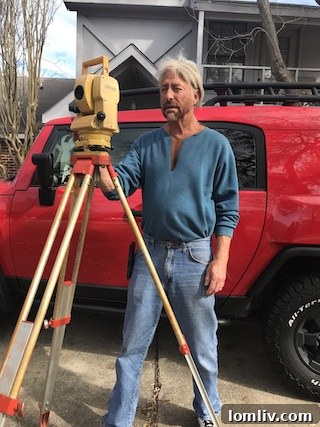
Industry icon Barry Rhodes, associated with Burns Surveying, is a testament to the dedication and expertise within the surveying business. With more than 50 years of experience, Rhodes has overseen an astounding 120,000 surveys in North Texas alone, offering a unique perspective on the practical implications of such a significant change in measurement standards.
“The difference in measurements are so minute for local surveyors,” Rhodes acknowledges, reflecting on the day-to-day work. “The difference isn’t usually a big deal unless you’re dealing with long pipelines or something similar. When you go really long distances, you have the curvature of the earth to deal with, which introduces other complexities far greater than the foot discrepancy.” His insight highlights that while the technical difference exists, its immediate impact on typical small-scale property surveys is often negligible compared to other factors like topographical variations or instrument precision.
Toeing The Line: Adapting to the New Standard
Despite his long-standing reliance on the U.S. Survey Foot, Rhodes expresses confidence that the transition will be manageable for Texas surveyors. “I always use the U.S. Foot. But if the state says to make the change, we’ll do it,” Rhodes states, echoing the sentiment of many professionals who prioritize adherence to official standards. He further reassures, “Our software probably has the option to convert.” This readiness to adapt underscores the professionalism within the industry and the role of modern technology in facilitating such transitions. Most contemporary surveying software packages are equipped with robust conversion capabilities, allowing for seamless shifts between different coordinate systems and units of measurement, including the two foot definitions.
The adaptation process will involve several key components for surveying firms. Beyond software updates, there will be a need for continued education and training to ensure all professionals are fully conversant with the International Foot and its application. Firms will also need to establish clear protocols for managing historical data that was based on the U.S. Survey Foot, ensuring proper labeling and conversion where necessary, particularly for projects that might involve re-surveys of older properties. This proactive approach will mitigate potential issues and ensure a smooth transition for the entire industry.
This mandate reinforces a broader trend towards global standardization in the geospatial domain. As technology advances and international collaborations become more common, having a unified system of measurement is paramount. From satellite imagery to GPS data, the foundational units must be consistent to enable accurate data fusion, analysis, and sharing across borders. The move away from the U.S. Survey Foot is not just a change in a number; it’s a step towards a more interconnected and precise global geospatial community.
The Future of Surveying: A Unified Foundation for Progress
The universal adoption of the International Foot marks a significant milestone in the evolution of land surveying in the United States. It symbolizes a commitment to precision, efficiency, and global interoperability. For future generations of surveyors, engineers, and planners, this standardization will eliminate a historical layer of complexity, allowing them to focus more on innovative techniques and advanced technologies without the inherent burden of dual measurement systems.
This change is particularly vital in an age where Geographic Information Systems (GIS) and precise positioning technologies like GPS and drone-based surveying are increasingly integrated into every aspect of land management and development. The integrity of these systems relies heavily on consistent and accurate foundational measurements. A unified foot standard ensures that data collected from diverse sources and across various platforms can be seamlessly integrated, analyzed, and utilized, unlocking new potentials for smart cities, environmental monitoring, resource management, and national defense.
Ultimately, while the difference between the U.S. Survey Foot and the International Foot might seem like a mere technicality, its resolution represents a profound leap forward for an industry built on the bedrock of accuracy. The shift guarantees that when someone defines a foot as 12 inches, they are now referring to the same globally recognized standard, precisely 0.3048 meters. This consistency, extending even to states like Texas, ensures that the foundation of our built environment and natural resource management is robust, reliable, and ready for the challenges of the 21st century.
The opinions expressed are solely those of the individual author for informational purposes only and should not be construed as legal advice. For any particular issue or problem related to surveying or legal matters, it is always recommended to consult with a qualified attorney or surveying professional.