In communities across the United States, particularly vibrant areas like North Texas, front yards often serve as canvases for personal expression. Homeowners frequently adorn their properties with an array of signs and flags, signaling everything from patriotism to personal beliefs. While these decorations are a common sight, new comprehensive research from real estate giant Redfin reveals that the flags you choose to display can significantly influence a home’s appeal and desirability to prospective buyers. This isn’t merely about aesthetics; it’s about conveying a powerful message about the community and the values it upholds, directly impacting the intricate dynamics of the housing market.
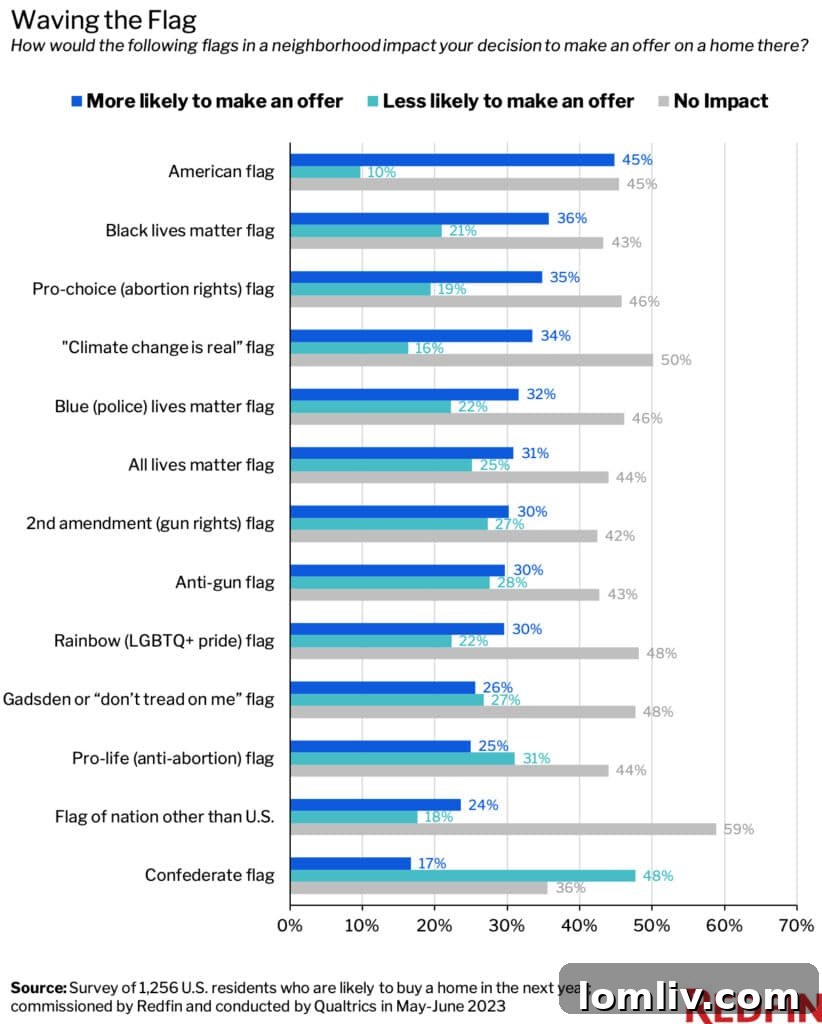
Redfin’s insightful study, which surveyed 1,256 U.S. homebuyers, delved into the nuanced impact of various flags on purchasing decisions. The findings highlight a fascinating intersection of social identity, community alignment, and prevailing real estate trends. One of the most striking revelations concerns the rainbow Pride flag, a widely recognized symbol of LGBTQ+ support and inclusivity. The study found that nearly a third of respondents, specifically 29.5 percent, indicated they would be more inclined to submit an offer on a home situated in a neighborhood where rainbow Pride flags are visible. Conversely, 22.3 percent stated that such flags would make them more likely to reconsider or pass on a property. Intriguingly, a substantial portion—48.2 percent—expressed indifference, suggesting a diverse range of responses to this particular symbol in their potential future neighborhoods.
Daryl Fairweather, Redfin’s Chief Economist, encapsulates this phenomenon succinctly: “In today’s divided nation, living amongst like-minded people could be considered a neighborhood amenity, just like highly rated schools and walkability.” This perspective underscores a fundamental shift in what homebuyers prioritize. With the rise of remote work, geographical constraints have loosened for many, allowing individuals to deprioritize proximity to their workplace. This newfound freedom often leads to a phenomenon where homebuyers “self-sort” into areas where their neighbors share similar ideologies, political views, and social values. It’s a testament to the idea that a home is not just a physical structure, but an entry point into a community, and prospective buyers are increasingly looking for a community that resonates with their personal identity and worldview. This desire for alignment transforms yard decorations into crucial indicators of a neighborhood’s social fabric and its potential suitability for diverse families.
The Political and Generational Landscape of Homebuyer Preferences
Delving deeper into the data, the Redfin study illuminated significant variations in preferences when segmented by political affiliations and generational demographics, offering valuable insights for real estate professionals. Self-identified Democrats, for instance, showed a strong inclination towards LGBTQ+-friendly neighborhoods. A significant 41.4 percent of Democrat homebuyers surveyed explicitly stated a preference for communities adorned with Pride rainbow flags. This statistic highlights a clear desire among this demographic for environments that openly signal inclusivity and support for diverse populations. Conversely, while a portion of Republican buyers were indeed deterred, the study noted that only 34.6 percent of Republican respondents indicated that rainbow flags would actively put them off. This suggests that while there is a segment of Republican buyers who might prefer different neighborhood aesthetics or values, a substantial number are either indifferent or not strongly averse to such displays, indicating a complex political landscape within homebuying decisions.
Generational differences also painted a compelling picture of evolving social norms and their impact on real estate appeal. Younger generations, often perceived as more progressive and socially conscious, demonstrated a greater acceptance and even preference for Pride flags and related paraphernalia. The study revealed that 37.9 percent of Gen Z buyers, followed by 30.9 percent of Millennials, were perfectly comfortable (“A-OK”) with rainbow flags. This comfort level gradually decreased with older generations, with 19.7 percent of Gen Xers and 17.7 percent of Baby Boomers sharing the same sentiment. These figures reflect a broader societal shift, where younger homebuyers are actively seeking communities that align with their progressive values, viewing visible symbols of inclusivity as positive indicators of a welcoming and forward-thinking environment. For real estate agents and sellers, understanding these generational nuances is crucial for effectively marketing properties and positioning neighborhoods, particularly in areas attracting younger demographics.
Symbols of Division: What Turns Buyers Away?
While some flags attract, others unequivocally deter. The Redfin study clearly identified symbols that act as significant red flags for a substantial portion of homebuyers, impacting property value and marketability. Topping the list of deterrents were Confederate flags. Nearly half of all U.S. homebuyers surveyed by Redfin unequivocally stated that encountering a Confederate flag in a potential neighborhood would make them seriously reconsider or entirely abandon their interest in purchasing a home there. The presence of this symbol, often associated with historical conflict, racial division, and controversy, sends a strong negative signal to a broad spectrum of buyers, indicating a community whose values may not align with their own and potentially raising concerns about the neighborhood’s overall social climate and inclusivity. This strong aversion highlights the deep historical wounds and ongoing societal debates linked to this particular emblem.
Following Confederate flags, other highly divisive front yard decorations included pro-life flags, which caused 31.1 percent of potential buyers to eschew a possible offer. These flags, representing a deeply personal and often politically charged stance on abortion rights, can create an immediate sense of discomfort or misalignment for buyers with differing views. Their presence signals a community with a strong position on a contentious issue, potentially alienating those with opposing beliefs. Similarly, anti-gun flags followed closely, with 27.5 percent of respondents indicating they would be deterred. This signals that visible advocacy for stricter gun control measures can also be a significant factor for some buyers, particularly those who staunchly support Second Amendment rights. The impact of these flags underscores the fact that intensely held beliefs, when openly displayed, can inadvertently narrow the pool of interested buyers by signaling a community that might not embrace diverse perspectives on fundamental social issues, turning off a significant segment of the market.
Symbols of Unity and Shared Values: What Attracts Buyers?
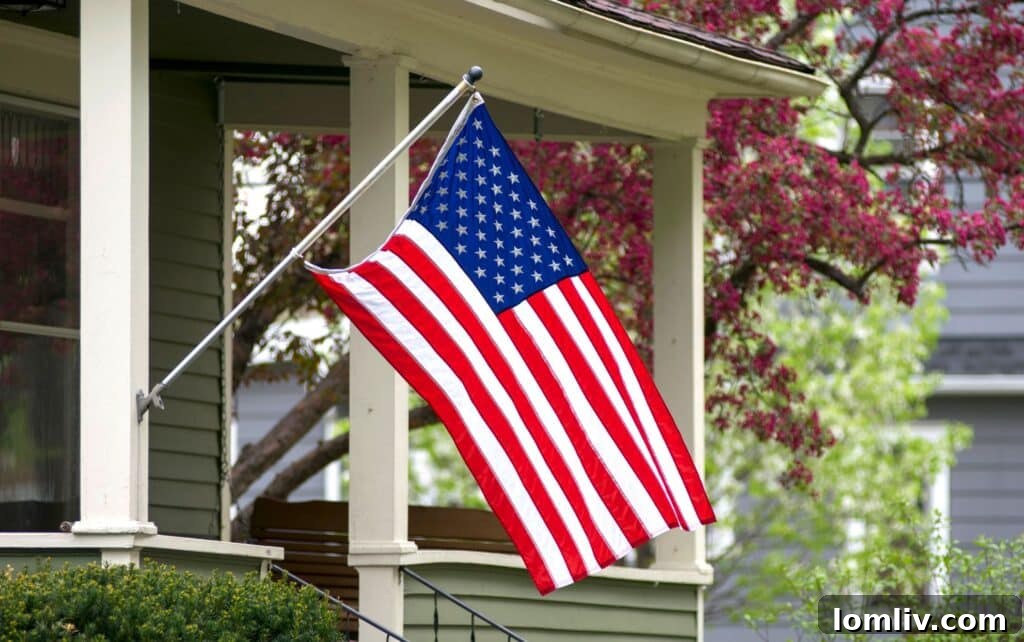
On the flip side, the study identified several flags that resonated positively with a significant number of homebuyers, signaling desirable community traits and shared values that can enhance neighborhood appeal. Unsurprisingly, the American flag emerged as the most popular, with a substantial 44.8 percent of respondents finding its presence in neighborhoods highly desirable. This universally recognized symbol of patriotism, national identity, and unity often signifies a sense of stability, tradition, and shared national pride, appealing to a wide demographic seeking a community with a strong, traditional American ethos. Its widespread acceptance makes it a safe and often beneficial display for sellers looking to broadly appeal to the market, communicating a sense of established community values.
Beyond traditional patriotism, the study highlighted the increasing importance of social justice and progressive values in modern homebuying decisions. Black Lives Matter flags were found to be desirable by 35.7 percent of homebuyers. These flags, representing a commitment to racial equality and social justice, appeal strongly to buyers who prioritize these values and seek to live in communities that openly embrace diversity and advocate for systemic change. For this segment, a BLM flag indicates a welcoming and conscious environment. Close behind, pro-choice flags were deemed desirable by 34.8 percent of respondents. Similar to BLM flags, these symbols resonate with buyers who support reproductive rights, indicating a desire for communities that align with their progressive social viewpoints. The appeal of both BLM and pro-choice flags demonstrates a growing segment of the homebuyer market that is actively seeking out neighborhoods that are not only safe and aesthetically pleasing but also reflective of their social and political convictions, effectively making these symbols a form of social signaling for potential residents.
The Evolving Definition of Neighborhood Appeal and Property Value
The Redfin study’s findings extend beyond mere statistical observations; they offer profound insights into the evolving dynamics of the real estate market and the very definition of “neighborhood appeal.” Traditionally, curb appeal focused on well-manicured lawns, attractive architecture, and a clean exterior. While these elements remain important, this research indicates that “curb appeal” now encompasses an entirely new dimension: the visible display of community values and social messaging. For sellers, understanding this shift is paramount. What they choose to display on their property can inadvertently communicate a wealth of information about the neighborhood’s prevailing culture, directly influencing how potential buyers perceive its desirability and, consequently, its property value and market attractiveness.
Real estate agents, in particular, can leverage this data to better advise their clients. For sellers, it might mean considering how their front yard displays could be perceived by a diverse range of buyers, especially when aiming for a broad market appeal. For buyers, it empowers them to look beyond the superficial and actively seek out neighborhoods that align with their lifestyle and belief systems, making informed decisions about their future community. This trend underscores the rise of “value-driven homebuying,” where the intangible aspects of a community—its inclusivity, political leanings, or social consciousness—are becoming as crucial as tangible amenities like school districts or proximity to public transport. As remote work continues to decentralize populations, individuals have more freedom to choose communities that genuinely feel like home, not just a place to live, thereby reshaping what constitutes a desirable property in today’s market.
Beyond Flags: Reading the Unspoken Language of a Neighborhood
While flags and signs offer clear, overt signals, homebuyers are constantly absorbing a myriad of other subtle cues that contribute to their perception of a neighborhood. These “unspoken languages” can include community gardens, the types of local businesses (e.g., independent bookstores vs. large chain stores), public art installations, or even the presence of specific community events and initiatives. A neighborhood’s character is a mosaic of these elements, each contributing to an overall impression that influences buyer sentiment. The Redfin study on flags simply highlights one of the most direct and potent forms of this social signaling. Buyers are not just evaluating a house’s square footage or number of bedrooms; they are implicitly (and sometimes explicitly) asking: “Do I belong here? Do these people share my values? Is this a community where I will feel comfortable, supported, and truly at home?” This holistic assessment of community ethos is becoming a cornerstone of modern homebuying.
Conclusion: Homebuying as an Act of Identity
The Redfin study provides compelling evidence that front yard flags are far more than mere decorations; they are powerful indicators of community values and social identity that profoundly impact home desirability and shape real estate outcomes. In an increasingly polarized yet interconnected world, homebuyers are not just seeking a house; they are actively searching for a community that reflects their beliefs, supports their lifestyle, and offers a sense of belonging among like-minded individuals. From the unifying symbol of the American flag to the inclusive message of the Pride flag, and the divisive nature of symbols like the Confederate flag, each display tells a unique story about the neighborhood’s character and values.
This research underscores a crucial evolution in the housing market: personal values and social alignment are now critical components of a property’s appeal. As buyers continue to “self-sort” into communities that mirror their identities, understanding these visible cues becomes indispensable for anyone involved in real estate, from individual sellers to large development firms. Ultimately, homebuying in the modern era is becoming an act of identity, a conscious choice to not only plant roots but to plant them in soil that nurtures one’s deepest convictions and sense of self. The humble front yard flag, therefore, stands as a potent symbol of this profound shift, guiding individuals toward the communities they truly wish to call home and influencing the very fabric of neighborhood composition across the nation.