Revitalizing Dallas: Streetlights’ Vision for Oak Lawn and Lemmon Avenue Transformation
The Dallas City Council has given its resounding approval to Streetlights’ ambitious plan for redeveloping a long-underutilized corner at Oak Lawn and Lemmon Avenue. This pivotal decision, following unanimous backing from the City Plan Commission, paves the way for a transformative project that promises to breathe new life into a prominent Dallas intersection. For decades, this site has been a rather unremarkable fixture, housing a Shell gas station and a Pizza Hut, surrounded by expansive, inefficient surface parking. Its true potential has remained untapped since the demolition of the historic Melrose Theater in the 1980s, leaving a void in the urban fabric of Oak Lawn.
The approval marks a significant step forward in the ongoing evolution of Dallas’s urban landscape, emphasizing a shift towards more dense, mixed-use, and pedestrian-friendly developments. Streetlights, a developer known for its sophisticated urban projects, aims to create a vibrant destination that honors the area’s past while charting a course for its future. This project is not merely about constructing a new building; it’s about re-envisioning how urban spaces can serve their communities, enhance walkability, and contribute to the aesthetic appeal and economic vitality of a neighborhood.
A Glimpse into the Past: Honoring the Melrose Theater Legacy
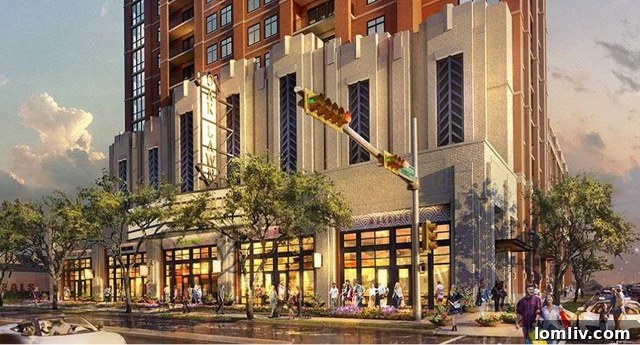
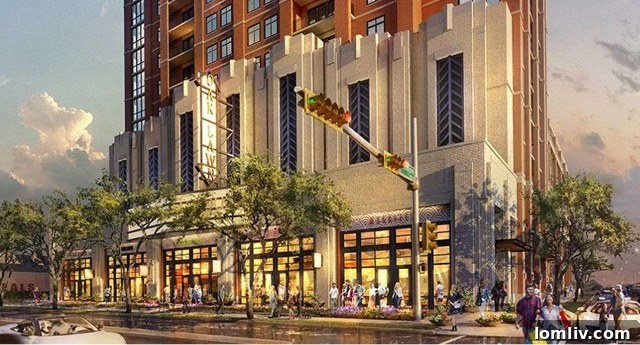
The site’s history is deeply intertwined with the beloved Melrose Theater, which once stood as a cultural landmark in Dallas. Its demolition in the 1980s left behind a sense of loss and an underutilized parcel of land that failed to live up to its prime location. Streetlights’ proposal beautifully acknowledges this legacy by reimagining elements of the original Melrose Theater’s iconic facade for the lower levels of the new development. This architectural homage serves as a thoughtful nod to the past, aiming to evoke a sense of nostalgia and continuity, rather than erasing history entirely.
This approach highlights a growing trend in urban redevelopment where developers seek to integrate historical references into contemporary designs. By incorporating design cues from the Melrose Theater, the project aims to create a building that feels intrinsically connected to its environment and the collective memory of Dallas residents. It’s a delicate balance of modernization and preservation, ensuring that while the city progresses, its unique character and heritage are not forgotten but rather celebrated through new architectural expressions.
Architectural Vision and the Promise of a Walkable Urban Core
Beyond its historical allusions, the design for the Oak Lawn and Lemmon Avenue project is meticulously crafted to foster a more engaging and pedestrian-centric urban experience. A key component of Streetlights’ plan is the creation of a truly walkable thoroughfare along both the Oak Lawn and Lemmon Avenue frontages. This involves designing ground-level spaces that encourage foot traffic, incorporating retail opportunities, outdoor seating, and inviting public areas that draw people in. Such an emphasis on pedestrian connectivity is crucial for developing vibrant, active streetscapes that contribute to a higher quality of urban life.
The development’s initial proposed height of 199 feet faced scrutiny during the planning stages but was subsequently lowered to 175 feet. While still five stories above the existing zoning limits for the area, this adjustment reflects a compromise aimed at balancing density with neighborhood compatibility. The increased height, however, will allow for a more efficient use of land in a desirable, amenity-rich area of Dallas, providing much-needed housing and commercial space. This vertical growth strategy is often a necessary component of urban infill projects, helping cities accommodate population growth without sprawling outwards, thereby preserving open spaces and reducing commutes.
Navigating Zoning and Development Regulations: FAR, Height, and Strategic Planning
One of the more complex aspects of the project involved the approved Floor Area Ratio (FAR) of 3.9-to-1. This FAR encompasses not only the corner lot but also the adjacent Eatzi’s lot. The concept of FAR is a critical urban planning tool, determining the intensity of land use by setting the ratio of a building’s total floor area to the size of the parcel it occupies. In this instance, Streetlights had initially proposed downzoning the Eatzi’s lot while simultaneously transferring its allowable height to the corner property, effectively consolidating development potential at the prime intersection.
However, the current approach appears to achieve a similar outcome through the approved FAR, raising questions about long-term protections for the Eatzi’s lot. While the intention might be to preserve Eatzi’s in its current location, critics ponder if this FAR allocation genuinely safeguards the site from future redevelopment in a “have your cake and eat it too” scenario, where development rights are maximized elsewhere without fully committing to the indefinite preservation of the lower-density parcel. This dynamic often highlights the intricate negotiations between developers, city planners, and community interests regarding property rights and urban evolution.
Addressing Community Needs: The Persistent Debate on Parking and Affordable Housing
The development also addresses two perennially debated topics in Dallas urban planning: parking and affordable housing. For parking, the project incorporates five stories of above-ground parking. This decision, while often a cost-saving measure for developers compared to more expensive underground options, frequently draws criticism for its visual impact and its potential to detract from the pedestrian experience by creating less active street-level facades. In a rapidly densifying urban core like Dallas, the preference for underground parking is growing, as it allows for more vibrant, mixed-use ground floors and a more aesthetically pleasing streetscape. The author’s personal “chief sadness” regarding the above-ground parking highlights a common sentiment among urban design enthusiasts who champion more integrated and visually appealing solutions.
Regarding affordable housing, the development includes 5 percent of its units, translating to nine affordable housing units. While the percentage might seem modest, it represents a net gain of nine affordable homes in a desirable area, a significant improvement over the zero units previously on the lot. The inclusion of affordable housing, even in small numbers, is a crucial step for Dallas, which like many booming cities, grapples with housing affordability challenges. Each unit contributes to a more equitable urban environment, offering opportunities for a broader range of residents to live near employment centers and amenities. The debate often centers on whether such percentages are sufficient, but any addition to the affordable housing stock is generally welcomed by advocates.
The Public Voice: Community Support and Navigating Opposition
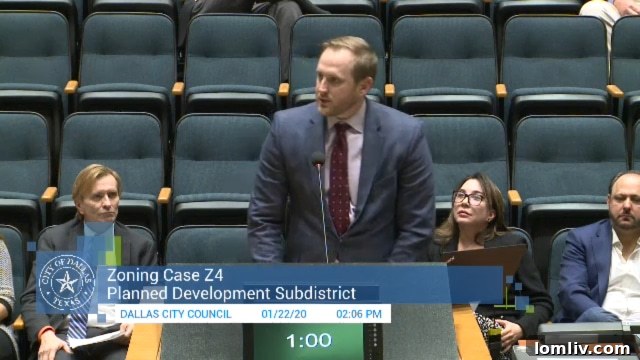
The path to approval for such a significant project is rarely without its challenges, and this development was no exception. Public hearings revealed a greater number of speakers voicing opposition than support. However, it’s important to contextualize these forums; those with specific grievances or concerns are often more motivated to speak. Despite the vocal opposition, many of whom had ties to the project or resided outside the immediate area, city balloting told a different story. The recorded support indicated that over 60 percent of residents within 500 feet of the project were in favor, underscoring a strong desire within the immediate community for redevelopment and revitalization.
This dichotomy between public hearing speakers and broader community polling often illustrates the complex dynamics of urban planning and public perception. While individual concerns are valid, the overall sentiment often leans towards progress and the tangible benefits that well-planned developments can bring. A humorous aside from the hearings noted that two supporters listed their address as 2525 Turtle Creek, a complex previously vocal against a project near them by Prescott. This highlights the often-localized nature of development opposition, where concerns can shift depending on proximity and direct impact, underscoring the “Not In My Backyard” (NIMBY) phenomenon that urban planners frequently encounter.
Infrastructure Challenges and Future Considerations: Traffic and Beyond
Beyond the immediate development, the Dallas City Council’s approval came with a directive for the city to investigate potential traffic improvements at the intersection of Oak Lawn and Lemmon Avenue. This proactive measure acknowledges the inevitable increase in traffic that accompanies new density and underscores a commitment to maintaining functional urban infrastructure. The request specifically targets improvements that could be integrated into the city’s “next bond package,” a common municipal funding mechanism for large-scale public works projects.
Given the typical timetable for construction of a project of this scale, there’s a strong possibility that the completion of the development could align perfectly with the implementation of these traffic improvements. This synchronized approach is ideal, allowing the city to mitigate potential congestion issues proactively rather than reactively. Effective traffic management and infrastructure upgrades are paramount to ensuring that urban growth enhances, rather than detracts from, the overall quality of life for residents and commuters alike.
Setting a Precedent: Future Development Along Lemmon Avenue
The approval of Streetlights’ project invariably raises questions about its potential to set a precedent for future developments in the surrounding area. The author expresses a valid concern about the property on the other side of Lemmon Avenue, currently home to businesses like Scardello cheese. This parcel could theoretically be assembled into a similarly sized lot, potentially paving the way for a comparable high-rise project. Such a development could then act as another prominent gateway on Lemmon Avenue, further transforming the character of the corridor.
While increased density can bring many benefits, the prospect of a domino effect of similar-sized projects can also spark anxieties about overdevelopment, loss of neighborhood character, and potential strain on existing infrastructure. Urban planners and community members must carefully consider the long-term vision for corridors like Lemmon Avenue, ensuring that new developments contribute positively to the urban fabric and are integrated thoughtfully into the existing community, rather than simply replicating a model without considering the specific context.
Evolving Retail Landscape: The Future of Local Mainstays
Finally, the discussion around the project touched upon the perceived irreplaceability of local businesses, particularly Eatzi’s. For many, preserving Eatzi’s seemed almost a “holy totem,” an iconic local establishment whose presence was paramount. However, the author posits that this sentiment might be “overplayed.” With the anticipated arrival of a Central Market on McKinney and Lemmon, the retail landscape in the area is clearly evolving. This new, large-format grocery and prepared foods store will introduce significant competition, challenging the notion that Eatzi’s is uniquely indispensable.
This reflects a broader trend in urban areas where long-standing local businesses must adapt to new market dynamics and increased competition. While beloved institutions hold a special place in the community, the urban environment is constantly in flux, driven by consumer demand, economic forces, and new development. The arrival of Central Market serves as a clear indicator of this evolution, suggesting that while Eatzi’s is valued, the market can and will adapt, offering residents new choices and reinforcing the dynamic nature of Dallas’s commercial corridors.

Understanding Dallas Real Estate and Urban Dynamics
As a keen observer of Dallas real estate, my focus consistently revolves around the intricacies of high-rise developments, the complexities of Homeowners Associations (HOAs), and the continuous cycle of urban renovation. These elements are not just components of property, but vital indicators of a city’s growth and evolving character. I deeply appreciate the delicate balance required between embracing modern architectural innovation and preserving historical aesthetics, all while navigating the powerful currents of the YIMBY (Yes In My Backyard) movement. This movement, advocating for increased housing density and sustainable urban growth, often finds itself at the forefront of discussions surrounding projects like the one on Oak Lawn and Lemmon Avenue, championing development to address housing shortages and promote vibrant urban living.
My insights aim to illuminate these multifaceted dynamics, offering a perspective that considers both the aspirational visions of developers and the practical concerns of residents. While I analyze these developments, I invite you to explore the broader conversations on urbanism. You can often find engaging discussions and updates on urban planning on platforms like Facebook and Twitter, although a direct search for my presence there might prove elusive. Nevertheless, the dialogue around shaping our cities is an open one, and your engagement is always welcome.