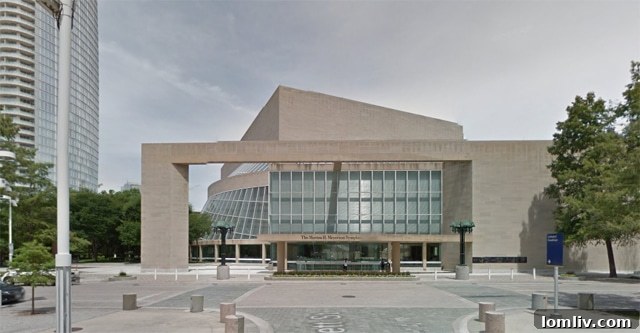
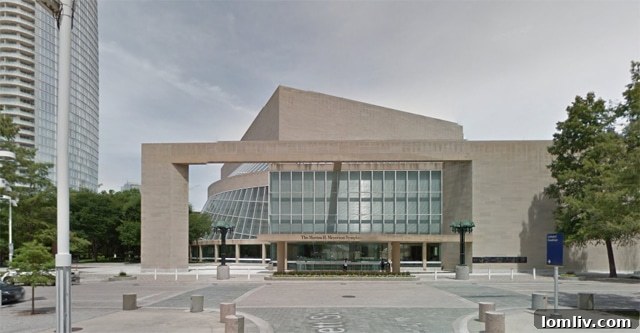
Urban development is a double-edged sword, perpetually presenting two sides to the same coin. While some discussions at the recent Urban Land Institute (ULI) meeting offered genuinely inspiring visions for urban futures, others underscored a disconcerting tone-deafness among developers regarding the broader societal impacts of their projects. Many proudly showcased their achievements, yet few delved into a critical reflection on the long-term effects and unintended consequences of their developments on existing communities.
The Uptown Lowdown: Dallas’ Booming Urban Core and Its Unseen Costs
The meteoric rise of Uptown Dallas is undeniable. Even those remotely connected to the city recognize its status as one of the hottest urban markets in the nation. This intense demand has even enabled the area to attract world-renowned architects, a phenomenon largely unseen in the Dallas skyline for decades. During the 1980s, iconic names like I.M. Pei and Philip Johnson shaped the city’s architectural identity. However, in the subsequent decades, Dallas’ urban landscape seemed to be sculpted primarily by a less imaginative, “box-building school” of design, prioritizing function over groundbreaking aesthetics.
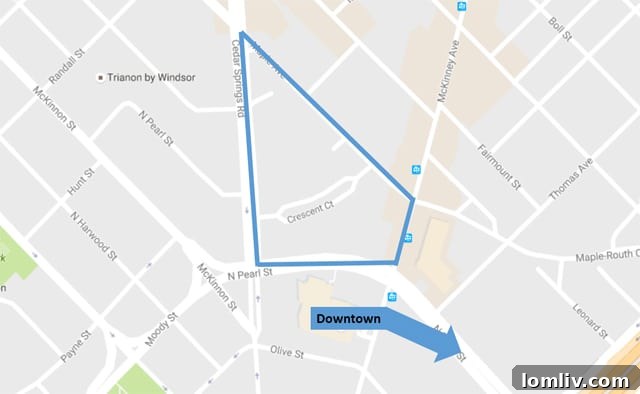
Crescent Development proudly highlights that the recently completed McKinney & Olive building, a striking design by the acclaimed Cesar Pelli, marks a significant milestone: it is “the first internationally acclaimed architect to design a commercial building in Dallas since the 1980s.” This fact is particularly poignant given that in 1986, Philip Johnson and John Burgee designed the iconic Crescent Court, a pivotal project that catalyzed the commercial transformation of Uptown. Strategically situated on a triangular lot, the Crescent Court structure metaphorically appears to point the way for Dallas’ urban core to expand northward, away from its traditional downtown roots.
The Complexities of Urban Renewal and Gentrification in Uptown
Undeniably, Uptown’s journey is a compelling narrative of urban renewal, effectively extending Dallas’ vibrant core. However, the discussions surrounding its early days were often unsettling. Attracting initial residents to what was once a less desirable area proved challenging, a common hurdle in revitalizing downtrodden neighborhoods due to societal fears surrounding poverty. What was truly discomforting, though, was the casual indifference, and at times outright mocking, directed at the area’s original residents. It’s one thing to humorously recall Uptown as a former hub of used car lots, antique shops, and tarot card readers—these were businesses, after all. But the derision aimed at the individuals who called Uptown home was profoundly distasteful.
Panelists recounted stories of developers “cutting deals with ‘crack heads’ on the corner” and “showing apartments while stepping over chalk outlines on the sidewalks.” These anecdotes, while presented as colorful historical tidbits, served as thinly veiled code for the low-income residents, predominantly people of color, who inhabited Uptown before its extensive redevelopment. Without mincing words, such descriptions, often associated with marginalized communities, do not evoke images of affluent or predominantly white neighborhoods. Although I wasn’t a Dallas resident at the time, the underlying message conveyed by the speakers was clear: the narrative revolved around the displacement of poor, black residents.
The fate of these displaced individuals was conspicuously absent from the celebratory narrative of Uptown’s success. This crucial omission became a central theme in daltxrealestate.com’s panel discussion on Fair Park later that summer. The overriding sentiment was a strong desire to avoid repeating the unchallenged displacement that had occurred in areas like State-Thomas, a key component of Uptown’s expansion.
Uptown’s Future: Risks and the Quest for Sustainable Growth
Despite its current prosperity, Uptown Dallas is not immune to future risks. A pertinent question arose during the ULI sessions: how do the area’s young demographics afford the influx of expensive new apartments? The surprising answer revealed that a significant number of 20-something leases were guaranteed by parents. This reliance on parental financial support introduces a notable vulnerability; a substantial economic downturn could have a severe impact on vacancy rates, potentially undermining the area’s perceived stability.
Furthermore, significant work remains to evolve Uptown from primarily a hub for single, childless nightclubbers into a more sustainable, family-oriented neighborhood. If this transition fails to materialize, Uptown risks becoming merely a transient place for youthful revelry, eventually to be abandoned by residents seeking more suburban stability once they decide to settle down and raise families. Cultivating a diverse, multi-generational community is crucial for its long-term viability and true urban success.
Artfully Building Cities: Can Cultural Attractions Drive Private Development? Lessons from Dallas and Fort Worth
Given the citywide focus on Fair Park’s revitalization, a ULI session titled “Artfully Building Cities: Can Cultural Attractions Drive Private Development? The Dallas and Fort Worth Stories” promised insightful discussion. The answer, broadly, was “yes,” but it came with uncomfortable implications.
In her opening remarks, Veletta Lill, a former Dallas City Council member and former executive director of the Dallas Arts District, revealed a stark truth: the very creation of the Dallas Arts District inadvertently contributed to Fair Park’s decline. It began in the mid-1970s with the relocation of what is now the Dallas Museum of Art (DMA) from its historic home in Fair Park. This exodus continued as other prominent cultural institutions abandoned the publicly-owned park for more desirable, privately-owned parcels fronting Woodall Rodgers Freeway. This abandonment by key cultural attractions had the exact opposite economic effect on Fair Park as it did on the burgeoning new Arts District, creating a vacuum that Fair Park has struggled to fill ever since.
This session, once again, revealed a concerning lack of retrospective understanding among the involved parties regarding the cyclical impact their decisions had created. Lucy Crow Billingsley, the developer behind One Arts Plaza, expressed lament that the city was now too heavily focused on Fair Park. This perspective overlooks a critical counterfactual: had the city and its cultural institutions chosen to invest the same substantial resources into Fair Park rather than creating a new Arts District, the current discussions around Fair Park’s future would likely be vastly different and far less challenging. Fair Park is a multifaceted issue with significant blame resting on city government, but removing its primary draws—its cultural institutions—was a profound blow, leaving its grand, empty buildings with few advocates for their restoration, save for the persistent, yet often challenging, presence of the State Fair of Texas.
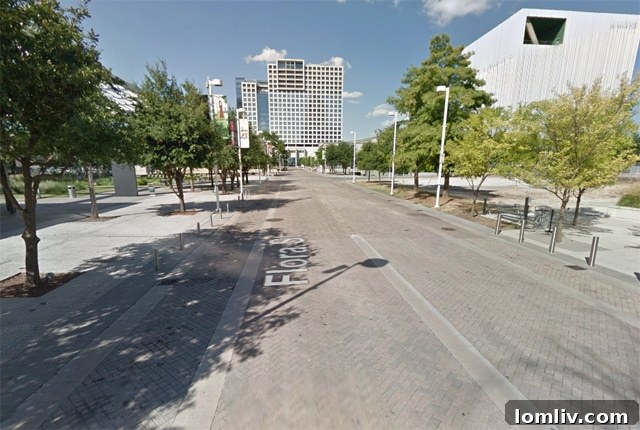
Dallas Arts District: A Question of True Vibrancy
In an ironic twist of fate, the Dallas Arts District hasn’t quite achieved the vibrant, mixed-use vision initially conceived. While magnificent “art temples” line Woodall Rodgers, they often remain quiet spaces, visited predominantly by those with tickets in hand for specific events. Outside of these scheduled happenings, the district frequently feels somewhat deserted, lacking the spontaneous activity characteristic of truly dynamic urban environments.
The original plan for a bustling, mixed-use district, intended to blend residential, commercial, and cultural elements, has largely remained unrealized. Anchoring each end of the district are two residential projects, often colloquially referred to as “donor housing.” With condominiums ranging from $750,000 to multi-million dollar price tags, these residences likely house a “who’s who” of arts patrons and benefactors. However, the collective 175 condos between Museum Tower and One Arts Plaza are insufficient to generate the sustained vibrancy needed for the entire district. The addition of trendy food trucks to draw lunchtime office workers, while a welcome amenity, hardly feels like a robust, long-term solution for fostering genuine community and round-the-clock activity.
The Dallas Arts District made a fundamental misstep by concentrating its cultural assets into a spatially isolated area, effectively creating a collection of beautiful but often underutilized “warehouses of culture.” Other successful cities have adopted a more organic approach, scattering their arts facilities throughout diverse neighborhoods. This strategy allows cultural venues to better absorb and distribute visitor traffic patterns, integrating them more seamlessly into the urban fabric. Even highly concentrated arts areas like New York’s Broadway or London’s West End strategically intersperse their theaters within vibrant, established neighborhoods, ensuring a continuous flow of pedestrian life and commercial activity.
Fort Worth’s Cultural District: A Parallel Path of Gentrification
In Dallas’ sister city, Fort Worth, the arts district evolved on a triangular parcel bordered by Camp Bowie Blvd., University Drive, and West Lancaster, directly across from the iconic Will Rogers Memorial Center. The opposing triangular parcel to the north houses the UNT Health Science Center, alongside a burgeoning mix of commercial and residential developments.
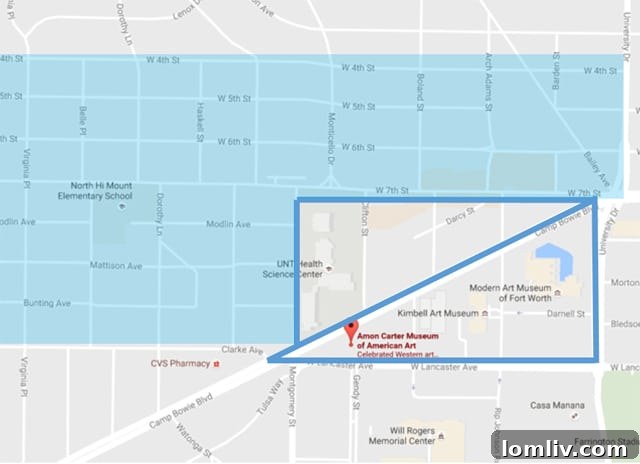
While the conversion of commercial properties to residential uses within a revitalized urban area—as seen in Dallas’ Design District—can be a positive development, what was equally telling, and equally unmentioned during the session, was the transformation occurring north of West 7th Street.
This historically heavily treed area, once home to charming middle-class bungalows built between the 1920s and 1940s, is experiencing intense gentrification. Original 1,500-square-foot, two-bedroom, two-bathroom homes are systematically being replaced by larger 2,500-square-foot townhomes or sprawling 4,500-square-foot, zero-lot-line mansions. This trend was vividly illustrated when the speaker presented aerial photographs tracking museum infill, which inadvertently also depicted the slow deforestation and demolition of original single-family homes and their mature trees. This pattern of displacement and architectural metamorphosis has numerous parallels in Dallas neighborhoods, highlighting a widespread consequence of unmanaged urban growth.
Both the Dallas and Fort Worth examples unequivocally answered the session’s titular question: yes, cultural attractions do attract significant investment. However, this investment almost invariably leads to the displacement of existing residents, often without adequate consideration or mitigation—a crucial social cost overlooked in the pursuit of economic revitalization.
Miscellaneous Observations from the Urban Land Institute Meeting: A Broader Critique
A consistent and troubling theme emerged in nearly every session I attended where issues like gentrification or homelessness were raised: these were framed not as problems to be understood and solved, but rather as inconveniences that needed to “go away” or be “removed.” During a session focused on Klyde Warren Park, an out-of-town attendee inquired about the park’s approach to homelessness. The speaker confidently asserted there was “no homeless problem” because the park was actively used (homeless individuals, he claimed, dislike activity), had robust security, and was not open 24/7. He even boasted of knowing “precisely which city parks the homeless frequented.” Sensing the cavalier and insensitive nature of this response, another panelist quickly interjected, emphasizing that all members of the community were welcome at the park, attempting to soften the dismissive tone.
In fairness to ULI, there was a session titled “Dallas’ Affordable and Mixed-Income Housing Plan,” which I regrettably could not attend due to professional commitments. Additionally, daltxrealestate.com writer Amanda Popken did attend other, arguably “gentler,” sessions that may have offered different perspectives on these critical social issues.
Finally, the closing day’s keynote speaker featured former President George W. Bush, presented as an “inspirational” figure. The day prior, media representatives received a stark note stating, “President Bush’s staff has informed us that no media will be allowed to cover his presentation…” This decision, even at an ostensibly non-political and professional event like the Urban Land Institute meeting, suggested an unwillingness to risk any potential embarrassment. While I had already anticipated his speech might be uninformative, as is often the case with purely “inspirational” addresses, this media blackout merely added to my reasons for not attending. Had the speaker been Jimmy Carter, widely regarded as our generation’s greatest post-President, whose profound wisdom on housing and homelessness could genuinely enlighten, I would have eagerly been present.
Remember: My focus areas include high-rises, homeowners’ associations (HOAs), and renovation projects. However, I also deeply appreciate modern and historical architecture, critically examining it in the context of the YIMBY (Yes In My Backyard) movement, advocating for thoughtful urban density. If you’re interested in hosting a Candysdirt.com Staff Meeting event, I’m the person to connect with. In 2016, my writing was honored with Bronze and Silver awards from the National Association of Real Estate Editors for my contributions to real estate journalism. Do you have a compelling story to share, or perhaps a unique marriage proposal to unveil? Please don’t hesitate to reach out to me via email at [email protected].