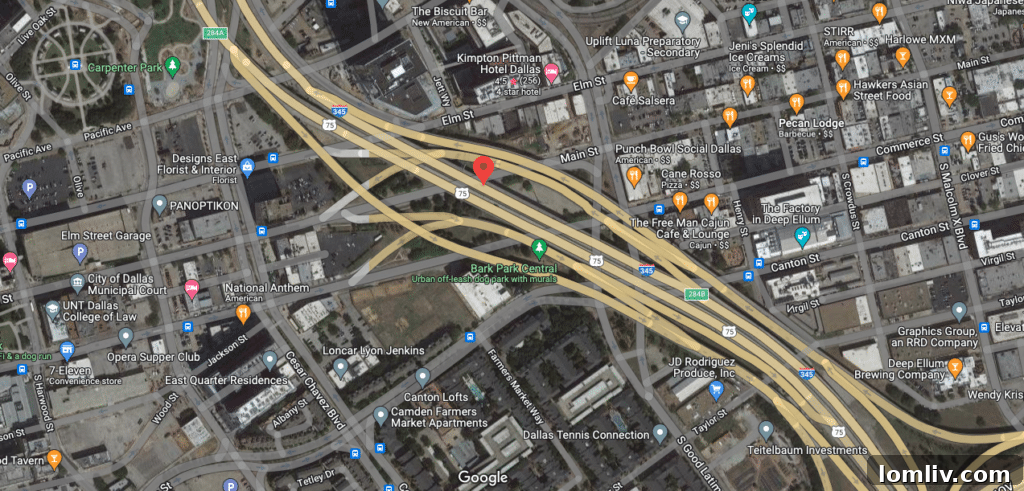
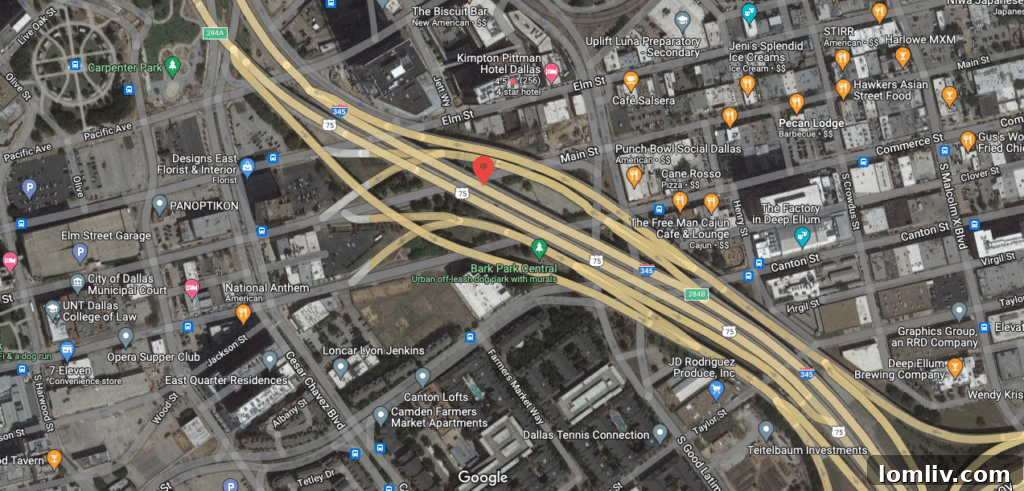
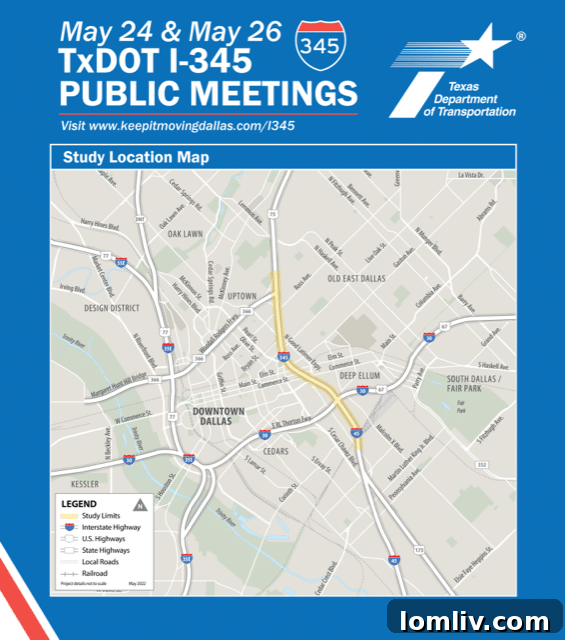
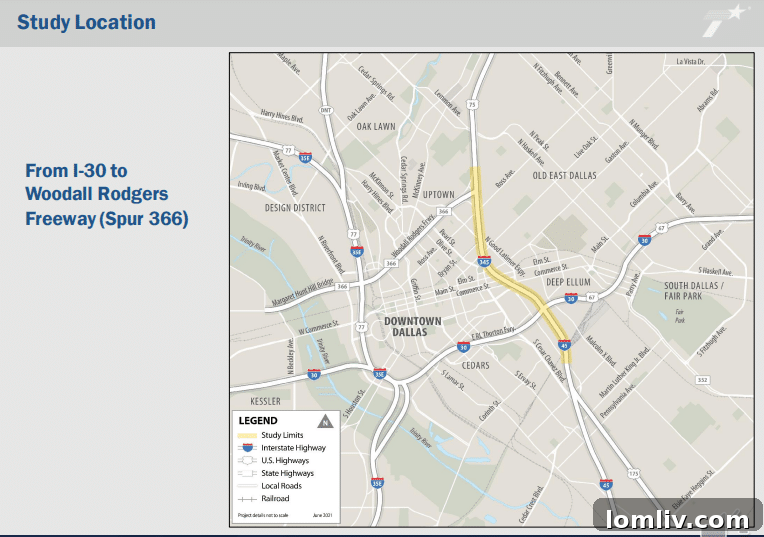
Dallas stands at a pivotal moment, poised to redefine its urban landscape through the transformative redesign of Interstate 345. This critical 1.4-mile stretch of highway, which currently serves as both a vital artery and a physical barrier between the vibrant Deep Ellum neighborhood and bustling Downtown Dallas, is the subject of an extensive feasibility study by the Texas Department of Transportation (TxDOT). As the final series of public meetings for the Interstate-345 Feasibility Study commences, residents and stakeholders are offered a crucial last opportunity to contribute their insights and shape the future of this essential Dallas corridor.
The comprehensive study is guiding TxDOT officials in their mission to develop a sustainable, efficient, and community-centric project aimed at significantly improving traffic flow and connectivity around the east side of downtown Dallas. I-345 is an indispensable thoroughfare, carrying an staggering average of over 180,000 vehicles daily. It seamlessly connects major interstates, including Interstate 30, U.S. 75/Interstate 45, and the Woodall Rogers Freeway (Spur 366), highlighting its immense importance to regional mobility and commerce. However, its aging infrastructure and divisive presence have prompted a city-wide conversation about more innovative and integrated solutions.
Public Engagement: Shaping the Future of Dallas’ I-345 Corridor
Public participation is at the heart of the I-345 Feasibility Study, ensuring that the final design reflects the diverse needs and aspirations of the Dallas community. TxDOT has organized a series of public meetings designed to facilitate an open dialogue and gather invaluable feedback from residents, businesses, and local organizations. These final in-person sessions are critical for those who wish to directly influence the project’s direction:
- Tuesday, May 24, 2022: 5:30 p.m. to 7:30 p.m. at St. Philip’s School and Community Center, located at 1600 Pennsylvania Avenue.
- Thursday, May 26, 2022: 3:00 p.m. to 6:30 p.m. at the Sheraton Dallas Hotel, Dallas Ballroom, 400 Olive Street.
For those unable to attend in person, a virtual meeting option offers flexibility and broad accessibility. This online platform, which is not a live event, will be available for public review and comment submission from 5:30 p.m. on Tuesday, May 24, through 11:59 p.m. on Monday, June 27. This extended period ensures that everyone has ample opportunity to review the proposed alternatives and provide thoughtful input.
Direct comments on the project can also be submitted via email to Project Manager Travis Campbell. Your perspective is vital in crafting a solution that not only addresses traffic congestion but also fosters a more connected and vibrant urban environment.
The TxDOT Feasibility Study: A Journey of Discovery and Design
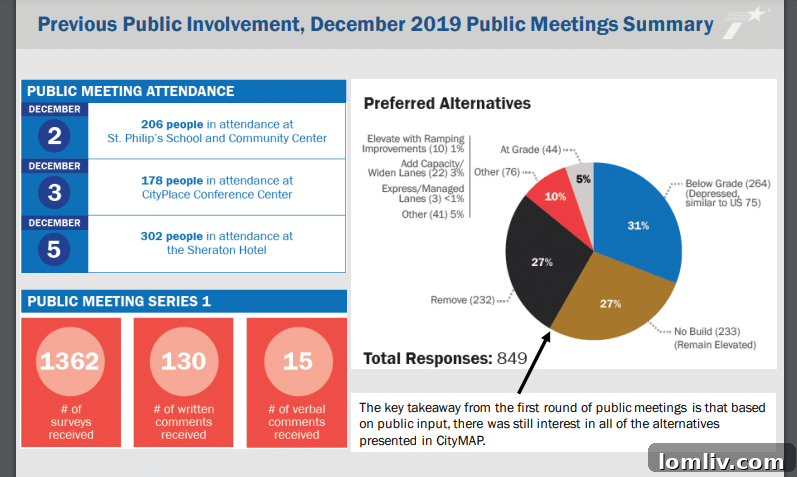
TxDOT initiated the comprehensive feasibility study in December 2020, embarking on a meticulous process of data collection, analysis, and community engagement. Over the past months, extensive feedback has been gathered from a wide array of stakeholders, including residents, urban planners, business owners, and environmental advocates. This invaluable input has been instrumental in shaping the conceptual alternatives currently under consideration. An archive of videos and PDF slides from previous presentations is readily available on the TxDOT website, offering a transparent look into the study’s progression and findings.
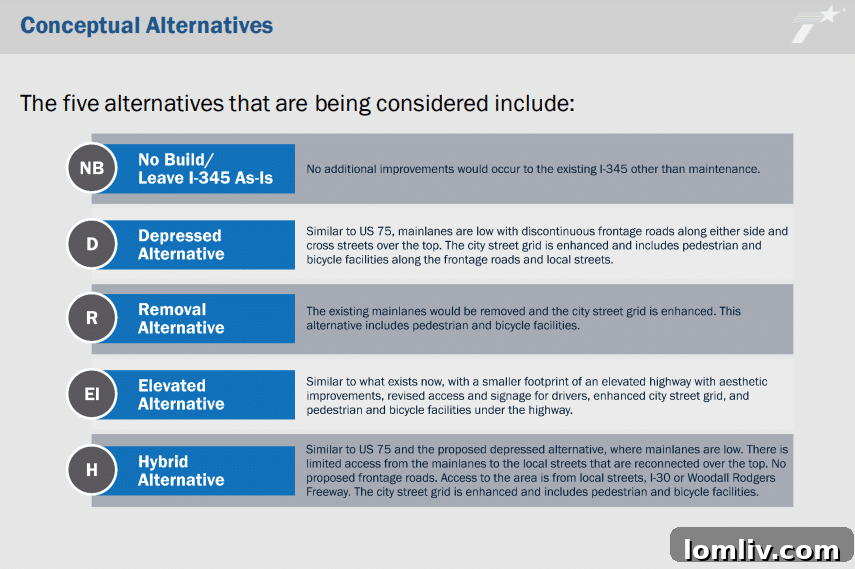
Based on this iterative process of stakeholder feedback and expert analysis, TxDOT has developed five distinct conceptual alternatives for the future of Interstate 345. Each option presents a unique approach to addressing the challenges of traffic flow, urban connectivity, and infrastructure revitalization.
Exploring the Five Conceptual Alternatives for I-345 Transformation
The potential solutions for I-345 range from maintaining the status quo to radical redesigns, each with profound implications for Dallas’ urban core:
- No Build / Leave I-345 “As Is” Alternative: This option serves as a baseline for comparison. It entails no significant structural changes to the existing elevated highway. While seemingly the least disruptive in the short term, it would mean continued deterioration of the infrastructure, perpetuation of the barrier between Deep Ellum and downtown, and an ongoing failure to address traffic efficiency and urban development goals.
- Depressed Alternative: This proposal suggests lowering sections of the freeway below grade. The primary benefit of a depressed highway is the ability to create new street-level connections, reintroducing surface streets, and allowing for new pedestrian and bicycle pathways. This can significantly enhance connectivity and facilitate mixed-use development, effectively stitching the city back together. Challenges include higher construction costs, potential drainage issues, and the need for careful urban design integration.
- Removal Alternative: A bold and transformative option, the removal alternative envisions the complete demolition of the elevated I-345 structure. This would free up significant urban land for parks, new development, and expanded surface street networks. It promises maximum urban connectivity, a dramatic reduction in noise and air pollution, and immense potential for economic revitalization. However, this option presents the largest challenge in terms of redirecting substantial traffic volumes and managing construction impacts.
- Elevated Alternative: This involves rebuilding or substantially renovating the existing elevated freeway, potentially with modern design enhancements and improved safety features. While it maintains the established traffic patterns and minimizes immediate disruption to surface streets, it also retains the physical and visual barrier between communities, potentially limiting the opportunities for urban integration and placemaking.
- Hybrid Alternative: This flexible approach combines elements from the other alternatives, tailoring specific solutions to different sections of the 1.4-mile corridor. For instance, one section might be depressed to facilitate connectivity, while another might involve an improved elevated structure where it makes engineering or urban sense. The hybrid alternative seeks to balance the benefits and challenges of each approach, offering a customized solution that maximizes positive impact for Dallas.
From Study to Schematic: The Path Forward
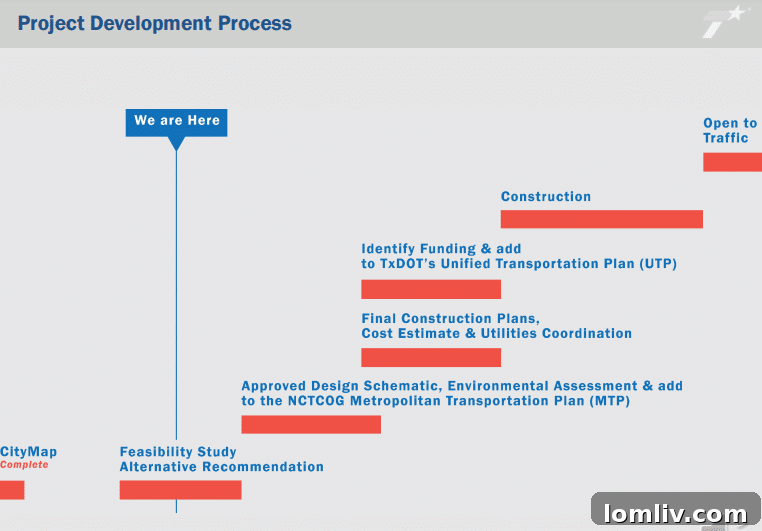
With the feasibility study nearing completion and public feedback being consolidated, TxDOT officials are preparing for the next critical phase: moving forward with one of these alternatives into the schematic and design phase. This transition marks the shift from conceptualization to detailed engineering and architectural planning.
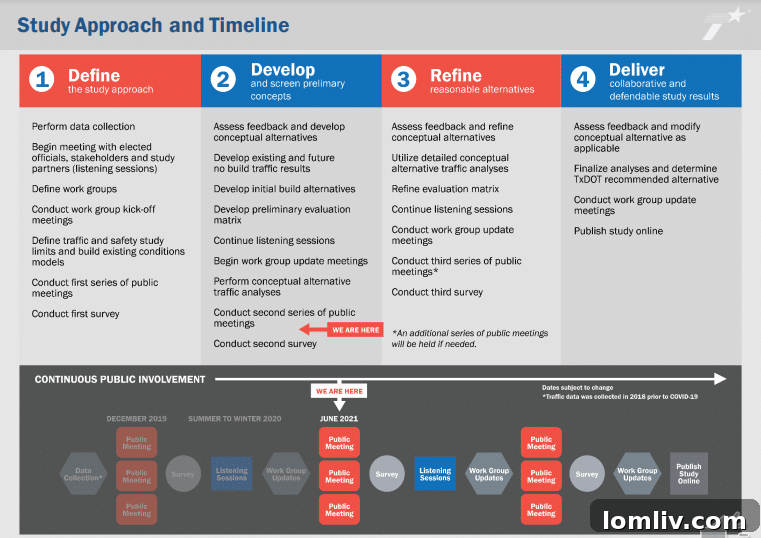
John Hudspeth, the Director of Transportation, Planning, and Development for TxDOT’s Dallas District, outlined the methodical four-phase approach guiding this monumental project: Define, Develop, Refine, and Deliver. This structured methodology ensures a thorough and well-considered process from inception to implementation.
“The overarching goals established under the prior CityMAP process were foundational,” Hudspeth explained. “These included a deep understanding of how each studied alternative would impact crucial areas such as mobility, connectivity, sustainability, and economic development.” TxDOT has diligently carried forward these essential CityMAP goals into the I-345 Feasibility Study, ensuring continuity and alignment with Dallas’ broader urban vision.
In addition to the CityMAP framework, TxDOT has augmented the goals for the I-345 Feasibility Study with several key objectives:
- Inclusive, Transparent, and Collaborative Public Involvement Process: Ensuring all voices are heard and the process is open and understandable.
- Collaborative Work with Stakeholders: Engaging continually with diverse groups to build consensus and optimize solutions.
- Review Recommendations from Previous Studies: Leveraging historical data and prior urban planning efforts to inform current decisions.
- Provide the Best Solution that Maintains Safety, Mobility, and Operability: Prioritizing functional excellence and user experience.
- Defensible Results: Ensuring all findings and recommendations are rigorously supported by data and analysis.
- Incorporate TxDOT and Community Goals: Harmonizing state-level transportation objectives with local community aspirations.
- Work Toward a Recommended Alternative: Culminating the study with a clear, well-justified path forward.
The Evaluation Matrix: A Holistic Approach
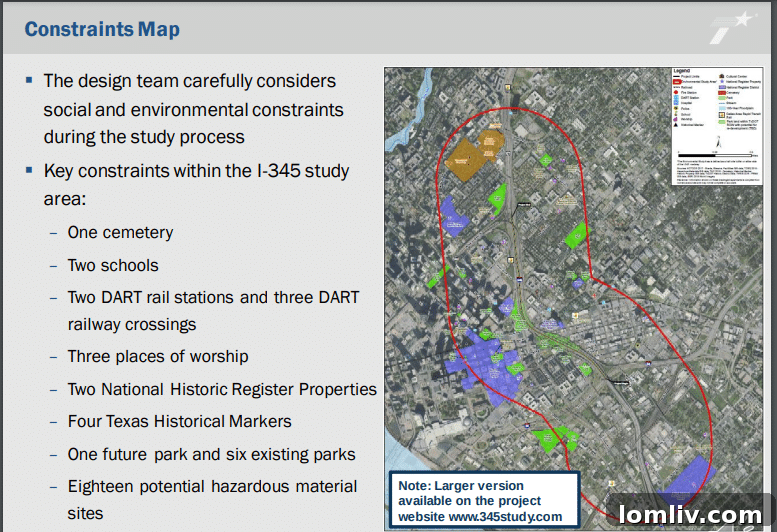
To objectively assess each of the five conceptual alternatives, a sophisticated evaluation matrix has been developed. This matrix meticulously factors in critical criteria, ensuring a holistic understanding of each option’s potential impact:
- Mobility: How effectively will each alternative improve traffic flow, reduce congestion, and enhance overall transportation efficiency for vehicles, public transit, and freight?
- Connectivity: To what extent will the alternative reconnect Deep Ellum with Downtown Dallas, fostering pedestrian and bicycle access, and integrating local street networks?
- Sustainability: What are the environmental implications, including air quality, green space opportunities, and long-term ecological impact? How does it contribute to a more resilient city?
- Economic Development: What new opportunities will arise for businesses, housing, and urban growth? How will it impact property values and regional economic vitality?
- Cost: A pragmatic assessment of the financial investment required for construction, maintenance, and long-term operational expenses.
“Understanding how our projects deeply impact communities is paramount to TxDOT,” Hudspeth affirmed. “We are steadfast in our commitment to working closely and transparently with all stakeholders, local communities, and the broader public as we move forward in this transformative journey for Dallas.”
A Unified Vision for Dallas’ Future
The Interstate 345 Feasibility Study represents a unique opportunity to reimagine a vital piece of Dallas’ infrastructure, transforming it from a dividing line into a catalyst for urban renewal and enhanced connectivity. By engaging the public and meticulously evaluating diverse alternatives, TxDOT is working towards a solution that will not only improve transportation but also profoundly reshape the social and economic fabric of the city. As Dallas looks to the future, the decisions made concerning I-345 will leave a lasting legacy, creating a more integrated, sustainable, and vibrant urban core for generations to come. Your continued engagement remains crucial as this ambitious project moves from conceptualization to concrete realization.