Preston Road Development: Navigating Growth and Community Concerns Behind the Pink Wall
Dallas, a city synonymous with growth and dynamic urban expansion, constantly faces the intricate challenge of balancing new development with the preservation of existing neighborhood character. A prominent example of this ongoing dialogue centers around a significant parcel of land located “Behind the Pink Wall” on Preston Road, strategically positioned near the bustling Northwest Highway. This site has been a nexus of local attention and vigorous discussion concerning a proposed residential project by Transwestern, a leading real estate developer.
The initial vision for this prime location was ambitious: a comprehensive development designed to house 220 residential units. This high-density proposal, while aiming to optimize land use in a highly desirable area, immediately ignited a strong reaction within the local community. Homeowners and residents, deeply invested in the unique charm and established serenity of the “Pink Wall” neighborhood, voiced significant concerns. Their apprehensions spanned across multiple critical areas, including the potential strain on existing infrastructure, exacerbation of already congested traffic patterns, fundamental changes to the aesthetic and character of the immediate vicinity, and potential impacts on property values and overall quality of life.
From Initial Aspirations to Collaborative Compromise
The extensive and often intense dialogue between Transwestern, the surrounding homeowners, and city planning authorities has been pivotal. It underscores the vital role of community engagement in shaping Dallas’s urban fabric. In response to the powerful feedback and a clear desire for a project that better harmonizes with its surroundings, Transwestern has put forth a substantially revised proposal. This new plan represents a significant reduction in scope, now suggesting a development comprising 165 residential units. This reduction of 55 units from the original proposal is a clear testament to the developer’s willingness to adapt and compromise in the face of concerted community input, aiming for a more palatable outcome.
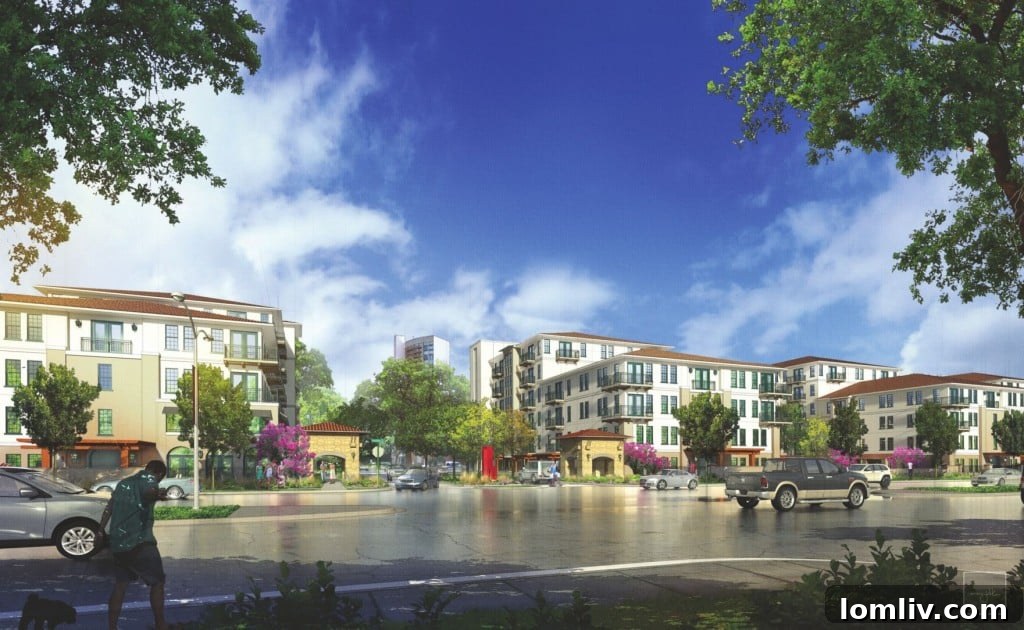
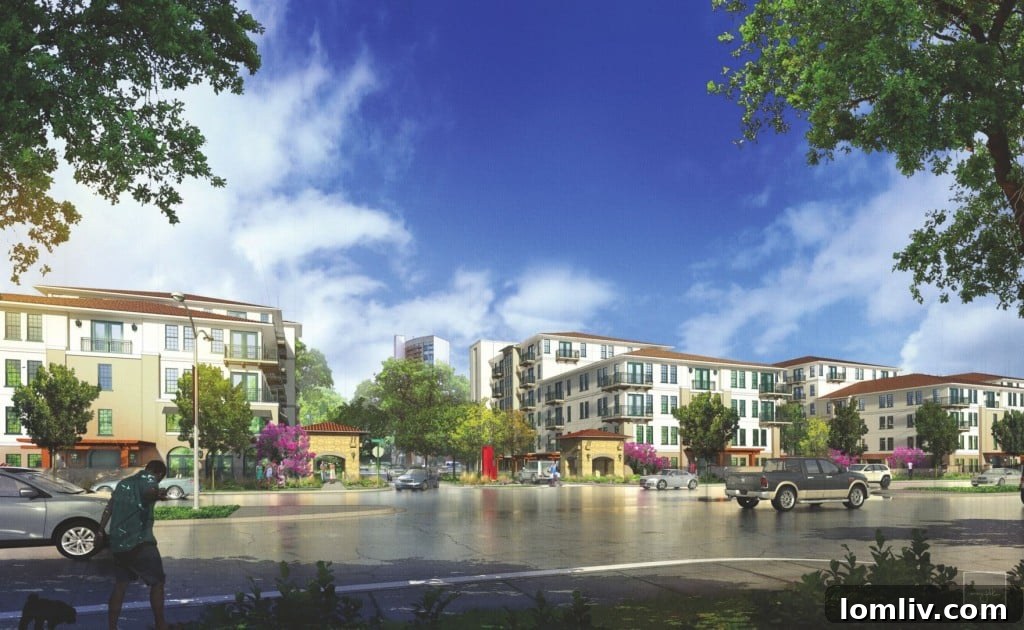
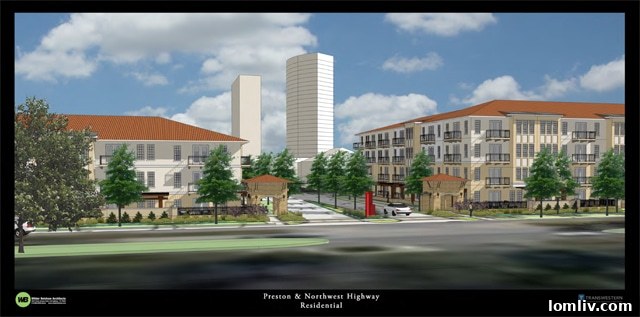
For those familiar with the Preston Road corridor, particularly in this prestigious section of Dallas, understanding the scale of new developments against existing landmarks is crucial. Iconic structures like Preston Tower and The Athena, known for their architectural prominence and established residential communities (including, notably, a unit owned by Steve Wolens and Laura Miller, sparking related discussions), offer a contextual backdrop. The updated rendering provides a clearer perspective, illustrating how the new complex intends to integrate visually. A key element of this revised plan is a strategic architectural and zoning compromise: the northern section of the development is designed to align with current zoning regulations, maintaining a height of three stories. This specific segment, which appears on the left in the second rendering, is intended to minimize its visual impact on adjacent single-family homes and maintain the existing scale of the neighborhood’s immediate boundaries. This adherence to existing zoning for a portion of the development represents a significant gesture of conciliation towards the community.
Navigating Zoning Requirements and Enhancing Residential Quality
While the northern segment respects current zoning, the southern portion of the proposed complex is envisioned as a four-story structure. This specific height necessitates a formal zoning change from the City of Dallas. Zoning alterations are often the most sensitive aspects of large-scale developments, as they can set precedents and significantly influence the future character and density of surrounding areas. Developers typically seek such changes to optimize land use and project financial viability, while residents frequently perceive them as potential threats to neighborhood stability and cherished aesthetics. Transwestern’s tiered height approach, proposing different zoning requirements for distinct sections of the property, exemplifies an attempt to achieve a delicate balance between development ambitions and community apprehensions about overwhelming density and visual intrusion.
In addition to the structural height, Transwestern has included a notable stipulation within their zoning amendment request: a minimum apartment unit size of 1000 square feet. This detail is highly significant and reflects a commitment to a particular standard of living. In many urban markets, developers might prioritize smaller, more numerous units to maximize rental revenue. However, by proposing a substantial minimum unit size, Transwestern signals an intention to attract a demographic seeking more spacious accommodations, potentially reducing overall unit count per building and fostering a more stable, less transient residential community. This proactive measure could be interpreted as another effort to address local residents’ concerns, aligning with a desire for high-quality, long-term tenancy rather than transient occupancy often associated with smaller, less expensive units. It also suggests a focus on creating a luxury apartment complex, further integrating with the upscale character of the Preston Road area.
Addressing Traffic Congestion on a Critical Dallas Corridor
Unquestionably, one of the most pressing and consistently cited concerns surrounding any new development along high-traffic arteries like Preston Road and Northwest Highway is its impact on existing vehicular congestion. Dallas’s major roadways are already stretched, and the introduction of hundreds of new residents inevitably adds to the daily traffic volume. Transwestern has directly addressed these concerns by proposing a tangible traffic mitigation solution: the developer has pledged to dedicate a sufficient parcel of land, visible on the far right in the lower rendering, to TXDOT (the Texas Department of Transportation) for the creation of a dedicated left-hand turn lane from Preston Road onto Northwest Highway.
This proposed infrastructure improvement is strategically designed to alleviate a significant bottleneck. It promises to particularly benefit residents coming off Averill Way and seeking to turn south onto Northwest Highway, streamlining their merge and reducing the backup on Preston Road. However, even with this dedicated lane, the challenges for residents needing to turn north onto Northwest Highway or access other points in the immediate vicinity during peak traffic hours will require continued vigilance. The sheer volume of vehicles traversing this key interchange means that the added traffic generated by 165 new units, though fewer than initially proposed, will still demand heightened caution and patience from all drivers, especially during rush hour commute times. The long-term effectiveness of this single lane in fully offsetting the increased vehicular load will be closely watched by the community and traffic planners alike.
To accurately frame the population impact, it’s essential to understand the numbers. While the existing site currently supports only 36 residential units, the proposed development would increase the total to 165 units. This represents a significant increase in the resident population for the immediate area. The developer’s assertion that the 165 units are “only 20 more units than under current zoning” requires careful interpretation. This statement likely means that while the overall jump from the current 36 units to 165 is substantial, the proposed 165 units exceed what could be built under the *existing zoning regulations* for a similar type of structure by merely 20 units. This implies that the requested zoning change specifically for the four-story southern segment primarily accounts for these additional 20 units beyond what the three-story zoning would permit across the entire site. This framing is a strategic part of the developer’s argument for community acceptance, attempting to downplay the *variance* requested rather than the overall *population increase*.
Broader Implications for Dallas Urban Development and Community Engagement
The Preston Road development behind the Pink Wall transcends the scope of a singular construction project; it serves as a microcosm for the broader urban planning challenges and exciting opportunities confronting Dallas as a rapidly expanding metropolitan hub. The escalating demand for housing and efficient land use places continuous pressure on developers to consider infill sites within established neighborhoods. This dynamic inevitably creates a natural tension between the objectives of developers – to maximize investment and address housing needs – and the aspirations of existing communities to safeguard their unique character, effectively manage infrastructure demands, and protect residential property values.
Effective urban planning in such environments necessitates a meticulous balancing act, where profound community engagement, transparent and open negotiation, and innovative compromises become not just desirable, but absolutely paramount. The “Pink Wall” itself carries deep symbolic resonance within Dallas. For many, it represents more than just a physical barrier; it embodies a historical element of the neighborhood, a demarcation of a particular lifestyle, and a beloved local landmark. Consequently, any development in its immediate vicinity inherently attracts heightened public scrutiny and spirited debate. The ultimate resolution of Transwestern’s revised proposal will not only determine the future of this specific parcel but could also establish critical precedents for how similar high-density residential projects are evaluated, approved, and seamlessly integrated into other mature Dallas neighborhoods. This situation vividly underscores the indispensable roles played by zoning commissions, city council members, and an actively engaged citizenry in collaboratively shaping the urban fabric and future trajectory of one of America’s most rapidly growing and influential cities.
Looking Ahead: Towards a Lasting Resolution for Preston Road
The journey forward for the Preston Road development will undoubtedly involve additional layers of discussion, a series of public hearings, and ultimately, a definitive decision from the Dallas City Council. Whether the scaled-back proposal of 165 units, intelligently combined with the commitment to a tiered building height and tangible traffic mitigation strategies, will finally succeed in fully addressing and satisfying the multifaceted concerns of the homeowners residing near the Pink Wall remains an open question. The inherent complexity of these interconnected issues — which involve harmonizing economic development goals with the preservation of community quality of life, strategically managing traffic in already congested urban arteries, and meticulously navigating intricate zoning regulations — means that truly simple or universally satisfying solutions are exceptionally rare.
Nevertheless, the noticeable evolution from an initial proposal of 220 units down to 165, the thoughtful commitment to maintaining a three-story profile for the northern section, the pledge for more spacious, larger individual units, and the proactive investment in critical traffic infrastructure collectively signal a genuine and meaningful attempt by Transwestern to bridge the chasm between their commercial development ambitions and the cherished aspirations of the local community. This ongoing and evolving dialogue represents a crucial and instructive chapter in Dallas’s larger growth narrative, powerfully demonstrating that responsible and thoughtful urban development demands not merely innovative architectural design, but equally, a profound understanding of local context, an unwavering commitment to transparency, and a sincere dedication to collaborative problem-solving. The ultimate fate and physical manifestation of this prominent Preston Road site will undoubtedly stand as a lasting testament to how Dallas strategically approaches and effectively manages its next pivotal phase of expansion and evolution.