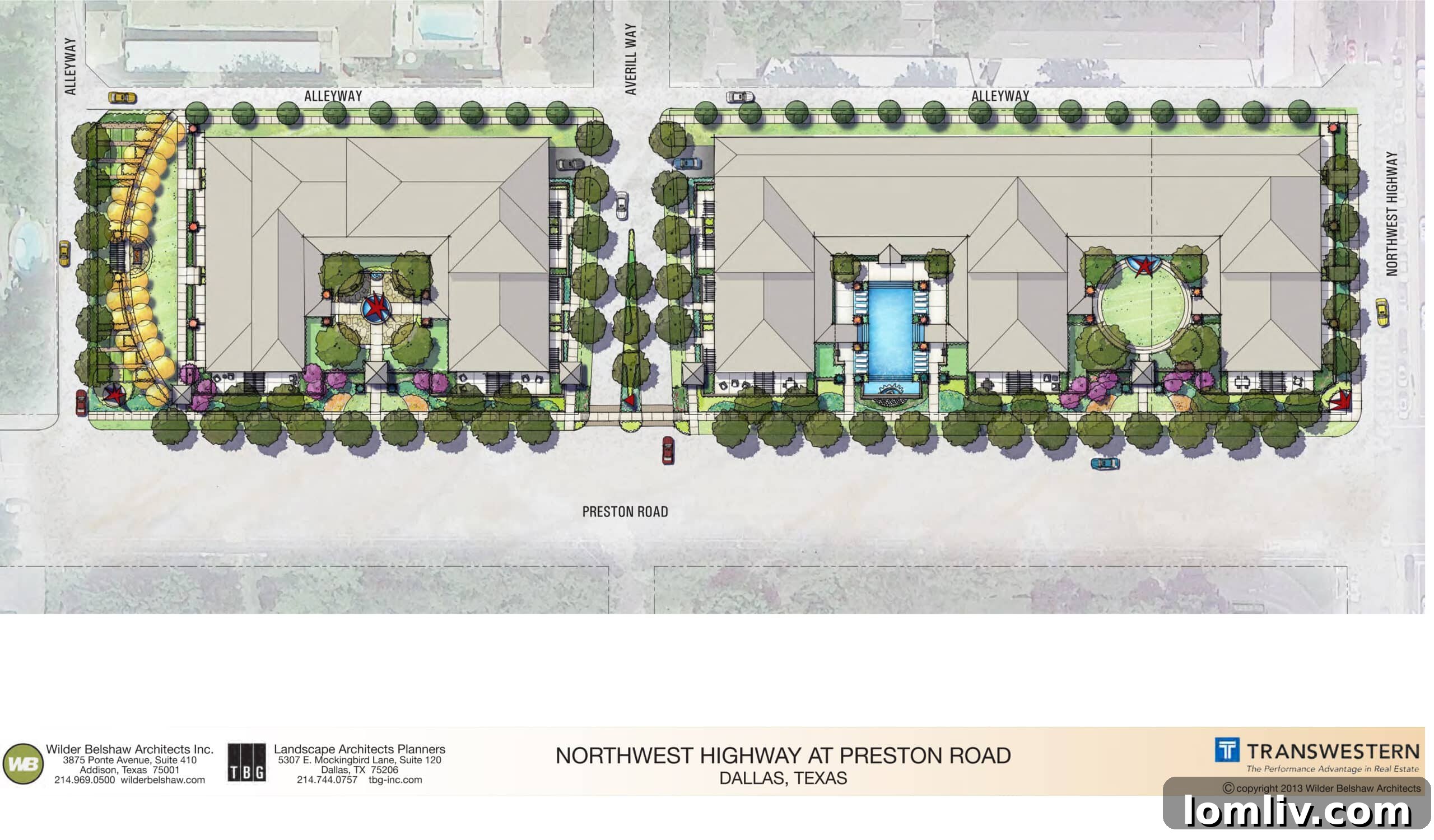
The highly anticipated and often contentious proposed apartment development by Transwestern at the prominent intersection of Preston Road and Northwest Highway in Dallas continues to be a focal point for both developers and the local community. Recent updates from neighborhood reporters at the Preston Hollow Advocate indicate a notable adjustment to Transwestern’s plans. Initially envisioned as an ambitious eight-story structure housing 296 residential units, the proposal has now been scaled back to a more modest six stories, reducing the total number of apartments to 225. This revision represents a significant concession from the developer, presumably in response to considerable community feedback and concerns.
This intersection, a gateway to the affluent Preston Hollow neighborhood, is one of Dallas’s most recognizable and highly trafficked areas. It’s an address that signifies prestige and convenience, offering unparalleled access to premier shopping, fine dining, top-tier schools, and major employment hubs. The desirability of this location makes it a prime target for high-density development, particularly for luxury residential properties designed to attract a discerning clientele, including empty nesters looking to downsize from larger homes and young professionals seeking sophisticated urban living. The existing landscape is a mix of established single-family homes, exclusive retail centers, and limited multi-family structures, making any new, large-scale project a topic of intense scrutiny.
While the reduction in scale from eight to six stories and 296 to 225 units is a step in the right direction for many residents, it hasn’t entirely quelled the apprehensions of local homeowners. Members of the Preston Hollow East Homeowners Association (PHEHA), among others, maintain that the proposed complex, even in its revised form, will introduce an unacceptable level of traffic into an already significantly congested area. The site, strategically positioned on the northeast corner of this bustling intersection, directly across from the iconic Ebby’s Little White House, is central to the neighborhood’s daily rhythm, meaning any increase in vehicle volume could have substantial ripple effects on local quality of life.
The core of the dispute lies in the dramatic difference between the existing zoning regulations and Transwestern’s proposed density. According to reports, the property’s current zoning permits a maximum of just 130 residential units. Presently, the site accommodates a mere 24 apartments and 12 condominiums. The revised rezoning proposal, therefore, still seeks to increase the unit count by more than six times the current density. Such a substantial intensification of land use invariably translates to a considerable influx of new residents and, consequently, a significant surge in daily vehicle trips. This potential increase in traffic is precisely what local residents are vigorously opposing, fearing it could cripple the area’s transportation infrastructure and diminish neighborhood charm.
Ashley Parks, President of the PHEHA, has articulated the community’s primary concern with unwavering clarity. “Traffic is the big concern,” Parks stated in the Advocate story, reflecting the unified voice of hundreds of residents. The collective anxiety isn’t merely theoretical; it stems from daily experiences with bottlenecks and delays at peak hours. The potential for hundreds of additional vehicles exiting and entering the proposed complex each day raises serious questions about public safety, commute times, and the environmental impact of increased idling and exhaust fumes. The fear is that even minor changes to traffic patterns in such a high-volume area could lead to disproportionately severe disruptions.
To amplify their concerns and demonstrate the breadth of community opposition, the PHEHA launched an online petition. As of a recent update, the PHEHA petition has garnered nearly 1,050 signatures, a clear indication of the widespread sentiment against the proposed rezoning. This figure represents almost double the amount of signatures since earlier reports, showcasing a growing, organized effort to influence the decision-making process. Beyond digital activism, residents are also planning a physical rally to visibly express their disapproval and solidarity. A gathering is scheduled for Saturday at 2:22 p.m. at Preston Hollow Park, a strategic move designed to attract local media attention and underscore the depth of community feeling to Dallas city officials.
The debate surrounding the Transwestern development at Preston Road and Northwest Highway encapsulates a broader tension common in rapidly growing urban centers like Dallas: the delicate balance between fostering economic growth through new development and preserving the established character and quality of life within existing neighborhoods. Developers often highlight the economic benefits of such projects, including increased property tax revenues for the city, job creation during construction, and the provision of much-needed housing options to meet the demands of a burgeoning population. They argue that high-density luxury apartments can attract residents who contribute significantly to the local economy, support nearby businesses, and offer housing diversity for various life stages.
However, community groups consistently emphasize the tangible impacts on residents. Beyond traffic, concerns often include potential strains on public services, increased noise pollution, decreased green space, alterations to neighborhood aesthetics, and the potential for a precedent that could encourage further high-density encroachment into historically single-family areas. For the residents of Preston Hollow, the preservation of their tranquil, upscale residential environment is paramount. They often feel that new developments, while bringing economic advantages, must not come at the expense of established community values and infrastructure limitations. The existing 130-unit zoning was put in place for a reason, reflecting a specific vision for density and land use that many residents believe should be upheld.
The process of rezoning itself is complex, involving numerous stages of review and approval by various city departments, the Dallas Planning Commission, and ultimately, the Dallas City Council. Each stage provides opportunities for public input, though the weight given to community objections can vary. Developers typically invest substantial resources in crafting proposals that address perceived needs and attempt to mitigate potential negative impacts. Yet, the final decision often hinges on a political calculus that balances the interests of developers, the economic development goals of the city, and the vocal concerns of its citizens. The negotiation that led to the reduction from 296 to 225 units demonstrates that the city planning process is indeed responsive to public pressure, at least to a degree.
This situation compels a critical question for all stakeholders: Does Transwestern’s revised rezoning plan go far enough to genuinely protect the Preston Hollow neighborhood from the profound impacts of excess traffic and increased density? Or, conversely, are the nearby residents, in their passionate defense of their community, overstating the potential negative ramifications and missing an opportunity for thoughtful, measured urban evolution? The answer likely lies in the middle, reflecting the inherent compromises required in urban planning. The outcome of this specific proposal will not only shape the future of this iconic Dallas intersection but will also send a clear signal about the future direction of development and community engagement within one of the city’s most cherished districts.