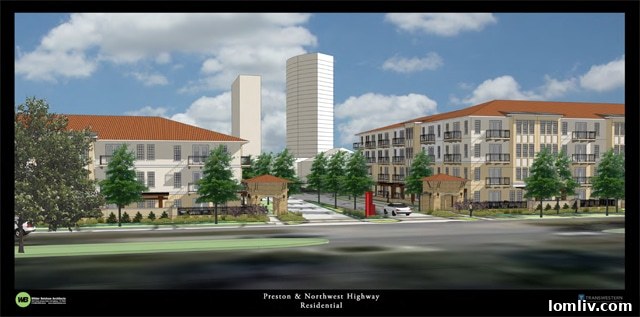
Transwestern Withdraws from Preston Hollow Project: A Turning Point for Dallas Development
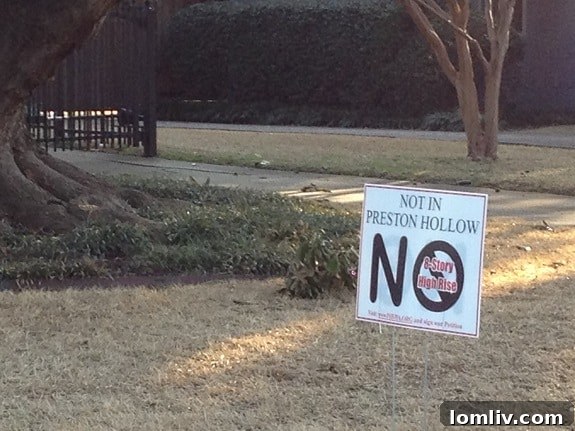
The highly contested development project at the critical intersection of Preston Road and Northwest Highway in Dallas has taken an unexpected turn. In a significant announcement, Transwestern has officially confirmed its withdrawal from the proposed multifamily development, effectively halting construction plans for the foreseeable future. This news undoubtedly signals the end of the polarizing “Not in Preston Hollow” signs that have dotted the landscape, a clear victory for vocal community opposition.
For the Dallas City Council, this development might come as a quiet relief. After months of intense community debates and political pressure, one less contentious battle now remains on their agenda. While the immediate future of this prime real estate parcel remains uncertain, the cessation of Transwestern’s plans marks a pivotal moment, raising crucial questions about the dynamics of urban development, community engagement, and the economic landscape of one of Dallas’s most affluent neighborhoods.
The Unraveling Deal: Financial Hurdles and Community Demands
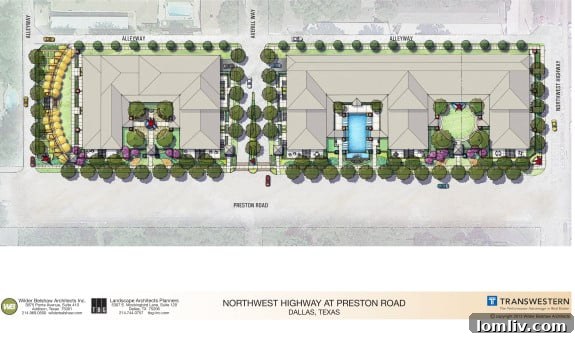
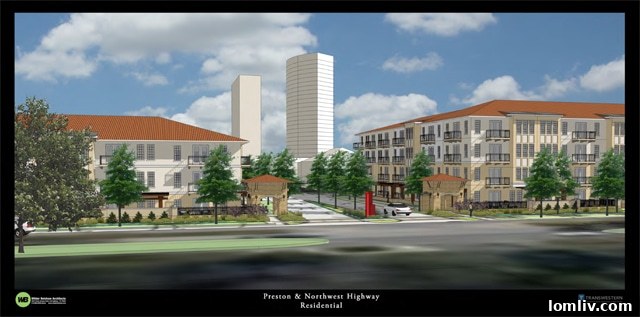
The decision by Transwestern to end its contractual relationship with the owners of Townhouse Row—the coveted three-acre site at the northeast corner of Northwest Highway and Preston Road—was not sudden. It followed a protracted period of negotiation and a significant scaling back of the project’s original vision. Sources familiar with the deal indicate that Transwestern, in an effort to appease local residents and address concerns about density, had reduced the number of proposed units from an initial 296 to a more modest 165.
However, this reduction came at a steep price. The decrease in density necessitated a renegotiation of the land sales price, which had initially been a robust $18 million. At one point, the Townhouse Row owners were projected to net approximately $140 per square foot for their three acres (130,680 square feet). This figure later escalated to an astonishing $170 per square foot when Preston Center Apartments became part of the larger deal. Such a price would have set a new record for land acquisition in this highly desirable “Gold Coast” corridor, an area uniquely positioned between the prestigious Preston Hollow and Park Cities neighborhoods, home to some of the nation’s wealthiest demographics. The appeal of developing in such a prime location is undeniable, yet the economic realities of a scaled-down project quickly became apparent.
The financial viability of a 165-unit development simply could not support the inflated land costs. A project with fewer units generates less revenue, making high land acquisition prices unsustainable. While there were reports that the Townhouse Row owners had, at one stage, agreed to a reduced price closer to $750,000 for their individual units, a final consensus proved elusive. Both the Townhouse Row owners and the Preston Apartments owners ultimately did not agree to the revised terms, leading to the developer’s decision to walk away. The ultimate financial toll on Transwestern—including due diligence, planning, and legal fees—as well as the costs incurred by homeowners who hired attorney P. Michael Jung to represent their interests, remains a significant, undisclosed figure.
NIMBYism and the Shifting Landscape of Dallas Development
This saga at Preston and Northwest Highway is a microcosm of a larger debate gripping Dallas: the tension between preserving neighborhood character and fostering necessary urban growth. The concept of “Not In My Backyard” (NIMBYism) played a central role in the community’s staunch opposition to increased density. While residents naturally seek to protect their property values, maintain traffic flow, and preserve the aesthetic of their neighborhoods, the broader economic implications of stalled development often go unexamined.
During a recent panel discussion for Keller Williams Luxury Homes International at the Dallas Country Club, featuring Neal Sleeper, President of City Place Co. and the West Village Board, and Gail Thomas, President and Executive Officer of the Trinity Trust, the critical issue of Dallas’s economic trajectory was starkly highlighted. Jim Gandy, President of Economic Development for Frisco, painted a vivid picture of his city’s explosive growth, attracting major businesses like the Dallas Cowboys and countless new developments. This stands in stark contrast to Dallas’s own struggle, where a staggering 266,195 jobs have been lost over the past decade, many migrating northward to rapidly expanding suburban areas.
The numbers don’t lie: approximately 10,000 people relocate to the Dallas-Fort Worth metroplex every month. This unprecedented population influx inevitably translates into increased traffic and demand for housing and services, regardless of whether new development proceeds in specific neighborhoods. While the desire to curb traffic and protect established communities is understandable, a complete moratorium on development within the city’s core risks exacerbating existing problems, including a dwindling tax base and a strained housing supply, pushing the population further to the outskirts.
The Economic Imperative: Why Stalled Development Costs Us All
The direct correlation between development, a robust tax base, and the quality of public services cannot be overstated. When a city experiences a loss of jobs and a reluctance to embrace new residential and commercial projects, its ability to generate crucial property and sales tax revenues diminishes. These revenues are the lifeblood of urban centers, funding essential services ranging from police and fire protection to schools, parks, and infrastructure maintenance.
Neal Sleeper, a respected figure in urban development, emphasized the power of effective communication in navigating these complex issues. He pointed to the historical success of the Oak Lawn Committee (OLC) as a prime example. The OLC played an instrumental role in forging a consensus between Oak Lawn homeowners and developers, creating a comfort zone that allowed for thoughtful, integrated growth. The result? Oak Lawn has flourished, becoming a vibrant, growing district that contributes billions of tax dollars to the city’s coffers, demonstrating a model where development and community interests can align for mutual benefit.
Bridging the Divide: Learning from Oak Lawn’s Success
The success story of the Oak Lawn Committee offers a crucial blueprint for other Dallas neighborhoods, particularly Preston Hollow and Preston Center. What’s needed is a similar collaborative platform—an “Oak Lawn Committee” for this area—that can facilitate open dialogue and build trust between residents, developers, and city planners. The goal should be to find a “comfort zone” where development can proceed in a manner that respects neighborhood character while also addressing the city’s broader economic and demographic needs.
Homeowners, while rightly concerned about their immediate surroundings, must also acknowledge the broader economic realities. A persistent “no” to all development eventually translates into higher property taxes and reduced city services, including vital amenities like police and fire protection. This isn’t a threat; it’s a direct consequence of a shrinking tax base and increased demand on existing resources from a growing population. Integrating such collaborative community engagement strategies into Councilman Jennifer Gates’s ongoing Preston Center Plan could be a transformative step, ensuring future development is both responsible and beneficial to all stakeholders.
What Lies Ahead for the “Pink Wall” Site?
With Transwestern’s departure, a cloud of uncertainty hangs over the coveted parcel of land “Behind the Pink Wall.” This raises a series of pressing questions about its future. Is this the definitive end of redevelopment aspirations for this strategically important site? Were the property owners, by holding out for record-setting prices, ultimately too ambitious, effectively killing a viable deal? Will they now attempt to entice another developer, perhaps one willing to meet their lofty financial expectations, or will this outcome deter future interest?
The challenge for any prospective developer will be immense, given the history of community resistance and the complex financial dynamics. Will developers be wary of touching this area, viewing it as too politically charged or economically unfeasible? Or will the existing Townhouse Row structures simply languish, slowly deteriorating until their sub-flooring rots, and outdated water-cooler systems give way to unsightly window units? The economic forces at play are formidable, and the future of this prime Preston Hollow corner remains a compelling narrative to watch. Stay very tuned, as the next chapter in this Dallas real estate saga is yet to be written.
Official Statement from Transwestern
“Transwestern and the owners of Town House Row have ended their contractual relationship concerning the property at the NE corner of NW Highway and Preston Road. After nine months of working closely with the neighborhood, we appreciate the many residents who continue to support positive redevelopment for this very important location.”
–Mark CulwellTranswestern, Managing Director of Multifamily Development