East Village Development: Sam’s Club Sparks Heated Debate in Dallas
The proposed development of a new Sam’s Club in Dallas’s vibrant East Village neighborhood by Trammell Crow Co. has ignited a significant debate among residents, urban planners, and local officials. A recent community meeting, intended to inform local residents about the project, highlighted the deep divisions and concerns surrounding the large-scale retail development.
Community Engagement: A Sparse But Passionate Turnout
On a recent Thursday evening, a sparsely attended community meeting was held at the Agape Methodist Church on Columbia Avenue in East Dallas. Easels, graphs, and detailed maps of the proposed Sam’s Club site were set up, inviting neighborhood residents to review Trammell Crow Co.’s plans. Despite the developer’s efforts to engage, only about a dozen residents, including a new reporter from the Dallas Morning News and some residents from Oak Lawn/Uptown interested in urban development trends, attended. The low turnout meant that formal group presentations were forgone in favor of intimate, one-on-one conversations between developer representatives and attendees. Scott Dyche, general counsel for Trammell Crow (affiliated with CBRE), Joel Behrens, and other team members spent the evening engaging with individuals and small groups, clarifying details and addressing concerns directly.
Indeed, as reported by the Dallas Morning News, the number of Trammell Crow representatives nearly matched that of the residents present, underscoring the limited direct community outreach and engagement that had occurred prior to this meeting.
The Proposed Project: A Big-Box Retailer in the Heart of East Dallas
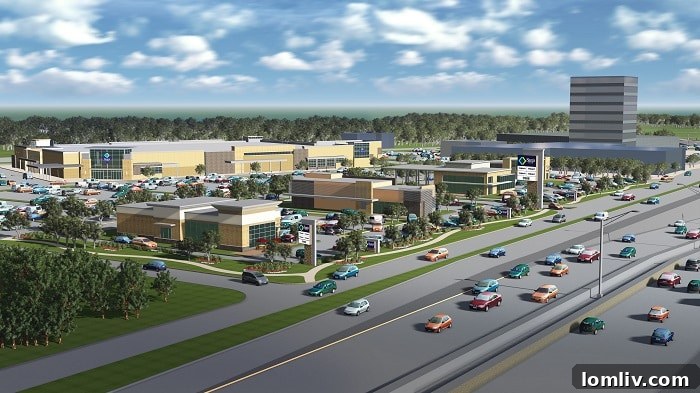
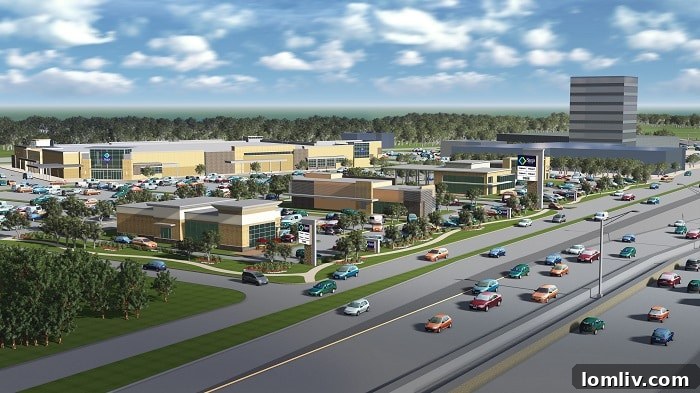
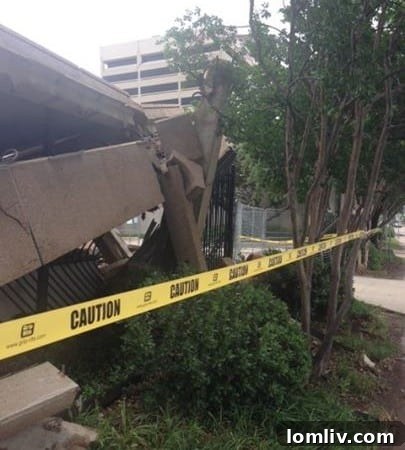
Trammell Crow Co. is moving forward with plans to construct a major shopping center, anchored by a Sam’s Wholesale Club, on a 17-acre parcel of land situated just north of the iconic Cityplace tower, off North Central Expressway at Haskell Avenue. The site, formerly home to Affiliated Computer Services, is a crucial area within East Dallas, identified by many as the burgeoning “East Village.” Local city insider Wylie Dallas even reported that construction had already commenced, sharing an image of early site work.
Clash of Visions: Residents Desire Mixed-Use, Developer Offers Retail
This area has recently seen significant redevelopment, attracting new residents with quality, affordable apartments, condominiums, and townhomes. For many homeowners who invested in these properties, the prospect of a massive warehouse store like Sam’s Club in their neighborhood is a jarring departure from their expectations. They purchased homes with the vision of an evolving urban village, not a big-box retail hub, fearing a negative impact on their property values.
Urban Planning and Accessibility Concerns
Urban planners and many residents express deep dissatisfaction, questioning why Trammell Crow is not pursuing a multi-family, mixed-use development, especially given the site’s proximity to a DART station. This sentiment is particularly strong with the “East Village” moniker attached to the area, implying a desire for a walkable, integrated urban environment. Concerns also mount over potential increases in traffic congestion, stemming from both customer vehicles and delivery trucks, which could overwhelm local streets and diminish the quality of life for residents.
The rezoning for this project was completed a year ago, a process that some critics argue severely disadvantaged the neighborhood. The final hurdle for Trammell Crow is approval from the Dallas Plan Commission. However, this approval was postponed after a strong showing of resident protests at a previous City Hall meeting, signaling growing community resistance.
Trammell Crow executives have publicly stated they were “blindsided by the protests,” indicating a disconnect between their development plans and the community’s aspirations. While most attendees at the recent meeting opposed the Sam’s Club, some acknowledged that if the development proceeds, mitigation strategies could be implemented to lessen its adverse effects on the neighborhood.
Developer’s Perspective and Outreach Efforts
Scott Dyche, Trammell Crow’s general counsel, found himself immersed in individual conversations rather than delivering a formal address at the meeting. The room was set up like a mini-convention, with numerous print-outs plastered on a blackboard, showcasing examples of large retail stores designed to integrate into dense urban settings and urban-friendly Walmarts – concepts largely brought by the Oak Lawn contingent. Attendees gravitated towards these visual aids before examining Trammell Crow’s large renderings of the future Sam’s Club site.
Dyche expressed Trammell Crow’s pride in the project, believing that within a few years, the neighborhood would appreciate the development more than currently. He acknowledged that part of the communication challenge stemmed from a lack of an organized neighborhood association, or a structured entity similar to an Oak Cliff Council, through which developers could have engaged more effectively. Dyche even voiced hope that the current situation could “turn into a positive for East Dallas, perhaps prompting a residents association.” There was also discussion about the possibility of Trammell Crow creating a community gathering room within the new Sam’s Club, drawing comparisons to the successful community spaces provided by Whole Foods in many of its neighborhood stores. “This is a great opportunity for East Dallas to organize,” Dyche remarked.
Earl Rector, a local resident, echoed a common sentiment: “The Sam’s is needed, we need the tax base.” However, he added, “But we really wanted an urban center to bring more people in,” highlighting the community’s broader vision for the area.
Voices from the Community: Concerns and Recommendations
The meeting provided a platform for several passionate local voices to share their insights and objections.
The Architect’s Call for Connectivity
Among the most informative locals was Bill Arnquist, a seasoned architect and Dallas native who has resided in East Dallas for 35 years. Arnquist, while not in outright opposition to the Sam’s Club given that the Planned Development (PD) was approved by the City Plan Commission (CPC) and City Council last May, articulated a strong stance on connectivity. “I do, however, feel very strongly that the city should require the developer to provide a pedestrian/bicycle access from Carroll to Haskell on the East side of the site,” he stated. “They must be required to do something to make a viable connection for access to the DART station at Cityplace. This is completely consistent with the urban development goals of the city.” Arnquist also shared fascinating historical context, noting that Raymond Nasher began his real estate empire by building family homes in the area, some of which still stand today. He recalled a 1954 map showing a public golf course just north of the proposed Sam’s Club site, painting a picture of the area’s evolving landscape.
Fear of Division and Eroding Property Values
Anthony Johnson, who moved to East Dallas from Uptown two years prior, expressed anxieties shared by many new residents. “Lots of us in East Dallas were hoping we made a good bet,” he said, referring to their investment in local property values. Johnson fears that the Sam’s Club will establish a permanent divide between the established West Village and the aspirational East Village. “That’s not what residents were promised,” he emphasized, adding a poignant metaphor: “Highway 75 should not be the Berlin Wall of East and West Dallas.”
“Frisco South” vs. “East Village”: A Stark Contrast
Rob Phillips, a resident off Carroll Avenue and a staunch opponent of the development, passionately declared, “This is Frisco South, not East Village.” His statement encapsulates the frustration of those who envision a vibrant, pedestrian-friendly urban core, not a car-centric suburban retail model. Phillips believes the development severs vital access to Haskell Avenue and raises serious concerns about truck loading and unloading, as well as general ingress and egress, which he views as significant public safety issues. He lamented the current traffic, stating, “It takes me ten minutes to get out of my house (with current traffic), now you lop on megastore traffic?”
Phillips also criticized the initial communication from Trammell Crow, alleging that previous hearings were poorly publicized or misrepresented. “I read news reports for a mixed-use product,” he explained. “If I had seen 100,000 square feet big box, I would have gone to the meeting to protest.” When asked about his plans if the project proceeds as planned, Phillips responded with resignation, “It will be something I have to live with. And it may affect my property values.” An avid walker who enjoys East Dallas for its walkability, frequently crossing Central Expressway to West Village for errands, Phillips questioned the broader impact: “Will this big box affect my quality of life, make my neighborhood tacky and dirty?” He concluded with a strong indictment of municipal oversight: “My city let me down. They could have asked more questions. They are not acting in the spirit of being a steward for the community.”
The Road Ahead: More Meetings and Future Possibilities
Recognizing the urgency of broader community engagement, Trammell Crow representatives acknowledged the hastily scheduled nature of the initial meeting. They announced another public meeting scheduled for Thursday, June 12th, at 6:30 p.m., hoping to reach more residents. Scott Dyche confirmed that postcards would be sent to every household within 500 feet of the project site, ensuring widespread notification.
Looking further into the future, there was also discussion about the potential for multi-family living to eventually come to the area. Specifically, there’s talk that when Xerox relocates in approximately three to four years, their current property would be an ideal fit for apartment or condominium development. Significantly, Trammell Crow Co. holds the right of first refusal on that land, suggesting a long-term interest in diverse development for the area.
However, for many residents, the promise of future apartments remains a distant “maybe,” overshadowed by the immediate reality of the Sam’s Club. They view the City’s approval of the current project as a gross error that fundamentally misaligns with the vision for East Village.
Conclusion: Defining East Village’s Future
The debate over the Sam’s Club development in East Village is more than just a dispute over a retail store; it’s a critical discussion about the identity and future of a rapidly evolving Dallas neighborhood. It pits economic development and tax revenue against community character, urban planning ideals, and the quality of life for its residents. As Trammell Crow seeks to move forward and residents continue their protests, the outcome of this struggle will undoubtedly shape the trajectory of East Dallas for years to come, influencing how future developments integrate into the urban fabric and whether the “East Village” can truly live up to its name.
East Village Site Plans