Toyota’s Landmark North American Headquarters Transforms Plano, Texas into a Thriving Economic Hub

On a crisp Tuesday morning, a pivotal moment unfolded in West Plano, Texas, marking the official commencement of construction for Toyota Motor Corporation’s new North American headquarters. With approximately 100 esteemed attendees looking on, a powerful Toyota Tundra truck ceremoniously moved the inaugural shovels of earth, symbolizing the groundbreaking of what is poised to become a $350 million corporate campus. This event was not merely a construction project; it was the tangible beginning of a new chapter for one of the world’s leading automakers and a monumental economic transformation for the Dallas-Fort Worth Metroplex.
The strategic decision by Toyota Motor Corp. to relocate its sprawling $350 million headquarters from its long-standing Southern California base to Plano represented North Texas’s most significant corporate relocation of 2014. This move, which captivated national attention, is projected to culminate in the creation and transfer of approximately 4,000 high-value jobs to the expansive 100-acre campus by late 2016 to early 2017. These positions encompass a diverse range of corporate functions, drawing talent not only from Toyota’s existing operations in California and New York but also from other states, consolidating the company’s North American leadership under one roof. The economic ripple effect extends far beyond the direct hires; experts estimate that for every primary job Toyota brings to Plano, an additional four jobs will be generated across various supporting sectors, underscoring the profound multiplier impact on the regional economy.
This colossal influx of professionals and their families presents an unparalleled business opportunity for realtors and the broader real estate market within Collin County and the surrounding areas. The sophisticated 1 million-square-foot campus, strategically located off the Sam Rayburn Tollway and Legacy Drive in the heart of Plano, will undoubtedly become the gravitational center for many of these relocating corporate employees. The desire for a convenient commute, coupled with access to excellent schools, amenities, and a high quality of life, will drive significant demand for housing options in close proximity to this burgeoning corporate hub.
Local industry leaders are already anticipating and preparing for this surge. David Maez, a respected broker and co-owner at VIVO Realty, articulates this readiness: “We’re all gearing up for it and we are ready to take them on, whether they’re going into Plano or Uptown.” Maez’s insight extends beyond direct Toyota employees, highlighting a crucial secondary wave of economic activity. “Another thing we’re going to see is all the corporations that do business with Toyota moving to the area. You’ll be adding all those other jobs and people to the area.” This foresight points to an ecosystem of ancillary businesses—suppliers, professional services, logistics providers, and more—that will follow Toyota’s lead, further amplifying the demand for both commercial and residential real estate, alongside robust job growth across diverse sectors of the Plano economy.

Delving deeper into the evolving residential landscape, Maez offered a nuanced perspective on where the significant volume of home sales is anticipated to occur. He meticulously outlined market trends driven by the diverse needs and preferences of Toyota’s incoming workforce, from senior executives to mid-level managers and new hires, ensuring that the Plano real estate market is poised to cater to a broad spectrum of demands.
For senior-level management and those seeking modern amenities and spacious living, Maez projects a strong preference for Plano itself, particularly areas experiencing rapid development. “For those in senior level management, a lot are going to want to stay in Plano, and the city is not built out—there is a lot of new construction, especially further up north,” he noted. This demographic often seeks contemporary homes, gated communities, and properties with ample space, frequently found in the newer developments stretching northwards. The demand isn’t confined solely to Plano’s immediate borders; it’s expected to spill over into affluent neighboring communities such as Frisco, Prosper, and McKinney, which offer master-planned communities, top-tier schools, and a luxurious suburban lifestyle. Maez predicts, “I think you are going to see inventory going very fast not only in Plano, but also in Frisco and maybe further north than that,” indicating a competitive market for high-end properties and newly built homes across the northern suburbs of the DFW Metroplex.
Conversely, for employees prioritizing proximity to the campus, established neighborhoods offer compelling alternatives. Maez highlighted the appeal of central-west Plano, an area characterized by its mature trees, larger lots, and a strong sense of community. “There are a lot of older homes on big lots in parts of central-west Plano, which is a great location, and you may see a lot of those houses being renovated and redone,” he explained. This segment of the market caters to those who value location and potential for customization. The opportunity to acquire a well-situated property and transform it to meet specific aesthetic and functional preferences is a powerful draw. “I think they will ask themselves, ‘Why not renovate a house and make it exactly how I want it?’” Maez mused, pointing to a trend of revitalizing existing housing stock, which will contribute to a dynamic and diverse housing market catering to all tastes and budgets.
The magnetic pull of Plano extends far beyond corporate incentives, rooted deeply in its exceptional quality of life. Plano Mayor Harry LaRosiliere eloquently articulated this sentiment to the appreciative crowd at the groundbreaking ceremony: “It brings the spotlight to our community, but it’s really the quality of life in Plano that’s attracting the companies like this.” This “quality of life” encompasses a myriad of factors that make Plano a coveted destination: a highly-rated public school system, an abundance of parks and green spaces, low crime rates, diverse cultural attractions, and a vibrant community spirit. These elements collectively foster an environment conducive to both professional growth and personal well-being, making it an ideal place for families and individuals to thrive.
Jim Lentz, Toyota North America’s chief executive officer at the time, offered further insights into the phased relocation and the positive reception the company had received. He projected a substantial initial wave, expecting approximately 300 employees to successfully transition and move to the Plano area within the first year of the relocation efforts. This early influx underscored the meticulous planning and extensive support systems put in place by Toyota to facilitate a smooth transition for its workforce, demonstrating a strong commitment to its employees.
Lentz’s remarks resonated with profound appreciation for the warm welcome extended by the local community and its leaders. “The support and encouragement we’ve received from the community, civic leaders, business partners and nearby corporations has been nothing short of tremendous,” he stated, emphasizing the collaborative spirit that defined the relocation process. He concluded with a forward-looking statement that cemented Plano’s role in Toyota’s trajectory: “It’s clear this is the right place to begin the next chapter of Toyota’s history in North America.” This “next chapter” signifies not just a change of address, but a strategic repositioning to foster greater collaboration, efficiency, and innovation across Toyota’s North American operations, all powered by the unique advantages offered by its new Plano home.
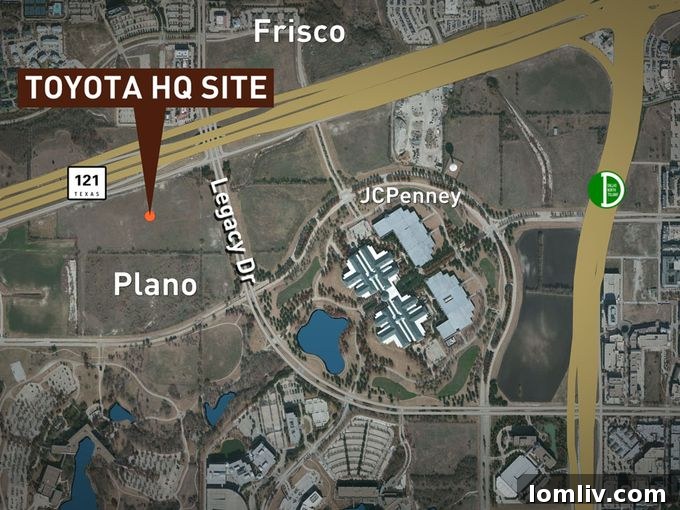
The Toyota campus isn’t an isolated development; it is an integral, flagship component of Plano’s thriving Legacy Business Park area. This dynamic corporate ecosystem has long been recognized as a premier destination for leading companies, already boasting over 100 established businesses that collectively employ nearly 100,000 people. The park’s strategic location, modern infrastructure, and robust talent pool make it an ideal environment for corporate synergy and growth. Toyota’s arrival further solidifies Legacy Business Park’s reputation as one of the most significant economic engines in the entire Dallas-Fort Worth Metroplex, attracting even more investment and talent to the region.
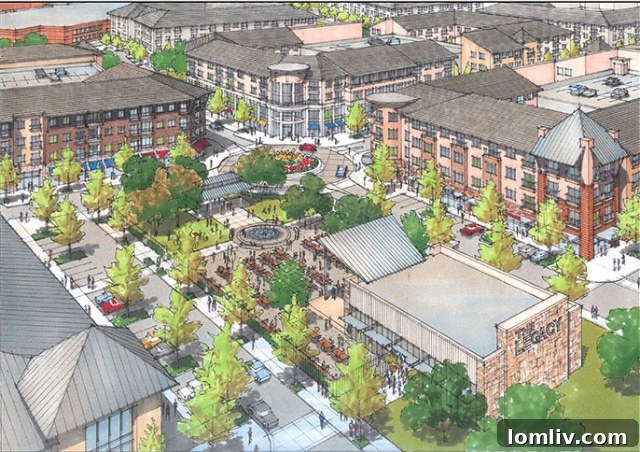
Complementing Toyota’s monumental move is the ambitious Legacy West project, a visionary mixed-use development spearheaded by Shops at Legacy developer Fehmi Karahan, in collaboration with KDC and Columbus Realty. Commencing work a year prior to the Toyota groundbreaking, this 240-acre master-planned community is strategically situated at the critical intersection of the Dallas North Tollway and State Highway 121, just southwest of the Toyota campus. Legacy West is designed to create a vibrant “live, work, play” environment, offering a harmonious blend of ultra-modern corporate office space, high-end retail establishments, a luxurious hotel, and sophisticated urban apartments. This holistic approach ensures that the area can cater to every facet of the incoming workforce’s lifestyle, from professional needs to leisure and residential desires. Adding to its impressive roster, the area will also serve as the new home for the 265,000-square-foot headquarters of FedEx Office, with construction slated to begin imminently. The collective impact of Toyota’s HQ, FedEx Office, and the broader Legacy West development is transforming this corner of Plano into a bustling, self-sustaining urban center within the suburban landscape, setting a new benchmark for corporate relocation and integrated community development.