Architect Tom Kundig: Blending Raw Materials with Revolutionary Design
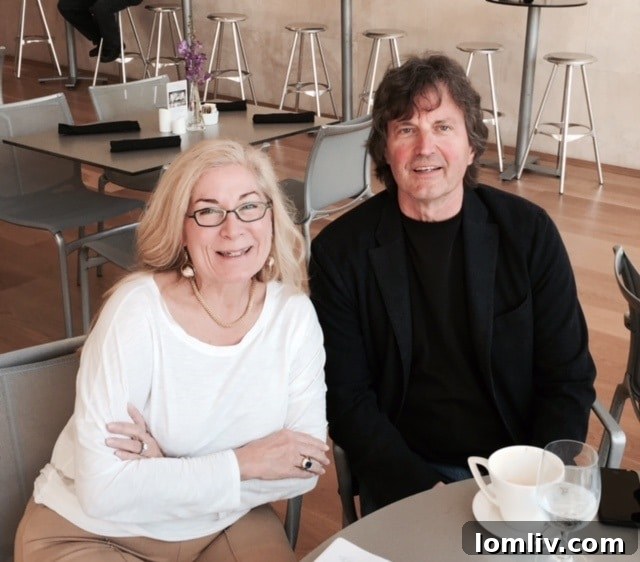
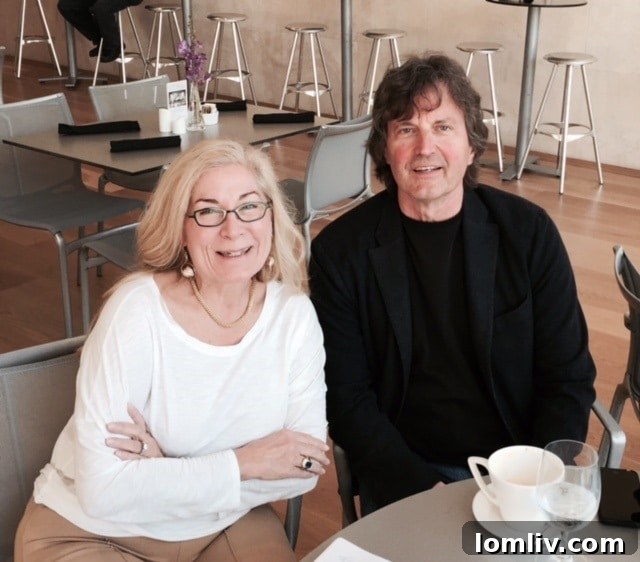
Renowned architect Tom Kundig, a name synonymous with innovative and groundbreaking design, recently captivated an audience of over 400 people at the City Performance Hall in Dallas. Hosted by the Dallas Architecture Forum, Kundig’s presentation offered a deep dive into his unique approach to architecture, revealing the philosophy behind some of the most talked-about structures of our time.
As a principal at the acclaimed Seattle-based Olson Kundig Architects, Kundig has garnered a massive international following. His distinctive style transcends conventional architectural norms, transforming robust materials like concrete and steel, often integrated with mechanical elements such as cranks and pulleys, into exquisitely livable spaces. Many of his designs appear to emerge organically from their natural surroundings, blurring the lines between built environment and untouched landscape. It’s no wonder he consistently tops the lists of the world’s most sought-after architects for bespoke primary, secondary, and subsequent residences.
The Philosophy Behind the Form: Provocative Architecture
Kundig’s architectural vision draws inspiration from a diverse palette. He shares an affinity for bare concrete, reminiscent of Louis Kahn, yet injects a fervent passion for raw steel, sometimes even embracing the aesthetic of rusty metal. His designs frequently incorporate what he terms the “seven simple machines” on an almost full scale, creating dynamic and interactive elements within his buildings. This deliberate balance between refinement and rawness, Kundig explains, is deeply influenced by his upbringing in the Pacific Northwest, particularly the region’s strong ties to the aircraft industry and steel fabrication. The design and mechanics of automobiles also left a tremendous mark on the 60-year-old baby boomer, whose Swiss parents instilled a profound appreciation for design, his father being an architect himself.
“Architecture is supposed to be provocative,” Kundig stated during his address, emphasizing his belief that buildings should “poke society” and challenge perceptions. His innate curiosity has always gravitated towards moving parts and mechanisms, from the intricate machinery of logging operations to the everyday machines that enhance living. He challenges the notion that machines are inherently inhuman, asking, “Why can’t a building change depending on the mood or circumstances?” This ethos is evident in his designs, where walls pivot, windows retract, and facades transform, allowing structures to adapt fluidly to their environment and the desires of their occupants.
Crafting Luxury for Global Visionaries
Kundig’s creations stand in stark contrast to the often austere, white-box aesthetic typically associated with modern architecture. His designs are vibrant, tactile, and deeply integrated with their sites. He designs for some of the world’s most influential figures, including titans of the tech and Wall Street industries, though strict non-disclosure agreements (NDAs) prevent him from revealing specific names. He notes that media moguls, with their intense desire for ultimate privacy, are often his most demanding clients. While he never had the opportunity to work with Steve Jobs, he has connections to those who did. It’s a compelling thought to consider if his innovative touch has extended to homes for figures like Bill and Melinda Gates.
Intriguingly, Kundig is currently engaged in a significant project right in Dallas, a detail he shared with a whisper, hinting at exciting developments for the local architectural landscape.
A Legacy of Awards and Enduring Influence
Over the past five years, Kundig’s architectural practice has flourished, marked by a continuous stream of commissioned projects and prestigious accolades. Among his notable recognitions are the 2008 Cooper-Hewitt National Design Award for Architecture Design, a testament to his innovative contributions to the field. In 2007, the American Academy of Arts and Letters honored him with an Academy Award in Architecture, further cementing his status as a leading figure in contemporary design.
His published work, particularly Tom Kundig: Houses 2, offers an intimate look into seventeen residential projects. This collection spans an impressive range, from a modest five hundred-square-foot cabin nestled deep in the woods to a grand residence meticulously carved into and built directly out of solid rock. In these works, Kundig consistently achieves his signature balance—juxtaposing rawness with refinement, and modernity with warmth. The result is a series of inviting spaces, each imbued with a profound sense of place. These homes seamlessly integrate his inventive detailing, rich material palettes, and stunning site considerations, whether set amidst the majestic forests of the Northwestern wilderness or within the severe beauty of the high desert landscapes.
Iconic Projects: A Glimpse into Kundig’s Portfolio
Let’s explore some of Tom Kundig’s most celebrated projects, each a masterclass in responsive and sculptural architecture:
Chicken Point Cabin (2002)
Located on Lake Hayden in Coeur D’Alene, Idaho, the Chicken Point Cabin is renowned for its remarkable operable wall of windows. This massive, hinged glass panel can be cranked open, transforming the entire living space into an open-air pavilion that seamlessly connects with the stunning natural site. The cabin features rustic yet refined materials and unique details, such as a striking steel fireplace crafted from a recycled section of an Alaskan oil pipeline. This project beautifully exemplifies Kundig’s ability to inject industrial elements with warmth and sophistication.
Hammer House (2009)
The Hammer House in Madrona, Seattle, built in 2009, showcases Kundig’s innovative use of structure and transparency. An exterior load-bearing wall, composed entirely of windows set within a robust steel structural frame, allows for an uninterrupted connection to the exterior. As Kundig’s firm describes, this design “frees the interior from the need for load-bearing walls, which maintains continuous access to the view within the space.” The house opens up in multiple directions, boasting a walled garden to the East and two decks to the West. Hanging steel stairs, suspended between the North wall and a steel plate, further enhance this profound sense of transparency and lightness. Dallas home builder Joe Kain recently presented a home featuring a similar hot-oiled metal fireplace, hinting at the growing influence of Kundig’s industrial-chic aesthetic.
A load-bearing exterior wall comprised of windows set into a steel structural frame “frees the interior from the need for load-bearing walls, which maintains continuous access to the view within the space,” according to a writeup by Kundig’s firm. “The house opens up in multiple ways and directions, with a walled garden to the East and two decks to the West. Hanging steel stairs, suspended between the North wall and a steel plate, enhance this sense of transparency.”
Studio House (1998)
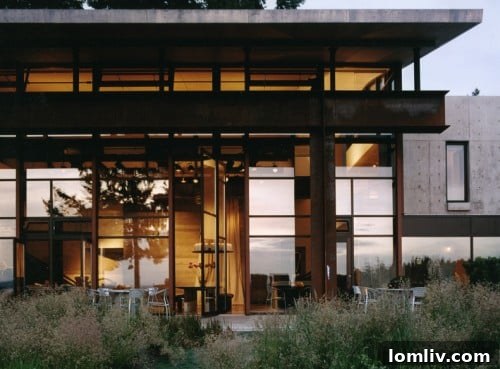
The Studio House in Seattle, Washington, designed around 1998, serves as both a private residence and a functional photo studio. It features a striking tessellated glass facade, complemented by rusted steel support beams and raw concrete interior walls. The impressive great room is equipped with studio-grade ceiling lighting, illustrating Kundig’s commitment to both aesthetics and utility.
Tye River Cabin (2006)
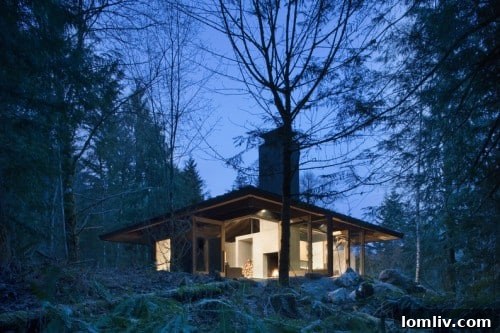
The Tye River Cabin, located in Skykomish, Washington, circa 2006, is a testament to Kundig’s philosophy on smaller, more integrated living spaces. Described as “essentially a wooden tent on a platform that opens to the forest and river,” this compact 600-square-foot cabin embodies his belief in the power of smaller homes. Like much of his work, it encourages an deep connection with nature through rotating glass panels, allowing entire walls of the structure to open up. “The stuff I’ve been doing is not about the center,” Kundig remarked, suggesting a focus on the periphery and the integration with the natural world rather than internal grandiosity.
The Pierre (2010)
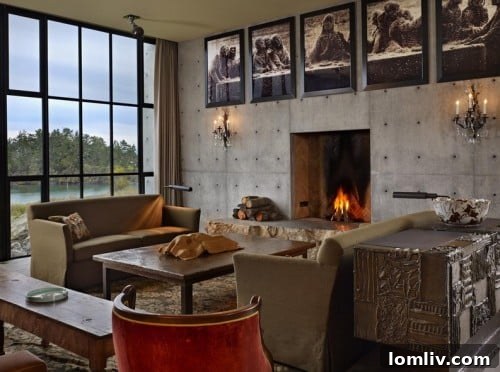
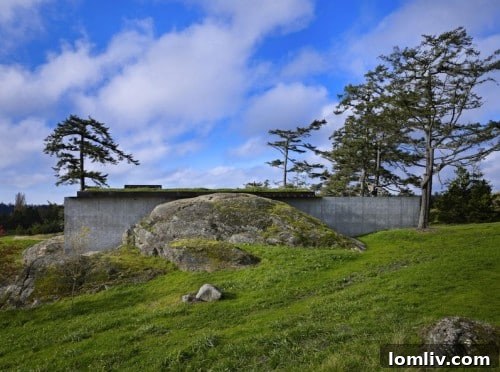
A masterclass in integrating architecture with its surrounding topography, The Pierre is a 2010 design located in the San Juan Islands, Washington. Kundig conceived a low-profile residence with a green roof and concrete exterior walls that artfully blend with the nearby stone formations. The house features his trademark steel windows, strategically placed to frame and maximize the breathtaking water views, further cementing the structure’s seamless connection to its dramatic site.
Shadowboxx (Location not specified, likely San Juan Islands)
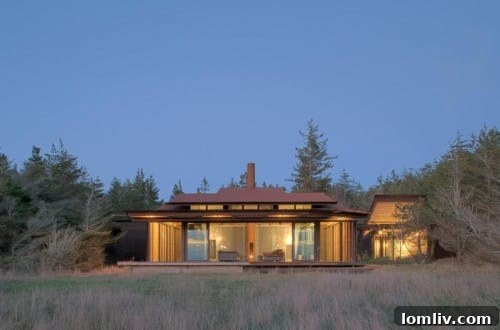
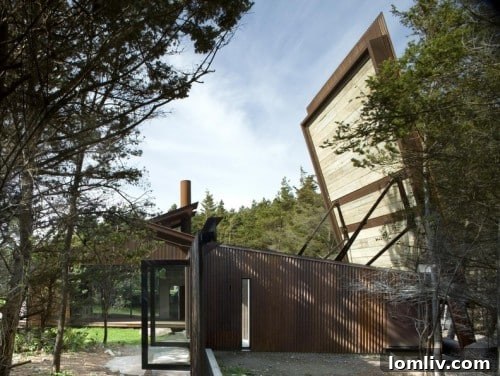
The Shadowboxx, a project by Kundig on the San Juan Islands, expertly combines a conventional structural profile with dramatically oversized portals. The front windows, for instance, can be entirely concealed by a series of floor-to-ceiling corrugated doors, offering robust protection from the elements while maintaining a sense of controlled openness. A whimsical “bath house” wing adds another layer of innovation, featuring a roof that pivots upwards to allow for an exhilarating open-air bathing experience. These elements exemplify Kundig’s playful yet highly functional approach to design.
Insights into Modern Residential Trends: Kundig’s Perspective
During his talk, Kundig offered invaluable insights into the evolving landscape of residential architectural design. He noted a significant shift, with clients increasingly desiring smaller spaces but demanding higher quality. “They want homes smaller but quality higher, much like a boat,” Tom explained, highlighting a preference for structures that are “neat and tidy.”
The Paradox of Size and Quality
When pressed on the definition of “quality,” Kundig elaborated, citing the highest-grade materials for flooring, walls, and meticulous attention to detail in elements such as the mechanism and feel of door handles, fixtures, and steel windows. This focus on tactile and enduring quality is paramount. He observed that clients no longer want merely “low maintenance” homes, but rather “ZERO maintenance,” a desire that profoundly influences material selection and construction techniques.
Sustainable Living and Evolving Room Functions
This trend towards downsizing is intrinsically linked to a broader embrace of energy-smart homes. Clients are increasingly aware of energy costs and environmental footprints, seeking designs that are both efficient and responsible.
Kundig also detailed how the function and scale of various rooms are transforming:
- Wine or Bourbon Cellars: Unless a client is a serious investor-collector, these spaces are shrinking. “We are asking people for the number of bottles they have and their consumption,” Kundig revealed, emphasizing practicality over grandeur. “You can always buy wine.”
- Media Rooms: Their standalone value is diminishing, unless the client is a film director or actor. The television now typically resides in the family room, becoming a central point for shared movie experiences.
- Master Bedrooms: These are also becoming smaller, as the need for separate conversation or sitting areas within the bedroom decreases.
- Kitchens: Despite the trend towards smaller overall footprints, kitchens remain large. However, their primary function has shifted. “That is where the food is delivered,” Kundig quipped, noting that “the big kitchen is more for gathering.” While often equipped with high-end appliances, they are frequently used more for social interaction than elaborate cooking.
- Family Rooms: These are almost universally attached to kitchens, reflecting a broader trend towards open-plan living. In places like Los Angeles, formal living and dining rooms are still occasionally requested, but the dominant preference, particularly on the West Coast, is for a single, expansive living/dining/kitchen area.
- Butler’s Pantries: With open-concept kitchens, a functional butler’s pantry located behind the main kitchen has become highly popular. This space allows for discreet food preparation, storage, and cleanup, keeping the primary kitchen immaculate for guests.
- Closets and Dressing Rooms: In high-end homes, closets have evolved into elaborate dressing rooms or “salons,” reminiscent of boutique shops. Despite the overall push for smaller homes, clients still desire generously sized closets.
- Master Bathrooms: While master bedrooms shrink, the master bath continues to be designed as a significant spa-like retreat, prioritizing relaxation and luxury.
The Transformed Garage: More Than Just Parking
Perhaps the most interesting transformation Kundig noted is that of the garage. On the West Coast, it is becoming standard practice to outfit all garages with 220-volt circuits for electric vehicles. Beyond car charging, clients are dedicating a space roughly the size of one garage stall to a “big toy box,” an almost extended mudroom where not only toys and bikes are stored, but also fishing rods, ski equipment, and other sporting gear. “If the master closets have become mini boutique stores, the garage has become a mini sport store,” Kundig observed. Thus, a four-car garage might see one stall entirely insulated and dedicated to this “sport store” function. This trend reflects the active lifestyles of West Coasters and presents an interesting design consideration for vacation homes, even in Texas.
Tom Kundig’s Optimistic Outlook on Texas
Kundig expressed a notably bullish sentiment regarding Texas. He shared with the Dallas Architecture Forum his appreciation for the state’s refreshing attitude, particularly its enduring embrace of hard work and risk-taking. “In California all these people and forces are influencing projects,” he noted, contrasting it with Texas’s environment. “Texas embraces the weirdos and risk takers with a political freedom philosophy much like I felt in Alaska.”
He particularly admires the vibrant culture in Dallas, the iconic Kimbell Art Museum in Fort Worth, and finds Texas to be one of the most optimistic, supportive, and curious places he has worked. “The support for architecture and the architectural community here is not typical in most states,” he conveyed. “I love a culture that allows exploration and risk-taking. California used to be like that.” He also commended Dallas, and cities like San Antonio, for finally recognizing and embracing their river systems. “I spent time downtown with Joe Hines,” he shared, “and there is a river in Dallas!” This newfound appreciation for natural urban elements is a trend Kundig finds particularly promising for the future of Texas architecture.