The iconic Dallas skyline, graced for decades by I.M. Pei’s Fountain Place tower, is witnessing a monumental transformation. With construction cranes now receding from the Fountain Place plaza, AMLI Fountain Place stands on the cusp of completion, finally bringing to life a vision nearly three decades in the making. This stunning new high-rise marks the long-anticipated companion building that legendary architect Henry N. Cobb always intended for this prominent downtown Dallas site. While not an exact replica, this modern residential tower pays profound homage to its predecessor, enriching the urban landscape and redefining luxury living in the heart of the city.
Cobb’s original master plan for Fountain Place envisioned a pair of identical towers, precisely rotated 90 degrees from each other, creating a striking architectural dialogue. However, the urban fabric of Dallas has evolved dramatically since the 1980s. The city’s core, once a bustling commercial hub, has blossomed into a vibrant residential neighborhood. This shift necessitated a re-evaluation of the original concept, leading to the creation of AMLI Fountain Place – a building that, while honoring its heritage, carves out its own distinct identity as a premier residential destination.
AMLI Fountain Place: A Fraternal Twin Emerges in Downtown Dallas
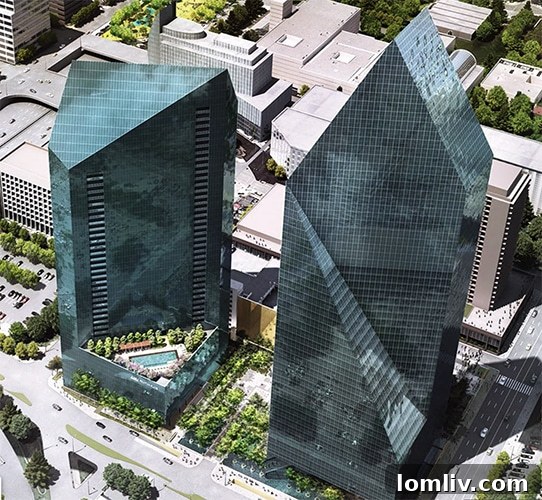
Instead of an exact clone, AMLI Fountain Place is best described as a fraternal twin to the original Fountain Place tower. Cobb’s initial design called for two identical towers, a symmetry that would have been breathtaking. The new addition, however, presents its own distinct design while meticulously paying tribute to its predecessor. One of the most noticeable differences lies in its stature: at 45 stories, this elegant, blunt-topped residential tower stands gracefully below Fountain Place’s commanding 60 stories. This deliberate height distinction, combined with echoes of the distinct late-modernist lines of the original, allows the new building to complement rather than merely copy Cobb’s groundbreaking design. It achieves a remarkable balance, appearing similar enough to belong, yet managing to be refreshingly unique and non-derivative.
The visual continuity between the two structures is powerfully established through the shared architectural language, most notably the use of the same striking green glass exterior. This choice instantly unites them, creating a harmonious pair on the Dallas skyline. They stand side by side, distinct yet undeniably related, embodying the concept of architectural siblings. This thoughtful design approach ensures that AMLI Fountain Place not only fulfills its residential purpose but also enhances the legacy of one of Dallas’s most recognizable architectural landmarks. The integration of modern residential needs with a nod to historical architectural intent makes AMLI Fountain Place a pivotal development in downtown Dallas, appealing to those seeking luxury high-rise living.
Architectural Dialogue: Form Meets Function in a Changing City

While the exterior of AMLI Fountain Place clearly articulates a connection to its famous sibling, it is the interior and its fundamental purpose that truly set the two buildings apart. When Henry N. Cobb conceived Fountain Place, he could scarcely have envisioned the downtown Dallas of today. A dramatic transformation has occurred, with the city’s core evolving from a predominantly commercial district to a vibrant, sought-after residential hub now home to over 70,000 residents. This profound demographic shift created an undeniable demand for urban living spaces, making the development of a 367-unit luxury residential community in Fountain Place Plaza not just desirable, but essential.
The decision to build a residential tower rather than another commercial high-rise was a strategic one, aligning perfectly with the evolving needs of downtown Dallas and the interests of the property owners. A competing commercial building would have run contrary to the contemporary market demands, whereas a luxury residential building like AMLI Fountain Place perfectly addresses the burgeoning desire for sophisticated urban living. This adaptability in planning underscores the dynamic nature of urban development and highlights how modern architecture can respond to the changing heartbeat of a city, ensuring vitality and relevance for decades to come. AMLI Fountain Place represents this crucial pivot, solidifying downtown Dallas’s status as a complete live-work-play environment.
Telling a ‘Residential Story’ Through Inspired Design
The fundamental shift in the building’s purpose – from potential commercial space to a luxury residential community – profoundly informed the design of this significant addition to downtown Dallas. The architects at Page, the esteemed architecture firm responsible for both the building’s exterior and its luxurious interiors, embraced this challenge with a clear vision. Wendy Dunnam Tita, FAIA, IIDA, LEED AP, Principal and Interior Architecture Director at Page, articulated their goal as telling a “residential story” through every design element. Their approach was to create an environment that exuded warmth, comfort, and hospitality, a stark contrast to the often-austere feel of traditional office spaces.

This residential narrative is palpable throughout AMLI Fountain Place. Carefully selected materials play a crucial role in achieving this inviting ambiance. Warm woods provide an earthy contrast to the building’s cool green glass curtain wall, while shimmering gold tiles and rich amber glass accents introduce elements of luxury and sophistication. The inclusion of private balconies for residents further enhances the hospitable feeling, offering personal outdoor retreats with breathtaking city views. Even the lushness of the landscaping surrounding the building and within the common areas is meticulously designed to signify a residential component, enveloping the structure in a welcoming, verdant embrace.
Tita eloquently summarized their design philosophy: “We wanted the design to say, ‘This is a residential building.’ We knew we were creating something that wouldn’t take away, but that would add to the skyline, and that illustrated that people inhabited it. Not an office building posing as a residential building.” This commitment to authentic residential design ensures that AMLI Fountain Place stands as a true home, a sanctuary of luxury living in the urban core, distinct in its purpose and appeal from its commercial counterpart.
Reflectivity, Light, and Unparalleled Views: The Essence of Luxury Interiors
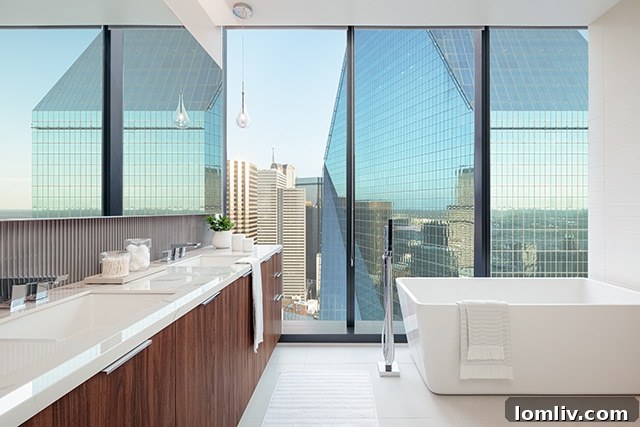
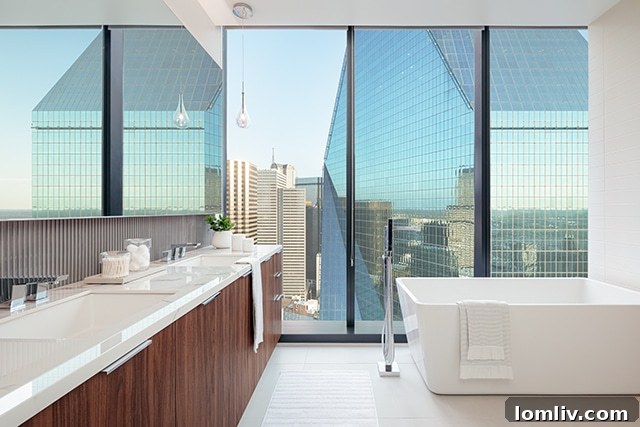
The meticulous attention to detail and the overarching residential narrative continue seamlessly into the luxury units themselves. Every design element within these sophisticated apartments is carefully curated to maximize the building’s most striking feature: its expansive glass exterior. As Wendy Dunnam Tita highlighted, “It will be one of the wonderful moments for the residents to have that floor-to-ceiling glass.” This architectural choice not only offers incomparable, panoramic views of the Dallas skyline and beyond but also floods each residence with abundant natural light, creating bright and airy living spaces.

Interior material selections further amplify this focus on light and reflectivity. For instance, the cabinets within the kitchens and other areas feature a glossy, reflective gray finish. These surfaces are strategically chosen to “almost disappear,” serving a dual purpose: they create a sleek, contemporary aesthetic while also reflecting and diffusing natural light throughout the units. This thoughtful integration of design elements ensures that light and reflectivity are not just incidental features, but fundamental components of the living experience, enhancing the sense of spaciousness and luxury. From custom wallcoverings to high-end plumbing fixtures and bespoke millwork, every aspect contributes to an elevated residential experience, setting a new benchmark for downtown Dallas luxury apartments.
As important as the carefully selected materials and finishes was the profound sense of responsibility and stewardship felt by the entire project team towards honoring the intentions of I.M. Pei’s original Fountain Place. This guiding principle underscored every decision, ensuring that the new tower would not only be a spectacular addition but also a respectful companion to an architectural icon. Tita shared her reflections on the new tower’s reception: “We’ve been cautiously pleased and humbled. We expected a lot of scrutiny. People have been kind to understand the challenges and appreciative of the gestures made in the new building.” This acknowledgment speaks volumes about the successful integration of a modern residential structure into a historically significant urban context, creating a harmonious and vibrant living experience that stands as a testament to thoughtful, forward-thinking architectural design. AMLI Fountain Place is more than just a building; it’s a testament to Dallas’s growth and its future as a premier destination for urban luxury living.