Embrace the Expanse: The Growing Allure of Tiny Houses on Big Land
In today’s fast-paced world, an increasing number of individuals and families are rethinking their priorities when it comes to homeownership. The traditional desire for sprawling mansions with countless rooms is steadily being replaced by a more considered, purposeful approach. This shift is beautifully encapsulated by a frequent request real estate expert Kathryn Roan observes from her discerning clients:
“Searching for property, the land is way more important than the house, and I’m repeatedly asked by clients to find them a “tiny house on a big piece of land.” And, quite frankly, we do not want to clean (or pay for) rooms we just will not use.”
This sentiment resonates deeply with a burgeoning movement towards intentional living, where quality of life, connection to nature, and financial prudence take precedence over square footage. The vision of a modest, efficient dwelling nestled within a vast, private landscape is no longer a niche fantasy but a tangible and highly sought-after reality for many.
The Philosophy Behind Prioritizing Land Over Lavishness
The quest for a “tiny house on a big piece of land” is driven by a multifaceted philosophy that challenges conventional notions of luxury and comfort. It’s a strategic choice rooted in practicality, lifestyle aspirations, and long-term vision. Here’s why this trend continues to gain momentum:
Financial Savvy and Reduced Overhead
- Lower Property Taxes: While land can be valuable, a smaller structure generally translates to a lower assessed home value, leading to reduced annual property tax burdens.
- Minimized Maintenance Costs: Fewer rooms mean less to clean, repair, and maintain. This frees up valuable time and money that would otherwise be spent on upkeep.
- Reduced Utility Bills: A smaller footprint requires less energy to heat, cool, and light, contributing to significant savings on electricity, gas, and water over time.
- Opportunity for Self-Sufficiency: Larger land parcels offer the potential for gardening, raising small livestock, or installing renewable energy sources, further decreasing living expenses and fostering independence.
A Lifestyle Centered on Experience, Not Consumption
- Enhanced Privacy and Seclusion: A vast expanse of land provides an unparalleled sense of privacy, creating a personal sanctuary away from the hustle and bustle of neighbors and city life.
- Unrestricted Outdoor Living: From gardening and farming to hiking, horseback riding, and simply enjoying nature, ample land offers limitless opportunities for outdoor recreation and hobbies right outside your door.
- Connection to Nature: Living amidst a natural landscape fosters a deeper connection to the environment, promoting well-being, tranquility, and a slower pace of life.
- Flexibility for Future Growth: While the current house may be tiny, a large plot of land offers flexibility for future expansion, adding outbuildings, or even building a second, larger home down the line if circumstances change.
Sustainable Living and Minimalist Values
- Reduced Environmental Footprint: Opting for a smaller home lessens resource consumption during construction and throughout its lifespan, aligning with eco-conscious values.
- Decluttering and Intentional Space: A tiny house encourages a minimalist lifestyle, prompting residents to curate their possessions and make intentional choices about what truly adds value to their lives.
- Focus on Quality Over Quantity: Without the need to fill numerous rooms, homeowners can invest in higher-quality, durable furnishings and finishes that truly enhance their living experience.
The Dogtrot Design: A Modern Homage to Ranch Living
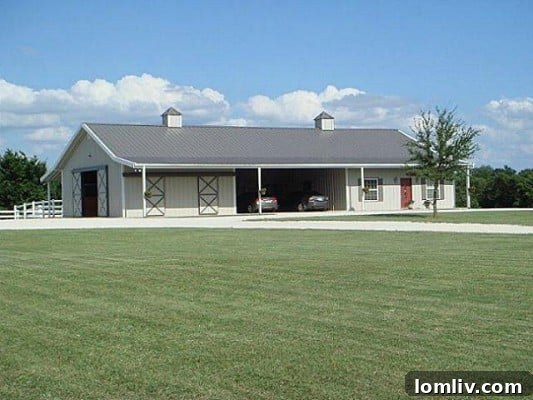
The logic behind prioritizing land and functional design is vividly demonstrated in modern architectural interpretations that seamlessly blend tradition with contemporary needs. Take, for instance, a truly innovative and modern take on the classic dogtrot house, as highlighted by SecondShelters.com. This design is a masterclass in thoughtful space utilization and integration with the surrounding environment, particularly appealing to those with an equestrian passion.
Understanding the Dogtrot Heritage
Historically, the dogtrot house was a popular design in the American South, characterized by two log cabins or rooms connected by a central, open breezeway, or “dogtrot.” This breezeway served as a shaded, naturally ventilated space for relaxation, working, and as a cooling passage for people and animals alike. Its ingenious design allowed for passive cooling in hot climates, creating a comfortable living environment long before air conditioning became commonplace.
A Contemporary Equestrian Dream
The modern iteration referenced offers a sophisticated evolution of this concept, perfectly tailored for the horse lover. Here, the traditional open breezeway is reimagined as a functional separator and connector:
- Distinct Separation of Spaces: The design intelligently places the main living quarters on one side and dedicated horse stalls with an attached run on the other. This thoughtful separation ensures that the main house remains pristine and serene, while the equestrian facilities are easily accessible and integrated without compromising cleanliness or residential comfort.
- Covered Parking as a Central Hub: Rather than an open breezeway, a covered parking area likely serves as the central linking element. This not only provides shelter for vehicles but also creates a protected transition zone between daily living and barn activities. It could potentially serve as a versatile outdoor living space, an area for tack, or even an alfresco dining spot, blending functionality with aesthetic appeal.
- Unparalleled Convenience for Horse Enthusiasts: For those who cherish their equine companions, this design is nothing short of a dream. Being able to step out of your home and directly into your horse’s environment, with attached runs allowing them freedom, epitomizes convenience and connection. It eliminates long commutes to stables, offering more quality time with horses and simplifying daily care routines.
- Harmonious Integration with Nature: This layout naturally encourages an indoor-outdoor lifestyle. The architectural design likely features elements that maximize natural light and ventilation, blurring the lines between the built environment and the expansive natural landscape.
This intelligent design proves that a smaller main residence doesn’t mean sacrificing luxury or functionality. Instead, it allows for a focused investment in the elements that truly matter to the homeowner’s lifestyle – in this case, a deep connection to their horses and the surrounding land.
Your Gateway to Exceptional Second Homes and Ranch Living
The demand for properties that offer a blend of simplicity, privacy, and passion is ever-increasing. Whether you’re drawn to the minimalist charm of a tiny house, the expansive freedom of a large ranch, or the specialized appeal of equestrian facilities, the market is evolving to meet these unique desires.
For those inspired by this vision of intentional living and integrated ranch design, exploring curated collections of properties is the next step. Discover more about this featured ranch and an array of other fabulous second homes that perfectly embody this philosophy by visiting SecondShelters.com. Your ideal sanctuary, where the land speaks louder than the walls, awaits.