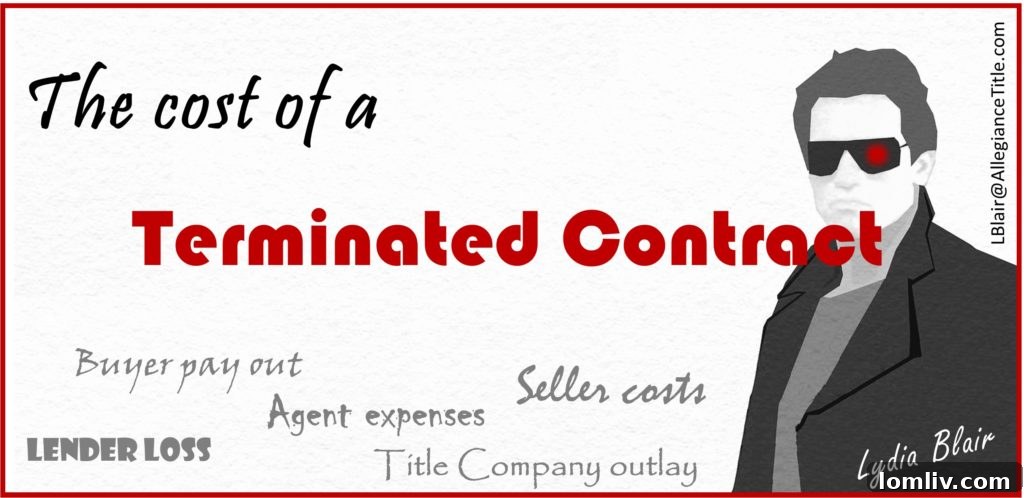
In the dynamic world of real estate, the journey from an initial offer to a successful closing is often intricate and full of potential twists. While every buyer and seller hopes for a smooth transaction, the reality is that contracts can, and sometimes do, terminate before completion. A terminated real estate contract is far more than just a deal falling through; it’s a complex event that can ripple through multiple parties, leaving a trail of financial losses, wasted time, and emotional frustration. Understanding the comprehensive costs and impacts associated with a cancelled home sale is crucial for anyone involved in a property transaction. Before uttering “Hasta la vista, baby” to a pending deal, it’s wise to consider the significant repercussions for everyone invested.
The Buyers: Understanding the Tangible and Intangible Costs of a Failed Home Purchase
For prospective homeowners, the cancellation of a real estate contract can be a particularly disheartening experience, often accompanied by substantial financial setbacks and emotional distress. Depending on how far the transaction has progressed, buyers typically incur a range of expenses that are difficult, if not impossible, to recoup.
One of the initial out-of-pocket expenses is often a non-refundable option fee paid directly to the seller. This fee grants the buyer the exclusive right to purchase the property within a specified period and often covers the seller’s inconvenience of taking the property off the market for a short while. Once paid, this fee is typically forfeited if the buyer backs out for reasons not protected by specific contingencies.
Another significant cost for buyers involves various property inspections. To ensure the home is structurally sound and free from major defects, buyers often invest in a general home inspection, pest inspection, radon testing, and potentially specialized inspections for plumbing, HVAC, or structural integrity. These inspections are vital for due diligence but can easily accumulate to several hundred or even a thousand dollars, all of which are usually paid upfront to independent contractors and are non-refundable regardless of the contract’s fate.
Furthermore, lenders typically require an appraisal of the property to ensure its value supports the loan amount. The appraisal fee, also paid by the buyer, covers the cost of a professional assessment of the home’s market value. If the contract terminates, this appraisal fee is almost certainly lost.
The process of securing financing also brings its own set of expenses. Loan application fees, including charges for credit reports and initial processing, are common. While some lenders may waive certain upfront fees, many still charge for the essential services required to qualify a buyer for a mortgage. These costs, though sometimes minor individually, contribute to the growing pile of unrecoverable expenses.
Perhaps one of the largest financial stakes for buyers is the earnest money deposit. This deposit, often a significant percentage of the purchase price, is placed in an escrow account with a title company or attorney as a show of good faith. The fate of earnest money upon contract termination is highly dependent on the terms of the specific contract and the reasons for its cancellation. If the buyer defaults on the contract without a valid contingency, the earnest money is typically forfeited to the seller as liquidated damages. However, if the contract is terminated due to the seller’s breach, or if a contingency (such as an unsatisfactory inspection report or a low appraisal) is not met and the buyer properly exercises their right to terminate, the earnest money may be returned to the buyer. Navigating the return or forfeiture of earnest money can be a complex legal issue, often requiring careful review of contractual clauses.
Beyond the monetary losses, buyers also endure significant intangible costs: the immense time investment spent researching properties, attending showings, negotiating offers, and coordinating various appointments. There’s also the profound emotional toll of dashed hopes, stress, and the disappointment of losing what they envisioned as their future home, potentially having to restart the entire arduous home search process from scratch.
The Sellers: Quantifying the Hidden and Obvious Losses in a Cancelled Sale
While the buyer’s losses in a terminated contract are often tangible and immediate, the costs to the seller can be more insidious, extending beyond mere dollars and cents to include lost opportunities and market positioning. For sellers, a contract termination can be a profoundly disruptive and expensive setback.
The most challenging cost to measure is often the lost opportunity. When a property goes under contract, it is typically removed from active market listings. This means that for the entire duration the property was under contract, the seller missed out on other potential buyers who might have made equally good or even better offers. In a fast-moving market, this could mean losing out on a higher price or a more favorable closing timeline. If market conditions shift during the contract period—interest rates rise, buyer demand cools—the seller might find themselves relisting their property in a less advantageous environment, potentially leading to a lower eventual sale price.
Furthermore, the fact that a previous contract fell through can sometimes carry a stigma. Future buyers and their agents may question why the deal failed, leading to increased scrutiny, tougher negotiations, or even hesitation to make an offer. The listing agent then faces the delicate task of explaining the situation without divulging confidential information or creating further impediments to a future sale.
More tangible financial losses for sellers can include specific expenses incurred during the aborted transaction. For instance, if the property is part of a homeowner’s association (HOA), sellers often pay for HOA documents, such as disclosures, bylaws, and financial statements, which are required for the transaction. These fees are typically non-refundable once the documents are ordered.
Additionally, sellers may have made repairs or improvements specifically at the request of the previous buyer, perhaps as a condition of their inspection contingency. These repairs, ranging from minor fixes to more substantial renovations, represent direct financial outlay that may not necessarily benefit a future buyer or contribute to the property’s market value in the same way, becoming a sunk cost.
Beyond direct property-related expenses, sellers often undertake significant personal and logistical preparations for a move. This can include early packing expenses, hiring or consulting with moving companies, ordering temporary storage, or even incurring costs for professional cleaning services to prepare the home for new occupants. These efforts involve both financial investment and considerable time and physical labor.
Perhaps most critically, many sellers are simultaneously contracted to buy another property. A terminated sale can create a catastrophic domino effect, jeopardizing their ability to close on their new home, potentially leading to penalties, loss of their own earnest money, or even the complete collapse of their onward purchase. The stress and uncertainty associated with these interlocking transactions can be immense, disrupting their entire life plan.
The Real Estate Agents: Uncompensated Labor and Marketing Investment
Real estate agents, both those representing the buyer and the seller, bear a substantial and often underestimated burden when a contract terminates. Their largest investment is almost always their unpaid time and expertise, as agents typically work on commission, meaning they only get paid upon the successful closing and funding of a transaction. A cancelled deal means countless hours of dedicated work go uncompensated.
For the listing agent, the work begins long before an offer is even received. This includes an extensive initial consultation, conducting a comparative market analysis (CMA) to price the property accurately, crafting a compelling listing agreement, and providing advice on staging and minor improvements. Significant upfront tasks also involve coordinating professional photography and virtual tours, measuring rooms, writing detailed property descriptions, and meticulously inputting all data into the Multiple Listing Service (MLS). This foundational work alone can span dozens of hours. Once listed, the agent dedicates time to marketing the property across various channels, both in the real world (open houses, print ads) and the virtual realm (social media campaigns, online portals).
The buyer’s agent also invests heavily in their client’s success. This involves extensive consultations to understand the buyer’s needs and preferences, diligent property searches, scheduling and accompanying clients on numerous showings, and navigating the complexities of offer submission and negotiation. They act as coordinators for inspections, appraisals, and lending processes, constantly communicating with all parties involved to keep the transaction on track. Each showing, each phone call, each email, and each piece of advice represents valuable time and expertise expended.
Furthermore, real estate agents often incur direct out-of-pocket expenses for marketing and advertising their listings. This can include professional photography fees, virtual staging subscriptions, online advertising boosts, print flyers, and even costs associated with open houses. These expenditures are made with the expectation of a successful sale and are typically not recoverable if the contract collapses.
Beyond the financial and time investments, agents also face the challenge of managing client expectations and emotions during a difficult situation. They must communicate the reasons for termination, strategize for the next steps, and maintain professionalism, all while knowing their hard work for that particular deal will go unrewarded. The impact on their pipeline, business efficiency, and even their reputation can be significant, highlighting the precarious nature of commission-based work.
The Title Agency: The Unseen Labor of Ensuring Clear Ownership
The title company plays a crucial, though often less visible, role in real estate transactions, and they too incur significant expenses when a contract terminates. From the moment they receive a new contract, the title agency initiates a complex process to ensure clear and marketable title, and their costs are typically not paid until the very end, at the closing and funding of the transaction.
The core of their work involves comprehensive processing costs, primarily focused on an exhaustive title search. This intricate investigation delves into a myriad of public records, including:
- Property Records: To establish a clear chain of ownership.
- Tax Records: To confirm all property taxes are current and identify any outstanding assessments.
- Deeds: Examining all previous conveyances to ensure proper transfer of ownership.
- Plats: Reviewing maps and land divisions to verify property boundaries and legal descriptions.
- Judgments: Searching for any court-ordered financial obligations against the seller or property.
- Liens: Identifying any claims against the property, such as mechanic’s liens, contractor liens, or child support liens.
- Court Records: Broader searches for any litigation affecting the property or parties involved.
This extensive research is vital to identify any encumbrances, defects, or clouds on the title that could jeopardize the buyer’s ownership rights. Each piece of this investigation requires skilled professionals and significant time.
In addition to their internal labor, title companies often incur fees from various outside sources to complete their due diligence. These third-party expenses can include:
- Obtaining a tax certificate from local government entities to officially verify tax status.
- Fees for attorney document preparation, particularly for complex cases or specific legal requirements.
- Costs for a survey, which physically defines property boundaries, identifies easements, and notes any encroachments.
- The process of obtaining accurate payoff amounts from existing mortgage lenders or lienholders, which requires coordination and verification.
All the hours spent diligently researching easements, restrictive covenants, potential unpaid taxes, special assessments, and other critical details represent lost revenue for the title agency if the contract ultimately terminates. They have performed essential services aimed at ensuring a legally sound transfer of property, but without a successful closing, they receive no compensation for their efforts, making contract terminations a direct financial drain on their operations.
The Lender: The Hidden Costs of Loan Origination
When a real estate contract terminates, the potential buyer’s lender also absorbs a range of costs and efforts that often go unrecovered. The process of originating a loan is complex and involves significant resources, all of which are expended with the expectation of a successful closing.
The initial phase of loan origination involves thoroughly researching and qualifying the buyer for a mortgage. This includes an in-depth review of their financial standing, employment history, and creditworthiness. Lenders dedicate substantial time to collecting and analyzing documentation such as income statements, bank records, and other financial disclosures to assess the borrower’s eligibility and risk profile.
Several specific costs are incurred early in the lending process:
- A credit report is pulled to evaluate the buyer’s credit history and score, a fundamental step in determining loan approval and interest rates.
- A flood determination is conducted to ascertain if the property is located in a designated flood zone, which dictates the necessity of flood insurance and compliance with federal regulations.
- As mentioned previously, an appraisal is ordered to independently verify the property’s market value, ensuring it provides adequate collateral for the loan. While the buyer typically pays this fee, the lender expends significant time coordinating it.
Beyond these direct, often visible costs, lenders also bear substantial internal underwriting costs. This involves the labor of loan officers, processors, and underwriters who meticulously review every aspect of the loan application, property details, and borrower’s qualifications to assess risk and ensure compliance with a myriad of banking regulations. This human capital and operational overhead are significant.
While some of these costs, like the appraisal and credit report, may be passed on to the client, depending on the lender’s policy and the specifics of the loan application, many of the internal processing and underwriting efforts are absorbed directly by the lending institution. If a contract terminates, the lender has invested considerable resources without generating any revenue from the loan’s interest or fees. This not only results in direct financial losses but also impacts their operational efficiency and resource allocation, as staff time could have been dedicated to other, potentially successful, loan applications.
Conclusion: The Far-Reaching Impact of a Terminated Real Estate Contract
The termination of a real estate contract is never a simple matter. It creates a complex web of financial, emotional, and logistical challenges that extend far beyond the immediate buyer and seller. From the out-of-pocket expenses for inspections, appraisals, and fees incurred by buyers, to the lost opportunities, tangible repairs, and moving preparations for sellers, the costs can quickly accumulate.
Real estate agents invest countless hours and personal funds into marketing and facilitating transactions, only to see their efforts uncompensated when a deal fails. Title companies perform essential, labor-intensive searches and incur third-party fees without payment, while lenders expend significant resources in the detailed process of loan origination and underwriting. Each party, driven by the common goal of a successful closing, contributes valuable time and money, making a contract termination a collective setback.
Understanding these far-reaching implications underscores the importance of careful due diligence, clear and comprehensive contractual agreements, and effective communication among all parties involved in a real estate transaction. While some terminations are unavoidable, a proactive approach, including thoroughly vetting all aspects of the deal and clearly defining contingencies, can help mitigate risks and protect the interests of everyone. Ultimately, a terminated contract serves as a stark reminder that in real estate, the adage holds true: nothing is final until the ink is dry and the keys are exchanged.
The opinions expressed are of the individual author for informational purposes only and not for legal advice. Contact an attorney for any particular issue or problem.