The Curious Case of Kathy Nealy’s Terrace House Condo and Entangled Finances
Exploring the financial downfall of a prominent political consultant amidst federal corruption allegations and a high-profile real estate foreclosure.
A Glimpse into High-Stakes Politics and Personal Financial Turmoil
Almost a year ago, the financial woes of Kathy Nealy, a prominent Dallas political consultant, made headlines. At the time, her attorney attributed her significant financial difficulties, including the impending loss of her luxurious Terrace House condo, directly to the FBI’s activities. Specifically, her legal team pointed to the 2011 raid on the office of Dallas County Commissioner John Wiley Price as the catalyst that “negatively impacted” Nealy’s ability to conduct her business, thereby leading to her considerable financial distress.
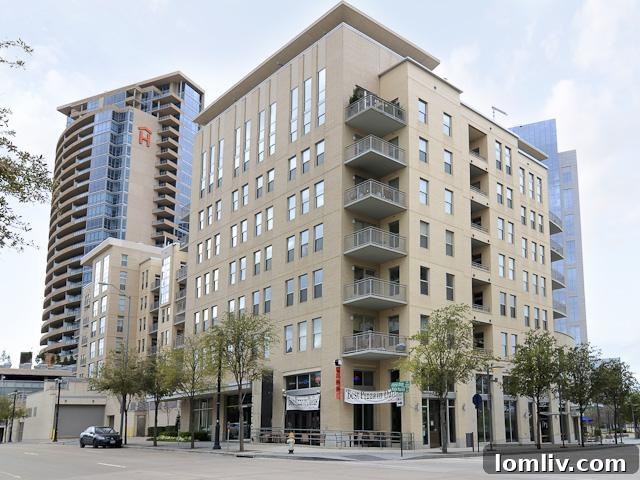
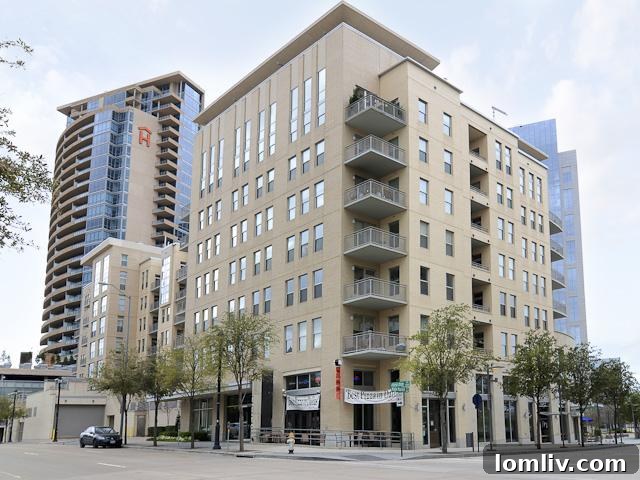
The property in question, unit 216 at 2323 North Houston in the esteemed Victory Park area of Dallas, was an upscale two-bedroom, two-bath condominium. In the wake of its tax foreclosure in August of the previous year, discussions around its market value were fervent. Commenters on early reports expressed skepticism regarding initial projections that the condo could fetch between $300,000 and $350,000. Many believed these figures were overly optimistic for a distressed property.
Despite the initial skepticism, the property’s journey through the market has indeed been protracted. As of the latest assessment, the unit had not yet found a buyer, underscoring the complexities and potential delays often associated with foreclosed properties, especially those entangled in high-profile legal sagas. Real estate analytics from Realist AVM placed the unit’s value in a broad range, somewhere between $242,865 and $396,253, reflecting the fluctuating nature of the market and the varied methods of appraisal. This wide valuation spectrum highlights the challenges in accurately pricing such assets, particularly when they are linked to ongoing legal controversies.

The Unraveling: Corruption Charges and a Consultant’s Downfall
The narrative surrounding Kathy Nealy took a dramatic turn when she was arrested on federal corruption charges. This significant development occurred on a Friday morning, placing her alongside John Wiley Price, her long-time political associate and a powerful Dallas County Commissioner. The arrests also included Dapheny Fain, Price’s chief of staff, and Christian Campbell, another consultant involved in their network. This unfolding scandal garnered national attention, with detailed reports appearing in esteemed publications such as The Washington Post and The New York Times, underscoring the gravity and widespread implications of the allegations.
It’s crucial to note the timeline: Nealy’s Victory Park condo was lost to foreclosure on August 6 of the preceding year, predating her arrest on corruption charges. While the slow sale of a foreclosed property isn’t entirely uncommon, especially when complex factors are at play, the subsequent charges undoubtedly added another layer of intricacy to her public and financial profile. Interestingly, despite the property’s stalled sale, the Dallas Central Appraisal District (DCAD) reported an increase in the unit’s assessed value, rising from $263,120 to $287,040, indicating some positive movement in its perceived market worth even amid the ongoing legal entanglements.
The initial defense for Nealy’s financial distress, as articulated by her attorney and reported by Robert Wilonsky of The Dallas News, centered on the FBI raid of John Wiley Price’s office in June 2011. Her attorney contended that this raid “negatively impacted” Nealy’s capacity to conduct business effectively, leading to her financial woes, including the tax foreclosure of her condo. Prior to this event, Nealy boasted an impressive roster of clients, including corporate giants like American Airlines, Hunt Oil, KB Homes, and Wal-Mart. Her political consulting work spanned high-profile campaigns, assisting Mike Rawlings in his mayoral bid, contributing to Bill Clinton’s presidential campaign, and supporting referendums for projects like the Cowboys Stadium and the American Airlines Center. A profile penned by Gromer Jeffers shortly after the raids highlighted her remarkable ascent, noting she “rose from being a struggling widow raising three children to one of the most sought-after consultants in Texas.”
Unmasking the Contradictions: Alleged Riches vs. Mounting Debts
The irony in Nealy’s situation became starkly apparent with the revelation of the federal corruption charges. The question naturally arose: how could a consultant, allegedly making substantial sums from illicit “deals” as claimed by federal authorities, concurrently face such profound financial instability that she couldn’t pay her taxes or retain ownership of her home? This apparent contradiction became a central point of public fascination and legal inquiry.
Further examination of her financial records unveiled a complex web of obligations. County records revealed that the Internal Revenue Service (IRS) had imposed a formidable tax lien on Nealy in November. This lien amounted to $256,711.34, a figure that represented a combination of unpaid taxes, penalties, and accrued interest. While the IRS typically maintains a policy of not commenting on individual cases, they clarified that it is possible for the actual tax amount to have been settled, leaving only penalties and interest as the outstanding balance. This figure, though substantial, marked a reduction from the $459,000 that federal authorities initially alleged she owed in July 2011, suggesting some payment or re-evaluation of her tax liabilities had occurred over time.
Adding to her financial burden, records from Realist indicated that Nealy had taken out a mortgage for $352,800 with Morgan Stanley Credit Corporation in December 2006. This significant mortgage underscored her substantial property investment. Beyond her residential property, Nealy also faced legal action concerning her commercial interests. Robert Wilonsky’s investigation uncovered a pending case involving Center Operating Company, the entity responsible for the ownership and management of the American Airlines Center. Center Operating had sued Nealy in Dallas County District Court, claiming an initial debt of $131,639.43. This amount was reportedly for a lower-level suite she had licensed at the venue in 2009. By November 2011, a motion for summary judgment increased this claim to over $187,000, compounded by an additional $62.45 for each day the case remained unresolved. A judgment was ultimately granted against her on December 20, 2011. Brian Vanderwoude, the attorney who managed the case, confirmed at the time that Center Operating’s policy prevented them from commenting on litigation involving suite-holders.
The juxtaposition of her alleged earnings from the federal “consulting deals” and her inability to service these fundamental debts – including taxes, mortgage, and commercial lease obligations – continues to pose a significant question mark. For many, it presents a perplexing scenario: how could someone with access to such lucrative opportunities fall into such profound financial disarray?
Property Comparison: Understanding Market Value
To provide a clearer perspective on the potential market value of Kathy Nealy’s foreclosed condo, it is beneficial to examine comparable properties within the same development. Consider a similar unit, unit 616, located on the sixth floor of the same Terrace House building. This unit boasts the identical square footage as Nealy’s unit 216, offering a spacious 1196 square feet of living space. While the interior furnishings and specific upgrades would undoubtedly differ, this unit serves as a robust benchmark for understanding the prevailing market conditions for these Victory Park residences.
This comparable unit, 616, was sold on June 16, 2012, for a price of $251,000. This sale provides valuable insight, illustrating the market’s capabilities for units within the Terrace House at that time. When considering Nealy’s unit, which remained unsold after foreclosure and was valued by DCAD between $263,120 and $287,040, the $251,000 sale price of unit 616 helps frame the discussion about its realistic market potential. It also contextualizes the earlier skepticism from commenters regarding the initial high valuation estimates for Nealy’s property, suggesting that the lower end of the projected price range might have been more aligned with recent sales data.
The availability of such comparable sales is crucial in real estate, particularly for unique properties like luxury condominiums in prime urban locations. It helps potential buyers, lenders, and appraisers to establish a fair market value, factoring in not just the property’s inherent characteristics but also the broader economic climate and specific market dynamics of the Victory Park neighborhood. For a foreclosed property like Nealy’s, a fair market assessment is even more critical, balancing the need for a swift sale with achieving the best possible return for the involved parties.
Below are images of the similar unit 616, providing a visual reference for the layout and general aesthetic of these desirable Terrace House residences.