 By Angelina Bader
Apartment List
A critical examination into the landscape of housing choices in America reveals a subtle yet powerful undercurrent: the pervasive phenomenon of renter stigma. A recent comprehensive survey conducted by Apartment List, gathering insights from over 5,000 renters and homeowners, sheds light on this often-unacknowledged societal bias. The findings are striking, indicating that a significant portion of the American populace, nearly 30 percent, perceives a distinct negative social stigma associated with the act of renting one’s home. This perception isn’t confined to a specific group; it resonates across the spectrum, shared by both those who rent and those who own. In fact, a notable 34 percent of renters themselves feel this societal judgment, alongside 28 percent of homeowners who acknowledge its existence. This deeply ingrained belief impacts the lives of America’s vast renter population, encompassing over 109 million individuals, shaping their financial decisions, emotional well-being, and overall sense of belonging in society. This article delves into the nuances of this renter stigma, exploring its origins, its manifestations, and the potential for a shifting paradigm in the face of evolving housing market dynamics and the ongoing housing affordability crisis.
Unveiling the Renter Stigma: A National Survey Reveals Deep-Seated Beliefs
The Persistent Stigma: A Challenge for Millions of Americans
The survey’s initial revelation underscores a societal bias that often goes unspoken: a significant segment of Americans views renting as a less desirable, or even inherently negative, housing choice. This stigma is not merely a fringe belief; it represents a substantial portion of public opinion, impacting millions. The fact that both renters and homeowners largely agree on its existence highlights how deeply rooted this perception is within the national consciousness. For the 109 million renters across the United States, this can translate into various forms of social pressure, from subtle judgments about their financial stability to broader societal expectations that prioritize property ownership above all else. Understanding this stigma is crucial, as it influences policy debates, individual financial planning, and even personal self-worth within the context of housing. It prompts us to question the underlying values that drive such perceptions and whether these values truly align with the diverse economic realities and lifestyle preferences of modern America. The data from Apartment List serves as a powerful call to action, urging a re-evaluation of how society views renting and the individuals who choose, or are compelled, to rent.
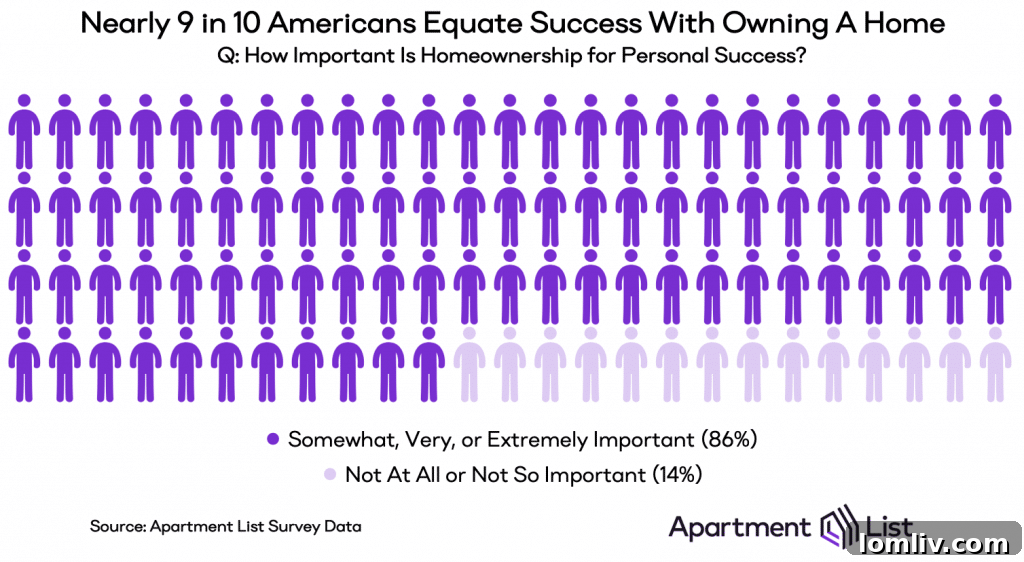
Nearly 9 in 10 Americans equate homeownership with personal success and economic security.
Homeownership: The Cornerstone of the American Dream, or a Fading Ideal?
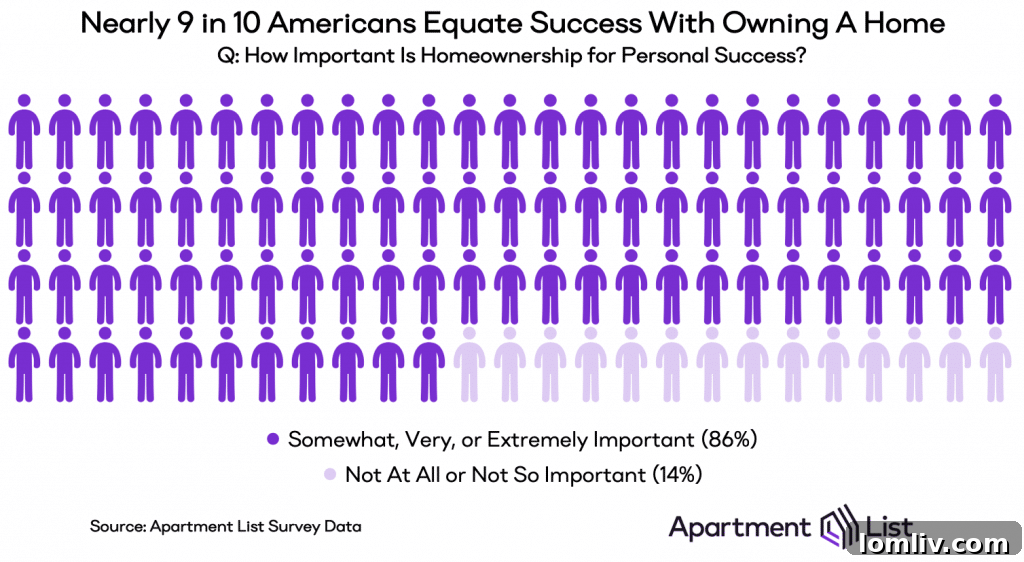
The prevailing narrative in American society has long championed homeownership as the quintessential marker of personal achievement and financial security. The Apartment List survey powerfully reinforces this enduring belief, revealing that a staggering 86 percent of respondents firmly equate homeownership with personal success. Even more overwhelmingly, 87 percent state that owning a home is paramount for achieving financial stability. This near-universal consensus positions homeownership not just as a preference, but as a societal benchmark against which individuals often measure their own progress and are, in turn, measured by others.
This deeply ingrained conviction suggests that for many, homeownership is synonymous with achieving the “American Dream.” It implies a sense of stability, permanence, and tangible asset accumulation that is often perceived as absent in the rental market. The belief system posits that owning property inherently provides a superior financial trajectory, offering equity growth, potential tax benefits, and a sense of rootedness within a community that renting ostensibly cannot provide. This perspective is reinforced by generations of cultural messaging and governmental policies that have historically incentivized homeownership as the primary pathway to wealth building.
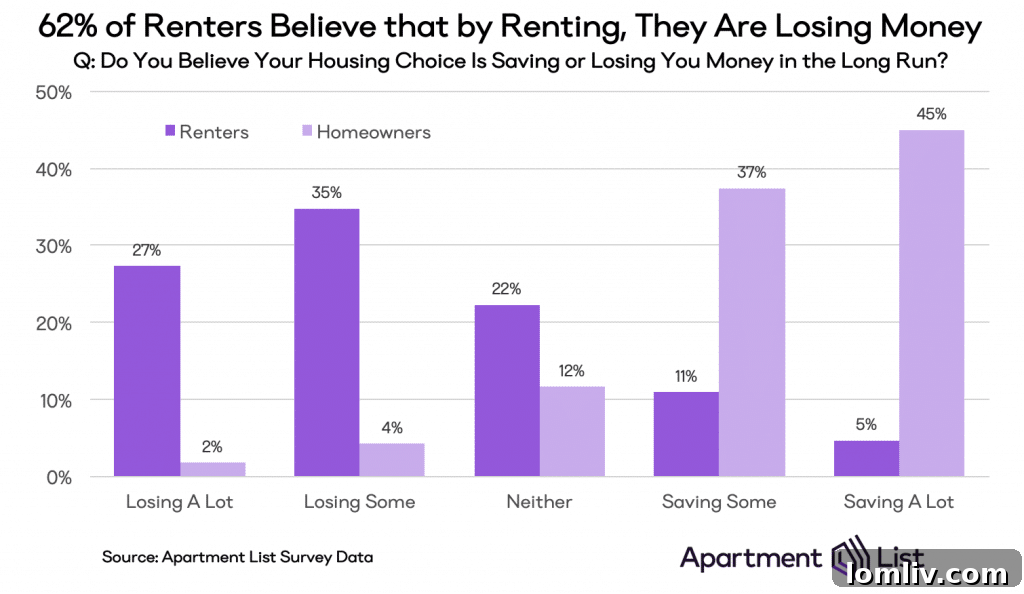
However, this conventional wisdom, while historically potent, faces increasing scrutiny in today’s complex economic landscape. Despite compelling evidence suggesting that homeownership is not a universally superior financial decision for everyone, the sentiment persists. Factors such as fluctuating market values, significant upfront costs like down payments and closing fees, ongoing maintenance expenses, rising property taxes, homeowner’s insurance premiums, and interest rates can often make renting a more financially prudent choice, particularly in volatile or expensive markets. Renting offers flexibility, predictable monthly costs (often excluding utilities), and eliminates the burden of property upkeep, allowing individuals to invest in other avenues or save for future goals. Yet, the social and psychological pull of owning a home remains incredibly strong, often overshadowing objective financial analysis.
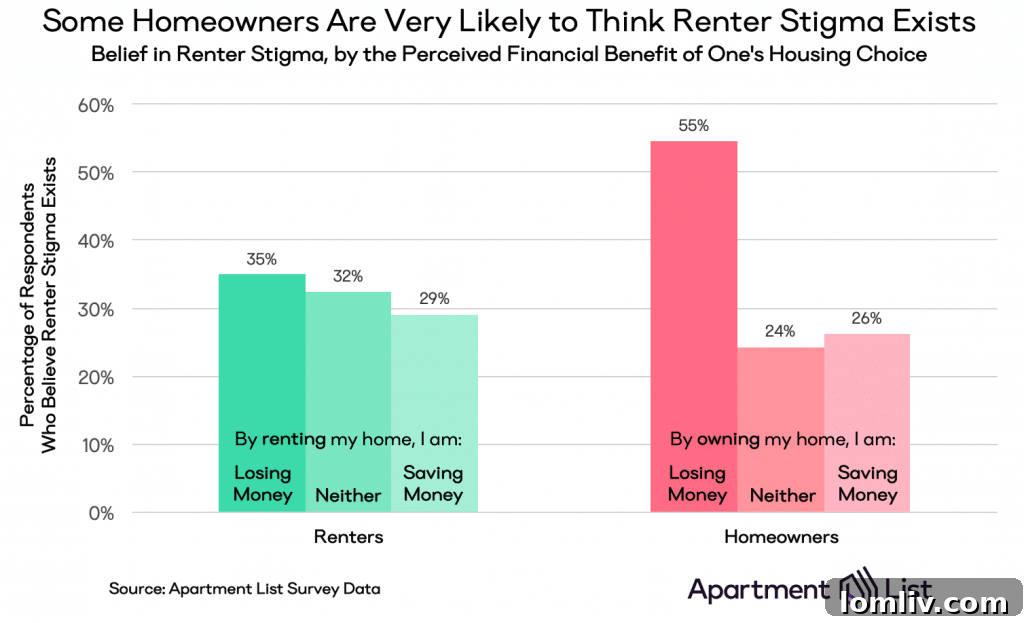
Interestingly, the survey reveals a fascinating paradox: belief in renter stigma is most pronounced among homeowners who recognize that, for them, renting might actually be a more cost-effective option. This suggests an internal conflict, where the societal expectation of homeownership may override purely financial logic, or perhaps, a defense mechanism to justify their own housing choices despite acknowledging alternative benefits. This highlights a powerful psychological component to the renter stigma, where societal expectations can heavily influence personal financial perceptions and decisions, even when objective data points to different conclusions. The perceived financial advantages of homeownership often overshadow the practical benefits of renting, such as greater mobility and lower immediate financial burden, which can be particularly appealing to younger generations or those in dynamic career paths.
Where Renter Stigma Thrives: Urban Centers and Younger Generations
The prevalence of renter stigma is not uniform across the United States; rather, it exhibits distinct patterns influenced by demographic and geographic factors. Apartment List’s research highlights that this stigma is significantly more pronounced in environments where renting is, ironically, more common. This includes younger demographics, who often enter the housing market as renters due to economic necessity, career mobility, or lifestyle preferences, and residents of larger metropolitan areas. Specifically, the belief in renter stigma intensifies within denser, more expensive neighborhoods, where the barrier to homeownership is exceptionally high.
In bustling urban centers, for instance, the sheer cost of real estate makes homeownership an unattainable dream for a vast segment of the population. Renting becomes not merely a choice but a widespread reality for young professionals, families, and individuals seeking access to jobs, culture, and amenities. Yet, even in these high-rental environments, the lingering societal ideal of homeownership can cast a shadow, leading to internal or external judgments. Younger generations, often burdened by student loan debt and facing rising housing costs, are increasingly delaying traditional milestones like homeownership. For them, renting is often a pragmatic first step, or even a long-term lifestyle choice that aligns with greater flexibility and less commitment. However, the survey suggests they are also more acutely aware of the negative perceptions associated with their housing status.
This phenomenon points to a fascinating cultural dichotomy. In areas where renting is the norm, one might expect the stigma to diminish as more people share the experience. Instead, it seems that in these competitive and expensive markets, the gap between the aspiration of homeownership and the reality of renting becomes even more pronounced, fueling a stronger sense of stigma among those who cannot (or choose not to) buy. This could be due to the visible disparity in wealth, the constant reminder of prohibitive housing costs, or the subtle reinforcement of an idealized “owner” status even in a renter-majority environment. Understanding these localized concentrations of renter stigma is vital for addressing the issue effectively, as a one-size-fits-all approach may not suffice for the diverse housing landscapes across the nation. It implies that while economic factors like high rents contribute to the prevalence of renting, they also, paradoxically, intensify the social pressure to own, thus strengthening the stigma and creating a more challenging environment for renters.
The Hidden Costs of Renting: Financial Strain and Emotional Burdens
Lacking affordable housing options, many renters make financial and emotional sacrifices to afford their housing costs.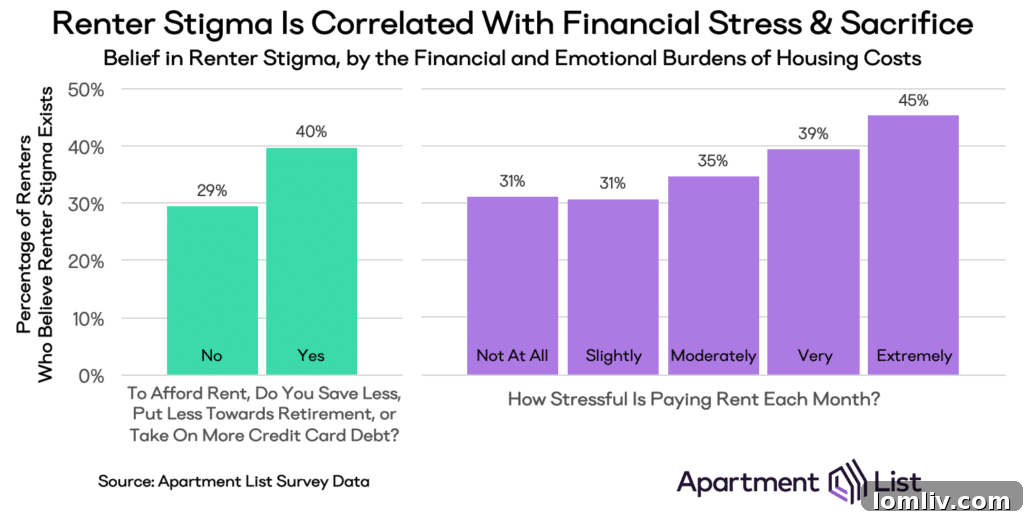
Beyond the societal perceptions, the tangible impact of the affordability crisis on renters is profound, manifesting in significant financial and emotional sacrifices. The Apartment List survey uncovered a particularly alarming trend: many renters are compelled to make short-term compromises that have severe long-term consequences for their economic security. These sacrifices often include dipping into personal savings, thereby eroding their emergency funds; contributing less to retirement accounts, jeopardizing their future financial stability; or accumulating additional credit card debt, which can spiral into a cycle of indebtedness. These choices, made out of necessity, undermine a renter’s ability to build a robust financial foundation, making them more vulnerable to economic shocks and hindering their long-term wealth accumulation.
These financial pressures are not just abstract numbers; they translate into a heavy emotional toll. A staggering 73 percent of renters report experiencing some level of emotional stress as rent due dates approach. This chronic anxiety is not merely about making ends meet; it speaks to the constant pressure of living paycheck to paycheck, the fear of eviction, and the struggle to balance housing costs with other essential living expenses like food, healthcare, and transportation. The mental burden of managing these financial anxieties can impact overall well-being, productivity, and personal relationships. It’s a constant reminder of their precarious financial situation, often exacerbated by the very stigma they perceive from society. This ongoing stress can lead to burnout, decreased quality of life, and a sense of hopelessness, highlighting the profound human cost of an unaddressed housing crisis.
Crucially, the survey found that belief in renter stigma is highest among this group of financially stressed renters. This suggests a powerful feedback loop: the societal judgment associated with renting might contribute to the emotional stress, while the financial strain of renting itself could make individuals more susceptible to feeling stigmatized. When individuals are already struggling to secure stable housing and manage their finances, the added weight of societal disapproval or the feeling of not measuring up to an arbitrary ideal can be particularly crushing. This highlights the urgent need to address both the economic realities of rental housing and the social perceptions that contribute to renter stigma, recognizing their intertwined nature. The sacrifices made today by renters to secure housing are not just financial; they are deeply personal, affecting their mental health, their ability to plan for the future, and their overall quality of life, underscoring the severe human cost of the current housing crisis.
Challenging the Narrative: How the Affordability Crisis May Reshape Renter Perceptions
The contemporary housing market in the United States is undergoing a period of unprecedented transformation, characterized by a rapidly escalating affordability crisis that is reshaping public discourse. This shift is not only altering the economic realities for millions but also has the potential to fundamentally challenge the deeply entrenched negative perceptions associated with renting. As rental costs skyrocket across the nation, and homeownership becomes increasingly out of reach for a growing segment of the population, the issue of housing equity has moved from a niche concern to a prominent feature of the national political agenda.
This mainstreaming of housing affordability is a critical development. When the challenges of securing adequate and affordable housing become a universal experience, affecting diverse socio-economic groups, it naturally begins to erode the foundation of stigma. It transforms the conversation from one of individual failure or poor financial choices to a systemic issue requiring collective solutions. Political leaders, policymakers, and community advocates are now actively debating strategies to address the housing crisis, including initiatives to expand affordable housing options, implement rent stabilization measures, and explore innovative housing models. This broader recognition of systemic issues suggests that being a renter is increasingly understood as a reflection of market forces rather than a personal shortcoming, fostering a greater collective empathy and understanding for those who rent.
Looking ahead, this intensified focus on housing equity holds significant promise for exerting downward pressure on the existence of a negative renter stigma. As more people, including those who once viewed homeownership as the only path to success, grapple with the realities of the current market, empathy and understanding for renters are likely to grow. The narrative is shifting from “why don’t they just buy a home?” to “how can we ensure everyone has access to safe, affordable housing?” This societal re-evaluation has the potential to foster a more inclusive and equitable understanding of diverse housing choices, recognizing that renting is a valid, often necessary, and sometimes preferable option for millions. Ultimately, the ongoing affordability crisis, while challenging, might paradoxically serve as a catalyst for a more enlightened perspective on renting, paving the way for a future where housing choices are respected, and renter stigma is a relic of the past, allowing individuals to choose housing options that best suit their lives without fear of societal judgment.
Moving Forward: Towards a More Equitable Understanding of Housing Choices
The findings from Apartment List’s comprehensive survey illuminate a critical societal challenge: the pervasive nature of renter stigma and its profound impact on millions of Americans. From deeply ingrained beliefs equating homeownership with success, to the real financial and emotional sacrifices made by renters, it’s clear that the current narrative surrounding housing choices needs re-evaluation. As the national dialogue increasingly focuses on housing affordability and equity, there is a tangible opportunity to dismantle these outdated perceptions. By acknowledging the systemic issues that shape housing realities and fostering a culture of respect for all housing paths, society can move towards a more inclusive and supportive environment where individuals are empowered to make choices that truly align with their personal and financial well-being, free from undue social pressure and stigma.
To see the entire report, click here.