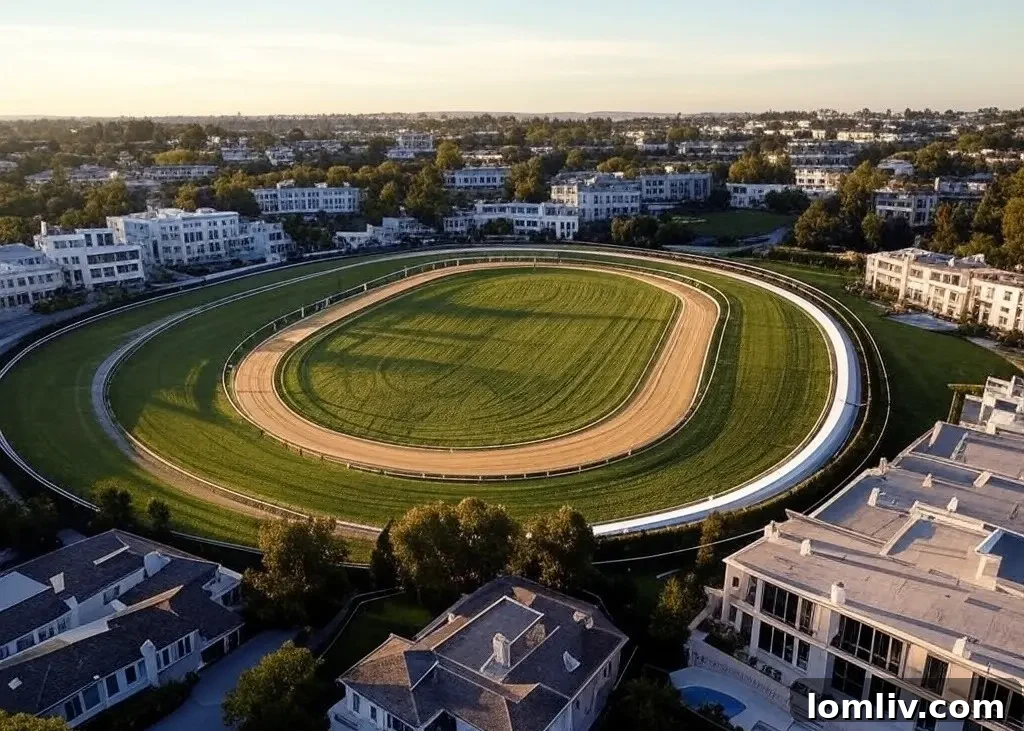

Horse racing stands as a global spectacle, captivating audiences and driving significant economic activity across continents. While renowned venues like Lone Star Park in Texas contribute to its widespread appeal, the profound impact of prestigious racecourses on local real estate values is a universal phenomenon. In the United Kingdom, in particular, residing within close proximity to some of the world’s most iconic racing venues can translate into a remarkably lucrative real estate investment, offering both lifestyle benefits and considerable financial premiums.
However, this desirability comes with a tangible cost. Property market analyses consistently reveal that homes sharing a postcode with these celebrated racecourses command substantially higher prices. This premium reflects not just the direct proximity but also the prestige, infrastructure, and unique lifestyle opportunities associated with these locations. The demand from horse racing enthusiasts, professionals, and those simply seeking a vibrant community atmosphere contributes significantly to this upward pressure on property values.
Recent data from leading property portal Zoopla emphatically supports this observation. Their comprehensive research indicates that properties situated within the postcode areas of mixed racecourses – venues hosting both flat and jumps racing – exhibit an astounding 25.3% price premium compared to the wider regional average. This figure underscores the exceptional value placed on such versatile racing locations.
The trend extends across different forms of racing. National Hunt courses, known for their thrilling jump races, see properties in their vicinity attracting an 18.5% premium. Similarly, homes near flat racetracks, which host high-speed races on level ground, enjoy a notable 15.2% premium on their market values. These statistics clearly demonstrate a consistent pattern: the closer a property is to a popular racecourse, the higher its perceived and actual market value, making “location, location, location” particularly pertinent in the equestrian world.
Why Mixed Racecourses Command the Highest Property Premiums

As the Zoopla data highlights, mixed racecourses are at the forefront of driving up local housing prices. A mixed racecourse, by definition, is a dual-purpose venue capable of staging both National Hunt (jumps) and Flat racing meetings. This versatility means that these tracks often host events throughout the year, offering a continuous calendar of excitement and drawing visitors consistently. This year-round activity translates into sustained demand for local amenities, services, and accommodation, which in turn bolsters property values.
The highest average property price recorded for areas surrounding mixed racecourses reaches an impressive £346,000. Many of these highly valued locations are found in the desirable regions surrounding London, benefiting from excellent transport links and a generally affluent demographic. For comparison, the national average for postcodes adjacent to purely National Hunt courses stands at £258,000, while properties near flat racing tracks command a slightly higher average of £276,000. The distinction emphasizes the unique appeal and economic impact of venues that offer a comprehensive racing experience.
It comes as little surprise that the vast majority of the most expensive racecourse-adjacent properties in England are concentrated in the affluent South. Topping this prestigious list is Sandown Park in Surrey, where house prices average an astonishing £905,000. This remarkable figure reflects not only the racecourse’s prestige but also Surrey’s status as one of the UK’s wealthiest counties, offering a blend of rural charm and urban accessibility.
Incredibly, Sandown Park’s average surpasses even that of Ascot, a name synonymous with royal patronage and world-class racing, where average property values stand at £694,000. Rounding out the top five most expensive locations are Epsom, home to the iconic Derby, followed by the picturesque Goodwood, and finally, Windsor. While the influence of the racecourses is undeniable, it’s also crucial to note that four out of these top five venues boast direct and convenient transport links to London, further enhancing their appeal to commuters and high-net-worth individuals.
Nationwide Premiums: Beyond the Southern Hotspots

While the South of England certainly showcases the most stratospheric property values near racecourses, the premium effect is by no means confined to London’s commuter belt. Across the United Kingdom, data reveals significant price hikes in other regions for homes sharing a postcode with a racing track, demonstrating a broader national trend. This indicates that the allure of horse racing, and the associated lifestyle, resonates deeply throughout the country.
A striking example can be found in the LS22 postcode, home to Wetherby Racecourse in West Yorkshire. Properties within this postcode average £348,000, representing an astounding 119.1% premium compared to the average cost of buying a house elsewhere in the broader West Yorkshire region. This dramatic increase highlights the significant localized impact a popular racecourse can have, transforming a regional average into a highly sought-after and expensive micro-market.
Similarly, Southwell in Nottinghamshire experiences a substantial 111.7% premium on homes compared to the typical regional average. This robust growth underscores the fact that even in regions traditionally considered more affordable than the South, the presence of a well-regarded racecourse can create pockets of exceptional property value. The trend isn’t exclusive to areas outside London; the SL5 postcode, shared with Ascot in Berkshire, sees an impressive 111.4% increase in average home prices compared to other properties in the surrounding Berkshire region, reaffirming the enduring prestige of Ascot.
Further analysis of property markets across the UK reveals additional significant trends. Homes near Bath Racecourse experience a substantial 64% increase in value compared to the Somerset average. This premium reflects Bath’s status as a historic city combined with the appeal of the racecourse. In the North East, properties in the NE3 postcode, which includes Newcastle Racecourse, are valued 55% higher than the regional average. These figures collectively demonstrate a powerful correlation between proximity to a racecourse and elevated property values, making them strong indicators of local economic desirability and investment potential.
A Savvy Investment: The Financial Perks of Racecourse Proximity
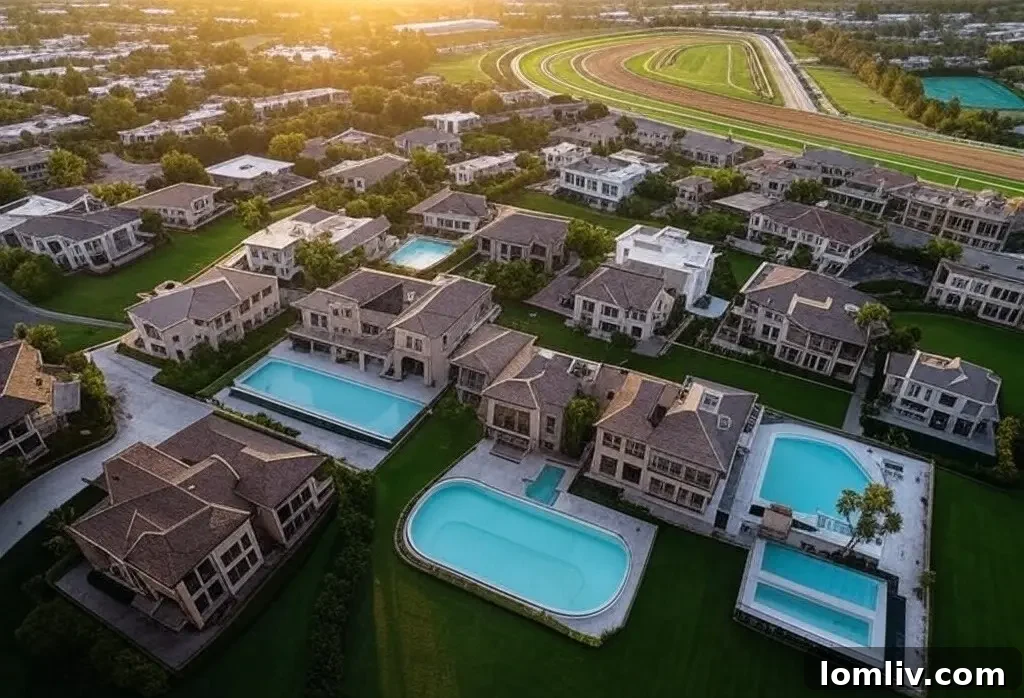
Despite the inherent premium associated with purchasing a property near a racecourse, the investment often comes with a compelling array of financial perks that make it a highly strategic move. One of the most significant advantages for homeowners is the unparalleled opportunity to generate substantial rental income, particularly during major racing festivals and events staged at the nearby track. This short-term rental market can be incredibly lucrative, offering a rapid return on investment and helping to offset the initial purchase premium.
This phenomenon is perhaps most evident in regions surrounding world-famous events such as the Kentucky Derby in Louisville, USA, or the Cheltenham Festival in the UK. During these peak periods, local residents frequently capitalize on the immense demand for accommodation by listing their homes on platforms like AirBNB. For instance, the four-day Cheltenham Festival sees hotel prices soar, often exceeding £1,000 for a modest three-night stay. This creates a prime opportunity for homeowners to command premium asking prices for their properties, attracting racegoers eager for convenient and comfortable lodging.
The financial benefits extend beyond just the major festivals. Throughout the racing season, there’s a steady demand from trainers, jockeys, owners, and stable staff, as well as regular race attendees, who may seek short or medium-term rentals. This consistent interest ensures that properties in these locations remain desirable for tenants, minimizing vacancy rates and providing a stable income stream. For those with existing financial commitments, leveraging the unique location of their home through strategic rentals can provide a crucial boost to their income, effectively turning their property into a dynamic asset.
Moreover, beyond direct rental income, owning property near a racecourse can offer long-term capital appreciation. The ongoing investment in racecourse facilities, the continuous flow of visitors, and the associated local development often contribute to the sustained growth of property values in these areas. This makes such investments not just beneficial in the short term through rental income, but also a solid strategy for building wealth over time.
Beyond the Track: The Broader Impact of Sports Venues on Real Estate
The profound influence of horse racing tracks on real estate prices is, in fact, part of a larger trend: homes situated near any significant sporting venue often come with a substantial premium. The presence of a major stadium or arena enhances the desirability of a location through various factors, including improved infrastructure, greater accessibility, and the vibrant atmosphere generated by events. These factors attract investment and elevate the overall profile of the surrounding neighborhoods.
Consider the iconic Lord’s Cricket Ground in London. Properties in its vicinity command an astonishing average price of £1.4 million. While the prestige of the venue itself plays a role, it can be argued that a significant portion of this premium is also attributable to its prime location in the heart of London, one of the world’s most expensive cities. Proximity to central London offers unparalleled access to amenities, transport links, and employment opportunities, naturally driving up property values.
Similarly, in the realm of football, Chelsea Football Club’s Stamford Bridge stadium in London consistently ranks highest in the Premier League for surrounding real estate values. A house near Stamford Bridge averages an impressive £1.2 million. This figure far surpasses property prices in areas surrounding other major football stadiums across the UK, even those of equally celebrated clubs. For instance, homes near Old Trafford (Manchester United), Anfield (Liverpool), and the Etihad Stadium (Manchester City) are significantly lower in comparison. This disparity highlights not just the club’s prestige but also the impact of the wider socio-economic landscape and property market dynamics within London compared to other major English cities.
The premium associated with properties near sporting venues stems from a combination of factors: enhanced public transport, local infrastructure upgrades, increased footfall leading to more local businesses, and a sense of community pride. Living near a stadium or racecourse can offer an exciting lifestyle, with direct access to world-class entertainment and a vibrant, often bustling, environment. These elements collectively contribute to the elevated desirability and, consequently, the higher market value of real estate in these unique locations.