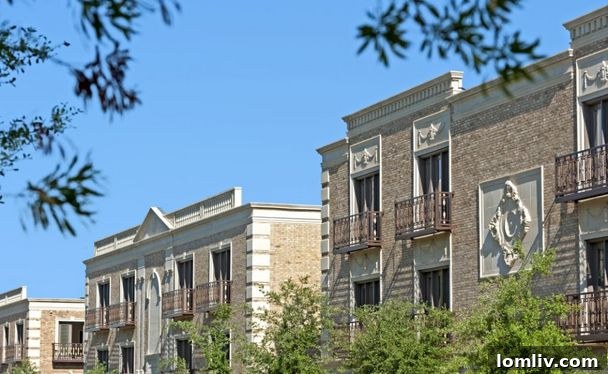
Navigating Growth: A Deep Dive into the Transwestern Redevelopment Proposal in Dallas’s Preston Hollow
Guest post by C.C. Allen
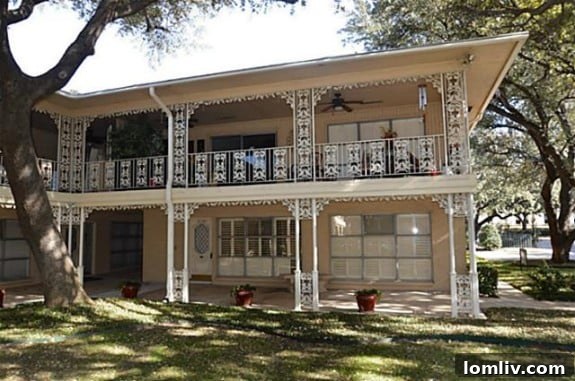
Dallas, a city experiencing unprecedented growth, continually faces the dynamic challenge of balancing urban development with the preservation of its beloved neighborhoods. This ongoing dialogue recently took center stage at a pivotal community meeting organized by Dallas City Councilman Lee Kleinman. Held at the University Park United Methodist Church, the gathering aimed to update the community on Transwestern’s ambitious proposal to redevelop the iconic Town House Row – a distinct street of twelve townhomes situated just east of Preston Road within the historic “Pink Wall” area – alongside an adjacent apartment complex.
The meeting drew a diverse array of attendees, including many passionate residents from well beyond the immediate “Pink Wall” vicinity. While the spirit of community engagement was strong, some segments of the “No” crowd frequently interrupted speakers with shout-outs, necessitating Councilman Kleinman’s pleas for respect and courtesy. Amidst this emotional atmosphere, accusations of Transwestern lacking transparency and harboring an undisclosed agenda were voiced. However, from the perspective of many residents and observers, these claims seemed particularly unfounded, given the developer’s extensive outreach efforts, which included over 500 meetings with homeowners over the past year. Transwestern has consistently demonstrated a genuine sensitivity to the desires and concerns of the area’s residents, fostering an environment of open communication.
 Addressing Core Community Concerns: Privacy, Density, and Traffic
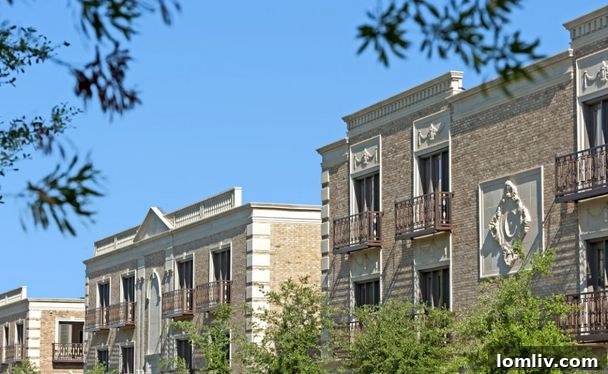 Addressing Core Community Concerns: Privacy, Density, and Traffic
The primary objections raised by those advocating against any redevelopment exceeding the current MF-1(A) zoning largely revolve around concerns for privacy and the potential impacts of increased density and traffic. As a long-time resident of the “Pink Wall” area and an experienced real estate professional, I believe it’s crucial to examine these issues with a balanced and informed perspective, considering both historical context and future imperatives.
Outdated Zoning in a Rapidly Evolving Urban Landscape
The zoning regulations governing this general area were established approximately six decades ago. At that time, Preston Hollow was a far different place, characterized by a few scattered farm homesteads amidst open fields. Lovers Lane, for instance, truly lived up to its name, winding through undeveloped stretches. City planners in Dallas could not have possibly foreseen the monumental growth that would transform Preston Center, defined by the critical intersection of two state highways, into the vibrant and indispensable hub it is today. Nor could they have anticipated Dallas’s explosive population growth, which now necessitates a significant increase in diverse housing options for those who desire to live close to one of the city’s most important commercial and cultural centers.
Relying on zoning created in a bygone era, when Dallas was a fraction of its current size and Preston Center a mere whisper of its future prominence, ignores the fundamental shifts that have occurred. Modern urban planning principles advocate for flexible zoning that can adapt to the needs of a growing metropolis. Stagnant zoning in areas ripe for revitalization can stifle progress and prevent the city from accommodating its expanding populace effectively.
Rethinking Privacy: Thoughtful Design vs. Uncontrolled Development
 Rethinking Privacy: Thoughtful Design vs. Uncontrolled Development
The concern for privacy is deeply understandable, particularly for residents of single-family homes adjacent to potential new developments. However, it’s vital to consider the alternatives under the existing zoning. Under the current MF-1(A) designation, a developer could legally construct buildings right up to the minimal setback requirements, potentially erecting three-story efficiency apartment complexes. Such structures could directly overlook single-family homeowners’ yards to the north and east, creating an intrusive scenario with minimal buffering. Moreover, this type of apartment often attracts a more transient population, potentially altering the established character of the “Pink Wall” area in ways that current residents might find less desirable.
In stark contrast, the Transwestern plan integrates a substantial 70-foot landscaped public park designed to serve as a generous buffer between the proposed construction and the nearest single-family residences. This extensive green space, coupled with additional trees and landscaping surrounding the new development, represents a significant commitment to preserving and enhancing the privacy of northern neighbors. This proactive approach by Transwestern demonstrates a clear understanding of community needs, offering a far more thoughtful and aesthetically pleasing solution than what the existing, outdated zoning would permit without such considerations. It’s an example of how modern, responsible development can proactively mitigate concerns through superior design and planning.
Urban Living and the Reality of Shared Views
 Urban Living and the Reality of Shared Views
It’s important to acknowledge that in any thriving urban environment, true, absolute privacy, in the sense of complete isolation from neighbors, is often a rare commodity. Residents of North Dallas, particularly those in the vicinity, might reflect on the longstanding presence of the 29-story Preston Tower and the 21-story Athena. These towering residential buildings have offered their residents views into properties for many blocks to both the north and south for decades. Indeed, some residents in these high-rises are known to possess telescopes, highlighting the inherent reality of vertical living in a dense city. Similarly, within the neighborhoods of Southeast and East Preston Hollow, it is common to have neighbors whose windows overlook adjacent yards, a standard aspect of community living.
The Transwestern proposal, with its carefully designed buffers and strategic placement, seeks to integrate new residential options while being acutely aware of these existing urban dynamics. The goal is not to eliminate all shared views, which is impractical in a growing city, but to create a development that harmonizes with its surroundings, offering residents of both new and existing structures a high quality of life within a vibrant urban context.
The Economic Imperative: Revitalizing Aging Infrastructure and Property Values
 The Economic Imperative: Revitalizing Aging Infrastructure and Property Values
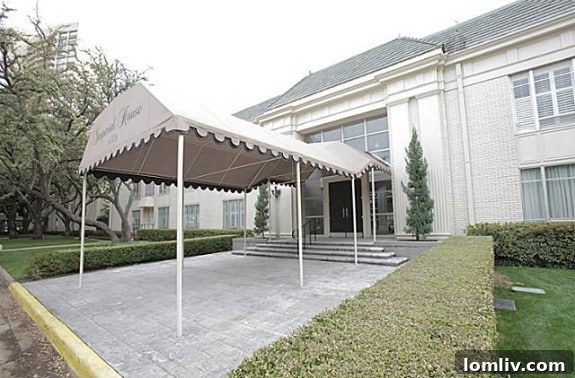
A significant, yet often overlooked, aspect of the “Pink Wall” area concerns the age and condition of many of its existing properties. A substantial portion of the condominiums in this locale were constructed to residential standards common over 50 years ago, with an anticipated lifespan of approximately half a century. As these properties continue to operate well beyond their predicted life expectancies, they demand increasingly substantial financial investment to maintain them in good repair. The reality for many Homeowners Associations (HOAs) in this area is that they are comprised of owners who are, understandably, reluctant to commit significant funds to the comprehensive updating of common areas.
Instead, many HOAs are primarily willing to levy special assessments only for critical items directly impacting residents’ safety and comfort, such as roof repairs, plumbing and electrical system overhauls, pool decking and tile replacements, and crucial heating/air conditioning system upgrades. This conservative financial approach, while understandable for individual owners, explains the current aesthetic and functional state of much of the “Pink Wall” area. Consequently, property values here are notably lower when compared to immediately adjacent areas to the north, which often feature newer construction or more robustly maintained properties.
In contrast, high-rises like Preston Tower and The Athena, constructed to more rigorous commercial standards, benefit from a much larger resident base over which to distribute the considerable costs of maintenance, repairs, and capital improvements. These buildings have generally succeeded in preserving their integrity and updating their common amenities effectively. It can be persuasively argued that the overall deteriorating condition of much of the “Pink Wall” residential construction has inadvertently exerted a negative influence on the property values of even those buildings that have made efforts to update their common areas and systems. New, high-quality development has the potential to inject much-needed capital and vitality into the area, fostering an environment where property values can stabilize and grow across the board.
Navigating Dallas’s Persistent Traffic Challenges
 Navigating Dallas’s Persistent Traffic Challenges
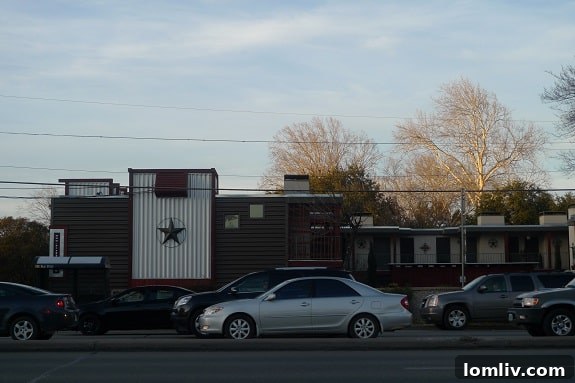
The issue of traffic congestion is undeniably a major concern for all Dallas residents. Anyone who regularly uses Northwest Highway and its intersecting roads between Central Expressway and the Dallas North Tollway has observed a significant and sustained increase in traffic volume and considerably longer waits at traffic lights over the past 18 months, a trend reflective of conditions across much of Dallas. Some speakers at the community meeting expressed valid worries that the net addition of vehicles from the Transwestern development onto Preston Road at the Northwest Highway intersection could substantially exacerbate existing traffic difficulties and potentially lead to more accidents.
However, it’s essential to put the proposed development’s impact into a broader perspective. Patti Niles, a diligent resident residing on Averill Way, conducted a personal traffic count from 8 AM to 8 PM on a weekday. Her findings revealed an astonishing 40 vehicles per minute, totaling 28,800 vehicles over a 12-hour period, entering this critical intersection from the east and west. In light of these existing volumes, Ms. Niles rightly characterized Transwestern’s stated addition of 600-800 trips per day as a “drop in the bucket” compared to the monumental number of cars already navigating that intersection daily. This highlights that the fundamental traffic problem is regional and systemic, not solely attributable to new developments.
Furthermore, Transwestern has demonstrated proactive responsibility by generously offering to allocate a portion of its property and substantial funds towards installing dedicated turn lanes, specifically aimed at facilitating a smoother flow of traffic at this key intersection. This commitment represents a significant, voluntary contribution to local infrastructure improvement. Beyond the developer’s efforts, we also understand that Jennifer Gates has undertaken the crucial task of collaborating with the Park Cities municipalities to synchronize traffic lights throughout the area. Such synchronized signal timing promises to yield a much greater ease in overall traffic flow, benefiting all commuters, far beyond the scope of any single new development.
A Vision for Dallas’s Sustainable Urban Future
When critically examining the Transwestern proposal, it becomes clear that there are no compelling arguments against a development crafted with such sensitivity. The plan has been meticulously developed with profound consideration for the privacy of surrounding homeowners and a keen eye for the aesthetic appeal and high-quality amenities typically associated with most prestigious Preston Hollow properties. Transwestern’s commitment to dedicating valuable land and substantial financial resources to directly alleviate privacy and traffic concerns is a testament to their responsible development philosophy.
The traffic challenges prevalent throughout Dallas are a widespread urban issue, demanding comprehensive solutions that acknowledge the undeniable fact that as a city grows, increased density is often a necessary component of sustainable development. Dallas is expanding at an extraordinary pace, and it is incumbent upon all stakeholders—including TXDOT, responsible for maintaining our highways, and the City of Dallas—to collaborate effectively in finding innovative ways to alleviate an already serious and pervasive traffic problem across the metropolitan area.
It is my hope that those who have expressed opposition will come to realize that all of us who have weighed in on this critical issue share a deep love for Dallas and our cherished neighborhoods. We are united in our desire for the inevitable tide of change to culminate in growth that genuinely enhances the very best aspects of our area. We are incredibly fortunate that the residents of Town House Row have attracted a developer of Transwestern’s caliber, one who clearly understands the unique character and inherent charm of this lovely part of Dallas and is dedicated to not just maintaining it, but elevating it responsibly. Should we, as a community, discourage such a high-quality developer, the alternative—new construction potentially permissible under the existing, outdated zoning—could result in outcomes far less desirable, making many wish we had extended a more welcoming hand to Transwestern from the outset. Embracing thoughtful, well-planned development is not just about accommodating growth; it’s about shaping a more vibrant, functional, and beautiful Dallas for generations to come.