

Welcome to your comprehensive weekly roundup of the most significant developments in the real estate world. This week, we delve into the enduring stability of low mortgage rates, a major industrial expansion poised to boost a local economy, and an in-depth look at the nation’s most attractive housing markets. From expert forecasts on interest rates that benefit homebuyers and those looking to refinance, to a substantial investment by a leading snack company in Garland, Texas, and Realtor.com’s authoritative ranking of top American housing markets, we cover the essential insights shaping today’s property landscape. Stay informed on the trends that could impact your homeownership journey or investment strategies.
Experts Predict Sustained Low Mortgage Rates Throughout 2020: What It Means for Buyers and Refinancers
For millions of Americans contemplating the significant step of purchasing a new home or the financially savvy move of refinancing an existing mortgage, 2020 brought exceptionally good tidings. The consensus among leading mortgage experts and financial analysts indicated a period of sustained low interest rates, creating a fertile environment for real estate transactions. According to insights shared by Bankrate writer Natalie Campisi, the trajectory of mortgage rates throughout the prior year set a promising precedent, with the average 30-year fixed mortgage rate commencing 2019 at 4.68 percent before steadily declining to conclude the year at a more favorable 3.93 percent. This downward trend, rather than being a temporary blip, was widely expected to stabilize, with rates largely hovering around the critical 4 percent threshold throughout the subsequent year.
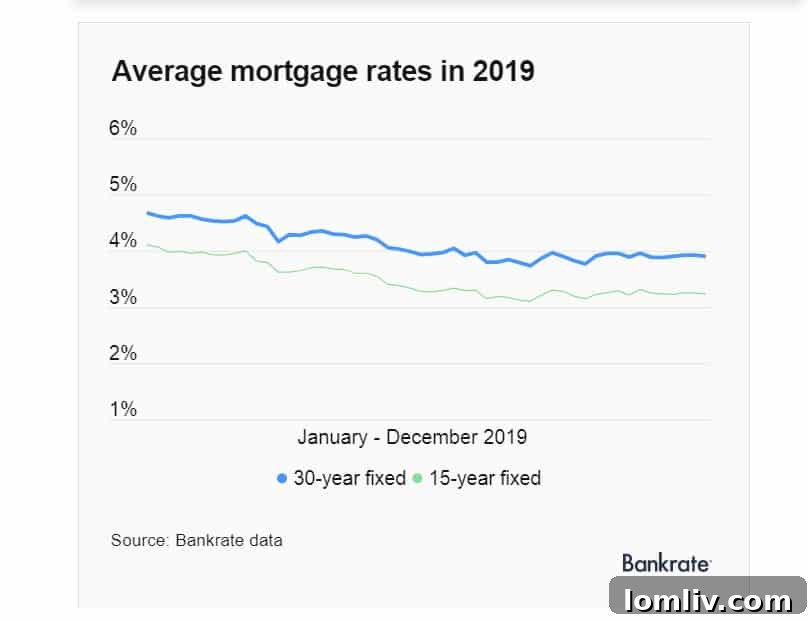
This forecast was reinforced by prominent figures in financial analysis, including Bankrate’s chief financial analyst, Greg McBride. McBride articulated a clear expectation that the benchmark 30-year fixed-rate mortgage would oscillate around the 4 percent mark for a considerable portion of 2020. His perspective highlighted the dual benefits of such stability: “The benchmark 30-year fixed rate mortgage will hopscotch back and forth over the 4 percent mark for much of 2020, remaining low enough to facilitate homebuying and providing ample refinancing opportunities on those trips below 4 percent,” McBride noted in a Bankrate news story. This meant that not only would prospective homebuyers find borrowing costs more manageable, potentially increasing their purchasing power and making homeownership more accessible, but current homeowners also had excellent windows of opportunity to refinance their existing loans. Refinancing at a lower rate could translate into significant monthly savings, reduced overall interest payments over the life of the loan, or even the ability to tap into home equity for other financial needs, such as home improvements or debt consolidation. The continued presence of these attractive rates served as a powerful incentive, driving activity across the entire housing market spectrum and signaling a period of confidence for both consumers and industry professionals alike.
Source: Bankrate
Understanding the Drivers Behind Stable Low Mortgage Rates
Several macroeconomic factors contribute to the consistent trend of low mortgage rates. Primarily, the Federal Reserve’s monetary policy plays a crucial role. When the Fed keeps its benchmark interest rates low, it generally translates to lower borrowing costs across the economy, including for mortgages. Global economic conditions also exert influence; periods of economic uncertainty often lead investors to seek safer assets like U.S. Treasury bonds. Increased demand for these bonds drives their prices up and their yields down. Mortgage rates tend to track these bond yields, so lower yields often result in lower mortgage rates. Furthermore, a balanced supply and demand for mortgage-backed securities, coupled with controlled inflation, helps maintain rate stability. For consumers, this environment of stable, low rates offers a valuable window. It provides predictability, allowing more time to prepare for a home purchase, improve credit scores, and explore various loan options without the immediate pressure of rapidly rising rates. Whether you’re a first-time buyer or an experienced homeowner, understanding these underlying dynamics can empower you to make informed decisions in the current real estate landscape.
Major Investment: Kraft Heinz Expands Operations in Garland, Texas, Creating Hundreds of New Jobs
Garland, Texas, is set to experience a significant economic uplift with the announcement of a substantial $25 million expansion at the Kraft Heinz plant situated on Forest Lane. This strategic investment underscores Kraft Heinz’s commitment to its manufacturing capabilities and signals a robust period of growth for the global food and beverage giant. The existing facility, already a cornerstone of local employment, spans an impressive 266,000 square feet and currently supports approximately 850 jobs within the Garland community.

The planned expansion is projected to generate an impressive 250 new jobs, a considerable boost for the local labor market. This job creation initiative is significantly aided by support from the Texas Enterprise Zone program, which provides incentives to companies making substantial capital investments and creating employment opportunities in eligible areas. Such programs are vital in fostering economic development and attracting major corporations to invest in local communities. The Garland plant, strategically located on a sprawling 50-acre site, is recognized as Kraft Heinz’s largest manufacturing facility, underscoring its importance within the company’s global production network. It plays a critical role in supplying popular consumer products to markets nationwide.
According to a detailed report from the Texas A&M University Real Estate Center, the Garland facility is responsible for manufacturing a diverse array of iconic Kraft Heinz brands. These include the ever-popular Lunchables, known for their convenience and appeal to younger consumers, as well as Oscar Mayer Naturals, catering to the growing demand for healthier, less processed food options. Additionally, the plant produces Kraft barbecue sauce, a staple in many households, and Velveeta Skillets, offering quick and easy meal solutions. This expansion not only signifies a boost in production capacity for these beloved brands but also solidifies Garland’s position as a vital manufacturing hub for the food industry. The ripple effects of such a large-scale investment extend beyond direct job creation, influencing local businesses, supply chains, and overall community prosperity, demonstrating the profound impact of corporate growth on regional economies.
Source: Texas A&M University Real Estate Center
Boise Leads the Pack: Analyzing America’s Hottest Housing Markets for 2020
In a surprising yet compelling shift, Boise, Idaho, emerged as the nation’s preeminent “hottest housing market,” according to a comprehensive report from Realtor.com. This significant recognition marks a remarkable ascent for the city, which just a year prior had ranked eighth on the same list. The study, meticulously summarized by Ryan Passy, was designed to pinpoint housing markets poised for the most substantial home sales and price growth throughout 2020, offering invaluable insights for prospective homebuyers, sellers, and real estate investors alike.

Boise’s rise to the top of the rankings, with a projected median sales price of $295,000 for 2020, can be attributed to a confluence of factors that make it immensely attractive. A primary driver is the influx of out-of-state buyers, drawn by Idaho’s appealing mild climate and, notably, its rapidly expanding technology sector. This burgeoning tech industry brings with it high-paying jobs, stimulating demand for housing and contributing to the area’s economic vitality. The blend of a desirable lifestyle, coupled with robust job growth, positions Boise as an ideal destination for those seeking opportunities and a high quality of life. Following Boise, the second hottest market identified was McAllen-Edinburg-Mission, Texas, which boasted a significantly more affordable median sales price of $152,000. Passy highlighted McAllen’s allure, stating, “McAllen’s affordable home prices, combined with Texas’ favorable tax environment, have made the border city an attractive destination for home buyers looking to move.” This underscores a broader trend: many top markets offer a blend of affordability, strong local economies, and appealing lifestyle factors, often away from the traditionally expensive coastal regions.
While no other major Texas cities broke into the top 25, the list of high-ranking cities showcases a diverse geographical spread and a consistent theme of value, growth, and quality of life. These markets represent areas where buyers can often find more home for their money, coupled with promising economic outlooks. Other notable cities that made the list, along with their median sales prices, included:
- Tucson, Ariz., $230,000: Attracting residents with its sunny climate, a growing university presence, and a more affordable alternative to California markets.
- Chattanooga, Tenn., $189,000: Known for its outdoor recreation, revitalized downtown, and a burgeoning tech scene often dubbed “Gig City.”
- Columbia, S.C., $178,000: Benefits from a strong state capital presence, military installations, and a lower cost of living.
- Rochester, N.Y., $149,000: Offers extreme affordability, a strong healthcare sector, and a vibrant cultural scene despite colder winters.
- Colorado Springs, Colo., $312,000: Draws residents with stunning natural beauty, military bases, and a growing aerospace industry, though slightly higher in price.
- Winston-Salem, N.C., $169,000: Part of the thriving “Triad” region, boasting a strong education and healthcare sector and an attractive arts scene.
- Charleston-North Charleston, S.C., $270,000: A historic coastal city with a strong tourism industry, port economy, and growing tech sector, offering a desirable lifestyle.
- Memphis, Tenn., $188,000: A hub for logistics and music, offering very affordable housing and a rich cultural heritage.
This comprehensive list illustrates a significant trend in the American housing market: a gravitation towards cities that offer an appealing combination of economic opportunity, affordability, and a high quality of life, often at a more accessible price point than major metropolitan areas. These emerging hot spots provide diverse opportunities for both homebuyers and investors looking to capitalize on regional growth and sustainable market appreciation.
Source: Realtor.com