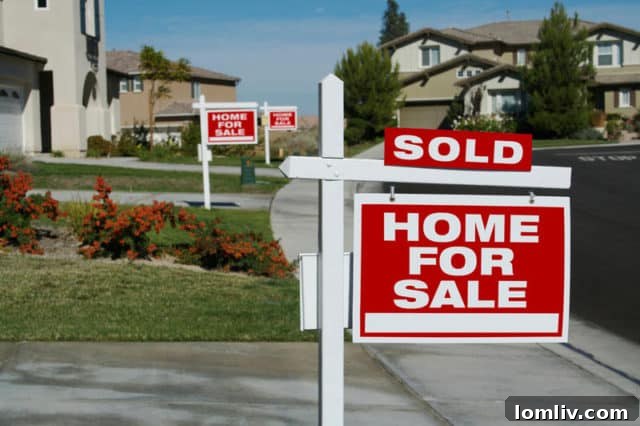
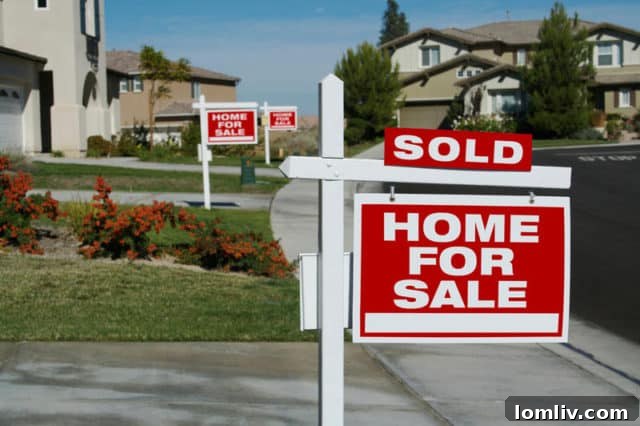
The journey of purchasing a new home in Texas is often exhilarating, a significant life milestone marked by excitement and anticipation. However, for many Texas homebuyers, this joy can quickly give way to an overwhelming deluge of unsolicited mail, emails, and phone calls. Their brand-new mailboxes become veritable magnets for a barrage of solicitations, requests, and demands for sensitive information regarding their recent property acquisition.
Beyond the legitimate welcome letters and occasional service offers, new homeowners frequently encounter a bewildering array of communications that mimic official documents. These often include sham mortgage insurance offers, deceptive tax filing service solicitations, and persistent enticements to disclose the exact sales price of their newly purchased property. Navigating this sea of correspondence can be incredibly challenging, making it difficult to discern what is a genuine request from a legitimate entity and what constitutes a thinly veiled attempt at fraud or an invasion of privacy. Here’s a crucial spoiler alert: in almost all cases, these requests for your sales price are not legitimate or necessary.
Understanding Texas’s Non-Disclosure Status for Real Estate Sales
One of the most distinctive aspects of the real estate market in Texas is its status as a non-disclosure state. This designation fundamentally means that neither a buyer nor a seller is legally obligated to reveal the sales price of a property to any individual or entity, governmental or otherwise. Unlike many other states, real estate sales prices in Texas are explicitly not considered public record. This privacy protection is a cornerstone of property rights in the Lone Star State, emphasizing the belief that a property transaction is a private agreement between two parties.
In contrast to Texas, residents in approximately 38 other U.S. states have public access to sales price data. In these “disclosure states,” a simple search through the county property tax appraiser’s website can reveal the most recent sales price for virtually any address. This public availability of data can manifest in various ways, from being printed in local media outlets to appearing directly on publicly recorded deeds. However, in Texas, the state staunchly upholds the principle that property sales are private transactions, granting homeowners the explicit right to keep the financial specifics of their purchase shielded from both curious onlookers and various government agencies. This policy is deeply ingrained in the state’s legal framework and cultural perspective on individual privacy.
To Whom Should You Confide Your Property’s Sales Price?
Given Texas’s non-disclosure status, it’s vital for new homeowners to understand that there are very few entities with a legitimate claim to your property’s sales price. There is no existing law that empowers state, county, city, or appraisal districts to mandate the disclosure of your sales price. Consequently, homeowners are under no legal obligation to furnish this information to these bodies.
Beyond official entities, you may also encounter requests or speculative inquiries from friends, family, or even nosy neighbors about what you paid for your property. While these individuals might be well-meaning, it’s crucial to remember that your property’s purchase price is private information and, frankly, nobody else’s business. You are absolutely not required to disclose your purchase price to your county tax office, your Homeowners Association (HOA), an independent appraiser hired by someone else, or any other third party who solicits this information. The only person with whom you should genuinely share the purchase price of your property, primarily for accurate financial record-keeping and tax planning purposes, is your certified tax accountant.
This strict policy empowers homeowners to control their financial information and prevents potential misuse, such as unwarranted tax assessments or targeted solicitations. Maintaining this confidentiality is a key part of protecting your financial privacy in Texas.
The Appraisal Districts’ Pursuit of Sales Data and Its Implications
Despite Texas’s non-disclosure laws, many Texas appraisal districts actively seek full disclosure of real estate sales prices. Their primary motivation stems from the desire to establish more accurate and, often, higher taxable values for properties within their jurisdiction. This pursuit of data is intrinsically linked to Texas’s unique tax structure.
Texas famously has no state income tax. To compensate for this, the state relies heavily on high property taxes. These taxes are assessed and collected by a multitude of local entities, including counties, cities, independent school districts, and various special appraisal districts. On average, total property taxes in Texas can hover around 2.5% to 3.5% of a property’s assessed value annually, making them a significant recurring expense for homeowners. If a tax assessor gains access to your actual sales price, they will very often use that price as the primary benchmark for establishing your property’s taxable value, potentially leading to higher tax assessments than might otherwise occur. This creates a natural tension between the appraisal districts’ objective of maximizing revenue and the homeowner’s right to privacy and potentially lower tax burden.
It’s important to understand that while appraisal districts use various methods to determine property values, including analyzing comparable sales (comps) from the Multiple Listing Service (MLS), they do not have direct access to your specific, private sales contract details unless you voluntarily provide them. Homeowners have the right to protest their property tax appraisals, and while bringing your actual sales price into the protest process can be a strategy, it is entirely your choice to do so.
Debunking Zestimates and Other Automated Guesstimates
In today’s digital age, many aspiring and current homeowners turn to popular real estate websites like Zillow, Trulia, and Redfin for quick “home value” estimates. These platforms leverage proprietary algorithms to generate what are often referred to as “Zestimates” or similar automated valuation models (AVMs). While these tools offer a convenient snapshot, it’s crucial for Texas homeowners to understand their inherent limitations and potential inaccuracies, especially in a non-disclosure state.
These automated valuation models typically compile publicly available data points such as recorded mortgage liens, property tax assessments, and geographic mapping information. However, they lack access to the granular, private, and real-time data that truly defines a property’s market value. Key information that Zestimates and similar platforms routinely miss includes:
- Actual Sales Prices: As Texas is a non-disclosure state, these platforms do not have access to the specific sales prices of recently sold homes unless that information is voluntarily made public in some other way, which is rare.
- Negotiated Concessions: The final agreed-upon sales price can be significantly influenced by seller concessions, such as contributions to closing costs, repairs, or home warranty plans. These details are confidential and not reflected in AVMs.
- Property Condition and Upgrades: AVMs cannot accurately assess the interior condition of a home, recent renovations, high-end finishes, or structural issues. A beautifully renovated home might be undervalued, while a fixer-upper might be overvalued.
- Lot Specifics and Unique Features: While they might capture lot size, AVMs often miss nuances like premium views, corner lots, unique landscaping, or desirable cul-de-sac locations.
- Market Nuances: Local market dynamics, such as intense bidding wars in a specific micro-neighborhood or a sudden influx of inventory, are difficult for algorithms to process accurately in real-time.
- Seller Motivation: A highly motivated seller might accept a lower offer for a quick sale, or a buyer might pay a premium for a dream home. Such human elements are beyond algorithmic comprehension.
Only licensed real estate agents, who have access to the comprehensive and proprietary Multiple Listing Service (MLS) data, and professional appraisers, who conduct physical inspections and in-depth market analyses, possess the full spectrum of information necessary to provide a truly accurate valuation. Relying solely on automated estimates can lead to misguided expectations for both buyers and sellers, potentially impacting negotiation strategies and market positioning.
The Confidants of the Sales Price: Who Truly Knows?
While the general public and most governmental entities in Texas are barred from knowing your property’s sales price, there is a distinct and limited circle of individuals and organizations who are privy to this confidential information due to their direct involvement in the transaction. This inner circle typically includes:
- The Buyer and Seller: As the primary parties to the contract, they are directly involved in the negotiation and agreement of the final sales price.
- Real Estate Agents: Both the buyer’s agent and the seller’s agent (listing agent) have access to the sales price as part of their fiduciary duty to their clients and for reporting purposes within the real estate industry.
- The Title Company: This neutral third party facilitates the closing process, ensuring a clear transfer of title, handling all funds, and recording the deed. They process all financial aspects, including the sales price.
- The Mortgage Lender: If financing is involved, the lender requires the sales price to calculate the loan-to-value ratio and to ensure the property appraises for at least the sales price to secure the loan.
Furthermore, if a property was listed for sale through the Multiple Listing Service (MLS), the listing broker is obligated to report the final sale and sales price to the MLS database. The MLS is a private, cooperative information network maintained by real estate professionals for their exclusive use. It collects, stores, and disseminates this proprietary sales data among its members for market analysis, comparable sales research, and to support their clients. Importantly, MLS data is not public information and is protected from general public access.
It’s vital to distinguish between property owner information and sales price information. Property owner details, such as the owner’s name and property address, are generally public records. Marketing and sales companies frequently scour county records daily, gathering information on deed transfers and the filing of mortgage liens. This is how they obtain the addresses of new homeowners to target with their solicitations. Additionally, many unsolicited communications can originate from companies that access public utility connection records. When you activate utilities for your new home, that information can become publicly available unless you proactively request that the utility provider keep your data private. Being aware of these avenues of data collection can help homeowners understand why they receive so much unwanted mail and take steps to mitigate it.
Strategies to Curtail Unwanted Requests and Protect Your Privacy
Confronted with an official-looking request demanding the intricate details of your property sale can be unsettling. However, armed with the knowledge of Texas’s non-disclosure laws and a proactive mindset, homeowners can effectively protect their privacy and reduce the onslaught of unwanted solicitations. The simplest and often most effective strategy when faced with unsolicited requests for your sales price or other sensitive financial information is to ignore it. These requests are almost always an attempt to gather data that you are not legally obligated to provide.
Beyond simply ignoring the requests, here are some actionable steps and considerations:
- Shred Sensitive Mail: Do not just discard mail that looks like a scam or an unnecessary request for information. Shred any documents that contain your address, name, or any hint of financial information to prevent identity theft or further targeting.
- Block Suspicious Callers: If you receive unsolicited phone calls asking for sales price details, do not engage. Politely decline to provide information or simply hang up. Consider blocking numbers from repeat offenders.
- Report Scams: If you believe a solicitation is a scam (e.g., fraudulent mortgage insurance offers), consider reporting it to the appropriate authorities, such as the Federal Trade Commission (FTC) or the Texas Attorney General’s Office.
- Review Utility Privacy Settings: When setting up new utility services (electricity, water, gas), inquire about their privacy policies and options to keep your account information private. Many utility providers offer ways to opt out of information sharing, preventing your data from becoming part of public utility connection records that marketers often access.
- Be Skeptical of “Official” Language: Many fraudulent solicitations are designed to look government-issued or highly official. Look for subtle signs of unprofessionalism, generic greetings, or requests for information that seems overly personal or unnecessary. Remember, legitimate government entities in Texas will not demand your sales price.
- Consult Your Realtor or Attorney: If you are genuinely unsure about the legitimacy of a request, do not hesitate to reach out to your real estate agent or a real estate attorney. They can provide guidance on what information is truly required and what is not.
In my professional opinion, no one should ever voluntarily offer up additional financial and personal information, especially details as sensitive as a property’s sales price, to unsolicited parties. In an era where personal data is highly valued and often exploited, exercising your right to privacy as a Texas homeowner is more critical than ever. Empower yourself with knowledge, remain vigilant, and safeguard your personal and financial information by knowing when to share and, more importantly, when to politely and firmly decline.