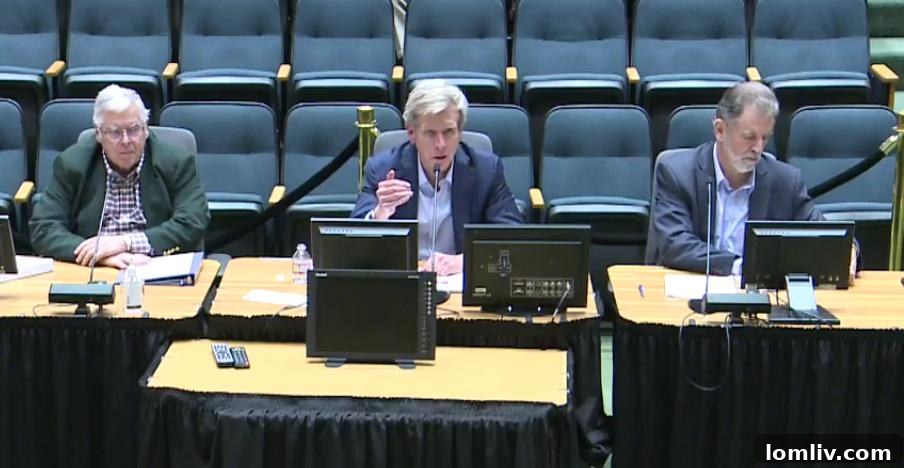
The financial stability of Dallas’s retired police officers and firefighters is a critical concern, brought into sharp focus by a staggering $3 billion deficit in the Dallas Police And Fire Pension fund. This pressing issue, first identified in 2015, continues to be a central topic for city leaders, particularly the Dallas Mayor’s Ad Hoc Committee on Pensions. In a pivotal December meeting, a groundbreaking solution emerged: leveraging and monetizing the city’s considerable real estate assets to help bridge this massive funding gap. This innovative proposal stands out among a range of ideas put forth to safeguard the pensions of those who dedicated their lives to protecting Dallas citizens.
The search for viable solutions to the Dallas Police and Fire Pension fund’s deep deficit has been extensive and multifaceted. Since the shortfall came to light in 2015, city officials and stakeholders have explored numerous avenues to secure the financial future of its uniformed retirees. Beyond the recent suggestion of monetizing city-owned real estate, other strategies have included the potential issuance of municipal bonds, reallocating portions of sales tax revenues, adjusting employee contribution levels to reflect current economic realities, and a thorough re-evaluation of the annual financial allocation from the city’s general fund. Furthermore, looking ahead, officials have pointed to the potential legalization of gaming in the 2025 Texas legislative session as a possible new stream of tax revenue, offering another hopeful, albeit speculative, path towards bolstering the fund.
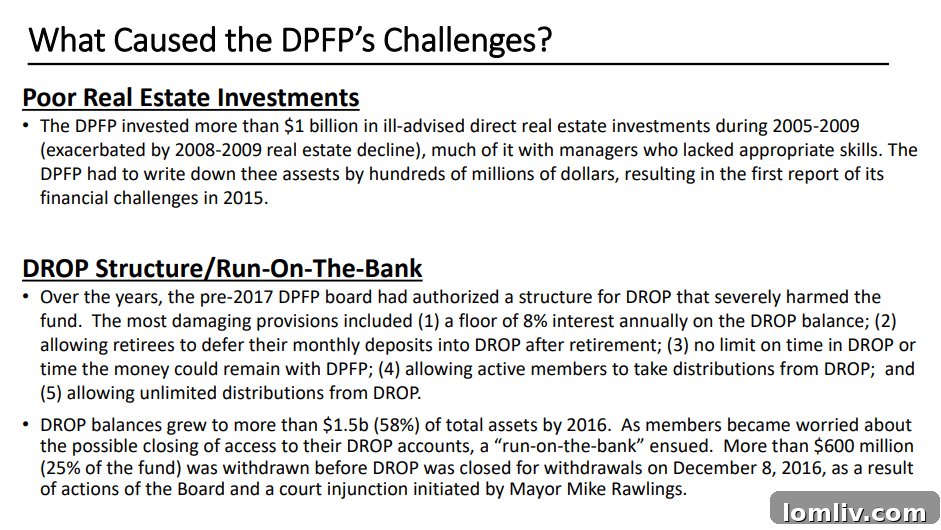
Rob Walters, a former Dallas Police and Fire Pension Board member, has been a vocal proponent of proactive and adaptable strategies. He emphatically urged city leaders to “be nimble” in their approach to ensuring that uniformed retirees receive the pension payments they rightfully earned throughout their dedicated service. Walters underscored that the current predicament, particularly the substantial $3 billion deficit, was significantly exacerbated by over $1 billion in ill-advised real estate investments made by the fund in the past. This historical misstep serves as a stark reminder of the need for diligent oversight and strategic financial planning moving forward.
Walters, drawing upon extensive research and analysis, elaborated on his proposed solution for monetizing city assets. “We have studied this at great length,” he stated, emphasizing the thoroughness of their investigations. “The best cities and the best practices… look for opportunities that take assets that reside on a balance sheet and get them onto the income statement.” This core principle underpins his argument that Dallas possesses a wealth of underutilized or overlooked real estate assets that could be transformed into active revenue streams. By converting dormant capital into generating income, the city could not only benefit the pension fund directly but also alleviate the financial burden on its general fund in the long term, thereby fostering greater fiscal health across the municipality.
To illustrate his point, Walters specifically referenced a variety of tangible city assets that could be considered for monetization. These include underutilized parking facilities, often prime real estate in urban cores, which could be leased or redeveloped for higher revenue generation. He also mentioned landfill assets, which, while not immediately apparent as income generators, could offer opportunities through long-term leases, energy projects, or other innovative uses. Beyond these specific examples, Walters highlighted the broader category of “underutilized city facilities” – buildings, land parcels, or infrastructure that are not performing at their full economic potential and could be repurposed, sold, or leased to generate significant capital for the pension fund.
Critically, Walters stressed the urgency of this approach. “The city need not wait on this,” he asserted, advocating for immediate action rather than prolonged deliberation. He invoked the memorable phrase of former Chicago Mayor Rahm Emanuel, “Let’s not let a crisis go wasted here,” to convey the imperative for seizing the moment. This crisis, while severe, presents an unparalleled opportunity for Dallas to rethink its asset management strategies and implement innovative financial solutions that could have lasting positive impacts on its fiscal landscape and the well-being of its public servants.
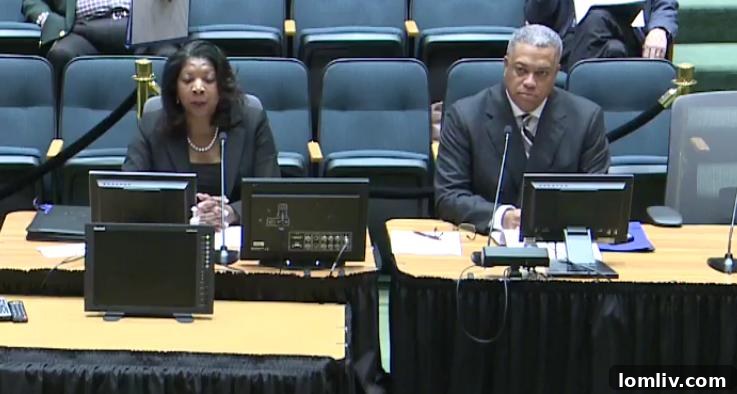
For those seeking deeper insights into these critical discussions, the proceedings of the Ad Hoc Committee on Pensions offer valuable context. The December 14 meeting featured a comprehensive discussion on financial alternatives, expertly led by Rob Walters himself. This session delved into the intricacies of asset monetization and other proposed remedies for the pension deficit. Concurrently, a crucial presentation on the Dallas Employees Retirement Fund was delivered by Executive Director Cheryl Alston and Deputy Executive Director David Etheridge, providing an overview of the broader municipal retirement landscape. The entire two-hour committee meeting, a testament to the depth and seriousness of these discussions, is available for public viewing, offering transparency into the city’s efforts to address these formidable financial challenges.
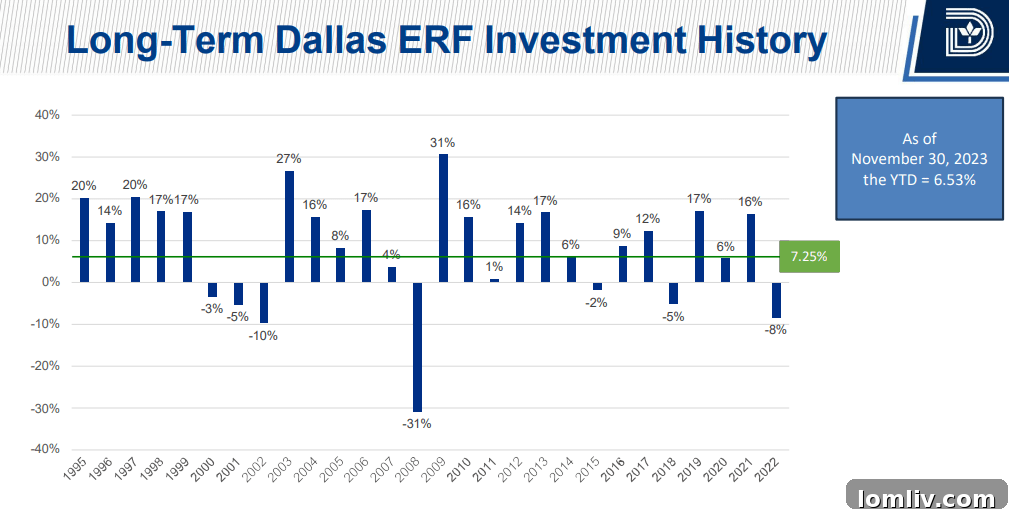
The Ad Hoc Committee on Pensions continues its vital work, with its next crucial meeting scheduled for 3 p.m. on January 11. These ongoing deliberations are expected to refine proposed solutions and move closer to a consensus that can be presented for official consideration and implementation. The consistent engagement of this committee underscores the city’s dedication to finding a sustainable resolution for the pension fund.
City Releases Comprehensive Statement on Dallas Police and Fire Pension System
In a significant development, the City of Dallas issued a detailed press release on December 14, providing an update on its ongoing efforts to address the Dallas Police and Fire Pension System’s funding crisis. The statement announced that solutions aimed at fully funding the Dallas Police and Fire Pension System over a 30-year period had been meticulously developed and presented by a “third-party actuarial firm.” This involvement of external experts brings an independent and specialized perspective to the complex financial modeling required for such a large-scale pension restoration.
While the announcement of actuarial solutions sounds promising, the path forward appears to be intricate and demanding. It is evident that the Dallas City Council and the Pension System board still face substantial negotiations and consensus-building to arrive at a mutually agreeable and implementable plan. Bridging the gap between expert recommendations and the political and practical realities of municipal governance requires careful navigation and unwavering commitment from all parties involved.
Mayor Pro Tem Tennell Atkins, in the official press release, reiterated the city’s steadfast commitment to due diligence and financial integrity. “Gathering advice from experts in pension funds and investments is another step in the right direction,” Atkins stated, acknowledging the value of specialized consultation. He emphasized that “Our due diligence will ensure the financial integrity of the Dallas Police and Fire Pension System and the Employees’ Retirement Fund.” Atkins’ remarks underscore the city’s resolve: “We remain committed to finding a solution without compromising our ability to meet the existing and future needs of our city and all its residents.” This statement highlights the delicate balance required – securing the pensions of retirees while simultaneously maintaining essential city services and financial health for the wider community.
The urgency of the situation is further emphasized by the timeline for the “funding soundness restoration plan.” Dallas Chief Financial Officer Jack Ireland confirmed that this crucial plan is scheduled for submission to the Texas Pension Review Board by Fall 2024. This deadline marks a significant milestone, as it initiates the formal review process by the state authority responsible for overseeing public pension systems. Meeting this submission date is paramount for ensuring timely progress.
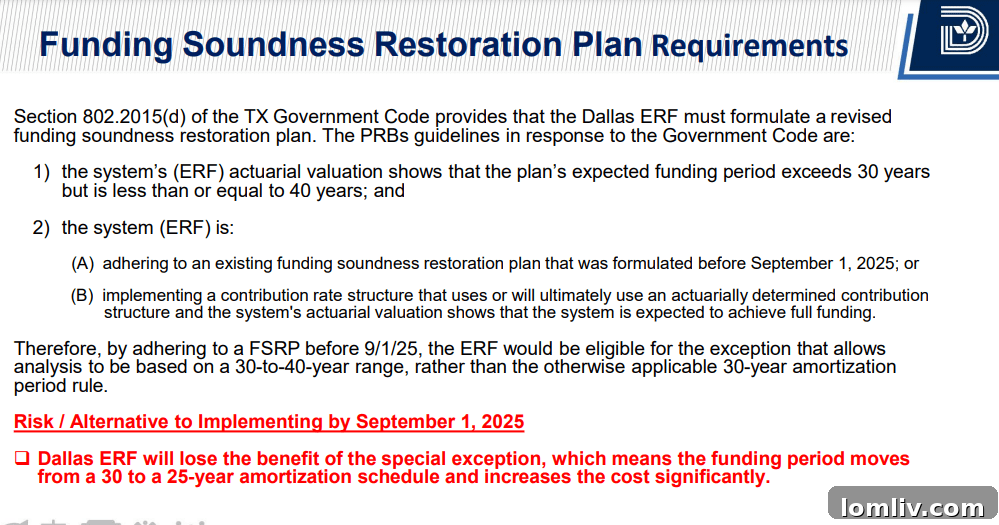
Deputy Executive Director David Etheridge provided a stark warning regarding the critical September 2025 deadline. Action must be taken by this date to participate in a 30-year amortization schedule, a standard and financially manageable period for addressing pension deficits. “If we miss that date,” Etheridge cautioned, “it becomes a risk and an increased cost to the city, as the amortization would go down to 25 years.” A shorter amortization period would necessitate larger annual payments, placing a more immediate and substantial strain on the city’s budget, thus highlighting the absolute necessity of adherence to this timeline for Dallas’s fiscal health.
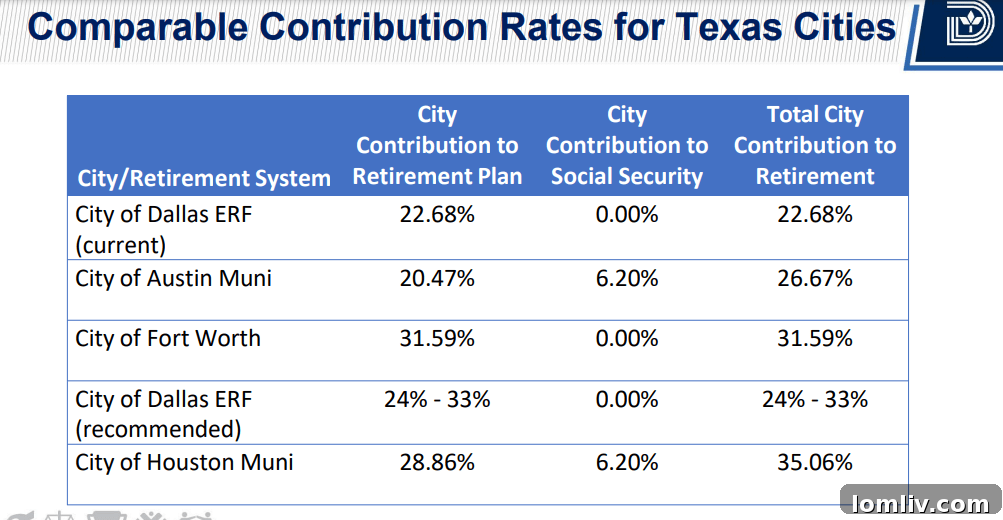
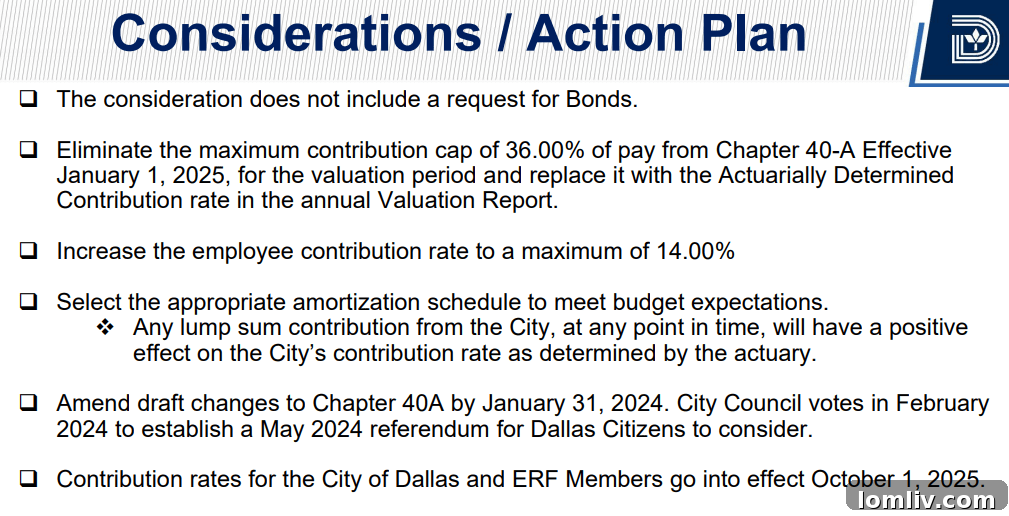
In their efforts to formulate a viable path forward, Cheryl Alston and David Etheridge presented a series of impactful proposals. While they strategically chose not to submit a request for bond funds at this juncture, their recommendations focused on structural changes designed to enhance the fund’s stability. These included increasing the employee contribution levels, a move intended to ensure a more robust and sustainable funding stream. Additionally, they proposed eliminating a rigid 36 percent maximum contribution cap, which would allow for greater flexibility in adjusting contributions as needed. Crucially, their proposals also sought to introduce language that would empower the City Council to inject an “infusion of capital” when necessary, making the overall contribution rate more adjustable and responsive to future financial fluctuations. Such far-reaching changes, however, are subject to a rigorous approval process, requiring endorsement from the pension board, the Dallas City Council, and ultimately, the city’s voters. To meet the critical impending deadlines, Alston specifically requested that these measures be placed on a May ballot, underscoring the urgency of public engagement and approval.
Strategic Approaches to Funding The Dallas Police And Fire Pension Plan
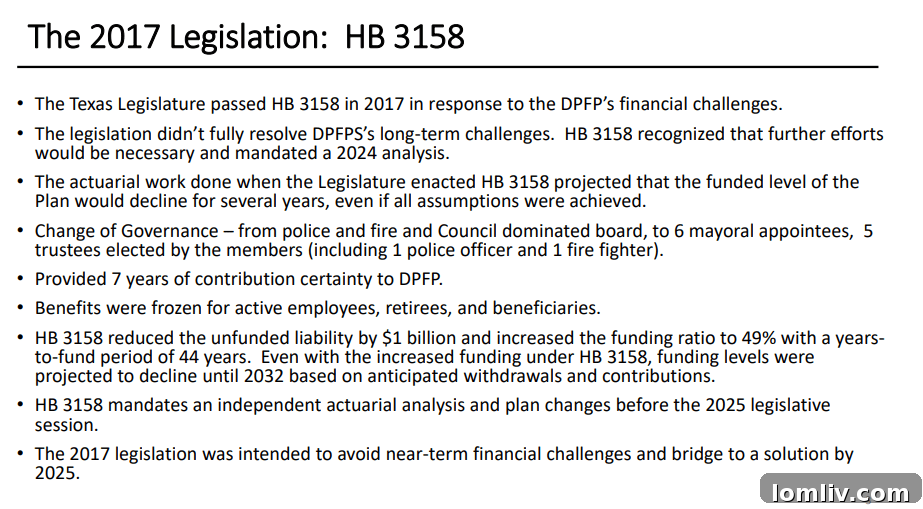
The historical context of the Dallas Police and Fire Pension fund’s challenges is crucial for understanding the current efforts. Bill Quinn, former chair of the DPFP, recalled the legislative response of House Bill 3158, passed in 2017. While this bill was a necessary step, Quinn candidly described it as “just putting a tourniquet on the bleeding and stopping the bleeding when we really needed a long-term solution.” His analogy emphasizes that while the bill provided immediate relief and prevented further deterioration, it did not fully address the systemic issues or secure the fund’s long-term solvency. The ongoing discussions therefore aim to move beyond short-term fixes towards comprehensive, enduring strategies.
Rob Walters, a significant voice in these deliberations, highlighted that the collective recommendations emerging from former board members, coupled with valuable input from John Stephens – currently serving as president of the Economic Development Corporation board – are meticulously crafted to represent the best interests of Dallas’s dedicated police officers and firefighters. This collaborative approach ensures that the proposed solutions are not only financially sound but also fair and equitable to the uniformed personnel who rely on these pensions for their retirement security. Their combined expertise brings both pension fund management experience and economic development insights to the table.
Dallas Chief Financial Officer Jack Ireland affirmed the city’s unwavering commitment to the funding plan. He stated unequivocally that the city’s finance office would bring the pension funding plan before the City Council for official approval. “It would be a priority for us in the same way we ensure that we fund our debt service every year,” Ireland asserted, drawing a parallel to the city’s highest financial obligations. This statement underscores that pension funding is not merely an optional expenditure but a fundamental financial responsibility that rivals other critical budgetary items. The goal, he noted, would be to fund this with new revenue streams. Ireland pointed out that “New construction alone has brought in $20 million a year,” indicating a potential source for increased funding. He cautioned, however, that prioritizing pension funding might entail difficult choices. “That type of revenue would help us fund this type of increase. It may result in us not being able to do some enhancements like crisis intervention or offender re-entry… because this would be a priority.” This transparency highlights the trade-offs involved and the city’s resolve to secure its pension obligations even if it means deferring other important programs.
Ultimately, the core objective guiding the Dallas City Council is straightforward and deeply reassuring, as articulated by Mayor Pro Tem Atkins. “Uniformed employees, when you retire, you will get paid,” he declared with conviction. “It’s as simple as that… You are safe with the City of Dallas. We are going to do everything in our power to make sure Dallas is the best place to work.” This powerful statement serves as a foundational promise to the city’s police officers and firefighters, reinforcing the city’s commitment to honor their service and ensure their financial security in retirement. It encapsulates the overarching goal of all ongoing efforts: to restore confidence, establish sustainable funding, and affirm Dallas’s dedication to its public safety personnel. The ongoing deliberations, expert consultations, and proposed legislative actions all converge on this singular promise, aiming to transform a complex financial challenge into a secure future for the city’s esteemed retirees.