The urban landscape is in constant flux, a vibrant tapestry woven with the aspirations and practical needs of its residents. For many, particularly younger generations and those who prioritize flexibility, renting remains a powerful and appealing housing choice. This dynamic became exceptionally relevant to me recently, as my Millennial daughter embarked on a significant life change, relocating from her lively Austin apartment to the energetic heart of New York City’s Hell’s Kitchen after securing a coveted position on Fifth Avenue. This personal connection naturally sharpened my focus on the intricacies of the rental market, especially the data-driven insights from reputable sources like RENTCafé.
The recently published RENTCafé Mid-Year Report offers a compelling deep dive into the notable shifts within the nation’s rental scene. Analyzing rental activity from the first half of this year, the report unequivocally confirms a robust resurgence in the allure of big city life. Younger generations and a growing cohort of “renters by choice” are actively moving back to major urban centers, with application levels returning to pre-pandemic highs. This trend highlights a broader societal movement, where the appeal of urban amenities, diverse career opportunities, and a thriving social environment continues to draw individuals, underscoring the enduring magnetic pull of metropolitan living.
National Rental Market Trends: A Resurgent Urban Appeal
On a national scale, the rental market has demonstrated remarkable resilience and growth. Overall renting activity saw a healthy increase of 13 percent compared to the same period last year. This surge is more than just a statistic; it serves as a clear indicator of post-pandemic economic recovery and evolving lifestyle preferences. Following a period of uncertainty and a temporary dip in urban populations, the magnetic pull of big cities has unequivocally reasserted itself. Several key factors contribute to this national upswing: a steadily recovering job market, the increasing adoption of hybrid work models that still necessitate urban proximity, and a strong generational desire for the unique social and cultural vibrancy found only in metropolitan environments.
The phenomenon of “renters by choice” is also playing an increasingly significant role. This demographic consists of individuals or families who, despite possessing the financial capacity to purchase a home, consciously opt for renting. Their motivations often center around the unparalleled flexibility that renting offers, a desire to avoid the responsibilities and maintenance associated with homeownership, access to high-end amenities frequently found in modern apartment communities, and the ability to reside in prime urban locations where purchasing might be financially prohibitive. This discerning demographic adds a crucial layer of demand and sophistication to the rental market, bolstering its overall strength and ensuring its continued dynamism.
Dallas-Fort Worth Metroplex: A Texas Powerhouse in Rental Growth
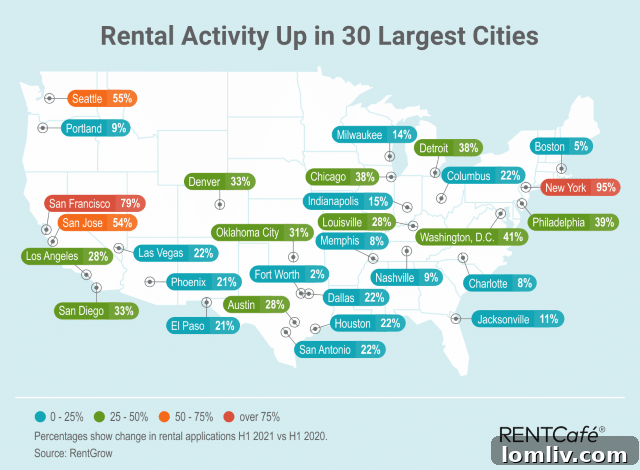
While the national trends paint an optimistic picture, the Dallas-Fort Worth (DFW) metroplex stands out as a particular epicenter of rental market dynamism. Dallas, in particular, significantly outperformed national averages, experiencing an impressive 22 percent increase in renting activity year-over-year. This substantial surge includes both existing residents making internal moves within Dallas and, notably, a considerable influx of new renters migrating into the city from external locations. This robust growth underscores Dallas’s escalating appeal as a major economic powerhouse and an increasingly desirable place to live and work.
Fort Worth, often characterized as Dallas’s slightly more relaxed counterpart, also reported strong activity. It mirrored the national numbers with a 13 percent increase in renters moving into the city. However, the report also highlighted a 28 percent outflow of renters leaving “Cowtown,” suggesting a more intricate migratory pattern within the broader metroplex. This could be indicative of various factors, such as residents seeking different lifestyles—perhaps moving to surrounding suburbs for more spacious living, or even transitioning to homeownership within the expansive DFW area. Regardless, the combined activity underscores the intense demand and fluid movement of residents across this rapidly expanding North Texas region.
The Lone Star State’s Unprecedented Rental Boom
Beyond the impressive performance of the DFW metroplex, Texas as a whole is experiencing an unprecedented rental boom, solidifying its reputation as a premier destination for internal U.S. migration. In 2021, several other major Texas cities reported staggering increases in their renter populations:
- Austin: A colossal 57 percent increase, reflecting its continued tech-driven growth.
- El Paso: A substantial 47 percent increase, showcasing its unique border economy and affordability.
- Houston: A robust 43 percent increase, driven by its diverse energy, healthcare, and logistics sectors.
- San Antonio: A solid 28 percent increase, benefiting from its historical charm, military presence, and growing industries.
These figures are far more than mere statistics; they represent a powerful demographic and economic phenomenon. Texas’s broad appeal stems from a confluence of attractive factors, including the absence of a state income tax, a generally lower cost of living compared to coastal states, a highly business-friendly environment that consistently fosters job creation, and a diverse array of industries ranging from cutting-edge technology and booming energy to world-class healthcare and advanced manufacturing. This powerful combination creates an irresistible draw for both individuals and companies, directly translating into persistent high demand for quality rental properties across the entire state.
Delving Deeper into Dallas’s Rental Dynamics
A more detailed examination of Dallas’s rental landscape uncovers even more intricate patterns of residential movement. The RENTCafé analysis specifically identified that a significant proportion of new renters moving into Dallas are originating from neighboring cities within the metroplex, such as Garland, Mesquite, Plano, and Irving, among others. This intra-metroplex migration has effectively fueled an impressive 34 percent surge in rental applications specifically for Dallas properties. This trend strongly suggests that residents within the broader DFW area are increasingly attracted to the core urban offerings of Dallas, seeking closer proximity to burgeoning job centers, diverse entertainment districts, and a more dynamic, fast-paced city lifestyle.
Concurrently, the analysis also observed a 19 percent rise in individuals making the choice to move out of Dallas. This outward movement, while potentially appearing counterintuitive, is a natural and healthy characteristic of a thriving, fluid urban market. It can be attributed to a variety of factors, including residents seeking more affordable housing options in surrounding suburban communities, a desire for larger homes or increased green space, or even the exciting transition from renting to homeownership within the expansive DFW area. This continuous ebb and flow vividly underscores the diverse needs, evolving preferences, and varied aspirations of the region’s dynamic population.
The Youth Movement: Gen Z’s Impact on the Dallas Rental Market
One of the most compelling and forward-looking findings of the RENTCafé report is the profound impact of Generation Z on the rental market, particularly evident in Dallas. This youngest cohort of renters, with the oldest members reaching 24 years of age this year, is rapidly reshaping urban dwelling trends and consumer expectations. In Dallas, Gen Z applications for rental properties experienced an astounding 66 percent surge compared to the previous year. Nationally, this influential demographic also saw a substantial 39 percent rise in applications, with a notable proportion representing first-time renters eager to establish independence, launch their careers, and fully embrace urban life.
Gen Z renters are typically characterized by their innate digital fluency, a pronounced preference for convenience, and a strong desire for community-centric and experiential living environments. They are highly likely to be drawn to Dallas for its burgeoning tech industry, its diverse and growing job opportunities, and its vibrant social and cultural landscape. Their enthusiastic entry into the market signals a fresh wave of demand, actively compelling developers and property managers to innovate with amenities and technologies that specifically cater to this generation’s evolving expectations, such such as advanced smart home features, integrated co-working spaces, and robust, high-speed internet infrastructure.
Behind the Data: RENTCafé’s Robust Methodology
The insightful market and demographic trends presented within the RENTCafé report are the direct result of a rigorous and comprehensive analytical process. RENTCafé meticulously leveraged an extensive dataset derived from 2.5 million nationwide renter applications, all meticulously provided by RentGrow, a leading and trusted provider of resident screening solutions in the real estate industry. This vast and detailed dataset allows for an exceptionally comprehensive and accurate understanding of rental activity across a multitude of demographics and diverse geographic locations, thereby providing invaluable intelligence for both individual renters and seasoned real estate professionals. The sheer volume and granularity of the data analyzed significantly ensure the reliability, depth, and actionable nature of the trends identified.
New York City: A Metropolis Reawakened and Thriving
While much of the focus of this analysis has been on the robust performance of Texas cities, the report also casts a significant spotlight on other major urban centers, most notably New York City. The iconic metropolis, famously known as “the city that never sleeps,” experienced a phenomenal resurgence in renter interest, with the sheer number of individuals moving into the city skyrocketing by an astonishing 209 percent. This dramatic and rapid increase powerfully reflects New York’s enduring and unparalleled appeal as a global hub for culture, finance, innovation, and boundless opportunity, demonstrating a powerful bounce-back after the initial slowdowns experienced during the pandemic. My daughter’s recent move to the vibrant heart of Manhattan is a vivid testament to this powerful gravitational pull, and her action, alongside countless others, will undoubtedly contribute to these soaring figures in subsequent market analyses.
Future Outlook for Dynamic Urban Rental Markets
The compelling trends illuminated by the RENTCafé Mid-Year Report offer a clear and encouraging trajectory for the future of urban rental markets across the nation. The sustained and growing demand from younger generations, coupled with the consistent preferences of “renters by choice,” strongly suggests continued growth, innovation, and vibrancy within major cities like Dallas, Houston, and New York. Developers are highly likely to continue their investment in state-of-the-art urban apartment complexes, with a strong emphasis on integrating amenities and design aesthetics that profoundly appeal to the modern renter. However, this intensified demand also brings with it inherent challenges, including the potential for upward pressure on rental costs and the critical need for thoughtful, forward-thinking urban planning to accommodate burgeoning populations in a sustainable and equitable manner.
For individuals currently considering a relocation or embarking on a new chapter, understanding these intricate market dynamics is absolutely crucial. Whether seeking a vibrant and fast-paced city experience in Dallas, exploring the diverse professional opportunities in Houston, or immersing oneself in the unparalleled cultural richness of New York, the rental market offers a plethora of diverse options. The key to success lies in leveraging comprehensive data and nuanced insights to make truly informed decisions within what remains a competitive, dynamic, and rapidly evolving housing landscape.
In conclusion, the post-pandemic era has unequivocally ushered in a dynamic and profound resurgence in urban rental markets across the U.S., with Texas cities, particularly Dallas, confidently leading the charge. The enthusiastic entry and preferences of Gen Z, brilliantly coupled with the considered choices of renters by choice, are fundamentally reshaping urban demographics and demanding renewed attention to innovative housing solutions that adeptly meet these evolving needs. As cities continue their remarkable journey to adapt, innovate, and thrive, the rental market will undoubtedly remain a crucial barometer of urban health, vitality, and enduring appeal.