Discover the Timeless Charm of the Historic Daisy Polk Inn: A Dallas Treasure
Stepping through the doors of the Daisy Polk Inn more than two decades ago, I found myself unwittingly embarking on a journey through history. My dear friend and former pharmacist, A. Wayne Falcone, recognized my profound appreciation for historic homes and my passion for writing about them. It was this shared interest that prompted his invitation to visit what he affectionately calls “Miss Daisy,” a property that stands out as one of the most exquisite residences I have ever encountered.
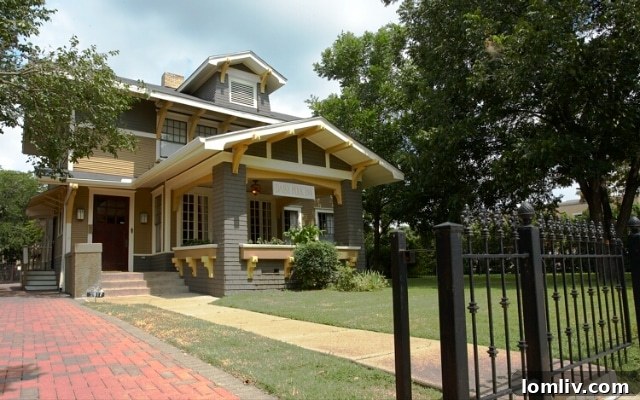
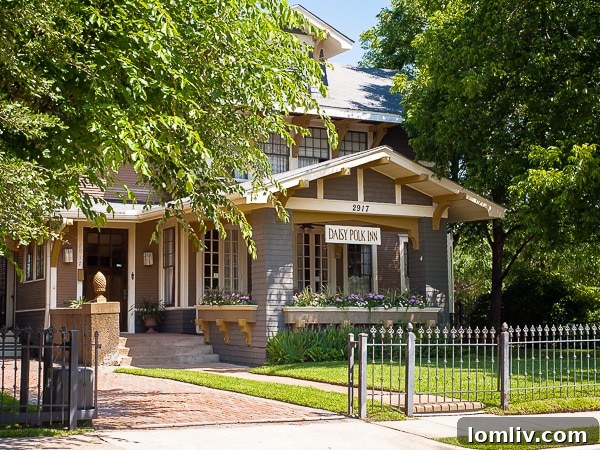
Officially recognized on landmark records as The Lynn Talley/Daisy Polk House, this architectural marvel boasts a fascinating origin story. Completed in 1910 at a cost of $4,000, it was meticulously built for Lynn P. Talley, the astute assistant cashier of City National Bank, and his wife, Martha. Lynn Talley’s career would later ascend to significant heights, culminating in his role as the fourth president of the esteemed Dallas Federal Reserve Bank. While the Talleys’ residency in “Miss Daisy” was relatively brief, their vision unquestionably laid the foundation for an extraordinary and enduring legacy, creating a home that was truly ahead of its time.
The Indomitable Spirit of Daisy Polk: A Dallas Icon
The house exchanged hands among three owners between 1912 and the 1930s, each contributing to its unfolding narrative. However, it was in 1944 that the property truly found its namesake. That year, the renowned opera soprano Daisy Polk—a direct descendant of President James K. Polk, indeed—acquired the charming three-bedroom residence for $8,500. Daisy was a woman who consistently defied conventional expectations, especially for her era, embodying a progressive spirit in every facet of her life.
Her illustrious career saw her studying under the tutelage of the legendary opera singer Enrico Caruso, a figure whose influence resonated globally in the world of classical music. This mentorship, coupled with her extensive travels, broadened Daisy’s horizons and fueled her passionate commitment to various causes. Notably, she dedicated a significant period to philanthropic efforts in Fontainebleau, France, actively raising funds to rebuild the village after it had been devastated by the ravages of war, showcasing her remarkable compassion and global citizenship.
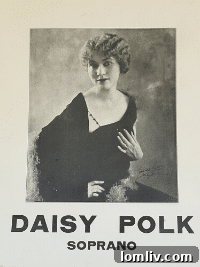
Upon moving to Dallas in 1922 at the age of 32, Daisy Polk quickly became an influential force in the city’s burgeoning cultural landscape. She performed frequently, established, and directed the vocal program at the prestigious Hockaday School, and simultaneously managed two successful vocal instruction businesses. It was within the very walls of this historic home that she ran an elite vocal instruction program, nurturing the talents of aspiring singers. Beyond her musical pursuits, Daisy was also a prolific writer, contributing numerous articles to The Dallas Morning News to champion the causes close to her heart, demonstrating her adeptness at public advocacy.
Perhaps the most fitting summation of Daisy’s rebellious and spirited nature comes from a reporter for The Dallas Morning News. During a 1976 interview for a bicentennial story, prompted by her historical connection to President James K. Polk, the reporter audaciously inquired about her approach to “aging gracefully.” Her unforgettable retort encapsulates her character perfectly: “I am growing old rebelliously, not gracefully.” One can almost imagine her delivering a defiant kick to the reporter after such a spirited declaration, a testament to her unwavering individuality.
Daisy Polk resided in this cherished home until the remarkable age of 91, a testament to her deep connection to the property. Following her passing, her caretakers continued to live there for several years. It was during this period that Wayne Falcone, who had admired the house for years, driving past it with a persistent longing, finally succeeded. Through sheer persistence and a genuine passion for the residence, he persuaded Daisy’s heirs to sell, and in 1996, Wayne proudly became the new owner, ready to usher “Miss Daisy” into her next chapter.
A Vision Realized: The Daisy Polk Inn’s Resurgence
Upon acquiring the property, Wayne Falcone faced a pivotal decision regarding its future. As he recounted, “Now, I had to decide what I was going to do with her other than sit in there with a glass of champagne and admire the glorious rooms. A guest house or bed and breakfast would work since the house is close to many clubs and restaurants.” This vision, however, was not without its formidable challenges. “It was not so easy obtaining this license,” Wayne explained. “The Oak Lawn Committee approved my presentation to begin the restoration, only to rescind it after a few months of beginning. A changing of the guard or its president was responsible for this. What was I going to do now?” This bureaucratic hurdle threatened to derail his ambitious plans, highlighting the complexities often involved in historical preservation and development.
As the saying wisely goes, “It takes a village.” And indeed, Wayne Falcone garnered invaluable support from a diverse group of dedicated individuals who believed in his vision. He received crucial assistance from architect Mark Shekter, esteemed council members Veletta Forsythe Lill and Willie Cothrum, renowned preservationist Jim Anderson, and even then-Mayor Laura Miller, among many others. Their collective efforts were instrumental in navigating the complex licensing process. Ultimately, Wayne successfully obtained the necessary license, which came with a historic overlay condition, formally approved by the City Council in 2003. This landmark decision paved the way for the Daisy Polk Inn to open its doors, ready to embrace its new purpose.
A New Era of Hospitality: The First Full-Service Bed and Breakfast in Dallas
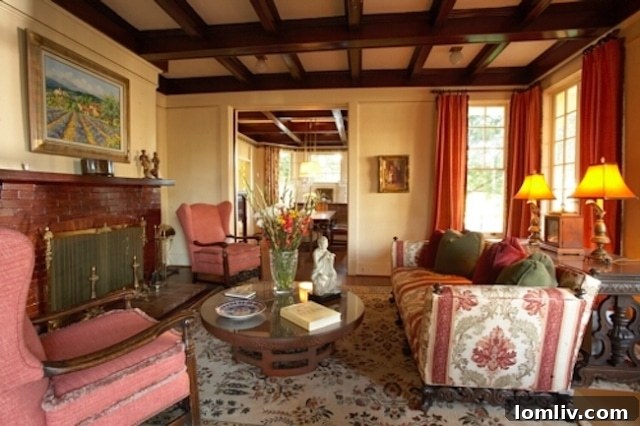
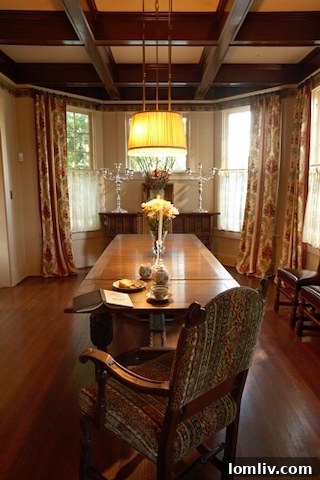
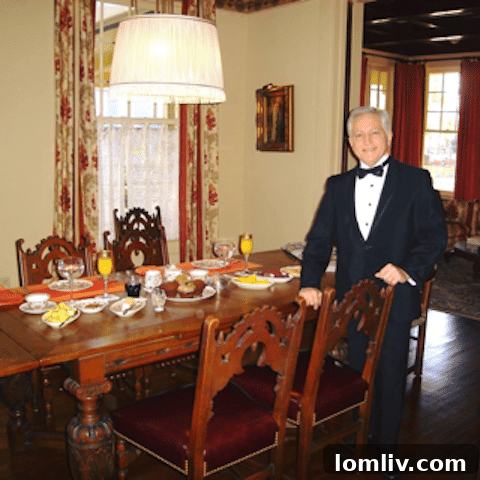
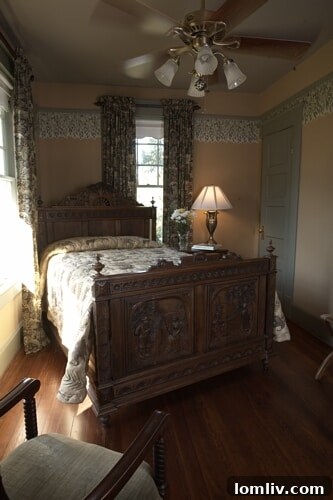
With its official opening, the Daisy Polk Inn proudly claimed its place as the first full-service bed and breakfast in Dallas, setting a new standard for luxury and historical immersion in the city’s hospitality scene. In 2009, the inn welcomed the talented Chef Michael Napier to its team, further elevating the guest experience with exquisite culinary offerings that matched the grandeur of its surroundings. The inn’s interiors are a testament to refined taste, meticulously decorated by Antiques Roadshow host and legendary antique dealer Gerald Tomlin of Tomlin Antiques. Every corner of “Miss Daisy” is adorned with breathtaking antiques sourced from across the globe and draped in luxurious Scalamandre fabrics, creating an ambiance of unparalleled elegance and historical richness.
The journey to secure official landmark status for the house was spearheaded by Ron Emrich, who undertook the extensive research and submission paperwork. At the time, Emrich was a principal with Urban Prospects, and his comprehensive report reads like a captivating historical novel, meticulously detailing the architectural and cultural significance of the property. Here’s a delightful excerpt, offering a glimpse into the profound insights of his work:
It is most certainly likely that the client, the builder, and any architect that may have participated in the creation of the house on Reagan Street had seen and been influenced by the work of the few nationally recognized and published architects who were creating masterpieces of Arts & Crafts design at the time, not the least of whom were brothers Charles Sumner and Henry Mather Greene, of Pasadena, California.
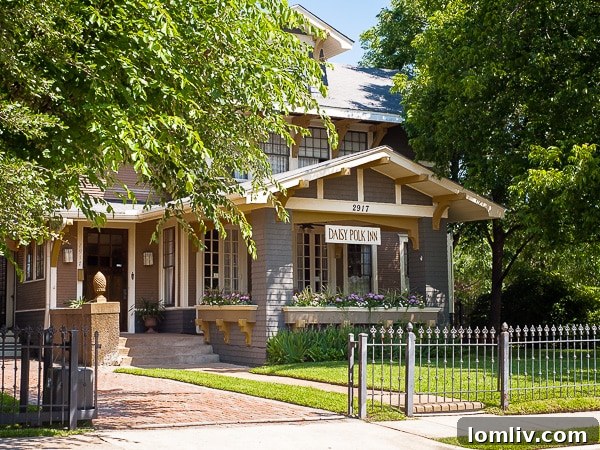
Lynn and Martha Talley’s house on Reagan Street — sadly undocumented as to its actual architectural design history — exhibits nearly all of the design characteristics of the Greene’s maturing Arts & Crafts work: the massive roof with multiple gables, an exuberant blend of shingling and siding as wall cladding, the projecting roof beams and knee brackets with shaped ends, in California, yet the influences are clearly seen in it.
Regardless of the perhaps never-to-be-known roots of the house’s design inspiration, The Talley House remains as the best and nearly only example of the high style Arts & Crafts influenced “bungalow” in Dallas. Few such distinguished examples were ever built in the first place; Dallas was conservative in every respect, including in matters of architectural taste and fashion. One of the few known comparable works in the Arts & Crafts style, the Mayfield House on Lakeside Drive in Highland Park, was demolished during the late 1980s, leaving the Talley/Polk House as the lone survivor.
This remarkable report underscores the unique architectural pedigree of the Talley/Polk House. It highlights the profound influence of the Arts & Crafts movement, a distinctive style characterized by its emphasis on handcrafted details, natural materials, and a harmonious blend with nature. Key features like the expansive roof with multiple gables, the dynamic interplay of shingles and siding, and the meticulously crafted projecting roof beams and knee brackets are all hallmarks of this sophisticated design philosophy. The mention of Charles Sumner and Henry Mather Greene, pioneers of the American Arts & Crafts movement, further cements the house’s connection to a significant architectural lineage, even if its direct design history remains a charming mystery. This historical context emphasizes why the Talley/Polk House stands as an unparalleled example of high-style Arts & Crafts architecture in Dallas, a city often perceived as more architecturally conservative. The regrettable demolition of the comparable Mayfield House further elevates the Talley/Polk House’s status as a rare and invaluable survivor.
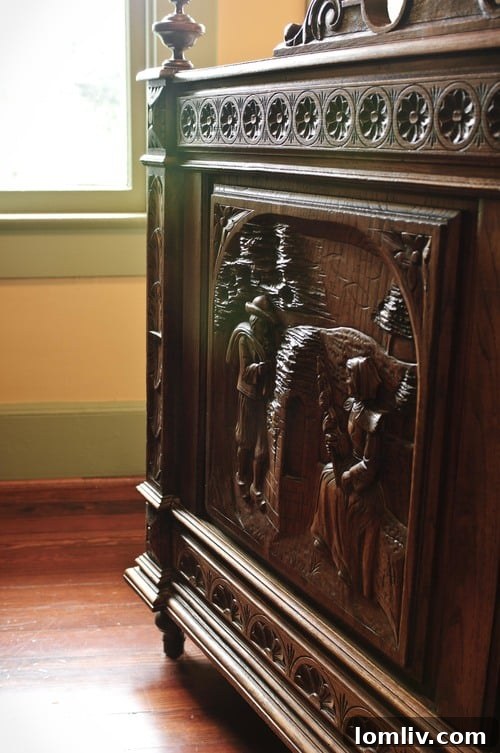
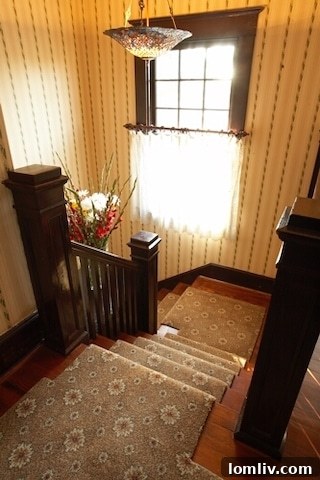
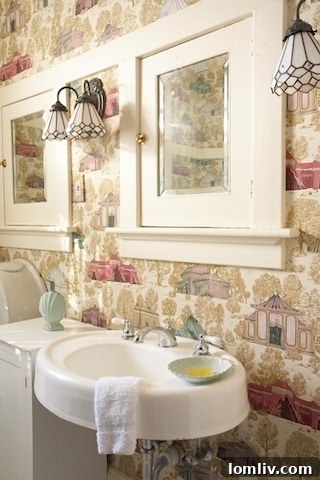
With the house officially receiving its well-deserved landmark status, Wayne Falcone recognized the need for a name that would truly capture its essence and history. “After a fair amount of deliberation, the answer appeared and was as obvious as the charm of the structure itself,” Wayne thoughtfully remarked. “Daisy Polk Inn was the only name that would do for such a wonderful and unique house that had weathered the ebb and flow of time and changing surroundings as rebelliously as the woman who resided there.” The name is a perfect homage to the opera soprano whose independent spirit so deeply resonated with the house’s own enduring character, reflecting a resilience and timeless charm that defied the ages.
I believe that “Miss Daisy” herself would be immensely proud to see how her beloved home has been meticulously cared for, preserved, and cherished by Wayne. Over the years, he has graciously hosted a diverse array of notable individuals, though, with admirable discretion, he prefers not to disclose their identities. Every moment spent nurturing this historic property has been a labor of love for Wayne. However, as all chapters eventually draw to a close, it is now time for “Miss Daisy” to embark on her next exciting act, poised to continue her storied journey under new stewardship.
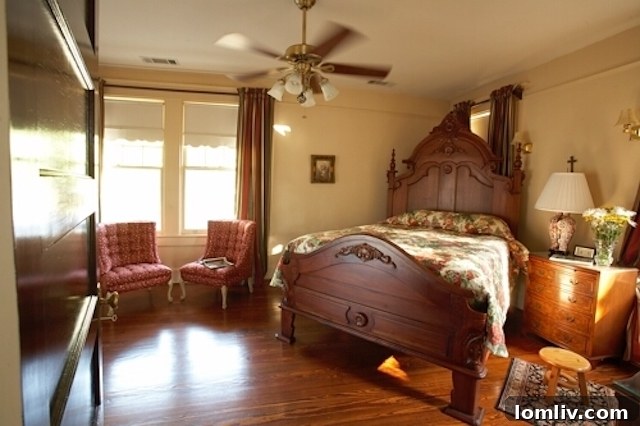
To truly encapsulate the profound significance of this architectural gem, I’ll conclude with the final paragraph from the official landmark paperwork, a passage that beautifully summarizes its enduring legacy:
The Talley/Polk House at 2917 Regan Street is a unique feature in the Oak Lawn neighborhood, reflecting an outstanding pedigree as the most distinguished remaining high-style Arts & Crafts house in the city.
This statement serves as a powerful reminder of the Daisy Polk Inn’s invaluable contribution to Dallas’s architectural heritage and its unique position as a beacon of the Arts & Crafts movement. It is not merely a building but a living testament to history, art, and the enduring spirit of remarkable individuals.
For more information on “Miss Daisy” and opportunities related to this exceptional property, please contact Candace Rubin.