Texas, a state synonymous with growth and opportunity, continues to capture national attention with its dynamic economic landscape and rapid demographic shifts. Recent reports, however, paint a picture of contrasts, highlighting both the state’s remarkable successes and critical challenges. From its bustling housing markets to its rapidly expanding population, Texas is undeniably a hub of activity. Yet, beneath the surface of this vibrant growth, crucial areas like public education demand immediate and strategic intervention. This detailed analysis delves into the latest data concerning Texas’s educational system, its unprecedented population boom, the thriving economic prowess of the Dallas-Fort Worth metroplex, and the state’s intensely competitive housing market.
Addressing the Challenges in Texas Education
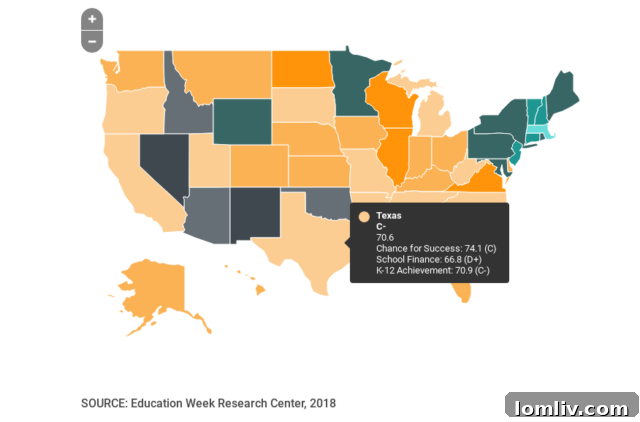
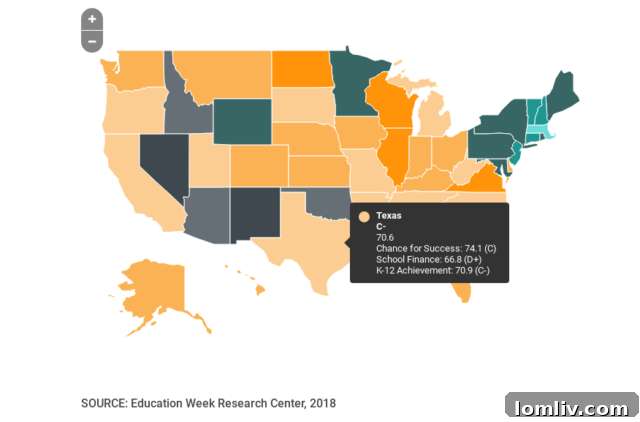
According to Education Week’s annual report card, Texas schools are teetering on the edge, revealing significant areas for improvement. The state garnered an overall ranking of 70.6 percent, noticeably trailing the national average, which hovers around 74 percent. This assessment places Texas squarely in the bottom 20 states nationwide, signaling a pressing need for reform and increased investment.
A breakdown of the scores reveals the core issues. Texas received a grade of C, or 74.1 percent, for its efforts in setting students up for success, indicating moderate effectiveness in preparing the next generation. K-12 achievement was also a concern, with a score of 70.9 percent. However, the most significant mark against the state, and perhaps the least surprising, lies in school finance, where Texas scored a dismal 66.8 percent. This critical area significantly impacts every facet of the education system, from teacher salaries and classroom resources to facility maintenance and student support programs. The reliance on property taxes for school funding often creates vast disparities between wealthy and less affluent districts, exacerbating inequalities and challenging the principle of equitable education for all Texans.
The implications of underperforming schools and inadequate funding extend far beyond the classroom. They affect the state’s future workforce, economic competitiveness, and overall quality of life. As Texas continues to attract new residents and businesses, a robust and well-funded education system becomes an even more vital asset, crucial for fostering innovation, retaining talent, and ensuring long-term prosperity. Addressing these financial shortcomings and elevating educational standards are paramount for the sustained success of the Lone Star State.
Texas’s Unprecedented Population Surge
The allure of Texas is undeniable, as evidenced by new Census data revealing an astonishing influx of nearly 400,000 new residents in the past year alone. This surge has pushed the state’s population to a remarkable 28,304,596, solidifying its position as one of the fastest-growing states in the nation. To put this into perspective, the growth witnessed in a single year is roughly equivalent to adding the entire population of a major city like Arlington to the state’s populace.
This demographic explosion is fueled by a trifecta of factors. The majority, approximately 209,690, were new Texans born within the state, highlighting a healthy natural increase. Additionally, Texas continues to be a magnet for individuals seeking new opportunities, attracting over 110,000 immigrants from other countries and drawing 79,163 residents from other U.S. states. This diverse influx underscores Texas’s reputation as a land of opportunity, driven by its robust job market, business-friendly policies, lower cost of living compared to coastal states, and absence of a state income tax.
While this rapid growth is a testament to Texas’s economic vitality and widespread appeal, it also presents significant challenges. The state’s infrastructure, including roads, water systems, and public utilities, must rapidly expand to accommodate the growing populace. Public services, notably schools and healthcare facilities, face increased demand, putting further strain on existing resources. Understanding and strategically managing this demographic expansion is crucial for ensuring that Texas can continue to offer a high quality of life and maintain its economic momentum for all its residents, old and new.
Dallas-Fort Worth: An Economic Powerhouse on the National Stage
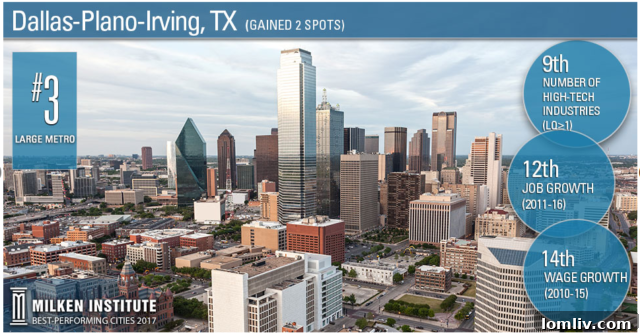
The economic prowess of the Dallas-Plano-Irving area continues to garner national recognition, securing an impressive third-place ranking in the prestigious Milken Institute’s Best-Performing Cities Index. This annual index, published since 1999, is a robust measure of urban economic vitality, evaluating metropolitan areas based on nine comprehensive metrics. These metrics provide a holistic view of growth, including crucial indicators like job growth, wage and salary growth, and the output of the technology sector over time.
The Dallas metro area’s high ranking is a direct reflection of its dynamic and diversified economy. Specifically, the region ranked ninth in the number of high-tech industries, showcasing its burgeoning innovation ecosystem. Its strong performance in job creation led to a 12th place ranking in job growth, signaling a thriving employment landscape that continues to attract talent. Furthermore, Dallas earned a 14th place ranking in wage growth, indicating that the economic prosperity is translating into tangible benefits for its workforce.
The success of the Dallas-Fort Worth metroplex is not accidental; it is a result of strategic investments, a pro-business environment, and a diverse economic base spanning technology, finance, healthcare, logistics, and professional services. This vibrant economic climate continues to attract corporate relocations and expansions, fostering a robust job market and contributing to the region’s overall appeal. As a result, the DFW area stands as a beacon of economic opportunity, solidifying its position among the nation’s elite urban centers, alongside leading cities like Provo, Utah, and Raleigh, North Carolina.
Navigating Texas’s Dynamic Housing Market
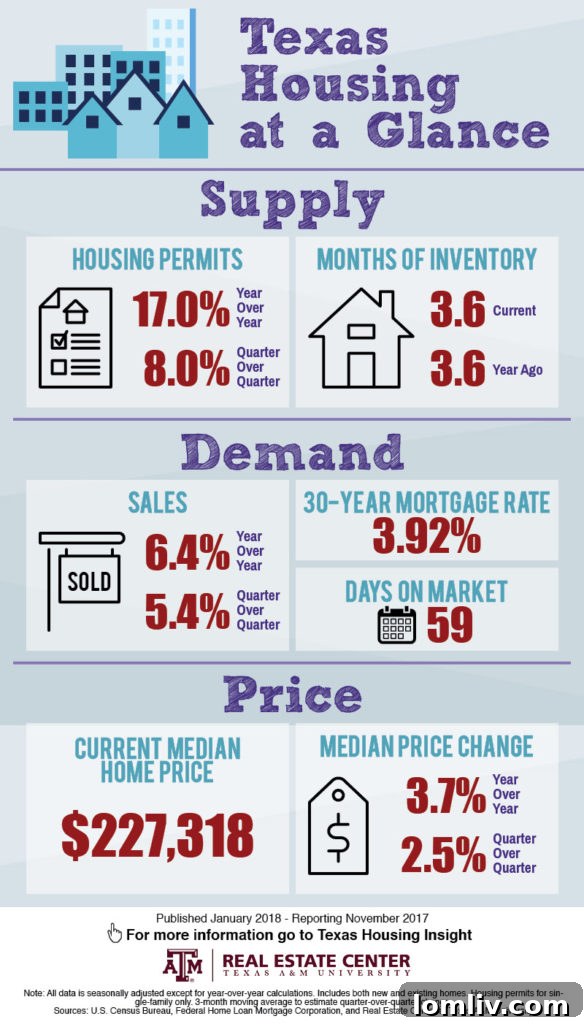
Texas’s booming population and thriving economy are creating an intensely competitive housing market across the state. New data from the Texas A&M Real Estate Center revealed a robust 6.6 percent increase in housing sales statewide in November, underscoring persistent demand. This surge in activity is met with efforts to boost supply, as single-family housing construction permits rose by an impressive 17.2 percent, reaching levels unseen since before the last recession. Metropolitan areas like Fort Worth experienced nearly a doubling of permits, while Dallas saw a significant 13.9 percent increase, contributing to an 11 percent rise in total housing starts year-over-year.
Despite new construction, housing inventory remains remarkably tight. The Months of Inventory (MOI), a key indicator of how long it would take to sell all available homes at the current sales pace, declined further in November. The statewide average stood at a mere 3.3 months, signaling a strong seller’s market. In major urban centers, the situation was even more pronounced, with Dallas reporting just 2.1 months of inventory and Fort Worth a critically low 1.9 months. New home inventories also faced similar pressures, dropping to 4.2 months in Dallas and 4 months in Fort Worth.
The high demand translates into homes spending less time on the market. Statewide, properties were selling in just under two months. The mid-range segment, homes priced between $200,000 and $300,000, averaged a swift 54 days on the market. Properties under $200,000 moved even quicker, averaging approximately two months. While demand remained strong, it was slightly less frenzied for houses above $500,000, with an average Days on Market (DOM) of 86 days. In the highly competitive Dallas and Fort Worth markets, existing homes were flying off the shelves in an average of just 34 and 33 days, respectively.
These market conditions reflect a robust economy and continuous population growth, but they also present challenges related to affordability and accessibility for many prospective homeowners. The tight inventory and rapid sales pace indicate that while Texas remains an attractive place to live, navigating its housing market requires speed and strategic action from buyers, while offering favorable conditions for sellers.
Conclusion: Texas’s Path Forward
Texas stands at a pivotal juncture, embodying both the immense opportunities and the inherent challenges that come with rapid growth. While its economy continues to thrive, particularly in metropolitan hubs like Dallas-Fort Worth, and its population swells with new residents seeking opportunity, the state faces critical responsibilities. Addressing the shortcomings in public education funding is not merely an academic exercise; it is an investment in the state’s future workforce and social equity. Similarly, managing the burgeoning housing demand with sustainable development strategies is essential to maintain affordability and quality of life for all Texans.
The data presented paints a clear picture: Texas is a dynamic state that is attracting people and businesses at an astonishing rate. However, sustaining this growth in the long term requires strategic foresight, robust public services, and equitable resource distribution. By tackling its educational challenges, planning for continued population expansion, and fostering a balanced housing market, Texas can ensure its trajectory remains upward, cementing its legacy as a truly exceptional state where opportunity abounds for generations to come.