

Texas’s Irresistible Pull: Unpacking the Latest Relocation Trends and Why People are Moving to Texas
Texas has long been synonymous with opportunity and growth, and recent relocation data strongly reinforces this reputation. The state continues to be a magnet for individuals and families seeking new beginnings, with an impressive influx of residents from across the nation and beyond. While the flow of people into Texas is substantial, a fascinating and often-discussed dynamic exists with California, creating a unique migration pipeline. Understanding these trends is crucial for grasping the economic, social, and demographic shifts occurring within the Lone Star State.
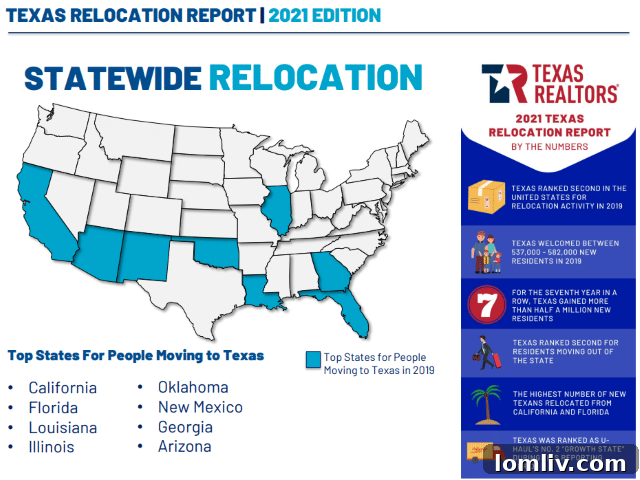
The 2021 Texas Relocation Report, a comprehensive analysis by Texas Realtors based on the latest available migration data from the U.S. Census Bureau and U-Haul, sheds considerable light on these movements. This authoritative report offers invaluable insights into who is moving to Texas, where they are coming from, and the significant impact these demographic shifts are having on various regions within the state. From bustling metropolitan centers to rapidly expanding suburban communities, Texas is experiencing transformative growth that warrants closer examination.
The California-Texas Migration Pipeline: A Two-Way Street with a Clear Winner
It’s hardly a revelation that a substantial number of Texas’s new residents hail from California. This westward exodus has been a dominant narrative in national migration discussions for years. However, the report highlights a more nuanced reality: the relocation path between these two economic powerhouses is, in fact, a two-way street. While Texas serves as a primary destination for Californians seeking new horizons, California also ranks as the top out-of-state relocation destination for people moving out of Texas. Yet, the balance of this exchange is heavily tilted in Texas’s favor, with approximately twice as many Californians choosing to move to Texas than vice versa.
This significant net migration from California to Texas can be attributed to a confluence of factors that make Texas an increasingly attractive option for individuals and businesses alike. These often include:
- Economic Opportunities: Texas boasts a robust and diversified economy, particularly strong in tech, energy, manufacturing, and healthcare. Its business-friendly policies, lower regulatory burdens, and lack of state income tax are powerful incentives for companies and job seekers.
- Affordable Living: Compared to California’s notoriously high cost of living, Texas offers significantly more affordable housing, lower property taxes (despite being higher than some states, they are still better than CA), and generally lower everyday expenses, allowing residents’ incomes to stretch further.
- Quality of Life: Many movers are drawn to Texas for its vibrant culture, diverse landscapes, and a perception of a better work-life balance. The state offers a variety of environments, from the fast-paced urban centers of Dallas and Houston to the unique charm of Austin and the historic appeal of San Antonio.
- Pro-Growth Environment: State and local governments in Texas are generally seen as proactive in fostering economic expansion and infrastructure development, which appeals to both businesses looking to relocate and individuals seeking upward mobility.
Texas Continues Its Growth Spurt: Key Statistics and What They Mean
Texas’s growth story extends far beyond its dynamic relationship with California. The state has consistently demonstrated an extraordinary capacity to attract and integrate new populations. The 2021 Texas Relocation Report underscores this by revealing that Texas was ranked as U-Haul’s second-ranked growth state during the 2019 reporting period. Furthermore, based on comprehensive 2019 data, Texas secured the second position nationally for overall relocation activity, cementing its status as a premier destination for movers.
The numbers are indeed striking. In 2019 alone, Texas welcomed between 537,000 and 528,000 new residents. This figure marks the seventh consecutive year that Texas gained over half a million new residents, an unparalleled streak of sustained population growth in the United States. While hundreds of thousands move in, a significant portion also moves out. The U.S. Census estimated that between 435,000 and 471,000 Texans relocated to other states during the same period. However, the net effect was overwhelmingly positive, resulting in a net gain of approximately 100,000 people for the state. This demonstrates Texas’s strong magnetic pull, outcompeting other states in retaining and attracting residents.
Adding another layer to Texas’s demographic expansion is its appeal to international migrants. The report indicates that Texas also welcomed approximately 192,000 to 222,000 new residents from outside the United States in 2019. This international influx contributes significantly to the state’s diversity and economic dynamism, bringing new skills, cultures, and entrepreneurial spirit that further fuel Texas’s growth trajectory.
Understanding the Data: The 2021 Texas Relocation Report Methodology
To fully appreciate the insights presented, it’s helpful to understand the foundation upon which the 2021 Texas Relocation Report is built. The report meticulously synthesizes data from two primary, highly reputable sources: the 2019 American Community Survey 5-Year Estimates provided by the U.S. Census Bureau and the 2020 U-Haul National Migration Trend Report. This combination offers a robust view, blending detailed demographic breakdowns from federal statistics with practical, real-time indicators from one of the nation’s leading moving services.
The report goes beyond statewide aggregates, offering granular analysis down to the county level across nine key demographic areas in Texas. This localized approach allows for a deeper understanding of specific regional trends, highlighting areas of concentrated growth and identifying internal migration patterns. Its accessible PDF format, packed with easily digestible information, makes it an invaluable resource for policymakers, real estate professionals, and anyone interested in Texas’s evolving demographic landscape.
Intra-State Dynamics: Relocation Trends Within Texas Counties
While the focus often remains on interstate migration, the report also provides critical insights into movement patterns within Texas itself, particularly within major metropolitan areas. Analyzing U.S. Census Flower Mapper data from 2014 to 2018, the report highlights significant internal shifts within the sprawling Dallas-Fort Worth (DFW) Metroplex, focusing on Collin, Dallas, Denton, and Tarrant counties. This internal movement is often driven by a quest for better housing, schools, or shorter commutes as urban cores expand and suburban areas develop.
Focus on the DFW Metroplex: Dallas, Collin, Denton, and Tarrant Counties
- Dallas County: A Hub of Activity: As a historic economic and cultural center, Dallas County naturally experiences the most dynamic ebb and flow of residents. It serves as both a significant point of origin and destination for people moving within the DFW region. Its bustling urban environment and diverse job market continue to attract new residents, even as some existing residents seek out opportunities in neighboring counties.
- Outward Movement from Dallas: The report reveals substantial outward migration from Dallas County to its surrounding areas. Specifically, 15,284 residents moved from Dallas County to Tarrant County, signaling a shift towards Fort Worth and its surrounding communities. Additionally, 13,742 moved to Collin County, known for its rapidly growing and affluent suburbs, and 9,826 relocated to Denton County, which offers a blend of suburban growth and access to major highways.
- Inward Migration to Surrounding Counties: These figures illustrate a common metropolitan trend: as central urban areas become denser or more expensive, residents often move to adjacent counties offering newer housing stock, larger lots, perceived better school districts, or a more suburban lifestyle, while still maintaining proximity to the core city’s employment centers. Collin, Denton, and Tarrant counties have all seen remarkable growth partly due to this internal migration from Dallas County, transforming the entire DFW region into one of the fastest-growing mega-regions in the U.S.
Texas Cities as National Magnets: U-Haul Destination Rankings
The U-Haul National Migration Trend Report, a key component of the Texas Relocation Report, offers a unique perspective on which cities are drawing the most attention from movers. These rankings are based on the volume of one-way U-Haul truck rentals entering a city versus leaving it, providing a direct measure of popularity as a destination. In 2019, several Texas cities prominently featured on this national list, underscoring their appeal:
- Dallas, Texas: Ranking 18th among U-Haul Destination Cities nationally, Dallas solidifies its position as a top-tier relocation magnet. Its robust economy, diverse job market, and vibrant cultural scene continue to attract thousands of new residents annually.
- Fort Worth, Texas: Just a short drive west, Fort Worth secured the 25th spot. Known for its distinct identity, rich Western heritage, and rapidly expanding economy, Fort Worth offers a slightly different pace and lifestyle compared to Dallas, appealing to those seeking a balance of urban amenities and a strong sense of community.
- Plano, Texas: Further north in Collin County, Plano ranked 27th. This city is a prime example of a thriving suburban hub that has developed its own robust corporate presence, excellent schools, and high quality of life, drawing families and professionals alike.
These rankings are not just numbers; they reflect ongoing economic development, infrastructure investment, and quality of life improvements that make these Texas cities highly desirable places to live and work.
Beyond the Numbers: The Impact of Rapid Growth on Texas
Such sustained and significant population growth naturally brings both opportunities and challenges for Texas. On the one hand, the influx of new residents fuels economic expansion, introduces diverse perspectives, and bolsters the state’s workforce. Businesses benefit from an expanding consumer base and a larger talent pool, while municipalities see increased tax revenues that can fund public services and infrastructure projects.
However, rapid growth also exerts pressure on existing resources and infrastructure. Housing markets in popular areas can become highly competitive, leading to rising home prices and affordability concerns. Transportation networks face increased congestion, necessitating continuous investment in roads, public transit, and smart urban planning. Schools, healthcare facilities, and utility services must also expand to accommodate the growing population. Addressing these challenges effectively requires proactive governance, strategic planning, and collaboration between state and local entities to ensure Texas can sustainably manage its impressive expansion and maintain the high quality of life that attracts so many.
Is Texas Still a Land of Opportunity? The Future of Relocation
Given the trends identified in the 2021 Texas Relocation Report, it’s clear that Texas continues to be perceived as a land of abundant opportunity. Its strong economic fundamentals, coupled with a relatively lower cost of living compared to coastal hubs, position it uniquely for continued growth. While the exact trajectory of future migration patterns may fluctuate with national economic conditions and evolving lifestyle preferences, the underlying factors driving people to Texas remain potent.
The state’s commitment to business development, its diverse and expanding job markets, and its appealing quality of life suggest that Texas will likely maintain its status as a top destination for both interstate and international relocation for the foreseeable future. The ongoing challenge will be to manage this growth thoughtfully, ensuring that the benefits are widespread and that the state’s infrastructure and resources evolve in tandem with its population.
Conclusion: Texas’s Enduring Appeal in a Changing Landscape
The 2021 Texas Relocation Report paints a vivid picture of a state in dynamic motion. It confirms Texas as a national leader in population growth, driven significantly by the well-documented pipeline from California, but also by strong domestic and international migration. The detailed insights into county-level movements and city popularity rankings underscore the diverse appeals within Texas itself, from the bustling heart of Dallas to the growing suburbs of Plano and the distinct charm of Fort Worth.
As Texas continues to grow, adapting to the needs of its expanding and diversifying population will be paramount. The data presented in the report serves as a vital guide for understanding these ongoing transformations. For anyone considering a move, or for those already calling it home, the message is clear: Texas remains a vibrant, opportunity-rich state, continually reshaping its landscape as new residents arrive, bringing their dreams and contributing to the Lone Star State’s enduring legacy of progress and prosperity.