Texas’ Arid Future: Navigating Drought, Water Scarcity, and Sustainable Solutions
The imperative for water conservation in drought-stricken regions has never been more urgent. A recent exposé in Governing magazine, titled “Drought-Plagued Regions Struggle to Conserve WaterandMake Money,” offers a stark and essential read for all Texans, particularly those intimately familiar with the parched landscapes of North and West Texas. This insightful article illuminates the complex interplay between dwindling water resources, economic growth, and the desperate measures communities are forced to undertake to secure their future.
The Looming Water Crisis in Texas
Texas, a state synonymous with vast expanses and a booming economy, finds itself at a critical juncture regarding its most precious resource: water. The ongoing drought, exacerbated by changing climate patterns and relentless population growth, has pushed many regions to their limits. While the immediate focus is often on visible impacts like dry rivers and shrinking reservoirs, the underlying struggle involves a delicate balance between encouraging water conservation and maintaining the financial viability of municipal water utilities. These utilities rely on water sales for revenue, creating a paradox where successful conservation efforts can inadvertently lead to revenue shortfalls, hindering investments in future water infrastructure and supply projects. This dilemma forces communities into difficult decisions, often necessitating innovative financial strategies alongside aggressive conservation mandates.
Midland’s Bold Moves: A Case Study in Resilience
The city of Midland, West Texas, serves as a poignant case study in the fight for water security. Fueled by an unprecedented economic boom driven by shale gas and oil exploration, Midland experienced a surge in population and industrial activity. This rapid growth, while economically beneficial, placed immense and unforeseen pressure on the region’s already strained water supplies. Recognizing the existential threat this posed, city officials adopted a multi-pronged strategy to ensure the town’s long-term viability. This involved implementing unprecedented utility rate hikes to both encourage conservation and generate revenue for critical investments. Concurrently, thoughtful upgrades were made to existing water infrastructure, enhancing efficiency and reducing leaks. Perhaps most significantly, Midland embarked on strategic land purchases, often in remote areas, to access and pipe in new underground water reserves. These proactive, and at times controversial, measures have reportedly secured a 50-year supply of water for the city, a testament to their foresight and determination in the face of acute scarcity.
North Texas on the Brink: A Region’s Struggle
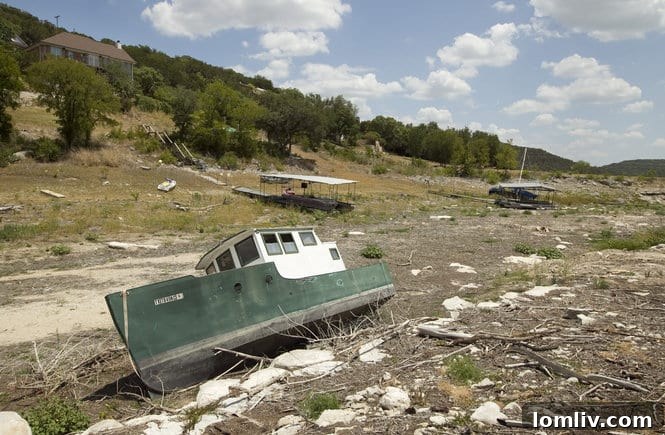
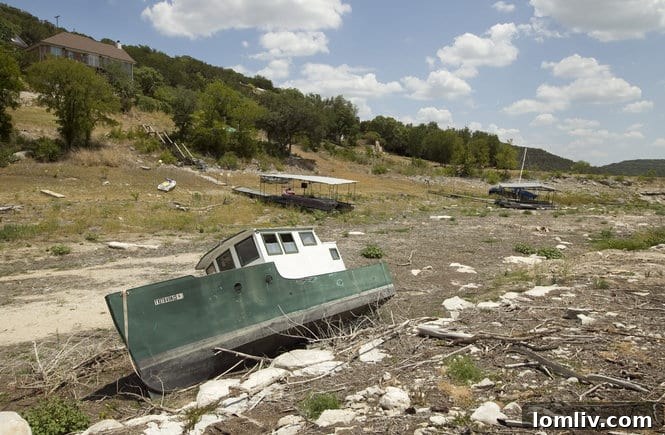
Even as parts of Texas implement long-term solutions, others remain in a precarious state. Despite a relatively mild summer in North Texas, characterized by occasional rainfall that offered some temporary relief to reservoirs, the region remains in desperate shape. The cumulative effect of years of drought has left a lasting impact, with many communities teetering on the edge of a severe water crisis. Evidence of this struggle is alarmingly visible: some North Texas communities have resorted to extreme measures such as installing locks on fire hydrants to deter water theft, underscoring the desperation. Furthermore, interactive maps reveal that some rivers and lakes are so severely parched that one might have to walk nearly a mile across exposed lakebeds before encountering any water. This stark reality paints a grim picture, suggesting that it may not be long before populous North Texas communities face similar challenges to towns in West Texas, where some residents already struggle to access basic drinking water services.
A Paradox of Growth and Scarcity
The most unsettling aspect of Texas’s water dilemma is the paradox of continued growth amidst escalating scarcity. The demand for water continues its relentless upward trajectory, driven by an expanding population and entrenched lifestyle habits. Across the suburban landscape, the drilling of wells to maintain lush green lawns and the filling of private swimming pools remain common practices, seemingly oblivious to the dwindling resources. This stands in stark contrast to regions like California, where the call for water conservation has reached an entirely different level of urgency. For instance, an ad campaign in San Francisco famously urged city residents to “have a quickie in the shower,” promoting significantly shorter bathing times—essentially, just a quick rinse. Yet, as a compelling blog post fromSF Gatecolumnist Mark Morford highlighted, even within California, water usage disparities are evident, with the Bay Area consuming far less water than Sacramento, and vast agricultural areas—including dairies, vineyards, and organic farms—requiring even greater quantities. This comparison underscores the complex, multi-faceted nature of water demand across different sectors and geographies, making a unified approach to conservation a significant challenge.
Embracing Sustainable Water Practices: A Personal and Community Perspective
Individual actions, while seemingly small, contribute significantly to the broader water conservation effort. In our home in East Dallas, we’ve embarked on a transformative journey away from the typical 1950s St. Augustine lawn, a notorious water guzzler. Our vision involves transitioning to a resilient landscape featuring a diverse mix of native Texas flowers and grasses, thoughtfully integrated with decomposed granite and decorative stone. This approach, known as xeriscaping, not only drastically reduces water requirements but also enhances the ecological value of our property, providing habitat for local wildlife. Our vegetable garden, for example, is watered exclusively with soaker hoses, a highly efficient method that minimizes evaporation and ensures water is delivered directly to the plant roots, significantly reducing wastage. Our long-term goal is ambitious yet attainable: to dramatically cut our monthly water bill to just a few dollars, reflecting a truly water-efficient lifestyle. This shift, however, makes us somewhat of a rarity in our neighborhood of well-preserved 1950s homes. Most of our neighbors continue to maintain traditional, sprawling grassy front lawns that provide the rhythmic “chorus of mowers” every weekend morning, serving as our suburban-style alarm clock. Many of these homes are equipped with automatic sprinkler systems that often run irrespective of recent rainfall, some of which are clearly not in optimal working condition, frequently producing uncontrolled “geysers” due to broken sprinkler heads—a display of water waste that has become more routine than the reliable Old Faithful geyser.
Navigating Local Water Policies: Disparity and Progress
The disparity in local water conservation policies further complicates Texas’s statewide efforts. Just a short drive from Dallas, in the neighboring city of Mesquite, city officials have implemented stringent Stage 3 water restrictions, curbing outdoor watering to just once every two weeks. This proactive stance positions Mesquite as a pioneer in water conservation among its North Texas peers, demonstrating a clear commitment to safeguarding its water resources. In stark contrast, residents in Dallas are still permitted to water their lawns twice a week, a policy that reflects a less aggressive approach to conservation. It might not be long before Mesquite, leading by example, finds itself urging its residents to adopt even more stringent measures, perhaps even echoing San Francisco’s call for “quickie showers.” Despite the growing evidence of water scarcity and the progressive policies adopted by some communities, there remains a noticeable absence of a significant shift in the watering habits of many Dallas-area homeowners. This reluctance highlights the challenges associated with implementing and enforcing uniform conservation measures across a diverse metropolitan area, often requiring a delicate balance between public education, policy changes, and overcoming deeply ingrained behavioral patterns.
The Battle for Water: Legal, Ethical, and Political Challenges
Beyond individual and municipal conservation efforts, the fight for water in Texas often escalates into complex legal, ethical, and political battles. As Tom Arrandale’s piece in Governing meticulously details, a deep-seated tension exists between rural farm towns and ranching counties and wealthier, growing big cities that cast covetous eyes on their water resources. This dynamic is eerily reminiscent of the infamous Los Angeles water grab a century ago, which effectively dried up agriculture in the undeveloped Owens Valley in California’s Sierra Nevada, forever altering the region’s landscape and economy. Such historical precedents underscore the fierce competition over scarce resources.
A contemporary illustration of this struggle is unfolding west of the Pecos River, where Texas ranchers are embroiled in a legal showdown with a prominent Midland oilman, Clayton W. Williams Jr. Williams seeks to sell Midland a staggering 41 million gallons of water daily from his family’s ranch located near Fort Stockton, a small community whose population of 8,283 is currently in decline. The Middle Pecos Groundwater Conservation District, based in Fort Stockton, represents the local interests and has unanimously voted to deny Williams a pumping permit, citing concerns over the sustainability of local groundwater supplies and the potential negative impact on existing users. Undeterred, Williams, who also operates his own oil and gas company from Midland, has taken his Fort Stockton neighbors to court, initiating a costly and drawn-out legal battle. Paul Weatherby, the Middle Pecos district manager, eloquently summarizes the precarious situation in the Chihuahuan Desert: “There are water marketers, there are water interests and there are water pirates. We’re in the Chihuahuan Desert, and we don’t have anywhere to go should we run out of water ourselves.” This quote encapsulates the cutthroat nature of water acquisition in an arid environment, where powerful private ventures, employing engineers, geologists, and lawyers, tirelessly scout Pecos County for available water, often at the expense of local communities and the environment.
Furthermore, the allure of securing more water for Midland, especially in the context of the severe drought, reportedly led to questionable maneuvers to finance the Fort Stockton pipeline. To facilitate this crucial infrastructure project, its backers were accused of rigging an election. This manipulation led to the creation of a new state-sanctioned utility: the Midland County Freshwater Supply District No. 1. In Texas, freshwater districts are typically established by residents through a vote to serve a rural county, subdivision, or other sparsely populated region. However, in a highly contentious move, Midland’s proposal drew the district boundaries to encompass just a single, isolated 20-acre tract situated near the Midland airport. Subsequently, the son of a Williams executive reportedly moved onto this property, residing in a modular home. This made him the district’s sole eligible voter. Exercising this singular power, he singlehandedly adopted ballot measures in 2010 that established the new water district and, crucially, granted it an astonishing $375 million in revenue bond authority. This maneuver, by circumventing conventional democratic processes, raises profound ethical and legal questions about fairness, transparency, and the allocation of vital public resources for private interests. It highlights the lengths to which some entities will go to secure water, underscoring the pressing need for robust oversight and equitable governance in water management across the state.
The Imperative for Collective Action
Texas stands at a crossroads. The challenges of drought, increasing demand, and the intricate web of economic and political interests require more than isolated efforts. They demand a collective, systemic approach. From individual households adopting water-wise landscaping to municipalities enforcing stricter conservation measures, and state leadership mediating complex water rights disputes, every level of society must contribute. Investing in advanced water infrastructure, promoting widespread adoption of sustainable practices, and fostering a culture of water consciousness are no longer options but absolute necessities. The future prosperity and environmental health of Texas hinge on its ability to confront these challenges head-on, ensuring a secure and sustainable water future for all its inhabitants.