Master-planned communities (MPCs) stand as a distinctive and highly sought-after segment within the United States housing market, offering more than just homes—they promise a lifestyle. These meticulously designed developments integrate residential areas with comprehensive amenities, green spaces, and a strong emphasis on community engagement. From on-site schools and retail centers to elaborate recreational facilities and carefully planned infrastructure, MPCs cater to a wide demographic, including growing families, active adults, and those seeking a cohesive living environment with convenience at its core. Their enduring popularity stems from the promise of a structured, amenity-rich environment that often fosters a stronger sense of belonging than traditional neighborhoods. Among the states where the allure of master-planned living is most pronounced, Florida consistently leads the nation, yet Texas remains an exceptionally strong contender, solidifying its position as a close second in this vibrant and competitive real estate sector.
The year 2022 marked a significant period of adjustment for the U.S. housing market, and master-planned communities, despite their unique appeal, were not immune to these broader economic shifts. According to comprehensive data compiled by RCLCO Real Estate Consulting, a leading authority in real estate market analysis, new home sales across the 50 most popular master-planned communities experienced a substantial 20 percent decline in 2022 compared to the robust performance witnessed in 2021. This notable downturn reflects a period of heightened economic uncertainty, primarily driven by a swift increase in interest rates orchestrated by the Federal Reserve and persistent issues surrounding housing affordability. These factors became particularly impactful during the second half of the year, leading to a noticeable reduction in prospective buyer traffic to sales centers and a subsequent contraction in new home transactions across these premier developments. The confluence of these elements created a challenging environment for both developers and potential homeowners, prompting strategic re-evaluations within the industry.
Navigating Economic Headwinds: Slowing Sales and Affordability Challenges in Master-Planned Communities
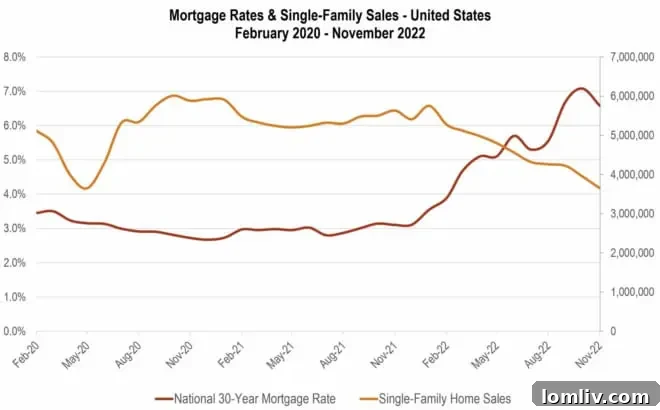
The deceleration in home sales within master-planned communities became increasingly pronounced as 2022 progressed. Analysis reveals that new home sales in the second half of the year were a substantial 13 percent lower than those recorded in the first six months. This deepening slump directly corresponded with the Federal Reserve’s aggressive campaign to curb inflation, which propelled mortgage rates to unprecedented levels in recent memory. By October 2022, average 30-year fixed mortgage rates had surged above 7 percent, a critical threshold that significantly impacted buyer purchasing power. Such elevated borrowing costs translated directly into higher monthly mortgage payments, making homeownership less attainable for a broad segment of potential buyers and effectively sidelining many from the market. Compounding these challenges, new home prices across the nation consistently maintained levels 10 to 30 percent higher than the previous year throughout the trailing 12-month period, adding further pressure to household budgets already strained by inflation. This dual challenge of rising prices and escalating interest rates created a formidable barrier to entry for many aspiring homeowners.
In a proactive effort to mitigate the adverse effects of decreasing affordability and revitalize buyer interest, developers of master-planned communities and their affiliated home builders have implemented a range of innovative strategies. A predominant trend has been the deliberate shift towards introducing or intensifying the focus on smaller, more efficiently designed housing products offered at more competitive and attainable price points. This strategic pivot aims to appeal to a wider demographic, including first-time homebuyers, young professionals, and those seeking to downsize without sacrificing the lifestyle benefits inherent in an MPC. These homes often feature thoughtful layouts, maximizing usable space and incorporating modern conveniences, all while retaining access to the community’s extensive amenities. Beyond product diversification, builders are also deploying various financial incentives to directly address affordability concerns. Common strategies include “buying down” interest rates, where the builder contributes funds to temporarily or permanently reduce the buyer’s mortgage interest rate, thereby lowering their monthly payments. Another prevalent incentive involves covering a portion or all of a buyer’s closing costs, providing crucial immediate financial relief at the time of purchase. These measures are designed not only to stimulate sales but also to ensure that the dream of homeownership within a master-planned community remains within reach for a greater number of individuals and families during challenging economic times.
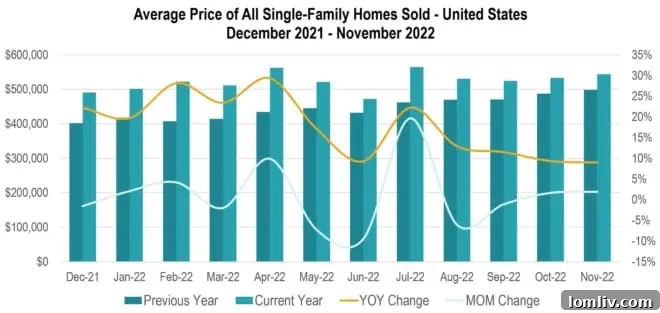
Cameron Jackson, Senior Vice President of Operations at Larry H. Miller Real Estate, offered a critical perspective on the direct correlation between fluctuating interest rates and observed sales performance. “If you look at the graph of our monthly sales plotted along with how interest rates behaved, the steady decline in monthly sales volume follows the interest rate line going upward pretty clearly,” Jackson articulated. This statement vividly illustrates the immediate and profound impact that changes in borrowing costs have on consumer purchasing decisions within the housing market. Jackson further elaborated on the broader implications for the coming year, expressing a cautious outlook: “Weakened market fundamentals and consumer confidence will make things challenging in 2023 until the Fed feels inflation is under control.” This analysis underscores the intricate relationship between macroeconomic stability, central bank policy, and consumer behavior. High inflation erodes the real value of money and creates economic uncertainty, prompting prospective homebuyers to delay large financial commitments. Consequently, the trajectory of the housing market’s recovery, particularly within the sensitive master-planned community segment, is inextricably linked to the Federal Reserve’s success in managing inflation and the subsequent restoration of broader consumer and market confidence. The path forward remains contingent on these crucial economic indicators.
Regional Powerhouses: Top-Selling Master-Planned Communities in Texas and Florida’s Dominance
Despite the broader market adjustments, certain regions and specific master-planned communities demonstrated remarkable resilience and exceptional sales performance throughout 2022. Florida, with its consistently warm climate, absence of state income tax, and a flourishing job market bolstered by tourism and an influx of new residents, solidified its national leadership by securing six of the top 11 best-selling master-planned communities nationwide. This dominance highlights the Sunshine State’s enduring appeal as a destination for both retirees and families seeking an enhanced quality of life. However, Texas, renowned for its dynamic economy, robust population growth, business-friendly policies, and diverse job opportunities across various sectors, proudly claimed three prominent spots on RCLCO’s prestigious list, reaffirming its significant and expanding role in the national master-planned community landscape. These top-performing Texas communities serve as prime examples of the state’s powerful draw for homebuyers seeking value, opportunity, and lifestyle.
Leading the impressive charge for the Lone Star State was Silverado in Aubrey, Texas, a premier development by D.R. Horton, one of the nation’s largest homebuilders. This vibrant community ascended to the coveted No. 6 position on RCLCO’s ranking of best-selling master-planned communities, recording an extraordinary 820 new home sales in 2022. This figure represents an astonishing 100 percent increase from just 411 sales in the previous year, 2021. Silverado’s exceptional growth can be attributed to its strategic location within a rapidly expanding corridor of North Texas, offering a desirable blend of suburban tranquility, excellent schools, and convenient access to major employment hubs in the Dallas-Fort Worth metroplex. Its diverse housing options, coupled with an array of thoughtfully designed amenities catering to families and individuals, have clearly resonated strongly with a broad spectrum of discerning buyers, making it a standout success even in a challenging market.
Another consistently strong performer for Texas was Mission Ridge in El Paso, Texas, a distinguished development by Hunt Communities. This well-established master-planned community achieved 805 sales in 2022. While this represented a modest 1 percent decrease from its 811 new home sales recorded in 2021, it notably signifies a remarkable level of sustained demand and market stability, especially when considering the significant economic headwinds experienced throughout the year. Mission Ridge’s enduring popularity underscores its robust appeal within the El Paso region, likely driven by its carefully planned neighborhoods, reputation for quality construction, and a strong focus on fostering a desirable, amenity-rich living environment for its residents, ensuring its continued relevance in the local housing market.
Making an impressive and immediate impact on RCLCO’s national ranking was Sunterra, situated in Katy, Texas, a collaborative development between Land Tejas and Starwood Land. In its inaugural year appearing on this prestigious list, Sunterra achieved a commendable 789 new home sales in 2022. This remarkably strong entry immediately positions Sunterra as a significant and emerging player within the highly competitive Houston metropolitan area’s master-planned community landscape. Its rapid ascent can be attributed to innovative community planning, a strategic location offering excellent connectivity to Houston’s thriving job centers and amenities, and a compelling array of recreational facilities and lifestyle features designed to cultivate an active and engaging environment for its residents. Sunterra’s early success sets a high benchmark for its future growth and expansion within the region.
A deeper examination of regional sales performance reveals the Houston Metropolitan Statistical Area (MSA) as a particularly vibrant hub for master-planned community development. The Houston MSA alone boasted more locations on the best-selling list than any other single metropolitan area in the U.S., with 13 distinct neighborhoods collectively contributing over 6,000 new home sales. This substantial contribution accounted for almost 19 percent of all sales among the ranked master-planned communities nationwide. Houston’s robust performance is a testament to its continuous population growth, a remarkably diverse economic base that offers a plethora of job opportunities, ample land availability for expansive developments, and a thriving job market that consistently attracts new residents from across the nation and globe. However, when assessing the overall sales volume by state, Florida maintained its undeniable dominant position, representing approximately 46 percent of all sales among the ranked communities. Texas, with its significant contributions from major metropolitan areas like Houston, Dallas-Fort Worth, and Austin, followed closely behind, capturing nearly 30 percent of the national sales volume within this specialized and highly attractive housing segment. This data emphatically underscores the unparalleled strategic importance of these two states in not only defining but also actively shaping the future trajectory of master-planned community development across the United States.
Looking ahead, the landscape for master-planned communities in 2023 and beyond is poised to remain dynamic and adaptive. While the initial shockwaves of rapidly rising interest rates may have begun to subside, and the Federal Reserve potentially moderates its approach to inflation, housing affordability will undoubtedly continue to be a central and critical theme. Developers and builders are anticipated to further refine their strategic approaches, focusing intently on integrating innovative construction techniques to manage costs more efficiently, offering flexible and creative financing solutions to potential buyers, and continually emphasizing the intrinsic long-term value and distinctive lifestyle benefits that master-planned communities uniquely provide. The inherent and enduring appeal of a thoughtfully designed, amenity-rich community, offering unparalleled convenience, a strong social fabric, and a predictable living environment, remains a powerful magnet for homebuyers. This enduring draw is expected to sustain demand, albeit with continuous adjustments necessary to meet evolving market conditions, changing buyer expectations, and the broader economic climate. The continued growth, innovation, and adaptive resilience demonstrated by master-planned communities in real estate powerhouses like Florida and Texas will undeniably serve as a crucial barometer for the overall health and future direction of the wider U.S. housing market.
For a complete and in-depth analysis of these intricate trends, including detailed insights into market performance, and to explore the full, comprehensive list of top-selling master-planned communities, the report from RCLCO Real Estate Consulting serves as an invaluable and authoritative resource. You can access the full report directly here.