Texas Legislature’s New Horizon: Prioritizing School Finance and Property Tax Relief
The legislative landscape in Austin has undergone a significant transformation, with the contentious “bathroom bill” debates of 2017 now firmly in the rearview mirror. As the Texas 86th Legislative Session convenes, lawmakers are charting a fresh course, setting their sights on two paramount issues dominating public discourse: comprehensive school finance reform and much-needed property tax relief for Texans. This strategic pivot signals a renewed focus on core issues that directly impact the daily lives of millions across the Lone Star State.
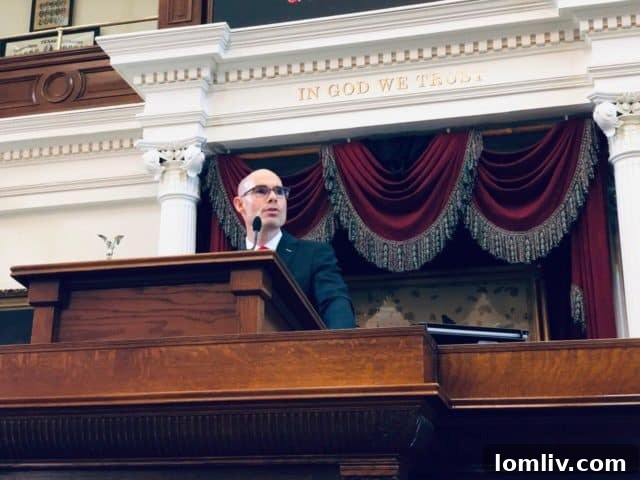
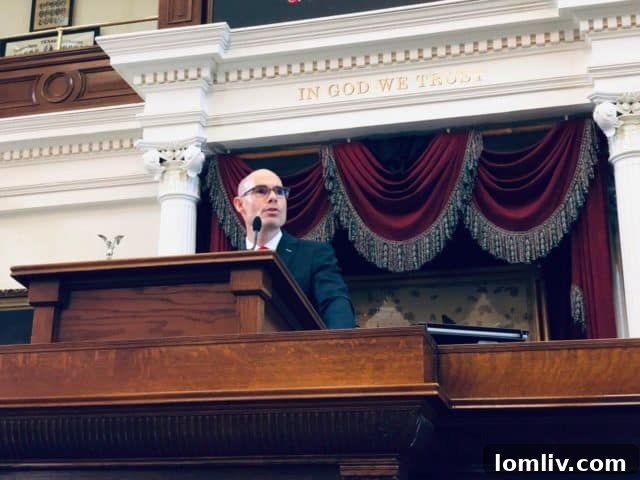
This shift in priorities was immediately evident, championed by the newly installed House Speaker, Dennis Bonnen. His commitment to these critical areas was playfully yet pointedly displayed when every cup in the Senate lounge was emblazoned with the definitive message: “School Finance Reform, The Time Is Now.” This clear declaration from leadership underscores the urgency and bipartisan agreement to tackle these long-standing challenges head-on.
A Promising Fiscal Outlook Meets Economic Uncertainty
The session commenced with a degree of cautious optimism, following State Comptroller Glenn Hegar’s announcement that approximately $119.1 billion would be available for the state budget over the next two years. This represents an 8.1 percent increase in funding for vital public programs, including education and healthcare. However, Hegar tempered expectations with a note of caution, highlighting falling oil prices and a degree of uncertainty within the U.S. economy. These factors introduce an element of unpredictability regarding future revenue projections, suggesting that while funds are available, legislators must exercise prudence in their allocations.
Despite these economic caveats, a palpable sense of cooperation permeated both chambers of the Texas Legislature. This collaborative spirit marks a notable departure from the fractious dynamics of the previous session. That period was largely characterized by Lieutenant Governor Dan Patrick’s persistent, and ultimately unsuccessful, push for controversial legislation such as the “bathroom bill” and school vouchers, which divided lawmakers and the public alike.
Bipartisanship Takes Center Stage Under New Leadership
In his inaugural address on Tuesday, Speaker Bonnen delivered a powerful plea for increased bipartisanship, setting a collaborative tone for the session. “In a state as big and diverse as Texas, there are plenty of ideas about what we should do on any one issue and these ideas often point in different directions,” Bonnen stated. “It’s our job to reconcile the differences.” This message resonated strongly, signaling a legislative environment more conducive to consensus-building and effective governance.
The composition of both legislative bodies also reflects a shift from previous years. The November elections saw Democrats gain 12 seats in the House, reducing the Republican majority to 83 seats against the Democrats’ 67. In the Senate, Republicans maintain a 19-12 lead. This altered balance of power, particularly in the Senate, significantly impacts the “three-fifths rule,” which requires a supermajority to bring bills to the floor. Under this rule, a highly unpopular GOP bill, like a potential “bathroom bill,” would now be vulnerable to being killed with the defection of just one Republican, a stark contrast to the previous session where Democrats were outnumbered 20-10, making such maneuvers far more difficult.
This noticeable pivot away from divisive social issues, particularly the once-dominant bathroom bill debate (which Lt. Gov. Patrick himself recently declared “settled”), bodes exceptionally well for advocates of comprehensive public education finance reform and property owners seeking relief from escalating property tax burdens. The stage is now set for a legislative session focused on tangible solutions to Texas’s most pressing fiscal challenges.
The Intertwined Issues: School Funding and Property Taxes
At the heart of Texas’s fiscal predicament lies the inextricable link between public school funding and local property taxes. As the state’s contribution to public education funding continues its alarming decline, local school districts are left with an impossible choice: implement draconian budget cuts that severely impact the quality of education or repeatedly return to the well of local property owners, asking for tax ratification elections to bridge the funding gap. This dynamic creates a vicious cycle where homeowners bear an ever-increasing burden to sustain local schools.
A decade ago, the state funded approximately 49 percent of public education expenditures. Today, that figure has plummeted to a mere 38 percent, with the Texas Education Agency (TEA) projecting further decreases. This trend places an unsustainable strain on local communities, fueling widespread frustration and calls for systemic change. The November election results, which saw a clear mandate for addressing these issues, made it abundantly clear that something had to give, ushering in this renewed legislative push.
Addressing the Funding Gap: Legislative Proposals
The legislative panel tasked with examining Texas school finance has recommended a substantial state investment of $1.7 billion in public education this session. This funding is specifically earmarked for critical areas such as literacy initiatives and increasing teacher pay, recognizing the vital role educators play in student success. Additionally, another $3 billion has been identified as necessary for special education programs, an area that has faced significant state-level criticism for artificially capping the number of students receiving essential support services.
Several key bills have already been introduced to tackle these complex issues:
- House Joint Resolution 24 (HJR 24): Filed by Rep. Charlie Geren (R-Fort Worth), this resolution proposes a state constitutional amendment that would mandate Texas to fund at least 50 percent of public school expenses. If passed, this would put the critical decision directly to the voters, potentially ensuring a more stable and equitable funding mechanism for public education.
- House Bill 443 (HB 443): Authored by Rep. Morgan Meyer (R-Dallas), this bill aims to refine the controversial “recapture” formula. This system requires property-rich districts, like Highland Park ISD and Dallas ISD, to pay a portion of their local property tax revenue to the state, which is then redistributed to property-poor districts. HB 443 seeks to adjust this formula and prevent districts from exceeding the previous year’s operational costs, aiming for greater fiscal responsibility and fairness.
- House Bill 528 (HB 528): Introduced by Rep. Harold Dutton (D-Houston), this bill addresses concerns raised by urban districts such as Dallas ISD and Houston ISD regarding charter schools. It proposes including charter school students in the enrollment numbers of the district where the charter is located. This change would effectively increase the funding for the traditional public school district, mitigating the financial impact of student transfers to charter schools.
- House Bill 127 (HB 127): Filed by Rep. Mary Gonzalez (D-Clint), this legislation also targets charter school funding. It seeks to standardize the amount of state funding charter schools receive, ensuring they get the same amount as their local school district. Currently, charter schools typically receive the average amount allocated to traditional public schools, and HB 127 aims to create a more consistent and equitable funding structure.
Governor Abbott’s Bold Proposal: Tax Caps and Funding Guarantees
Governor Greg Abbott has made the twin goals of improving state funding for education and providing property tax relief the central “leitmotif” of his legislative agenda. Prior to the session, he released a detailed report outlining his vision, which includes several key initiatives. Among them is the proposal to replicate the highly successful “Accelerating Campus Excellence” (ACE) program from Dallas ISD. This program provides stipends to high-quality teachers working in challenging, at-risk schools, thereby incentivizing talent where it is most needed. The Governor also aims to reward districts that successfully meet state benchmarks for economically disadvantaged students, fostering greater accountability and improved outcomes.
However, a central and more contentious element of Governor Abbott’s plan is his call for a cap on increasing local property taxes. Specifically, he proposes limiting the annual increase in property tax revenue that school districts can collect to 2.5 percent. While this measure is intended to drive down tax rates and offer relief to property owners, it has raised significant concerns among education advocates.
The $4 Billion Question: Unanswered Funding Shortfalls
Governor Abbott contends that any shortfall resulting from this 2.5 percent cap would be fully offset by increased state funds. Yet, the critical detail of precisely *how* the state would consistently make up this difference remains largely unexplained. This lack of clarity is a major point of contention. To illustrate the potential problem, it’s important to understand that this cap is on the total property tax revenue a district collects, not necessarily on individual property owners’ tax bills. For instance, if overall property assessments in Dallas ISD rise by only 2.5 percent, the district can maintain its tax rate, even if individual property owners experience an 8 percent increase in their own assessed values.
The core concern intensifies when examining appropriations requests filed by the TEA in light of the proposed tax rate cap. The TEA’s own projections forecast a 6.7 percent growth in property tax revenue per year. When juxtaposed with Governor Abbott’s proposed 2.5 percent cap, this creates a potential annual shortfall of almost $4 billion. The Governor’s repeated assurances that the state would cover this deficit are met with skepticism by advocates who worry that property tax caps, which are politically popular, might pass while the more complex and less politically expedient school finance reforms fail. This scenario would leave school districts facing enormous budget gaps with no viable mechanism for rectification.
Such a substantial and recurring shortfall of $4 billion would also severely jeopardize other key priorities that Texans universally support. How, critics ask, could the state fund initiatives like universal pre-kindergarten, essential teacher raises, improvements to the teacher pension system, and crucial assistance for homeless and impoverished students, if it is already struggling to cover basic operational deficits?
Chris Tackett, a respected analyst, has provided an illuminating breakdown of the potential implications of this cap. His analysis includes an alarming 10-year projection. He writes, “If the Governor’s 2.5% Tax Revenue cap was in place for the past 10 years, the additional dollars that the state would have had to make up, just to keep our school districts even (cities and counties would have their own costs not included here), would have been approximately $30 Billion.” This staggering figure underscores the profound long-term financial risk associated with the proposed cap if not coupled with robust, guaranteed state funding mechanisms.
Hope for a Collaborative Future in Texas
The stakes are undeniably high for the 86th Legislative Session. The initial congenial atmosphere and the clear shift towards substantive issues offer a glimmer of hope that legislators will genuinely embrace bipartisan cooperation. The challenges of school finance and property tax relief are deeply intertwined and fundamental to the future prosperity and equity of Texas. Hopefully, lawmakers will take their leadership’s call to heart and work collaboratively to forge sustainable solutions.
“Let’s be sure when we adjourn sine die we leave this House and this state better than we found it,” Speaker Bonnen urged. His concluding sentiment encapsulates the aspirations for this session: “There’s a saying we have in Texas: As Texas goes, so goes the nation.” The success of this legislative session in addressing these core issues will not only shape the future of Texas but may also offer a model for other states grappling with similar challenges. The 86th Legislature will run from January 8 to May 27, and all eyes will be on Austin to see if meaningful progress can be achieved.
Bethany Erickson is the education and public policy writer for Daltxrealestate.com. She is also the Director of Audience Engagement for Candy’s Media. She is a member of the Online News Association, the Education Writers Association, the International Academy of Digital Arts and Sciences, the National Association of Real Estate Editors, and the Society of Professional Journalists, and is the 2018 NAREE Gold winner for best series and a 2018 Dallas Press Club Hugh Aynsworth Award winner. Contact her at [email protected].