
The Lingering Shadow: A Decade of US Housing Market Recovery Since the 2007 Crash

The year 2007 marked a pivotal moment in American economic history, as the real estate bubble burst, triggering a global financial crisis that left deep scars across the nation. A decade later, the question of recovery remains complex and uneven. According to a detailed data visualization by HowMuch.net, based on insights from the U.S. Census Bureau’s American Community Survey, many states have barely managed to recover from the devastating housing crash, with some still languishing below their pre-recession valuations.
This comprehensive analysis compares housing market data from 2007 to 2017, offering a crucial snapshot of the nation’s progress and lingering challenges. It highlights the stark disparities in recovery, painting a vivid picture of a country where economic fortunes have diverged significantly depending on geographical location.
Understanding the 2007 Housing Bubble Burst
Before delving into the specifics of the recovery, it’s essential to recall the circumstances surrounding the 2007 housing market collapse. Fueled by lax lending standards, speculative buying, and an unsustainable surge in home prices, a massive real estate bubble formed throughout the early to mid-2000s. Mortgage-backed securities, complex financial instruments tied to these risky loans, proliferated across the financial system. When homeowners began defaulting on their subprime mortgages in increasing numbers, the entire edifice crumbled, leading to widespread foreclosures, a credit crunch, and ultimately, the Great Recession.
The impact was catastrophic: millions lost their homes, personal wealth plummeted, and the ripple effects touched every sector of the economy. The crisis underscored the interconnectedness of global finance and the profound influence of the housing market on national economic stability. The subsequent years were characterized by a slow, arduous journey towards recovery, marked by government interventions, low-interest rates, and shifting consumer confidence.
The Landscape Before the Crash: A 2007 Snapshot
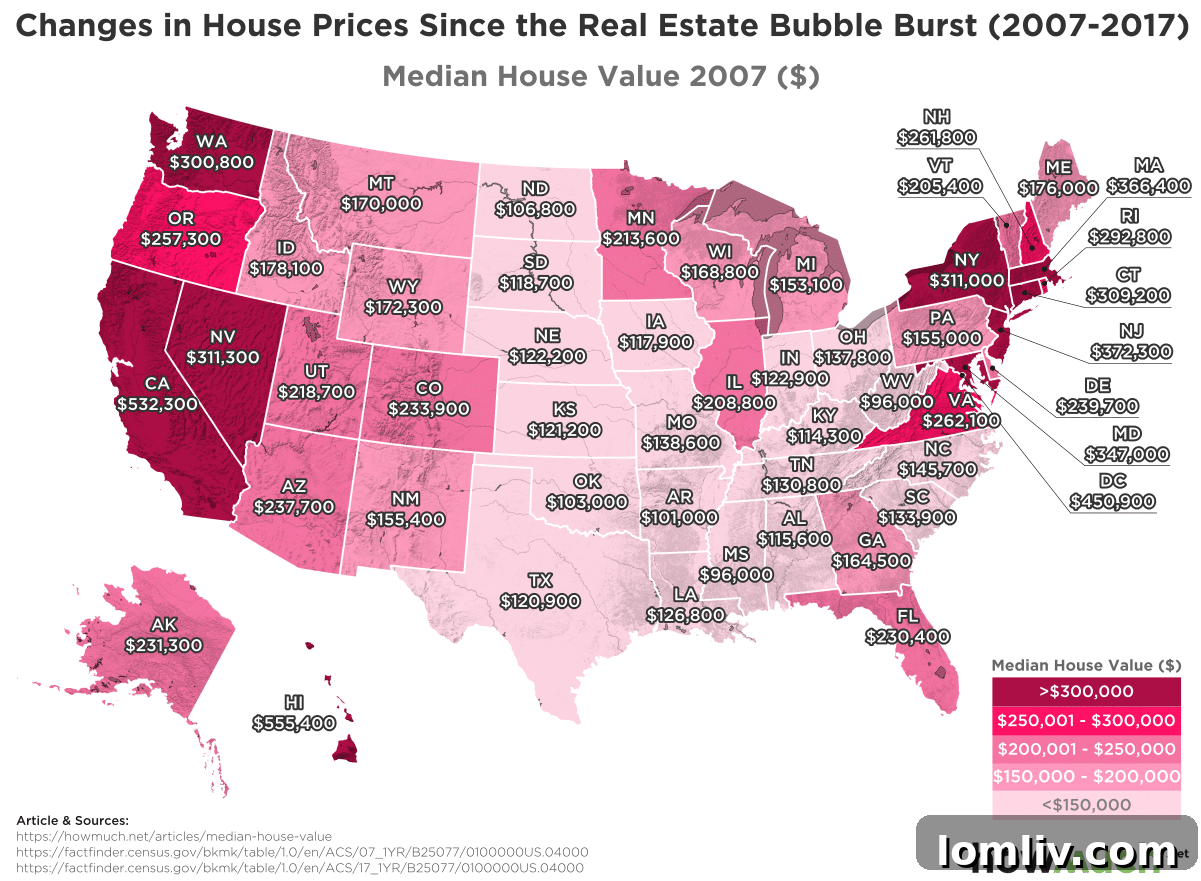
The housing market just before the bubble burst presented a distinct geographical pattern. Analysts from HowMuch.net observed that “before the housing bubble burst, the most affordable housing market was sandwiched in the middle of the country between the expensive West and East Coasts.” This configuration meant that while coastal states commanded exorbitant prices, the heartland offered a more attainable dream of homeownership.
States stretching from North Dakota, with a median home price of approximately $106,800, down to Texas, where the typical house cost around $120,900, represented pockets of relative affordability. These figures contrasted sharply with the booming, and ultimately unsustainable, prices seen in other regions. California stood out as the most expensive state on the mainland, boasting an “eye-popping” median house value of $532,300. This stark disparity reflected not only demand and supply dynamics but also the speculative frenzy that had taken root in high-growth, desirable areas, particularly on the West Coast.
The prices in these coastal hubs were often detached from underlying economic fundamentals, creating an illusion of endless growth that masked the inherent instability of the market. This pre-crash distribution serves as a critical baseline against which the uneven recovery of the subsequent decade can be measured, highlighting the profound changes that swept across the nation’s real estate landscape.
A Decade Later: The Mixed Picture of 2017 Housing Recovery
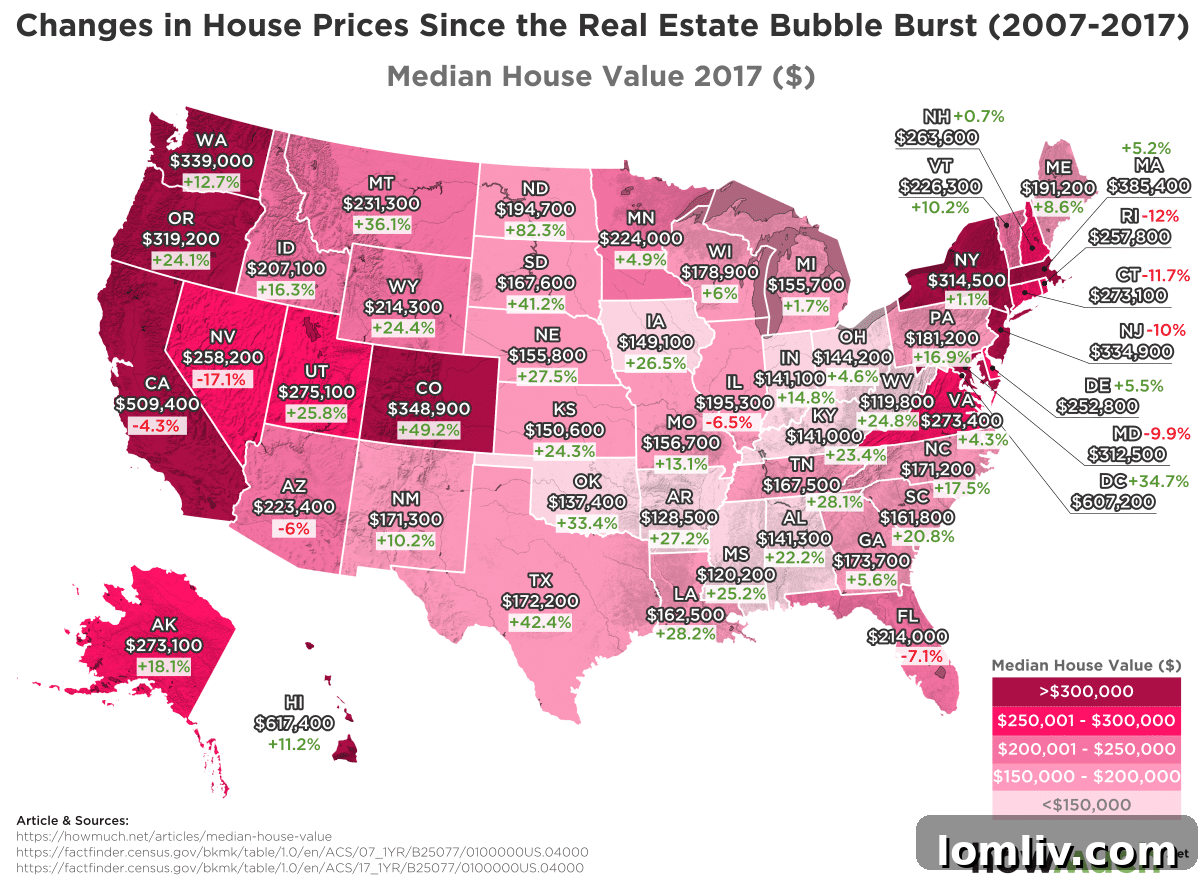
Fast forward to 2017, and the housing market presented a complex tapestry of recovery, growth, and lingering stagnation. While the overall trend showed signs of improvement, a deeper dive into the data revealed significant variations. The analysis indicated that median house prices had indeed climbed higher in 41 states, in addition to Washington D.C., when compared to their 2007 levels. This broad-based increase signaled a general rebound from the depths of the recession, suggesting that much of the country had managed to regain lost ground.
However, the pace and extent of this recovery were far from uniform. The report pointed out a crucial detail: a substantial portion of these recovering states experienced only modest gains. Specifically, 22 states saw their home values climb by 20 percent or less over the decade. This incremental growth suggests a slow and arduous path to recovery for many regions, where property owners may have only just begun to see their equity return to pre-crisis levels, often after enduring years of depreciation and uncertainty. Such lukewarm growth, while positive, underscores the lasting impact of the recession and the conservative nature of the subsequent market correction.
States Still Struggling: The Long Road Back
Despite the broader signs of recovery, several states continued to grapple with depressed housing values a full decade after the crash. These regions serve as stark reminders of the profound and long-lasting economic impact of the 2007 crisis. Nevada, for instance, remained significantly below its pre-recession levels, with home prices still 17.1 percent lower than they were before 2007. The state, heavily impacted by the bubble’s burst due to its rapid growth and speculative investment prior to the crash, faced a particularly steep climb back.
Other states similarly found themselves in a prolonged slump, failing to recapture their 2007 valuations. Rhode Island experienced a decline of 12.0 percent, Connecticut lagged by 11.7 percent, and New Jersey saw its median home prices remain 10.0 percent below pre-crisis figures. These states, often characterized by mature markets, economic challenges, or specific local factors, illustrate the uneven nature of the national recovery. For homeowners in these areas, the dream of regaining lost equity continued to be a distant prospect, underscoring the deep structural issues that persisted in their local economies and housing markets.
The Resilient Markets: Where Growth Has Flourished
In stark contrast to the lagging states, some regions demonstrated remarkable resilience and even posted double-digit increases in housing prices over the decade. These areas often benefited from strong underlying economic fundamentals, population growth, and diversified industries that spurred demand and bolstered consumer confidence. Texas emerged as a prime example of such a resilient market, registering an impressive 42.4 percent increase in housing prices between 2007 and 2017.
In 2007, the median home price in Texas was $120,900. By 2017, that figure had climbed significantly to $172,200. This robust growth can be attributed to several factors, including a booming energy sector, a burgeoning tech industry, and a continuous influx of new residents attracted by job opportunities and a relatively lower cost of living compared to other major states. Texas’s diversified economy helped it weather the national downturn more effectively and positioned it for a stronger, more sustainable recovery. The ability of such states to not only recover but thrive highlights the dynamic nature of regional economies and their profound impact on local real estate markets.
Factors Influencing Uneven Recovery
The disparate recovery rates across the U.S. can be attributed to a confluence of economic, demographic, and policy factors. States that experienced robust job growth, particularly in sectors resilient to economic downturns or those attracting significant investment, often saw their housing markets rebound faster. Population migration played a crucial role; states with increasing populations naturally experienced higher demand for housing, pushing prices upwards. Conversely, areas with stagnant or declining populations, coupled with a surplus of housing inventory, faced prolonged struggles.
Local economic diversity was another key determinant. States overly reliant on a single industry that was severely impacted by the recession, such as manufacturing or construction, often suffered more protracted downturns. Furthermore, the stringency of mortgage lending standards post-crisis, combined with varying local housing policies and zoning regulations, also influenced the pace of construction and, consequently, the supply-demand balance. The legacy of foreclosures and underwater mortgages continued to weigh on certain markets, creating a drag on recovery by flooding the market with distressed properties and limiting the ability of homeowners to sell or refinance.
Lessons Learned and the Future of the US Housing Market
The decade following the 2007 housing crash offered invaluable lessons on the vulnerabilities of an overheated real estate market and the broader economy. It underscored the importance of responsible lending practices, prudent financial regulation, and the need for a diversified economic base within states and regions. For policymakers, it highlighted the delicate balance required to foster growth without inflating unsustainable bubbles.
As the U.S. housing market continues to evolve beyond the 2017 data, these lessons remain pertinent. While the immediate aftermath of the crash saw a nationwide slump, the subsequent uneven recovery demonstrates that real estate is fundamentally local. National trends often mask significant regional disparities, driven by unique economic engines, demographic shifts, and affordability challenges. Understanding these localized dynamics is crucial for both policymakers and prospective homeowners alike, as the journey towards sustainable and equitable housing stability continues.
Conclusion
The HowMuch.net analysis of U.S. Census Bureau data provides a compelling and often sobering look at the nation’s housing market recovery a decade after the devastating 2007 crash. While a majority of states have seen their median home values surpass pre-recession levels by 2017, the pace of recovery has been anything but uniform. The stark contrasts between booming markets like Texas and those still struggling, such as Nevada, Rhode Island, Connecticut, and New Jersey, underscore the complex, multi-faceted nature of economic rebound.
This detailed examination serves as a critical reminder that economic recovery is rarely a monolithic process. Instead, it is a mosaic of diverse regional experiences, shaped by local economic strengths, demographic shifts, and the lingering effects of historical downturns. For analysts, policymakers, and ordinary citizens, these insights are crucial for understanding the enduring legacy of the Great Recession and for charting a more resilient path forward for the American housing market.