Discover the Enduring Legacy of Fort Clark: A Historic Texas Frontier Gem
Nestled deep within the vast landscapes of Kinney County, Texas, lies a site rich with stories of courage, conflict, and community: Fort Clark. Established in 1852, this historic military outpost, now known as Fort Clark Springs, served as a vital cornerstone in the defense and development of the American Southwest. From guarding the volatile Mexican border to protecting critical military routes, Fort Clark played an indispensable role in shaping the destiny of Texas and the nation.
Its strategic location along Las Moras Creek, a natural spring-fed oasis, made it an ideal site for a military installation. The fort quickly became a bustling headquarters, initially home to the C and E companies of the U.S. First Infantry Regiment under the capable command of Major Joseph H. LaMotte. Its primary missions were manifold: to deter cross-border incursions, protect the flow of commerce and communication along the crucial military road stretching to El Paso, and provide a bulwark against various Native American tribes resisting westward expansion. Over its nearly century-long active service, Fort Clark witnessed the unfolding of critical historical events, leaving an indelible mark on Texas and American military history.
A Home to Legends: Officers Who Shaped History at Fort Clark
Fort Clark’s significance is not merely defined by its strategic location or its role in frontier conflicts, but also by the extraordinary individuals who walked its grounds. Throughout its active years, the fort served as a crucible for some of America’s most celebrated military leaders, many of whom would go on to achieve legendary status. Their formative years and experiences at this remote Texas outpost undoubtedly contributed to their later successes and the leadership qualities for which they became renowned.
General George S. Patton: The Maverick Military Mind
Perhaps one of the most famous figures to have served at Fort Clark was Lieutenant George S. Patton Jr. While his tenure here was early in his illustrious career, it was during this period that he honed many of the skills and developed the relentless drive that would define him. Patton, later a commanding general during World War II, known for his aggressive leadership and tank warfare strategies, experienced the rigors of frontier life and military discipline that prepared him for grander stages. His time at Fort Clark was a foundational chapter in the life of a man who would become one of the 20th century’s most iconic military leaders.
Major General William Rufus Shafter: “Pecos Bill” and Frontier Warfare
Another prominent name linked to Fort Clark is Major General William Rufus Shafter, affectionately known as “Pecos Bill.” Shafter, a veteran of the Civil War, gained considerable experience in the Indian Wars, particularly in the Trans-Pecos region of Texas. His gruff demeanor and formidable presence earned him his colorful moniker. At Fort Clark, Shafter played a key role in campaigns aimed at securing the frontier, demonstrating the grit and determination required to operate in challenging environments. His experiences here contributed significantly to his understanding of logistics and command in difficult terrains, lessons he would later apply during the Spanish-American War.
General John Lapham Bullis: The Unsung Hero of the Texas Frontier
General John Lapham Bullis, a true frontier legend, also left his mark on Fort Clark. Bullis was a highly decorated officer renowned for his courage and prowess as an Indian fighter and scout. He participated in numerous expeditions from Fort Clark, often leading scouting parties deep into hostile territory. His exceptional leadership and understanding of the land were invaluable in tracking and engaging various Native American groups. Bullis’s contributions, though often overshadowed by more famous names, were crucial to the pacification of the Texas frontier, and his legacy at Fort Clark embodies the spirit of dedication and bravery that characterized the era.
General Jonathan Wainwright: A Leader Forged in the Crucible of War
Even later, General Jonathan Wainwright, a hero of World War II known for his courageous defense of the Philippines and subsequent imprisonment, served at Fort Clark. Like Patton, his time here in the early 20th century provided valuable foundational experience for a career that would culminate in unimaginable challenges. Wainwright’s service at this historic post allowed him to develop the resilience and tactical acumen that would be tested to their limits on the battlefields of the Pacific, cementing Fort Clark’s role as a training ground for future leaders.
Through the Fires of Conflict: Fort Clark’s Role in American Wars
Fort Clark’s strategic importance meant it was often at the forefront of the nation’s major conflicts, witnessing firsthand the dramatic shifts in military strategy and national priorities.
The Civil War Era at Fort Clark
The outbreak of the American Civil War in 1861 brought immense upheaval to Texas and its military posts. As Texas seceded from the Union, Fort Clark, like other federal installations, was abandoned by U.S. troops and subsequently occupied by Confederate forces. For a period, it served as a Confederate outpost, playing a role in protecting the western flank of the Confederacy and preventing Union incursions from Mexico. However, its primary purpose shifted as the frontier conflicts with Native American tribes continued, albeit under a different flag. Following the war, U.S. troops eventually reoccupied the fort, resuming their original mission of frontier defense.
Guardians of the Frontier: The Indian Wars
Perhaps Fort Clark’s most defining period was its extensive involvement in the Indian Wars. Throughout the latter half of the 19th century, the fort served as a key base of operations for campaigns against the Lipan Apache, Kickapoo, Comanche, and other Native American tribes. Soldiers stationed at Fort Clark routinely patrolled vast stretches of the frontier, engaging in skirmishes, tracking raiding parties, and protecting settler communities and vital trade routes. The legendary Buffalo Soldiers, African American regiments of the U.S. Army, also played a crucial role from Fort Clark, earning a formidable reputation for their bravery and effectiveness in these campaigns. Their tireless efforts from bases like Fort Clark were instrumental in the eventual pacification of the Texas frontier, albeit at a significant cost to Native American populations.
A Final Military Chapter: World War II
By the early 20th century, with the frontier largely settled and Native American conflicts a thing of the past, Fort Clark’s role evolved. During World War II, the fort was reactivated and repurposed to support the war effort. It primarily served as a training ground, preparing soldiers for deployment to battlefronts across the globe. This final military chapter saw a new generation of American fighting men pass through its historic gates, learning the skills necessary to defend freedom on a global scale. However, with the conclusion of the war in 1945, and the changing landscape of military needs, Fort Clark was officially decommissioned and shuttered in 1946, marking the end of its nearly 94 years of continuous military service.
Brackettville: A Town Forged by the Fort
The history of Fort Clark is inextricably linked to the nearby town of Brackettville. Founded in the shadow of the fort, Brackettville began as a humble settlement catering to the needs of the soldiers and travelers passing through. It quickly grew into a bustling stagecoach stop, a critical waypoint on the challenging journey across the rugged Texas landscape. Inns, saloons, and general stores sprang up, creating a vibrant community that thrived on the fort’s presence and the constant flow of traffic it generated. However, the town’s fortunes took a dramatic turn with the advent of the railroad. When the tracks were laid some 10 miles away, bypassing Brackettville, the stream of travelers became scarce, leading to a period of decline and isolation for the once-thriving frontier town. Despite this setback, Brackettville retained its unique character and its deep historical connection to Fort Clark.
From Military Outpost to Modern Haven: The Evolution into Fort Clark Springs
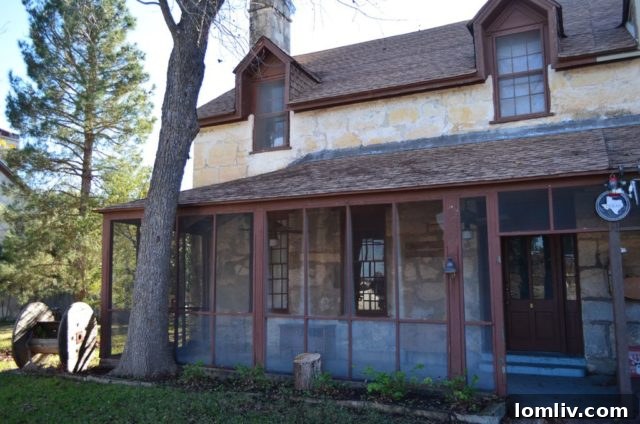
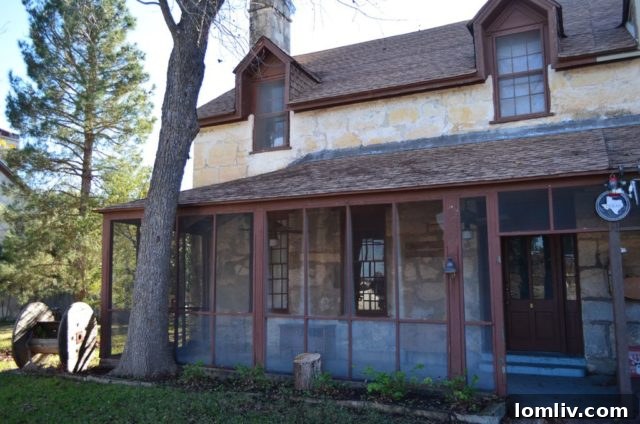
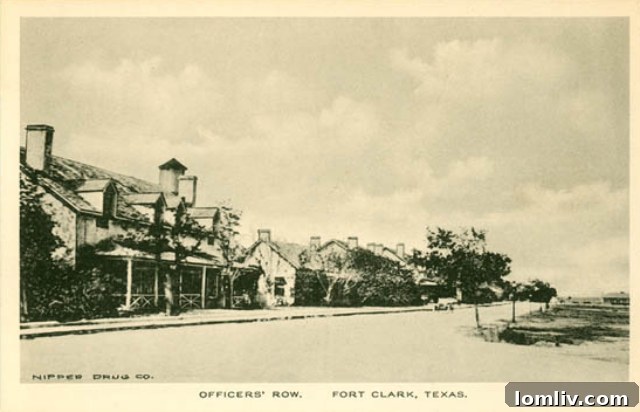
Following its closure in 1946, Fort Clark might have faded into obscurity, a collection of abandoned buildings left to the elements. Instead, it experienced a remarkable transformation. The expansive grounds and historic structures were purchased by a private entity and meticulously redeveloped into a unique residential and recreational community known today as Fort Clark Springs. This innovative approach preserved much of the fort’s original architecture and historical integrity while providing modern amenities for residents and visitors. The former officers’ quarters, barracks, and administrative buildings were lovingly restored and converted into private homes, lodges, and community facilities. Today, Fort Clark Springs offers a tranquil retreat where history comes alive, allowing residents to live amidst centuries-old live oaks and historic buildings, enjoying amenities like a championship golf course, swimming pools fed by the pristine Las Moras Spring, and abundant wildlife.
Own a Piece of History: An Officer’s Quarters Up for Grabs
Now, a truly rare and remarkable opportunity has emerged for those who dream of owning a tangible piece of Texas history. One of the very abodes that housed officers since nearly the beginning of Fort Clark’s active service is currently on the market. Imagine stepping into rooms where legendary figures planned campaigns, strategized defenses, and experienced the daily life of a frontier officer. This isn’t just a house; it’s a living artifact, a testament to the past, offering a unique blend of historical charm and modern comfort. Owning such a property allows you to become a custodian of history, preserving its stories for future generations while enjoying the serene beauty and rich heritage of Fort Clark Springs. It’s an unparalleled chance to connect with the valor and vision of those who shaped the American West, right from your own historic home.
We have the compelling details on this unique historic offering at SecondShelters.com.
The Enduring Legacy of Fort Clark
From a pivotal frontier outpost to a celebrated residential community, Fort Clark’s journey reflects the broader tapestry of American history. Its story is one of resilience, strategic importance, and the unwavering spirit of those who served and settled here. Today, Fort Clark Springs stands as a vibrant testament to this profound legacy, inviting all to explore its grounds, delve into its past, and perhaps even claim a piece of its extraordinary heritage as their own.