For many homeowners, the thought of a plumbing emergency can be daunting. While simple tasks like unclogging a toilet or retrieving a dropped item from a drain might be within our DIY capabilities, most significant plumbing issues demand professional attention. The common pitfall, however, is often waiting until a minor problem escalates into a major crisis before calling in an expert. This delay can lead to extensive damage, costly repairs, and even health hazards that could have been easily avoided. Through numerous home and plumbing inspections, we’ve encountered various issues that underscore the critical importance of early detection and proactive maintenance. This article delves into common plumbing problems that often start small but can quickly develop into catastrophic situations, highlighting why vigilance and timely professional intervention are your best defense against plumbing disasters.
The Insidious Nature of Hidden Leaks: A Leaky Tub Example
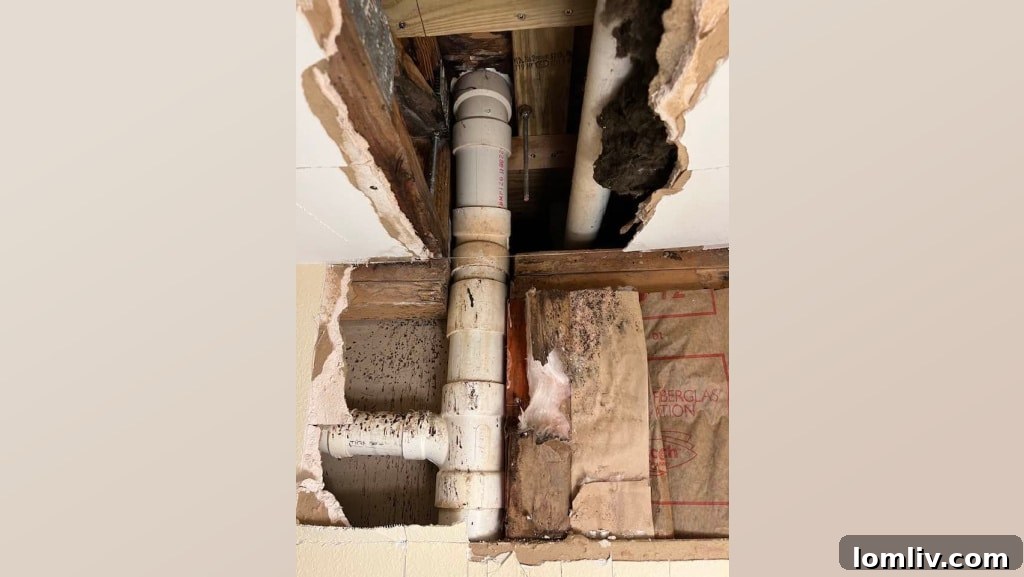
Plumbing problems frequently originate in unseen areas, making them particularly treacherous. What begins as a small, seemingly insignificant drip can relentlessly erode your home’s integrity over time. Take, for instance, a leaky tub – a common issue often dismissed with a quick towel wipe. The image above dramatically illustrates the consequences of such an oversight. It shows the devastating reality found inside a wall and ceiling directly beneath an upstairs bathroom tub during a plumbing inspection, long after the sheetrock was removed.
Initially, homeowners might perceive a tub leak as “no big deal,” perhaps just a little water that can be absorbed by a towel. However, this seemingly minor inconvenience can silently wreak havoc. Over months and even years, that small trickle of water penetrates porous building materials like sheetrock, wood framing, and subflooring. The result is a slow, destructive process that compromises structural elements. Wood beams and joists can rot, losing their strength and stability, potentially leading to sagging floors or ceilings. More alarmingly, the consistent moisture creates an ideal breeding ground for mold and mildew. What starts as a small patch can proliferate into “generations” of mold, spreading deep within walls and ceilings, as witnessed in the inspection. Beyond the aesthetic and structural damage, mold poses significant health risks, triggering allergies, respiratory problems, and other health concerns for occupants.
Preventing such extensive damage begins with vigilance. Homeowners should regularly inspect the caulking and grout around tubs and showers, as these are common points of water intrusion. Any signs of water discoloration on ceilings or walls below an upstairs bathroom, peeling paint, or a persistent musty odor should immediately raise a red flag. These are tell-tale indicators of a hidden leak that demands immediate investigation. Addressing a small leak promptly can save thousands in repair costs and safeguard your family’s health and home’s structural integrity.
Ancient Plumbing Cleanouts: Your Home’s Critical Access Point
A plumbing cleanout is an essential, yet often overlooked, component of your home’s drainage system. Located typically on the outside of your house, it’s a section of pipe equipped with a removable cap, designed to provide direct access to your main sewer line. This access is crucial for plumbers to inspect, clear blockages, and maintain the integrity of your wastewater system. The critical question is: do you know where yours are, and more importantly, what condition they are in?
Many older homes feature cast iron cleanouts and sewer lines. While cast iron was once a standard, its longevity is finite. Over decades, these pipes are susceptible to corrosion, rust, and degradation. Environmental factors, ground movement, and even tree root intrusion can exacerbate the wear and tear. When the visible part of your cleanout is literally disintegrating, as demonstrated in countless home inspections, it’s a clear signal that the underlying cast iron pipes are likely in a similar, compromised state. This isn’t merely an aesthetic issue; it’s a significant structural and sanitary concern. A failing cleanout means compromised access for maintenance and, more critically, an increased risk of severe sewer backups. Without a functioning cleanout, clearing a main line blockage becomes a much more complex, invasive, and expensive endeavor, often requiring excavation.
Replacing deteriorating cast iron cleanouts and sections of ancient plumbing isn’t just a recommendation; it’s a necessary investment in your home’s health and your family’s safety. Modern materials like PVC offer superior durability and resistance to corrosion and root intrusion. Regular inspections by a qualified plumber can identify these aging components before they fail catastrophically, preventing raw sewage from backing up into your home—a nightmare scenario that leads to extensive property damage and serious health risks. Understanding the age and material of your plumbing system, especially the main sewer line and its cleanout, is vital for proactive home maintenance.
@greenscenehome When your plumbing cleanout is literally disintegrating, it’s time to go ahead and replace that. #AskAHomeInspector #dallasrealestate
♬ original sound – Green Scene Home Inspections
Dishwasher Overflow: The Hidden Culprits Behind Kitchen Chaos
Modern dishwashers are designed with efficiency and convenience in mind, often incorporating safety mechanisms to prevent overflows. Typically, wastewater from the dishwasher flows through a drain hose, usually connecting to an air gap device located on your sink or directly to a garbage disposal unit, and then into the main drainpipe. This system is designed to prevent dirty water from backing up into the dishwasher or overflowing onto your kitchen floor. However, when a component in this crucial drainage pathway fails or becomes blocked, the results can be messy and damaging.
A dishwasher overflow, as seen in many inspection findings, often signals a blockage in the drain hose itself, a clogged air gap, or an issue with the garbage disposal if the dishwasher drains through it. Food particles, grease, and detergent residue can accumulate over time, restricting water flow and causing a backup. A faulty drain pump within the dishwasher unit can also prevent proper drainage. The consequences of such an overflow extend far beyond a wet kitchen floor. Water can seep into your kitchen cabinets, causing wood to warp, laminate to peel, and fostering mold growth in hidden, dark spaces. It can also damage your subfloor, leading to costly repairs and potential structural compromise if left unaddressed. Regular maintenance, such as periodically cleaning your dishwasher filter, ensuring the air gap is clear, and running hot water through the disposal after each use, can significantly reduce the risk of an overflow. If you notice standing water in your dishwasher, slow drainage, or any signs of leakage, it’s crucial to investigate immediately and consult a plumbing professional to diagnose and rectify the issue before it escalates into extensive water damage.
@greenscenehome Raise your hand if you know what’s wrong here? #AskAHomeInspector #homeinspectionfinds #realestate
♬ original sound – Green Scene Home Inspections
The Insidious Slow Toilet Leak: A Hidden Water Waster and Damage Dealer
Among the most common and easily overlooked plumbing problems is the slow toilet leak. Because these leaks are often minimal and occur out of sight, homeowners can live with them for extended periods without realizing the gradual damage and significant water waste they cause. Nobody enjoys spending excessive time scrutinizing their toilet, which makes even a tiny, constant drip incredibly easy to miss. This issue is particularly prevalent and damaging in vacant homes or properties being sold, where no one is regularly present to detect subtle signs of trouble. In such cases, a small leak can go unnoticed for months, leading to extensive damage.
The implications of a slow toilet leak are manifold. Financially, it results in a constant waste of water, manifesting as mysteriously high water bills that can add up significantly over time. Environmentally, it’s a needless depletion of a precious resource. More critically, the continuous drip, whether from a faulty flapper valve inside the tank, a loose tank bolt, a worn-out fill valve, or a compromised wax ring at the base of the toilet, slowly saturates the surrounding floor and subfloor. This constant moisture leads to wood rot, weakening the floor structure, and creates a perfect breeding ground for mold and mildew. Mold can flourish underneath the toilet, behind baseboards, and within the subfloor, leading to musty odors and potential health issues for future occupants.
Detecting a slow toilet leak is relatively simple. The easiest method is the dye test: add a few drops of food coloring to the toilet tank, wait about 15-30 minutes, and then check the toilet bowl. If colored water appears in the bowl without flushing, you have a leak. Another sign is hearing your toilet “phantom flush” or run briefly when no one has used it. For properties that are not regularly occupied, it’s imperative to have someone periodically maintain the home – running water, checking HVAC systems, and specifically looking for problems like toilet leaks. A proactive approach to toilet maintenance, including regular checks and prompt repair of any minor leaks, is essential to prevent costly water damage and maintain the integrity of your home’s flooring and structure.
Proactive Plumbing: Your Best Defense Against Disaster
The examples above clearly illustrate a fundamental truth about home maintenance: ignoring minor plumbing issues is a gamble with your property’s value and your family’s well-being. Proactive plumbing maintenance isn’t merely about fixing what’s broken; it’s about preventing problems before they start, identifying potential failures, and extending the lifespan of your home’s critical systems. While some DIY tasks are manageable, understanding the limits of your expertise and knowing when to call a professional plumber is crucial.
Regular visual inspections should be a routine part of homeownership. Take the time to look under sinks for drips, check around the base of toilets and appliances like washing machines and water heaters for any signs of moisture. Pay attention to musty odors, water stains on ceilings or walls, and any sudden unexplained increases in your water bill. These are often the first, subtle indicators of a hidden leak. Furthermore, every homeowner should know the location of their main water shut-off valve, as well as individual shut-off valves for toilets, sinks, and major appliances. This knowledge can be invaluable during a sudden leak or burst pipe, minimizing damage until professional help arrives.
Professional plumbing inspections offer an invaluable safeguard. A certified inspector can identify aging pipes, corroded fittings, potential leak sources, and issues with water pressure or drainage that might escape an untrained eye. Whether you’re buying a new home or simply maintaining your current one, a comprehensive plumbing inspection can provide peace of mind and help you budget for necessary repairs or upgrades, preventing costly emergencies down the line. Investing in preventative maintenance and timely repairs is always more cost-effective than dealing with the aftermath of a catastrophic plumbing failure, which can include extensive water damage, mold remediation, and structural reconstruction.
In summary, plumbing problems are far from trivial. They demand respect, attention, and often, the expertise of a professional. From the silent destruction of a leaky tub to the potential health hazards of a failing cleanout, and the insidious damage caused by dishwasher overflows or slow toilet leaks, each issue underscores the critical importance of vigilance and prompt action. Don’t wait until a small drip becomes a flood. Embrace proactive maintenance, learn to recognize the early warning signs, and don’t hesitate to consult a qualified plumber. Your home and your wallet will thank you. And remember, while these issues are serious, there’s always room for a little plumbing humor!