
In the dynamic landscape of real estate finance, the ability to sell a mortgage note offers a strategic pathway for noteholders to unlock immediate liquidity. Selling a mortgage note essentially means transferring the ownership of a loan to another party, who then assumes the responsibility of collecting the remaining scheduled payments. This financial maneuver is particularly appealing to homeowners and investors seeking prompt access to capital, often receiving a significant lump sum payment. Depending on various factors such as the inherent risk profile of the note and prevailing market conditions, this lump sum typically ranges between 65% and 95% of the note’s outstanding value.
Navigating the process requires meticulous preparation and a clear understanding of what prospective buyers prioritize. Key considerations for buyers often include the borrower’s credit history, the stability of the property’s location, and the overall financial health of the note. Sellers have the flexibility to offload the entire note or opt for a partial sale, allowing them to retain some future payment streams while still accessing immediate cash. Furthermore, understanding the distinction between recourse and non-recourse sales is vital, as this dictates the seller’s future financial obligations, if any, should the borrower default. Ultimately, selling a mortgage note provides an efficient mechanism to convert future income streams into present cash, simultaneously transferring the administrative burdens and risks associated with long-term payment collection.
Understanding Texas Mortgage Notes: A Foundation for Sellers

A mortgage note in Texas serves as a crucial legal instrument, formalizing the debt obligation between a borrower and a lender, often referred to as the noteholder. This legally binding agreement meticulously outlines the terms of repayment, including the principal amount, interest rate, payment schedule, and any other specific conditions. In return for adhering to these terms, the noteholder gains the right to collect payments and, in the unfortunate event of default, initiate foreclosure proceedings to recover the outstanding debt.
Texas operates under a dual system, utilizing both deeds of trust and traditional mortgages to secure real estate loans. While both serve to secure the borrower’s promise to repay, their primary distinction lies in the method of foreclosure. Deeds of trust typically facilitate a quicker, more streamlined non-judicial foreclosure process, whereas traditional mortgages often require judicial intervention. This legal nuance primarily affects the enforcement mechanism rather than the inherent ability to sell or transfer the note. For potential buyers of Texas mortgage notes, the state’s robust real estate markets—especially in major metropolitan areas like Dallas, Houston, and Austin—are a significant draw, often leading to higher note values and increased investor interest due to consistent property appreciation and economic stability.
The valuation of notes secured by properties within Dallas suburbs, for instance, exhibits considerable variation based on location and growth trajectory. Understanding these nuances is crucial for sellers to set realistic expectations and appeal to the right buyers:
- Established Neighborhoods: Areas such as Richardson, Garland, and Irving, characterized by mature infrastructure, stable communities, and a consistent history of property value appreciation, tend to attract steady interest. Notes from these locations are often seen as lower risk due to predictable market behavior.
- High-Growth Areas: Thriving cities like Frisco, McKinney, and Allen are experiencing rapid development, population influx, and significant demand. Notes secured by properties in these zones frequently command premium offers from note buyers who anticipate continued strong appreciation and robust borrower performance driven by economic expansion.
- Emerging Markets: Locations such as Celina and Prosper, while showing immense potential for future growth, are still in earlier stages of development. Notes from these areas may require more specialized evaluation from buyers familiar with nascent markets and their unique risk/reward profiles, sometimes leading to slightly higher discount rates.
- Urban Core & Luxury Markets: Downtown Dallas, Uptown, Highland Park, and University Park offer notes secured by high-value properties. These notes often appeal to institutional buyers looking for larger principal balances and affluent borrower demographics, typically reflecting lower default risks and high equity cushions.
Why Consider Selling Your Texas Mortgage Note?

The decision to sell a private mortgage note in Texas is driven by a diverse set of financial and personal objectives, extending far beyond simply needing quick cash for mortgage note. While immediate capital access remains a primary motivator, the strategic advantages can be profound and long-lasting.
1. Meeting Immediate Capital Needs: For many noteholders, the most compelling reason to sell is the opportunity to convert a long-term asset into liquid funds without delay. Instead of patiently waiting for years or even decades to receive the full value of the note through periodic payments, sellers can obtain a substantial lump sum upfront. This capital can be strategically deployed to fuel business expansion, seize new and time-sensitive investment opportunities, settle unexpected medical expenses, or fund significant life events like a child’s education or a down payment on another property. For instance, a small business owner in Austin holding a $150,000 note might sell it to acquire new equipment, significantly boosting operational efficiency and revenue long before the note would have fully amortized, providing a tangible return on investment.
2. Streamlining Estate Planning and Wealth Management: Estate planning is another frequently cited reason for selling. Heirs often prefer receiving liquid assets over inheriting the administrative responsibilities and complexities of managing ongoing loan payments. The process of collecting, tracking, and distributing payments from a mortgage note can be cumbersome and time-consuming for beneficiaries, potentially leading to familial disputes or prolonged probate processes. For example, a 78-year-old noteholder in Dallas, wishing to simplify their financial affairs and reduce future burdens on family members, might opt to sell a $200,000 note. This provides their heirs with a clear, readily distributable asset, avoiding potential complexities associated with servicing a loan after the noteholder’s passing and ensuring a smoother transfer of wealth.
3. Mitigating Future Risks and Uncertainties: Holding a mortgage note inherently carries various risks. Economic downturns, shifts in property markets, or changes in the borrower’s employment status can all impact the reliability of future payment streams. By selling the note, the original noteholder transfers these financial uncertainties and the associated collection risks to the buyer. This risk mitigation can be especially attractive in times of economic volatility, making guaranteed cash today far more appealing than potentially fluctuating future payments. When a Texas mortgage note buyer purchases your note, they absorb these risks, including the possibility of borrower default, late payments, or the necessity of foreclosure, allowing the original seller to secure their financial position and gain peace of mind from potential future liabilities.
4. Eliminating Administrative Burden: Managing a mortgage note involves more than just receiving payments. It includes tracking payment histories, handling late payments, dealing with escrow accounts for taxes and insurance, responding to borrower inquiries, and ensuring compliance with state and federal regulations. For individuals or small investors, this can be a significant administrative burden that diverts time and resources from other pursuits. Selling the note frees the seller from these ongoing responsibilities, allowing them to focus on other endeavors or simply enjoy a less complex financial life without the day-to-day hassle of loan servicing.
The Comprehensive Texas Note Selling Process
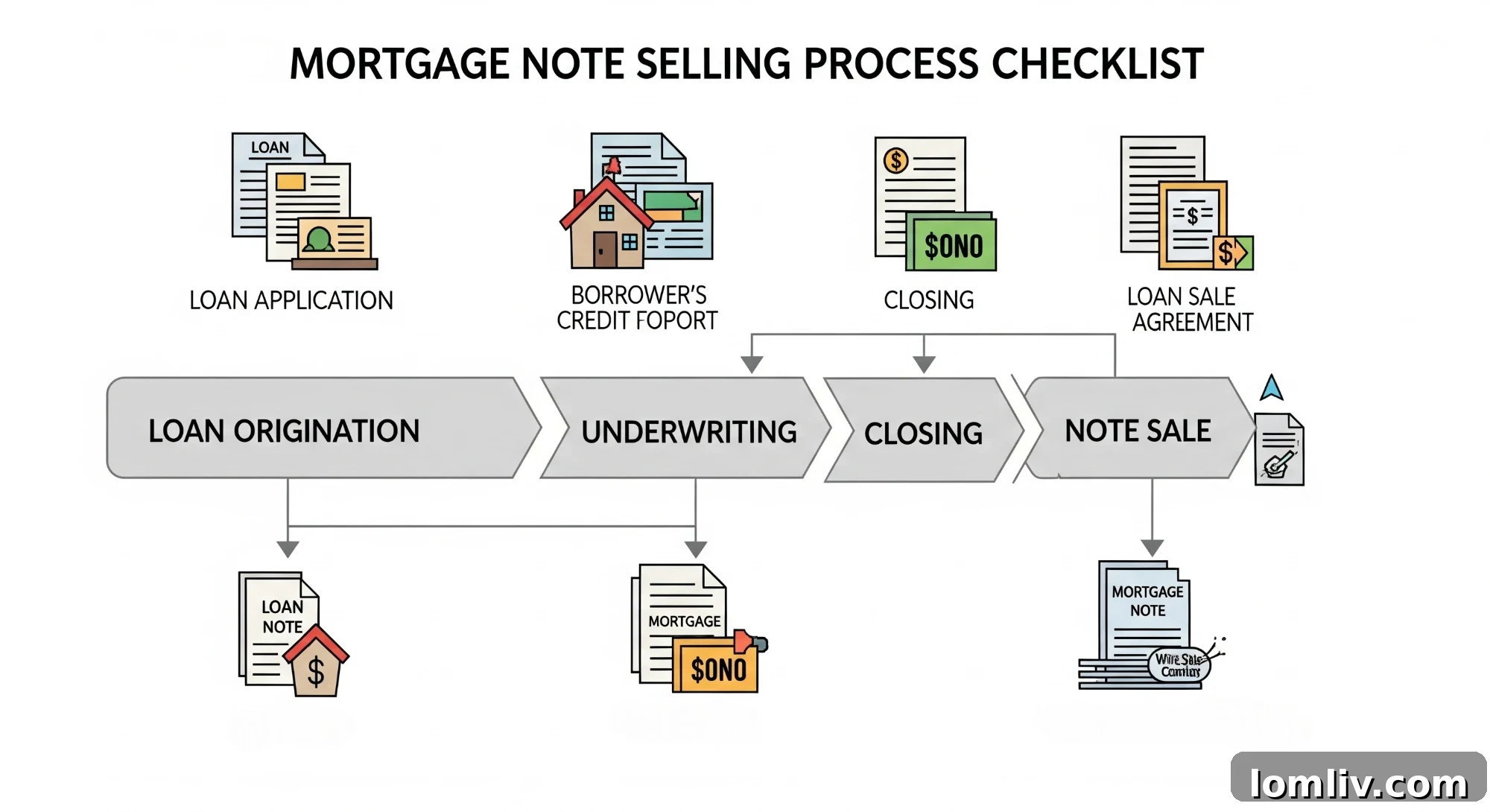
Successfully selling a seller financed note in Texas involves a structured process, beginning with a thorough evaluation and culminating in a swift closing. Understanding each phase is crucial for sellers to maximize their returns and ensure a smooth transaction.
Initial Evaluation: Determining Your Note’s Value
The intrinsic value of your mortgage note is meticulously assessed based on a confluence of critical factors that collectively inform a buyer’s risk and return analysis:
Payment History: This is arguably the most paramount factor. A consistent and impeccable record of on-time payments from the borrower is a strong, tangible indicator of reliability and financial discipline. Buyers view a flawless payment history as a significantly de-risked asset, often translating to higher offers. Conversely, sporadic or late payments, even if eventually cured, will negatively impact valuation as they signal potential future payment issues. Buyers will scrutinize payment ledgers closely, looking for any red flags or patterns of delinquency.
Property Value and Location: The value of the underlying collateral—the property itself—matters significantly. Notes secured by properties in appreciating markets, like the thriving Dallas-Fort Worth metroplex, naturally hold more appeal. A property with strong equity (meaning a low loan-to-value ratio) provides a greater buffer against potential losses in case of default, reassuring buyers. The property’s specific location, its condition, local market trends, and desirability are all key determinants of its collateral strength.
Interest Rate: The contractual interest rate of your note directly influences its attractiveness. Notes carrying rates above prevailing market levels are particularly valuable, as they offer buyers a higher yield compared to new originations. For example, a note originated three years ago at 8% interest will inherently command a higher premium in today’s market if current mortgage rates are 5-6%, simply because the buyer receives a superior return on their investment. Conversely, notes with rates below market averages may sell at a discount to compensate the buyer for a lower yield.
Borrower Creditworthiness: While a stellar payment history often overshadows initial credit scores, the borrower’s creditworthiness at the time of origination and any subsequent credit checks can still influence the note’s value. Buyers assess the borrower’s capacity and willingness to pay based on their financial track record. A strong credit profile adds another layer of security to the note, indicating a lower likelihood of future default.
Documentation Quality and Completeness: The quality and completeness of your documentation are absolutely critical. Well-organized files containing all necessary legal documents, recorded mortgages, title insurance policies, detailed payment records, and property appraisals significantly streamline the transaction process. Incomplete or disorganized documentation can cause delays, raise red flags for buyers, and potentially lead to lower offers or even a rejection, as it signals increased risk and potential legal complications.
Documentation Requirements: Preparing for a Smooth Sale
Texas note sales demand precise and exhaustive documentation to ensure a legally sound transfer and facilitate accurate pricing. The backbone of any note sale lies in the original promissory note and the recorded mortgage or deed of trust, which legally binds the borrower to the terms and secures the property as collateral. Beyond these foundational documents, a clear and comprehensive payment history is indispensable for buyers to verify the note’s performance and calculate its true value.
Essential documents for selling your mortgage note include:
- Original Promissory Note and Recorded Mortgage/Deed of Trust: These are the foundational legal instruments establishing the debt and the collateral. Buyers need the originals or certified copies to confirm the validity and enforceability of the loan.
- Complete Payment History: A detailed ledger showing all payments received, including dates, amounts, and any late fees or adjustments. This history should ideally cover the entire life of the loan to demonstrate consistent performance.
- Property Appraisal and Title Insurance Policy: A recent property appraisal verifies the current market value of the collateral, while a title insurance policy confirms clear ownership, protects against title defects, and provides security for the new noteholder.
- Borrower Credit Reports and Income Verification: Documentation from the time of loan origination, such as the borrower’s credit application, credit reports, and income verification (e.g., pay stubs, tax returns), helps buyers assess the initial underwriting quality and the borrower’s ability to pay.
- Property Insurance Policies and Current Tax Records: Proof of current homeowner’s insurance and up-to-date property tax records demonstrate responsible property management and protect the collateral’s value from damage or liens.
- Any Modification Agreements or Significant Correspondence: If the loan terms were ever modified, or if there were any significant communications with the borrower regarding payment issues or hardship, these documents are crucial for transparency and understanding the full history of the note.
Presenting a meticulously organized and complete documentation package not only significantly accelerates the initial evaluation and due diligence phases but also frequently leads to more favorable offers from buyers who perceive less risk and administrative hassle, recognizing the seller’s professionalism.
Timeline and Closing: From Offer to Funds Disbursal
One of the significant advantages of selling a Texas mortgage note is the efficiency of the transaction process. Typically, Texas note sales can be finalized and closed within a relatively short timeframe, ranging from 15 to 35 days, provided all documentation is complete and accurate. This expedited timeline is a key benefit for sellers needing quick access to capital, reducing the uncertainty and waiting period often associated with other asset sales.
Upon submitting your complete documentation package to a prospective buyer or note broker, you can generally anticipate receiving initial offers within a rapid window of 48 to 72 hours. This initial offer period allows sellers to gauge market interest, compare potential returns, and select the most suitable offer.
Following the acceptance of an offer, the due diligence phase commences. This critical stage involves a comprehensive review of all submitted documents by the buyer, alongside ordering a current property appraisal and a detailed title examination. Appraisals for properties located in major Texas markets like Dallas, Houston, or San Antonio typically complete within one week due to readily available appraisers and market data. However, properties with unique characteristics, such as luxury estates in Southlake or historic homes in Highland Park, or those requiring specialized valuation expertise, might extend this timeframe slightly. Similarly, rural properties situated in counties outside major metropolitan areas could necessitate the involvement of specialized appraisers familiar with those specific markets, potentially adding a few extra days to the timeline for accurate valuation.
The closing for note transfers is diligently managed by experienced title companies or attorneys who specialize in these types of financial transactions. The process closely mirrors traditional real estate closings, involving the formal recording of all necessary legal documents to transfer ownership of the note and the security instrument. Simultaneously, funds are disbursed to the seller, completing the transaction and providing the anticipated liquidity. This streamlined process, facilitated by Texas’s robust legal and financial infrastructure, ensures a secure and efficient transfer of assets, from offer to final funding.
Understanding Texas Foreclosure Laws: A Buyer’s Perspective

Texas’s unique and highly efficient foreclosure laws play a pivotal role in shaping mortgage note valuation and significantly bolstering buyer confidence. The state permits both judicial (court-supervised) and non-judicial (out-of-court) foreclosures. However, non-judicial procedures overwhelmingly dominate the landscape due to their remarkable speed, cost-effectiveness, and streamlined nature, making Texas an attractive market for note holders and buyers alike who prioritize quick resolution in case of default.
The Efficient Non-Judicial Foreclosure Process in Texas
The foreclosure process in Texas is characterized by its notable efficiency, especially the non-judicial route, which is predominantly used when the mortgage instrument contains a “power of sale” clause (common in deeds of trust). This allows lenders to foreclose without extensive court involvement, minimizing legal fees and court delays. The process typically initiates with a mandatory 20-day notice to the borrower, which formally informs them of their default and provides a crucial opportunity to “cure” the default by catching up on missed payments. This relatively short cure period is exceptionally beneficial to noteholders, providing a significant advantage compared to states that mandate much longer notification periods, often extending to 60, 90, or even 120 days, thereby minimizing the financial impact of non-performing loans.
Upon the expiration of this 20-day cure period, and assuming the default has not been remedied, lenders are then required to post a notice of sale. This notice must be physically posted at the courthouse door in the county where the property is located, and also filed with the county clerk, a minimum of 21 days prior to the scheduled auction date. These foreclosure sales are consistently held on the first Tuesday of each month, typically between 10 AM and 4 PM, at the county courthouse. This predictability and regularity further contribute to the efficiency of the Texas system, allowing buyers to plan and participate in auctions with clear expectations.
Key Timeline Benefits for Noteholders and Buyers:
- Rapid Conclusion: The entire non-judicial foreclosure process, from the initial notice to the final sale, typically concludes within approximately 27 days after the cure period ends. This makes it one of the fastest foreclosure procedures available anywhere in the nation, offering swift resolution for lenders.
- Comparative Advantage: This accelerated timeline stands in stark contrast to the often protracted judicial foreclosure proceedings seen in states like New York or Florida, which can easily exceed 18 months, tying up capital, incurring substantial legal costs, and increasing risk for noteholders.
- Increased Liquidity and Reduced Risk: The speed of foreclosure in Texas significantly reduces the holding costs and risks for note buyers, making Texas notes more attractive and potentially leading to better pricing for sellers due to lower potential default expenses.
Foreclosure Costs and Recovery: Maximizing Returns
Another compelling aspect of the Texas foreclosure landscape is its cost-effectiveness. The typical costs associated with a non-judicial foreclosure in Texas range from an estimated $1,200 to $3,500. This places Texas among the most economical states for enforcing a mortgage note, especially when compared to states with lengthy judicial processes that can incur tens of thousands in legal fees. These comparatively low costs are highly advantageous for noteholders and subsequent buyers, as they directly translate into a higher net recovery from the sale of the collateral property. Consequently, notes secured by Texas properties often command better pricing, as buyers face lower potential expenses in the event of default and subsequent enforcement.
Furthermore, Texas law permits deficiency judgments. This critical provision allows lenders (or the new noteholder/buyer) to pursue the borrower for any remaining balance of the debt if the proceeds from the foreclosure sale are insufficient to cover the full outstanding loan amount. This right significantly strengthens the security of the note, particularly for those with high loan-to-value (LTV) ratios, where the property’s value may be close to or even less than the loan amount. The ability to seek a deficiency judgment provides an additional layer of financial protection for the noteholder, enhancing the overall value of the note. It is crucial for both sellers and buyers to understand that Texas provides no statutory redemption rights after a foreclosure sale. This means that once a property is sold at auction, the former borrower cannot reclaim it, offering finality and certainty to the successful bidder and simplifying post-foreclosure asset management for the note buyer.
Dallas Market Considerations: A Prime Hub for Note Trading
Dallas unequivocally stands as Texas’s preeminent and most dynamic mortgage note market, distinguished by its diverse array of property types and exceptionally robust economic fundamentals. The expansive Dallas-Fort Worth metroplex consistently demonstrates impressive job growth, particularly within thriving sectors such as technology, healthcare, logistics, and corporate headquarters. This sustained economic vitality directly contributes to stable property values, enhances borrower employment stability, and consequently, fosters an environment conducive to competitive mortgage note pricing.
Market Characteristics by Area: Nuances within Dallas County
The Dallas real estate market is far from monolithic; different areas within Dallas County exhibit distinct characteristics that significantly influence note valuation:
- Established Luxury Neighborhoods: Notes secured by properties in highly affluent and established neighborhoods like Highland Park, University Park, and Preston Hollow typically command premium pricing. These areas are characterized by enduring property values, low turnover, and a demographic of affluent borrowers, which inherently translates to lower default risk and higher buyer confidence due to strong equity positions.
- Core Suburban Markets: Suburbs such as Plano, Frisco, McKinney, and Allen represent dynamic growth corridors. Frisco’s rapid development and influx of corporate campuses, for example, attract note buyers seeking appreciation potential alongside strong payment performance. Established areas like Richardson and Addison offer reliable stability, supported by mature infrastructure and diverse employment bases. Notes here are often seen as balanced opportunities, combining growth with stability.
- Emerging Growth Areas: Younger, rapidly developing areas like Celina and Prosper, while offering significant long-term potential, might receive slightly lower initial pricing for notes due to their nascent stage of development and a more limited history of comparable sales data. Buyers in these areas are often looking for higher yield to compensate for perceived growth-related uncertainties and less established market liquidity.
- Urban Revitalization Zones: Areas undergoing significant revitalization, such as Deep Ellum or parts of South Dallas, present unique investment profiles. Notes here might appeal to specialized buyers who understand the dynamics of urban renewal and potential for long-term value appreciation, often with a different risk tolerance and a focus on future development.
Commercial Notes in Dallas: Outperforming Smaller Markets
Beyond residential notes, commercial notes secured by Dallas properties frequently outperform those found in smaller Texas markets. The city’s incredibly diverse and resilient economy robustly supports a wide spectrum of business types, from vibrant small retail establishments in districts like Deep Ellum and Bishop Arts to colossal corporate facilities in major business parks like Las Colinas and Legacy West. This economic diversity mitigates risk and ensures a broader pool of tenants and businesses, making commercial notes in Dallas highly attractive to investors seeking stable income streams backed by strong underlying assets and a resilient local economy.
Regional Comparisons: Beyond the Dallas Hub
While Dallas indisputably holds a dominant position in Texas note trading, other significant markets across the state present unique investment profiles and opportunities that cater to different buyer appetites:
- Houston: Houston’s economy is heavily influenced by the energy sector. This creates distinct characteristics for its notes, particularly for commercial properties tied to oil and gas. While offering strong potential, it can also introduce unique market sensitivities to global energy price fluctuations. Residential notes in Houston benefit from the city’s vast population and diverse job market outside of energy.
- Austin: Austin’s booming technology sector and vibrant cultural scene strongly support residential note values, driving continuous demand and appreciation. However, this rapid growth can also lead to more volatile pricing and intense competition among buyers, often reflecting lower yields due to high demand.
- San Antonio: San Antonio’s consistent and steady growth, often driven by its military presence, tourism, and healthcare industries, provides a backdrop for reliable note performance with less volatility compared to Austin. Notes in San Antonio often appeal to buyers seeking consistent, moderate returns and a stable, diversified economic base.
- Smaller Markets (e.g., Amarillo, Beaumont, El Paso): Markets such as Amarillo (agriculture, logistics), Beaumont (petrochemicals), or El Paso (manufacturing, cross-border trade) present distinct challenges and opportunities. Notes in these areas might require more specialized buyers who possess intricate familiarity with local economic conditions, demographics, and real estate trends, as broader market liquidity may be lower, and generalist buyers might be less active.
Notably, Dallas also benefits from having a concentrated presence of multiple active mortgage note buyers operating locally. This robust ecosystem fosters intense competition, which often translates into more competitive pricing and better outcomes for sellers within the Dallas metroplex, as buyers vie for quality assets.
Maximizing Your Note’s Value: Strategies for Sellers
To achieve the best possible sale price for your real estate note in Texas, noteholders should actively implement several strategic measures. These proactive steps can significantly enhance the attractiveness and perceived value of your note to prospective buyers, leading to more favorable offers and a smoother transaction process.
1. Meticulous Payment Record Keeping: This is unequivocally the most impactful strategy. Maintaining detailed, accurate, and easily verifiable payment records demonstrably proves the note’s reliability and the borrower’s payment discipline. Digital records showcasing consistent, on-time payments, especially during periods of economic uncertainty or stress (such as the challenging years of 2020-2021), will substantially boost buyer confidence. Buyers are seeking predictable income streams, and a clean payment history is the strongest evidence of this. Any gaps, inconsistencies, or unexplained late payments in records can lead to discounts or complicate the sale, as buyers will factor in perceived risk.
2. Understanding Property Maintenance and Condition: While you, as the noteholder, might not directly control the day-to-day upkeep of the underlying collateral property, its condition directly impacts its value and, consequently, the note’s security. Staying well-informed about the property’s condition, major repairs, and any significant neighborhood developments (e.g., new infrastructure, declining areas) can certainly aid your timing decisions and help you anticipate buyer concerns about collateral depreciation. A well-maintained property in a stable or improving area is a stronger piece of collateral, translating to a more valuable and secure note.
3. Strategic Market Timing Considerations: The broader economic and interest rate environment plays a crucial role in note valuation. Understanding these dynamics can help you decide the optimal time to sell and position your note most effectively:
- Rising Interest Rates: In an environment of rising market interest rates for new loans, existing notes that carry higher interest rates (e.g., an 8% note when new mortgages are 6%) become more attractive, potentially improving their sale price or premium as they offer a superior yield compared to newly originated debt.
- Falling Interest Rates: Conversely, when market rates are falling, the premiums for existing notes might compress as their contractual rate becomes less comparatively attractive against lower new loan rates, making them less appealing unless significantly discounted.
- Economic Stability: Strong economic growth, low unemployment, and a robust housing market typically support higher property values and more reliable borrower payments, creating a favorable selling environment for mortgage notes.
- Consider Partial Sales for Large Notes: For particularly large notes, especially those exceeding $500,000, consider the strategy of a partial sale. This approach allows you to sell a specific number of future payments or a defined portion of the note’s principal, providing immediate cash flow while enabling you to retain a residual income stream from the remaining payments. This flexibility can be attractive for sellers who want to access capital without completely divesting from the investment and maintaining some future upside.
4. Enhance Documentation: Prior to approaching buyers, organize all your documents meticulously. Ensure everything is complete, clearly labeled, and easily accessible in a digital format. Consider having a legal professional review your note and supporting documents to preemptively identify and address any issues that might deter a buyer or cause delays during due diligence.
5. Borrower Communication: While maintaining an arm’s-length relationship, if there have been any significant communications with the borrower (e.g., payment arrangements during hardship, loan modifications), having clear, documented records of these interactions can be beneficial for transparency and understanding the full history of the loan for potential buyers.
Choosing the Right Buyer: A Critical Decision for Sellers

The success of your mortgage note selling process hinges significantly on selecting the right buyer. The landscape of note buyers is diverse, with entities varying widely in their pricing strategies, service levels, due diligence requirements, and overall reliability. Making an informed choice is paramount to ensuring a smooth, profitable, and stress-free transaction, ultimately maximizing your return on the sale.
Types of Buyers and Their Characteristics:
- Direct Buyers / Institutional Funds: These include large investment funds, banks, and other institutional entities. They typically offer highly competitive pricing due to their scale, access to lower cost of capital, and efficient operational structures. However, they often have rigorous due diligence requirements and may demand more extensive documentation, which can sometimes lead to longer evaluation periods. They are often ideal for larger, higher-value, or more standardized notes.
- Local Buyers / Private Investors: These are individual investors or smaller firms often operating within a specific geographic region. They might provide faster service and a more personalized approach, potentially streamlining the initial stages due to fewer internal bureaucratic hurdles. However, their offers might sometimes be slightly lower than institutional buyers due to smaller capital pools or different risk appetites, but they can be more flexible for unique or smaller notes.
- Note Brokers: While not direct buyers, brokers act as intermediaries, connecting sellers with a network of potential buyers. They can help you shop your note to multiple parties, potentially securing a better offer through competitive bidding, but they will charge a commission or fee for their services, which needs to be factored into your net proceeds.
The Importance of Texas-Specific Experience:
Experience with Texas properties and its unique legal framework is paramount. Buyers who are intimately familiar with local foreclosure laws, regional market conditions (like the specific dynamics of the Dallas metroplex), and the state’s precise documentation requirements often facilitate significantly smoother transactions. They understand the nuances of deeds of trust versus traditional mortgages, the efficiency of non-judicial foreclosures, specific county recording practices, and local property value drivers. This expertise minimizes potential roadblocks, speeds up due diligence, and ultimately leads to more competitive and accurate pricing for your note, as they can more precisely assess risk and value.
Evaluating Buyer Reliability: Closing Ratios and Transparency:
A strong indicator of a buyer’s reliability and professionalism is their closing ratio. Established and reputable buyers commonly boast high closing ratios, successfully completing 90-95% of the offers they extend and have accepted. This demonstrates their commitment and capacity to close transactions. Conversely, newer entrants to the market or less experienced buyers might exhibit lower success rates, potentially due to insufficient capital, unexpected due diligence findings, or a lack of understanding of the complexities involved. Failed closings are not just frustrating; they waste valuable time, potentially causing the seller to miss out on other opportunities, and can even cost money if market conditions shift unfavorably during the delay. Always seek transparency regarding their process, demand clear communication, and review testimonials or references if available to verify their track record.
Asking the Right Questions:
When interacting with potential buyers, don’t hesitate to ask about their experience with Texas notes, their typical closing timelines, what specific documents they require, and their due diligence process. A reputable buyer will be transparent and willing to answer all your questions thoroughly, providing you with the confidence needed to proceed.
Key Takeaways: Why Texas is Ideal for Selling Mortgage Notes
Selling mortgage notes in Texas presents an exceptionally efficient and advantageous avenue for noteholders seeking to access capital or divest from long-term payment collection responsibilities. The state’s unique confluence of favorable legal frameworks, robust economic drivers, and dynamic real estate markets consistently underpins a highly competitive environment for note pricing and transactions, making it a prime destination for note sales.
The foundation of Texas’s appeal lies in its streamlined legal environment. The prevalence and efficiency of non-judicial foreclosure procedures, coupled with remarkably short cure periods and predictable sale schedules, significantly reduce risk and accelerate recovery timelines for note buyers. This legal certainty translates directly into enhanced buyer confidence and, consequently, more attractive offers for sellers, as buyers face fewer potential hurdles. Furthermore, the permission of deficiency judgments and the absence of post-foreclosure redemption rights further fortify the position of the noteholder, making Texas notes highly secure assets in the eyes of investors.
Achieving a successful sale, however, critically hinges on a few key factors: impeccable and complete documentation, setting realistic expectations regarding valuation, and the diligent selection of qualified and experienced buyers. A well-prepared noteholder, armed with organized records and a clear understanding of the market, is poised for success and can navigate the process with greater ease and confidence.
Ultimately, Texas’s well-established real estate infrastructure, coupled with its seller-friendly legal landscape, renders the note selling process notably more straightforward and predictable compared to many other states. For noteholders situated within the expansive Dallas-Fort Worth metroplex, the advantages are particularly pronounced. The region boasts an abundant array of buyer options, ranging from local investors to large institutional funds, fostering intense competition. Moreover, Dallas’s strong property fundamentals—driven by consistent job growth, diverse industries, and appreciating values—create truly optimal selling conditions, ensuring a robust market for your asset.
Whether your private mortgage note is secured by a suburban family home in Plano, a thriving commercial property in downtown Dallas, or an investment asset in an emerging growth corridor, Texas undeniably offers one of the nation’s most efficient, liquid, and competitive markets for note sales. The decision to sell is, of course, always personal and dependent on individual financial circumstances and goals. Nevertheless, Texas noteholders benefit immensely from operating within a mature and highly competitive market that accurately and appropriately values their hard-earned assets, providing a reliable pathway to converting future income into immediate financial freedom and strategic capital.