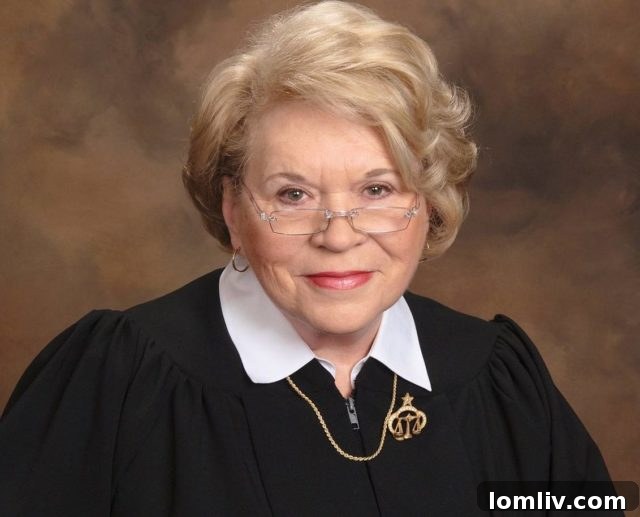
Long-Serving Tarrant County JP Jacquelyn Wright Indicted on Felony Charges
A significant legal development has shaken the judicial landscape of Tarrant County, Texas. Jacquelyn Wright, a veteran Justice of the Peace who has served the community for 28 years, now faces serious felony charges. This news, which emerged recently, marks a dramatic turn in a career already punctuated by various controversies. The indictment alleges that Judge Wright engaged in fraudulent activities related to homestead exemptions and also committed theft of services from Tarrant County, raising critical questions about public trust and accountability.
Understanding the Charges: Homestead Exemption Fraud and Theft
The core of the indictment against the 77-year-old Justice of the Peace centers on allegations of misrepresenting her primary residence to improperly benefit from homestead exemptions. In Texas, a homestead exemption is a legal provision designed to reduce the amount of property taxes homeowners pay on their primary residence. It allows eligible Texans to deduct a certain amount from their home’s appraised value, thereby lowering their tax burden. This exemption is crucial for many families, providing significant financial relief and making homeownership more affordable.
However, the privilege of claiming a homestead exemption is strictly tied to a property being the homeowner’s principal residence. The indictment against Judge Wright specifically alleges that between 2010 and 2018, she falsely claimed these exemptions on homes where she did not actually reside. The primary alleged motive was to avoid paying property taxes on a specific property located on Ivy Hill Road in Fort Worth. According to the grand jury, she falsely applied for and received a homestead exemption for the Ivy Hill Road home in 2015, 2016, and 2018. This constitutes a direct violation of property tax laws and an abuse of a system designed to help legitimate homeowners.
Beyond the homestead exemption fraud, Judge Wright also faces accusations of taking between $2,500 and $30,000 worth of services from Tarrant County. These services reportedly involved county labor and utilities. Such a charge implies a misuse of public resources, where an official allegedly leveraged their position to obtain services that should have been paid for personally, diverting funds or labor intended for the public good.
The Legal Process: Indictment and Public Integrity Unit
The Tarrant County District Attorney’s Office confirmed the indictment, stating, “We received information concerning potential violations by Judge Wright, and in response our Public Integrity unit investigated. Evidence discovered in the course of that investigation led to the presentation of charges to a Tarrant County Grand Jury.” This statement highlights the rigorous process undertaken by the Public Integrity Unit, a specialized division tasked with investigating allegations of misconduct involving public officials. The formation of such units underscores the commitment of law enforcement agencies to uphold ethical standards within government and ensure that those in positions of power are held to account.
Specifically, Judge Wright was indicted on a total of four felony counts: one count of theft and three counts of tampering with a government record. Tampering with a government record is a serious offense, often involving the falsification, concealment, or destruction of official documents, which would be relevant in the context of allegedly false homestead exemption applications. These charges are state felonies in Texas, carrying potential penalties that can include imprisonment for up to two years, significant fines, and a permanent stain on one’s public record. The District Attorney’s Office has affirmed that these cases will proceed to trial in a Tarrant County criminal court, where Judge Wright will have the opportunity to present her defense against these grave allegations.
A History of Controversy: Troubles Beyond the Current Indictment
Jacquelyn Wright’s 28-year tenure as a Tarrant County Justice of the Peace has been marked by a series of high-profile incidents that have drawn negative attention and raised questions about her conduct. These past controversies, while distinct from the current felony charges, contribute to a broader narrative of an official frequently at odds with ethical expectations and public standards.
Judicial Conduct and Ethical Lapses
In 2015, Judge Wright received a public warning from the Texas Commission on Judicial Conduct. This disciplinary action stemmed from allegations that she had seemingly offered a quid pro quo in a pending criminal case. A quid pro quo, meaning “something for something,” implies an exchange where an official uses their power to offer a benefit in return for a favor or action. Such behavior is a severe breach of judicial ethics, undermining the impartiality and integrity expected of a judge. The Texas Commission on Judicial Conduct is responsible for investigating allegations of misconduct against state judges, and a public warning is a formal rebuke, signaling a serious violation of the judicial code of conduct.
Campaign Missteps and Public Image
Beyond the courtroom, Judge Wright’s actions on the campaign trail and in public forums have also courted controversy. During her 2015 re-election campaign, she gained negative attention for posting an obscene message on Facebook directed at her then-opponent for the Justice of the Peace Place 4 seat. Such behavior, particularly from a sitting judge, is widely seen as unprofessional and unbecoming of the office, reflecting poorly on the judiciary as a whole.
More recently, in February, her husband, Ross Ladart, was caught on camera removing the signs of her opponent, Chris Gregory. While Judge Wright issued an apology to Gregory, she controversially maintained that her husband had done nothing wrong. This incident sparked further debate about election ethics and the conduct of individuals associated with political campaigns, especially those involving judicial positions where fairness and adherence to rules are paramount.
Financial Troubles and Alleged Motives
Further insights into Judge Wright’s financial history reveal that she filed for Chapter 13 bankruptcy in 2011, with the case being fully discharged in 2016. Chapter 13 bankruptcy allows individuals with regular income to develop a plan to repay all or part of their debts over three to five years. Her list of secured creditors included homes on both Maryanne Place and the Ivy Hill Road property, which is central to the current indictment. According to her bankruptcy debtors plan, she owed $108,017 in unsecured debt. While her position as a Justice of the Peace paid a substantial salary, recorded as $118,478 a year by the Texas Tribune’sGovernment Salary Explorer, the existence of significant debt during the period of alleged homestead exemption fraud could potentially be seen by prosecutors as a contributing factor or motive behind the alleged financial misdeeds.
The Road Ahead: Legal Battle and Political Implications
Following the indictment, Jacquelyn Wright voluntarily surrendered at the Parker County Jail on Wednesday. She was subsequently released on bond, which was set at $2,500. This is a standard procedure in felony cases, allowing the accused to remain free while awaiting trial, provided they adhere to bond conditions. However, the legal battle ahead is formidable. As state felonies, the charges of tampering with government records and theft of service carry severe potential consequences, including imprisonment and substantial fines, as well as the potential forfeiture of her right to hold public office in the future.
The timing of this indictment also coincides with a significant political shift for Judge Wright. In May, she lost her bid for re-election to Chris Gregory in a Republican primary runoff election. Although she will serve the remainder of her term through the end of the year, her defeat to Gregory, who faces no Democratic challenger, marks the conclusion of her nearly three-decade-long career on the bench. While the outcome of the election was determined before the indictment became public, the ongoing controversies and scrutiny surrounding her conduct likely played a role in voter perception and contributed to her electoral defeat. Her remaining months in office will undoubtedly be overshadowed by these serious legal proceedings, casting a long shadow over her legacy in Tarrant County.
Conclusion: Upholding Public Trust
The indictment of Jacquelyn Wright sends a stark message about accountability for public officials, regardless of their tenure or past service. Allegations of homestead exemption fraud and theft of services strike at the heart of public trust, as they involve the alleged misuse of tax benefits and public resources intended for the community. As the legal process unfolds in Tarrant County criminal court, the case will not only determine Judge Wright’s fate but also reinforce the principle that all individuals, including those in powerful judicial positions, are subject to the rule of law. The community will be watching closely as the Tarrant County District Attorney’s office pursues justice, ensuring that the integrity of both the tax system and public office is upheld.