In a surprising twist, recent real estate reports indicate that the nation’s “hottest housing markets” are not located in the sun-drenched states of the South or West, including Texas. This revelation might prompt aspiring homeowners to envision a cozy Christmas in a colder climate rather than a warm winter in the Lone Star State.
For October, the dynamic Dallas-Fort Worth (DFW) metro area was notably absent from the top 10 list of housing markets. In fact, a comprehensive report by Realtor.com revealed that no Texas city managed to secure a spot within the top 20 rankings nationwide. This challenges conventional wisdom, suggesting a significant shift in buyer preferences and market dynamics across the country.
Leading the pack for an impressive eleventh consecutive month, Manchester, New Hampshire, approximately an hour north of Boston, clinched the top position as the No. 1 U.S. housing market. This consistent performance underscores a unique trend emerging in the national real estate landscape. Following Manchester were Rochester, New York, and Burlington, Vermont, completing the top three. The rest of the top 10 were populated by metropolitan areas spanning Wisconsin, Ohio, Connecticut, Indiana, Kansas, and Massachusetts.
What unites these seemingly disparate locations? They share a striking characteristic that ironically contradicts the popular notion of “hot” markets. This common thread hints at a deeper economic story unfolding in the U.S. housing sector, moving beyond simple desirability to fundamental market forces.
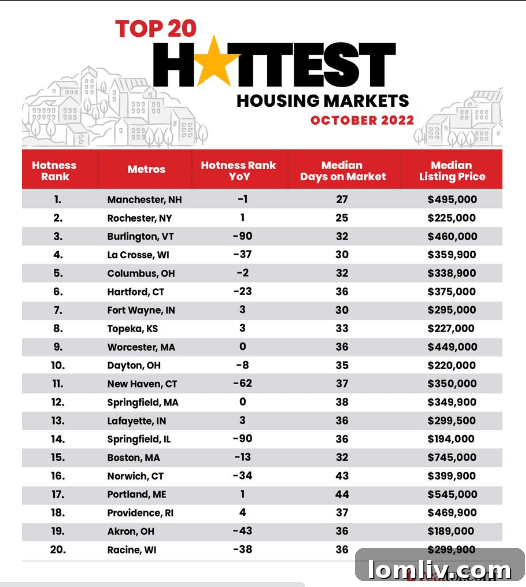
Realtor.com economic data analyst Hannah Jones articulated this unexpected irony, pointing out that all of the top-ranking markets are situated in colder climates. She explained, “In the South and West, which contain warm markets that were really popular even before the pandemic, prices have just been driven so high. Even if they’re places people might enjoy living, many buyers have been priced out.” This statement highlights a crucial shift: while areas like Texas remain highly attractive, their rapid appreciation has created affordability challenges, pushing buyers towards more accessible alternatives.
The concept of “hot” housing markets, therefore, isn’t solely about desirability or population growth, but increasingly about relative affordability and available inventory in the current economic climate. With rising interest rates and persistent inflation, buyers are prioritizing value and less competitive environments. These colder climate markets, often overlooked in previous booms, are now offering a compelling proposition: homes that are within reach financially, coupled with strong local economies and a sense of community. This dynamic signifies a rebalancing of the housing market, where the chase for the sun is temporarily paused in favor of financial prudence.
Unpacking the Paradox: Why Cold Climates are Heating Up
To truly understand this phenomenon, we must delve deeper into the metrics defining these “hottest” markets. The underlying factors contributing to the surge in demand for homes in places like Manchester, N.H., and Rochester, N.Y., are multifaceted. It’s not just about chilly temperatures; it’s about a convergence of economic realities and evolving buyer priorities.
Consider the median list price for a single-family home in Manchester, N.H., which stood at $495,000 in October. In contrast, Dallas recorded a slightly lower median price of $460,000 during the same period. However, this Dallas figure represents a substantial 15 percent increase year-over-year, indicating rapid appreciation even if the absolute price point is lower than Manchester’s. This comparison illustrates that while Dallas prices are still climbing, they have reached a point where affordability is becoming a significant concern for many potential buyers, pushing them to explore markets where their purchasing power stretches further.

So, what exactly qualifies a metro market as one of the “hottest” in the U.S. in the eyes of Realtor.com? The rankings are primarily based on two critical factors: the volume of views properties receive on Realtor.com within these metro areas and, more importantly, the speed at which homes are selling. These metrics collectively paint a picture of intense buyer interest and a highly competitive environment. High views suggest strong initial demand, while quick sales indicate limited inventory and aggressive bidding from motivated buyers.
For markets like Manchester, the combination of relatively more affordable housing options, lower competition compared to overheated pandemic boomtowns, and a steady local economy has created an ideal environment for rapid sales. Buyers, weary of bidding wars and escalating prices in the traditionally “hot” Southern and Western markets, are finding a more attainable path to homeownership in these unexpected locales. This trend is further fueled by the lasting impact of remote work, which has granted many individuals the flexibility to choose where they live based on factors beyond proximity to a physical office, such as affordability and quality of life, even if it means bundling up in the winter.
Dallas-Fort Worth: A Different Kind of Heat and Enduring Appeal
While Dallas-Fort Worth may not top the “hottest markets” list based on these specific speed-of-sale metrics, its appeal and market strength are undeniable and multifaceted. Realtors frequently report that people continue to flock to Texas, and specifically to DFW, drawn by a potent combination of factors: abundant career opportunities, reputable school districts, and the significant advantage of no state income tax. These foundational elements ensure a steady influx of residents, sustaining robust demand for housing across all segments.
The DFW metroplex boasts a diverse and resilient economy, serving as a hub for major corporations in technology, finance, logistics, and healthcare. This creates a wealth of high-paying jobs, making it an attractive destination for professionals and families alike. Furthermore, the absence of a state income tax is a powerful incentive, allowing residents to retain more of their earnings compared to those in many other high-tax states. This financial advantage directly contributes to a higher disposable income, enhancing overall affordability and quality of life for residents.
According to Redfin, the cost of living in Dallas is approximately 8 percent lower than the national average. This statistic, combined with strong employment prospects, positions Dallas as a highly desirable place to live, even as housing affordability and availability face challenges exacerbated by recent market shifts. The city’s ability to maintain a relatively lower cost of living while offering big-city amenities is a testament to its economic stability and strategic growth.
Despite the current focus on “hottest” markets in colder climates, confidence in the North Texas housing market remains exceptionally high. We place considerable weight on the insights from National Association of Home Builders Chief Economist Rob Dietz, who forecasts a significant surge for the Dallas housing market in 2024. This optimistic outlook is grounded in the region’s strong economic fundamentals, continued population growth, and the expectation of more stabilized interest rates, which would inject renewed vigor into buyer activity. The DFW market might be taking a breath after years of explosive growth, but its underlying strength and future potential are robust.
The Resilient Spirit of Dallas: Beyond the Rankings
Ask any native Texan if everything is bigger in the Lone Star State, and you’ll likely receive an emphatic affirmation, often coupled with the addendum, “And better.” This inherent pride extends to embracing the Texas climate, with many residents cherishing the long, hot summers that define the region. While the national spotlight might momentarily shine on colder markets, the unique appeal of Dallas remains undimmed, underpinned by a vibrant culture, diverse opportunities, and a strong sense of community.
For those who appreciate cooler temperatures, Dallas certainly delivers. The winter months, typically from December through February, offer plenty of “sweater weather,” including occasional frosty days and even the memorable “snowpocalypse” of recent years. This variety in climate ensures that Dallas offers something for everyone, dispelling any notion that it’s perpetually hot. The city’s resilience was vividly demonstrated during such weather events, further solidifying the strong community bonds and preparedness of its residents.
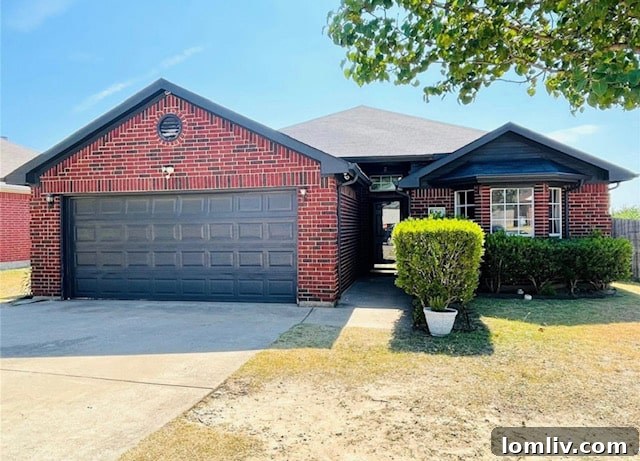
Ultimately, Dallas doesn’t rely on national headlines or fluctuating rankings to affirm its status as an exceptional place to live, work, and invest. The city proudly showcases a vast array of housing options, catering to every lifestyle and budget, from exquisite multi-million-dollar estates in prestigious neighborhoods to charming and affordable properties suitable for first-time homebuyers or growing families. This diversity ensures that the dream of homeownership remains attainable for a broad spectrum of residents, reflecting the inclusive spirit of the DFW metroplex.
City leaders are also acutely aware of the evolving housing landscape and are actively engaged in addressing critical needs, particularly regarding “missing-middle housing.” This initiative focuses on developing diverse housing types—such as duplexes, townhouses, and smaller apartment buildings—that bridge the gap between single-family homes and large apartment complexes. These efforts aim to enhance affordability, increase housing inventory, and ensure that Dallas continues to offer viable and attractive living options for its rapidly expanding population. The unanimous approval of developments like the Ojala Holdings Standard Shoreline apartment project underscores the city council’s commitment to strategic and equitable urban development.
Therefore, for those who might feel a pang of concern that Dallas didn’t make the top 20 “hottest housing markets” list, there’s no need to fret. The future outlook for local housing in North Texas is overwhelmingly positive. The market’s inherent strengths—driven by economic vitality, continuous population influx, and dedicated civic leadership—guarantee that Dallas will remain a highly sought-after destination. The current national trends merely represent a temporary market adjustment, and all indicators point towards a vibrant and prosperous real estate future for the Dallas-Fort Worth metroplex. Buyers and investors alike can look forward to a resilient market with promising opportunities on the horizon.