Dallas-Fort Worth Rental Market: Unpacking Rising Costs and Affordability Challenges
The Dallas-Fort Worth-Arlington metro area, a vibrant hub of economic activity and population growth, is increasingly grappling with the complexities of rental affordability. A recent comprehensive study by Lawn Love, a prominent San Diego-based lawn-care marketplace, sheds light on the factors driving up rental costs in this dynamic region. While DFW’s overall rankings in terms of sheer expense might not be top-tier, its position regarding “cost inflators” reveals a crucial and concerning trend for renters.
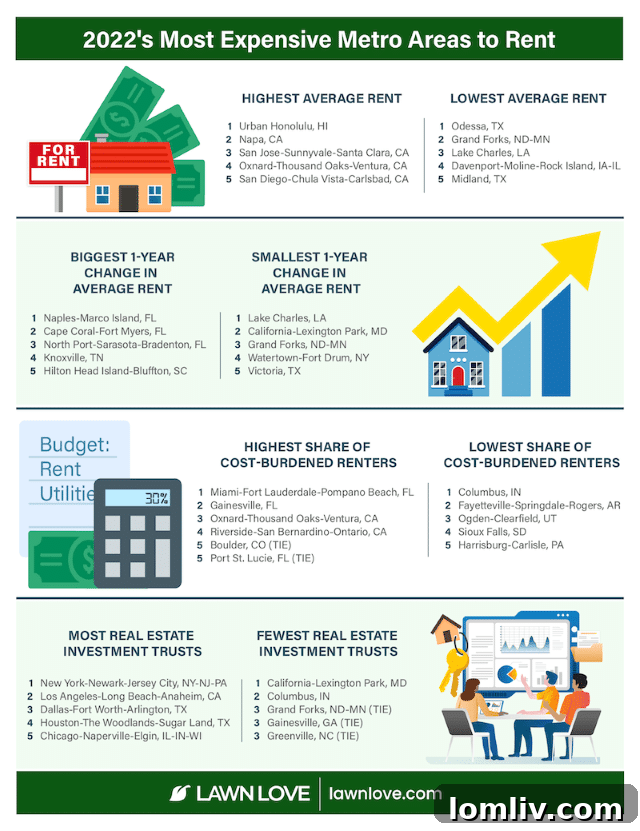
Lawn Love’s research meticulously analyzed 185 rental markets across the United States, providing a detailed snapshot of the rental landscape. The Dallas-Fort Worth-Arlington market presented expected figures in some categories, ranking as the 44th most expensive metro area for renters and 50th in average rent prices. However, when it came to rent affordability, DFW landed at a challenging 124th position, indicating that while rents might not be the absolute highest nationwide, they consume a disproportionately large share of residents’ incomes.
Beyond these general rankings, the study unveiled a particularly critical statistic: Dallas-Fort Worth-Arlington secured the fifth spot nationally in “cost inflators.” This specific metric, as defined by the Lawn Love study, primarily encompasses two significant factors: the prevalence of Real Estate Investment Trusts (REITs) and the average renters insurance premium. Understanding these components is essential for anyone seeking to navigate or comprehend the DFW rental market.
The Influence of Real Estate Investment Trusts (REITs) on DFW Rents
A major contributing factor to DFW’s high ranking in cost inflators is the significant presence and activity of Real Estate Investment Trusts (REITs). Lawn Love’s methodology specifically incorporated the REIT factor, citing a noticeable trend where large real estate companies acquire properties, often foreclosed homes, and subsequently convert them into rental units at increasingly exorbitant rates. This strategy, while profitable for investors, has profound implications for the local housing market and the everyday renter.
Real Estate Investment Trusts are companies that own, operate, or finance income-producing real estate. They allow individuals to invest in large-scale real estate portfolios, much like investing in stocks. While REITs can provide liquidity to the real estate market and fund significant development projects, their aggressive entry into the single-family home market has drawn considerable scrutiny. In regions like DFW, where economic growth and corporate relocations are driving demand, institutional investors find attractive opportunities to purchase properties in bulk, effectively reducing the available inventory for individual homebuyers and increasing competition in the rental sector.
The Dallas-Fort Worth area’s robust economy, characterized by thriving job markets and an influx of new residents, makes it a prime target for investment buyers, including these large institutional players. This heightened interest from investment firms has not gone unnoticed by local leadership. Dallas city officials, recognizing the potential for these activities to artificially inflate property values and rental prices, have begun to consider various policies aimed at moderating or slowing this investment interest. Such discussions underscore a broader concern that goes beyond local boundaries, having evolved into a topic of national concern regarding the role of private equity and investment firms in exacerbating housing crises.
The Double-Edged Sword of Investment: A Developer’s Perspective
The conversation around investor activity in the housing market is complex and multifaceted. While critics argue that institutional buying limits supply and drives up costs for everyday families, some within the real estate development community offer a different perspective. Ty Lee, founder of the Dallas REIT startup Common Dwelling, weighed in on this debate in an interview with Daltxrealestate.com back in May. He suggested that policies aimed at curbing investor activity might inadvertently harm the very sector they intend to protect: renters.
Lee explained that in an environment marked by rising interest rates, many prospective homebuyers find themselves priced out of the purchase market, forcing them to remain in or enter the rental market. If investors are restricted from buying properties, this could lead to a reduction in the available rental housing stock, thereby increasing competition for fewer units and potentially driving up rental prices further. “Limiting investor activity would remove a much-needed product for renters,” he stated. “Families need schools and space, and sometimes an apartment doesn’t work for them.” This highlights the challenge of balancing the need for affordable housing with the supply of diverse rental options, particularly for families who require more space than typical apartment living offers.
Renters Insurance: An Often Overlooked Cost Inflator
Beyond the formidable impact of REITs, the second significant component of cost inflators identified by Lawn Love is the average renters insurance premium. While typically a smaller monthly expense compared to rent, it is a mandatory or highly recommended cost for most renters and contributes to the overall financial burden. Renters insurance provides crucial protection for personal belongings against damage or theft and offers liability coverage in case someone is injured on the rented property.
Several factors can influence renters insurance premiums in the Dallas-Fort Worth area. These include the specific zip code, the age and construction of the building, the proximity to fire stations, local crime rates, and the tenant’s claims history. Furthermore, the region’s susceptibility to severe weather events, such as hailstorms and tornadoes, can lead to higher insurance rates as providers factor in increased risk. As property values and repair costs rise, so too does the potential cost of claims, which is reflected in premium prices. For many renters, this seemingly minor expense adds another layer to the mounting cost of living in DFW, making overall housing less affordable.
Broader Rental Market Trends: DFW in a National Context
The challenges faced by the Dallas-Fort Worth rental market are not isolated. The Lawn Love study also highlighted several other metro areas grappling with similar or even more intense affordability issues. Unsurprisingly, the New York-Newark-Jersey City market was rated the most expensive metro area overall, a reflection of its historically high rental costs and, crucially, a substantial presence of REITs. This correlation between investment activity and high costs is a recurring theme throughout the report.
California, a state notoriously known for its high cost of living, accounted for half of the top 10 most expensive metro areas. Cities like San Diego-Chula Vista-Carlsbad (No. 5) and Los Angeles-Long Beach-Anaheim (No. 6) exemplify this trend. Napa, at No. 9, stood out with the second-highest overall average monthly rent nationwide, a staggering $2,495. These comparisons underscore a national pattern where desirable urban centers, often characterized by strong economies and limited housing supply, become magnets for institutional investment, subsequently driving up rental prices and impacting affordability for local residents.
About Lawn Love: Insights Behind the Study
Understanding the source of this valuable data enhances its credibility and context. Lawn Love is a San Diego-based technology company that has carved out a unique niche in the home services industry. It operates as a marketplace connecting consumers with professional lawn care providers, leveraging technology to streamline the process of booking and managing yard work. The company’s ambitious stated goal is to “build the largest high-tech lawn care marketplace on planet earth.” While seemingly unrelated to housing market analysis, Lawn Love’s interest in such a study stems from its deep engagement with homeowners and renters, providing them with valuable demographic and market insights that directly impact their service offerings and strategic planning.
The report itself is a treasure trove of information, designed for ease of access and comprehensive understanding. It features a sortable table that allows users to quickly compare various metro areas based on specific metrics. A dynamic chart further enhances the user experience, offering a visual representation of the data and highlighting key trends. Lawn Love compiled this extensive report by gathering publicly available data on crucial indicators such as rent prices, rent affordability, and the aforementioned cost inflators. To ensure accuracy and provide a balanced view, the company then calculated weighted scores for each metro area across all categories, averaging these scores to produce the final rankings. It’s an insightful deep dive, definitely a four-bunny rabbit hole worth exploring. Hop on in to uncover more detailed findings and understand the intricate dynamics of rental markets across the nation. 🐇 🐇 🐇 🐇
Conclusion: Addressing the DFW Rental Challenge
The Lawn Love study serves as a critical indicator of the mounting pressures within the Dallas-Fort Worth-Arlington rental market. While the region continues to thrive economically, the rising influence of Real Estate Investment Trusts and the incremental burden of costs like renters insurance are creating significant affordability challenges. For residents, this translates to a constant struggle to secure housing that aligns with their income. For local leaders, it presents a complex policy dilemma: how to foster economic growth and attract investment while simultaneously protecting the interests of everyday families and ensuring access to affordable housing.
As DFW continues its trajectory as a major metropolitan area, addressing these cost inflators and improving rental affordability will require concerted efforts from policymakers, developers, and community stakeholders. Understanding the intricate factors at play, as illuminated by studies like Lawn Love’s, is the first step toward crafting sustainable solutions that ensure the region remains a welcoming and viable place for everyone to live and thrive.