
Decoding the Dynamic Real Estate Market: Key Insights from NAREE15
Just returned from the vibrant annual conference of the National Association of Real Estate Editors (NAREE15) in beautiful Miami, Florida. The event was a convergence of industry leaders, including luminaries like Steve Brown and Candace Carlisle, and for us, it was not only an occasion to proudly accept another award but, more importantly, to absorb the latest insights into the evolving state of the real estate market. This intensive engagement allows us to continually provide our readers with the most current and relevant information, keeping a finger on the pulse of not just market trends, but the broader real estate industry itself.
Our dedication to you, our valued readers, drives us to remain at the forefront of industry knowledge. We understand that whether you are actively seeking a Realtor or preparing to sell your home, you desire a professional who operates with intention and expertise, not by chance. The presence of an agent’s polished image on a billboard or in a costly advertisement, while a sign of marketing effort, doesn’t inherently guarantee they are the most qualified or dedicated professional for your unique needs. A sobering statistic reveals a significant challenge within the industry: between 35% and 40% of real estate agents in competitive areas like D.C. and Maryland fail to sell a single home in an entire year. This highlights a critical industry-wide re-evaluation of the “accidental” or part-time agent. A crucial question every prospective client should ask their agent is simple yet profound: “How many homes have you sold this year?” This metric often provides a clearer picture of an agent’s active involvement and success in the market.
The Digital Imperative: How Technology is Revolutionizing Real Estate
One of the most striking takeaways from NAREE15 underscored the undeniable shift towards digital platforms in real estate. Astute and successful agents have recognized that the epicenter of activity has migrated online. The traditional relevance of print media is steadily diminishing, a trend even evident among the predominantly print-focused journalists attending the conference. Numerous reporters confided that their respective publications are aggressively pushing online content over their print editions, signifying a broader, irreversible industry-wide transformation.
The numbers paint a compelling picture: an overwhelming 90% of home buyers now begin their property search online, often six months before ever engaging with a real estate agent. This radical transformation means technology isn’t merely influencing; it is fundamentally driving the real estate industry forward at an unprecedented pace. Buyers are now entering the market armed with more information than ever before, much of it gleaned from mobile devices. Approximately two-thirds of all visitors to major real estate portals like Zillow access the site via a mobile device. With a staggering 117 million people visiting real estate websites in May alone, and platforms like Zillow and Realtor.com commanding the largest shares, the need for agents and brokerages to maintain a dynamic, constantly updated online presence is paramount. In today’s hyper-competitive market, delaying content updates by even 15 minutes can mean missing out, underscoring the critical demand for real-time responsiveness and fresh information.
Generational Impact: Millennials and Baby Boomers Reshaping Housing Demands
The housing market’s current trajectory is largely being dictated by two dominant demographic forces: Millennials and Baby Boomers. Intriguingly, Millennials are projected to have an even more profound impact than their Boomer predecessors. A refreshing revelation from the conference was the dispelling of a widely propagated myth: that Millennials exclusively desire to lease properties and reside in dense, walkable urban environments. While this preference certainly holds true for a segment of the generation, it is far from universal. Many Millennials harbor strong aspirations for homeownership and are increasingly demonstrating a willingness to embrace suburban living.
However, this generation does approach consumption and possessions differently. Millennials often prioritize experiences over material goods, leading to a reduced demand for the sprawling homes traditionally favored by Baby Boomers. They are also less inclined to own multiple cars or incur expenses for parking spaces they rarely use. Their preferences lean towards more efficient, sustainably designed, and often smaller homes, reflecting a broader shift towards minimalism and practicality.
The Crippling Burden of Student Debt: A Barrier to Millennial Homeownership
Despite their desire for homeownership, individuals in their twenties are not acquiring homes at the same rate as a decade ago. Comprehensive new research and analysis from Equifax Inc. highlight key contributing factors: escalating student loan debt, often uncertain job prospects, and the enduring psychological impact of the 2008 housing bust. These interwoven challenges create formidable barriers to entry into the housing market for many young adults.
Dennis Carlson, Deputy Chief Economist at Equifax, presented alarming statistics: in 2004, consumers under 30 in the United States collectively held $146 billion in student loan debt. By 2014, this figure had more than doubled to a staggering $369 billion. This immense financial obligation acts as an “economic noose,” severely constricting Millennials’ financial flexibility and their capacity to save for down payments or manage the responsibilities of a mortgage.
Equifax data unequivocally demonstrates a strong correlation between income levels and student loan delinquency rates. Those earning less than $30,000 annually face the highest likelihood of defaulting on their student loans. Remarkably, for every additional $10,000 of income, the delinquency rate drops by 20 percent. This powerful correlation vividly illustrates the extraordinary strain student debt places on young consumers just embarking on their careers, diverting crucial funds that could otherwise be allocated to housing investments and wealth building.
Further analysis by Equifax and the Federal Reserve Bank of New York confirms this trend: while mortgage debt declined among twenty-somethings both with and without student debt, the reduction was significantly more pronounced for those burdened by student loans. In 2006, 33.2 percent of consumers under 30 with student debt also carried mortgage debt; by 2014, this figure had sharply fallen to 20.9 percent. In contrast, for consumers without student debt, the proportion with mortgage debt decreased from 29.6 percent in 2006 to 21.7 percent in 2014. These figures emphatically underscore the direct and disproportionate impact of student debt on the pursuit of homeownership.
To borrow a famously blunt political slogan, it is unequivocally: “It’s the Student Debt, Stupid.” This debt, aggressively pushed onto students much like a readily available commodity, has created a generation facing unprecedented financial hurdles to establishing roots. When questioned about their reasons for not purchasing a home, the overwhelming majority of renters—55.7 percent—cited “too much debt/not saved enough” in the Federal Reserve Bank of New York Survey of Consumer Expectations. Strikingly, only a small fraction, 7.9 percent, expressed concern about potential declines in housing prices, indicating that personal debt and insufficient savings are far greater inhibitors than market fear.
Carlson astutely observed, “Equifax data suggests that the conventional theory—Millennials are the rental generation and uninterested in home ownership—is only a part of the story.” He emphasized that substantial student debt and often less-than-stellar job prospects for recent college graduates undoubtedly dim the dream of homeownership more than a lack of inherent desire. However, he concluded with a hopeful outlook: “But we also see indications that they will eventually want the family, the car, and the house that older generations desired, just with a significant delay.” This valuable perspective from Dennis Carlson, combined with Don Ganguly of HomeUnion’s insightful declaration that job availability is the fundamental key to homeownership, paints a clearer, albeit challenging, picture. The current economic reality, where a mere 10 million jobs in the U.S. offer wages exceeding $40 per hour, poses a substantial obstacle as both home prices and rents continue their relentless ascent.
The Affordability Crisis: Luxury Development vs. Scarce Entry-Level Homes
The current housing market is characterized by a stark imbalance in supply, particularly evident in high-demand regions such as California. Here, the overwhelming majority of new construction entering the market consists of luxury properties, which critically exacerbates the shortage of affordable housing options. This trend is largely fueled by soaring land prices, which render it economically unfeasible for developers to construct entry-level or even mid-range homes, further alienating a significant portion of potential buyers.
Economists consistently observe that modern home buyers continue to highly value convenience, close proximity to essential amenities, the appeal of a brand-new property, and adequate living space. But what specifically drives Americans’ pronounced preference for new homes? According to Trulia’s Chief Economist, Selma Hepp, three primary factors stand out: (1) the invaluable opportunity for customization, allowing buyers to tailor their living environment to their precise tastes and needs; (2) the integration of modern features and cutting-edge technologies, offering enhanced comfort, energy efficiency, and connectivity; and (3) the inherent peace of mind that accompanies minimal immediate repair needs, a significant draw for many. Hepp, an insightful expert, also clarified the concept of an “Exurb”—a thriving community located beyond the traditional suburban sprawl, often serving as a commuter hub for a larger urban area. Examples like Prosper and Allen aptly illustrate this phenomenon. In highly competitive markets, buyers are compelled to purchase where supply is available, frequently in these exurban areas, which also offer the added benefits of good schools and lower crime rates.
Selma Hepp further elucidated that while many Millennials ideally aspire to urban living, the prohibitive costs and severe scarcity of affordable housing within city centers are effectively forcing them to consider these more distant exurban communities. She also highlighted an intriguing paradox: despite a majority of Americans expressing a preference for new homes, only 17% indicated a willingness to pay a 20% premium for a brand-new property. This clearly illustrates a pervasive tension between aspirational desires and economic realities in the housing market.
The “Not In My Backyard” (NIMBY) phenomenon continues to be a powerful, restrictive force, not just in affluent communities like Preston Hollow or Highland Park but also across states like California. In some instances, legitimate concerns such as drought conditions are being controversially utilized as justifications for imposing building moratoriums, which further constrict an already limited housing supply. This raises a pressing societal question: in the face of these compounding restrictions, where are people, particularly those desperately seeking affordable housing, genuinely expected to live?
The “One Percent”: A Distinct Segment in Luxury Real Estate
At the pinnacle of the market, the ultra-wealthy, often referred to as “the One Percent,” are acquiring luxury real estate with a remarkable ease, almost akin to purchasing everyday consumer goods. While not a universal trend, in highly exclusive areas like Sarasota, Florida, where beachfront properties command astronomical prices, the uber-rich are purchasing neighboring homes not as primary residences but as opulent guest lodges, or even as dedicated sanctuaries to house extensive personal collections of art, music, or other cherished possessions. Real estate agents confirm that similar patterns are emerging in prestigious Dallas neighborhoods such as Greenway Park, highlighting a distinctive and robust segment of the market driven by immense private wealth and highly specialized lifestyle needs.
Miami: The Global Nexus of Luxury Condo Living
Miami served as an exceptionally fitting and illuminating venue for the NAREE15 conference, firmly established as it is at the cutting edge of luxury condominium living. During our time there, we had the privilege of touring groundbreaking developments, including the stunning new Ritz-Carlton Residences on Meridian Avenue. These ultra-luxury units are being meticulously crafted within the architecturally repurposed shell of what was once a Heart Institute Hospital, standing as a testament to innovative adaptive reuse and uncompromising high-end design. We also immersed ourselves in the distinctive fragrance, refined ambiance, and natural elegance of the 1 Hotel South Beach, Barry Sternlicht’s visionary “middle-age creation,” majestically positioned on the oceanfront at 20th and Collins. The interiors of these properties are truly breathtaking and will be explored in greater detail in a forthcoming feature, promising an extraordinary visual and experiential journey.
Single-Family Homes as Strategic Investment Vehicles: Professionalizing the Everyday Investor
Beyond the exclusive realm of ultra-luxury, the market for single-family homes as investment properties continues to demonstrate remarkable strength, attracting a diverse range of “regular Joes and Jills.” Currently, an impressive 15 million single-family homes across the U.S. are held as investment real estate, with a striking 98% of these properties owned by “everyday” individual investors rather than large institutional entities. This trend signifies a burgeoning sector where companies are increasingly professionalizing the business of real estate investment, making it more structured, accessible, and efficient for individuals seeking to strategically diversify their financial portfolios.

Pioneering the Luxury Market: The Jills and the Evolution of Elite Real Estate Services
As our regular readers are well aware, the luxury real estate market continues to exhibit robust health and dynamic growth. The NAREE15 conference offered an invaluable annual overview from some of Miami’s most influential luxury agents, including the legendary team known as “The Jills”—Jill Hertzberg and Jill Eber of Coldwell Banker, alongside Judy Green, President and CEO of Premier Sotheby’s. Jay Parker, CEO of Douglas Elliman Real Estate-Florida, introduced an intriguing and emerging concept: the “Concierge real estate agent,” specifically tailored to cater to the ultra-rich. This bespoke approach promises highly individualized services extending far beyond traditional brokerage, a fascinating development we are keen to explore in depth.
The Jills, in particular, hold an almost mythical status in Miami real estate lore. With an astounding $552 million in sales recorded in 2013 alone, and landmark transactions such as the sale of the iconic Versace mansion in South Beach (the site of the famed designer’s tragic murder), their track record is truly unparalleled. Their success serves as a masterclass in strategic branding and market dominance:
Together, The Jills have likely sold more Miami real estate by dollar volume than any other team in the coastal city’s recent history.
In 2013, they achieved nearly $552 million in residential sales, as meticulously reported by REAL Trends and The Wall Street Journal. Considering that Miami’s most expensive single home sale stands at $47 million, this figure represents an extraordinary volume of transactions. (For comparative context, Manhattan’s residential record is famously almost double that amount.)
The Jills were also instrumental in the benchmark 2012 sale within the highly exclusive, yacht-encrusted island enclave of Indian Creek, having listed the property in collaboration with the New York-based duo Tal and Oren Alexander of Douglas Elliman, who also represented the buyer. A year later, The Jills successfully brokered the sale of the iconic Versace mansion, famously known as Casa Casuarina, for $41.5 million.
Further insights from the dynamic Miami market revealed notable shifts in buyer behavior: where buyers once commonly made 50% down payments on condominium purchases, the standard has now adjusted to approximately 35%. Additionally, a significant development on the regulatory front involves the IRS, which is reportedly scrutinizing the possibility of taxing these substantial deposits held in developers’ bank accounts, potentially introducing another layer of financial complexity to the high-stakes luxury real estate market.
The Evolving Landscape of Homeownership: Investment, Lending, and Generational Challenges
Is Investing in Single-Family Homes Still a Prudent Strategy?
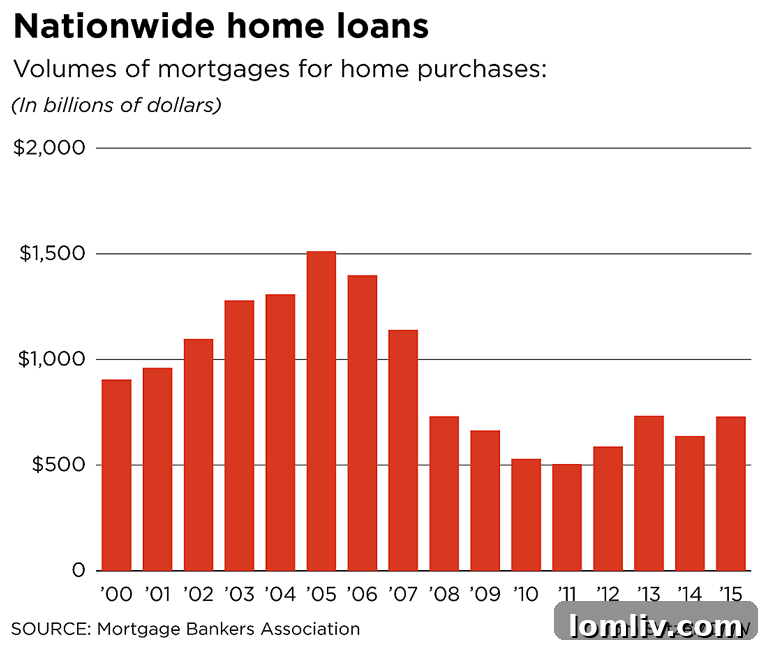
The answer remains a resounding “yes,” and arguably even more so now than ever, provided one possesses the financial wherewithal to navigate the current market. Despite the housing market’s encouraging recovery and the broader growth of the U.S. economy, securing a home loan continues to be significantly more challenging than it was a decade ago. Even nine years after the onset of the housing crisis, prospective homebuyers are still contending with more stringent mortgage underwriting standards and the persistent requirement for larger down payments.
Nearly a decade has elapsed since the housing crash ignited the recession. In the interim, home prices and sales have rebounded robustly, and the U.S. economy continues to expand.
However, the process of securing a home loan remains considerably more arduous than it was ten years prior.
And there is little indication that this situation is poised to change. Lenders exhibit no eagerness to relax their current mortgage standards.
“It’s still quite a bit tighter than it had been in the past,” observed Franklin Codel, Executive Vice President with Wells Fargo.
This persistent rigidity in lending standards creates a formidable and multifaceted challenge across various demographic segments. For Baby Boomers, a substantial portion of whom are anticipated to downsize from their larger family homes within the next decade, there is a looming dearth of suitable, appropriately scaled inventory. This raises a critical question: where will this significant segment of the population find adequate housing options that cater to their evolving needs in retirement?
Concurrently, the predicament faced by Millennials continues to intensify. Many were advised against homeownership during their formative years, and now find themselves trapped in a spiraling cycle of rising rents. This escalating rental burden makes it increasingly difficult to accumulate the substantial down payments required to purchase a home under the current stringent lending conditions. The clock is relentlessly ticking on housing affordability; as market prices and rental costs continue their upward trajectory, and underwriting standards remain unyielding, renting Millennials are caught in a compounding trap that pushes the dream of homeownership further and further out of reach.
In essence, we have inadvertently fostered a generation of renters, often not by their genuine choice, but largely as a consequence of systemic financial pressures. A critical perspective points directly to the historical role of banks, which aggressively enticed Millennials with readily available debt to finance their college educations. Yet, once these graduates entered the workforce and sought to establish financial stability through homeownership, these very same institutions dramatically tightened lending standards. This shift in lending policy, following a period of unchecked student loan proliferation, presents a deeply troubling and, some would argue, “rotten” dynamic for this generation, creating a profound imbalance between their financial burdens and their aspirations.