Discovering Dallas’s Grand Past: The Enduring Legacy of the South Boulevard/Park Row Historic District
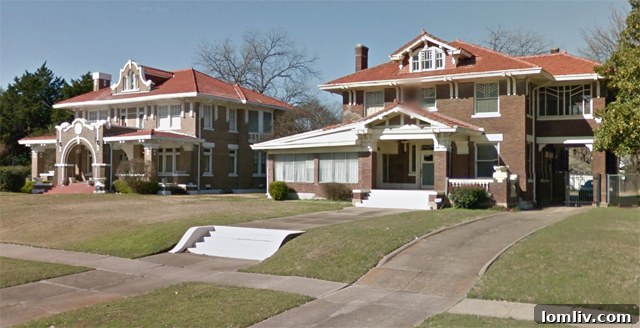
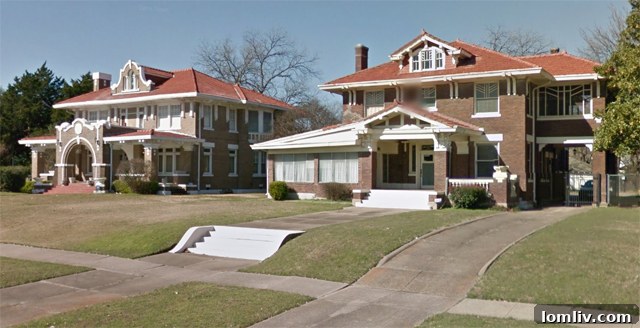
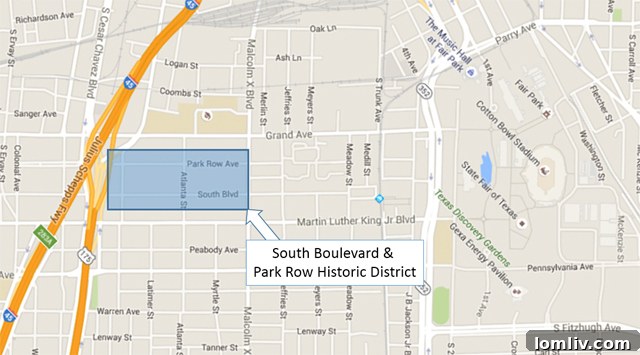
Nestled within the vibrant tapestry of Dallas, Texas, lies a historic gem often overlooked: the South Boulevard/Park Row Historic District. This fascinating area, rich with architectural splendor and profound historical narratives, offers a rare glimpse into the city’s early 20th-century elite and the tenacious spirit of its preservationists. Its story, largely chronicled by two pivotal master’s theses, reveals a neighborhood that rose, adapted, and continues to thrive against the odds, embodying the very essence of Dallas’s dynamic heritage.
The definitive account of this remarkable district originates from August 1980, when Charles Wayne Watson and Gary L. Young presented their Master of Architecture theses to the University of Texas at Arlington. Titled “A History and Guide to the South Boulevard/Park Row Historic District,” these scholarly works provided an exhaustive and, for many years, the only comprehensive chronicle of this enchanting Dallas neighborhood. Watson meticulously documented the evolution of South Boulevard, while Young focused his research on the unique characteristics of Park Row. Together, their invaluable contributions serve as the cornerstone for understanding the architectural styles, the social fabric, and the significant events that shaped this irreplaceable piece of Dallas history.
Today, these foundational documents are diligently preserved by Tammy Johnston, the impassioned president of the South Blvd. and Park Row Neighborhood Association. Johnston is more than just a steward of history; she is a living embodiment of the neighborhood’s spirit, dedicating herself to its continued revival. Her personal journey includes the meticulous renovation of a sprawling 4,000-square-foot South Boulevard mansion, a testament to her deep commitment and understanding of the immense potential held within these historic walls. Her efforts, and those of the association, are crucial in maintaining the district’s integrity and fostering a strong sense of community among its residents.
The Genesis of a Grand Neighborhood: From Religious Enclave to Urban Splendor
The origins of the South Boulevard/Park Row district as a prominent residential area can be traced back to a significant urban shift in 1913. This year marked the relocation of Temple Emanu-El, a cornerstone of Dallas’s Jewish community, from its original site in the Cedars neighborhood to the corner of Harwood Street and South Boulevard. This move was not arbitrary; it was a direct response to the encroaching industrial and commercial development spearheaded by the City of Dallas into the older Cedars district, signaling a need for new, more serene residential enclaves.
The Cedars, historically recognized as Dallas’s first Jewish community, saw many of its congregants follow their place of worship to its new location. This migration effectively established the South Boulevard area as the city’s second significant Jewish enclave, attracting a wave of prominent families who sought larger, more elaborate homes in a rapidly developing, desirable setting. Unfortunately, the original Temple Emanu-El building on South Boulevard eventually met a common fate for urban structures in the mid-20th century; it was torn down, a casualty of the construction of Interstate 45. This monumental freeway project, while facilitating regional connectivity, tragically bisected numerous Dallas neighborhoods, severing established communities and forever altering their physical and social landscapes, a fate that the South Boulevard area regrettably shared.
A Golden Era and Subsequent Challenges: Rise, Decline, and Resurgence
The neighborhood’s golden era, characterized by rapid construction and an influx of affluent residents, spanned approximately three decades, from 1914 to 1932. During this period, an impressive 55 homes were erected across the 2300 to 2700 blocks of South Boulevard. These residences represented the epitome of early 20th-century American architecture and design, attracting leading Dallas families who sought spacious living and architectural prestige. However, the transient nature of urban prosperity meant that by the time Watson and Young conducted their research in 1980, nine of these original homes had already been lost, a number that has unfortunately grown since. Despite these losses, the South Boulevard/Park Row district retains a significantly higher proportion of its original, intact homes compared to the Cedars, underscoring its unique preservation value.
As the original affluent residents gradually moved to newer, burgeoning areas of what was then considered “North” Dallas, such as the prestigious Swiss Avenue, the South Boulevard area entered a period of decline during the 1940s and 1950s. Many of its once-grand mansions, symbols of bygone opulence, were subdivided and converted into multi-family apartments, a common adaptive reuse strategy in urban areas facing economic shifts. This period could have marked the irreversible decay of the neighborhood. However, a turning point emerged in the 1950s when a group of visionary and enterprising Black residents recognized the inherent value and potential of the district. They initiated a monumental effort to restore and revitalize the neighborhood, a long and arduous journey fueled by dedication and a profound belief in the area’s future. This pioneering spirit of preservation and community building continues to define the district today, with ongoing initiatives to maintain its historical integrity and foster a vibrant living environment.
The tireless work of these community leaders did not go unnoticed. In 1976, the City of Dallas formally recognized their efforts and the architectural significance of the area by officially designating it a Historic District. This local recognition was swiftly followed by national acclaim; just two years later, in 1978, the South Boulevard/Park Row Historic District was proudly listed on the National Register of Historic Places. This dual designation provided crucial protections and opened doors for funding, further solidifying the neighborhood’s status as a vital part of American heritage and a testament to sustained community activism.
Architectural Grandeur and Urban Planning: The Blueprint of South Boulevard
The first official building permit for a residence in the South Boulevard area was issued in 1912 for the T.A. Manning home, located at 2533 South Boulevard, at its intersection with Atlanta Street. While the streets themselves had been laid out roughly two years prior, the construction of this pioneering home wasn’t completed until 1914. Manning’s initiative set a precedent, and by 1913, nine more permits were issued, signaling the burgeoning interest in this promising new residential enclave.
The urban planning of the South Boulevard district was notably generous. Individual lots were typically sized at a spacious 50 feet wide by an impressive 175 feet deep, although they were commonly sold by the linear foot. This substantial depth is particularly evident in the north side of South Boulevard, where many homes boast even wider lots. These generous dimensions account for the deep setbacks from the street, characteristic of the boulevard, which allowed for expansive front lawns, grand entranceways, and a sense of dignified privacy. This planning philosophy contributed significantly to the area’s initial appeal, distinguishing it from denser urban developments and catering to a desire for suburban grandeur within the city limits.
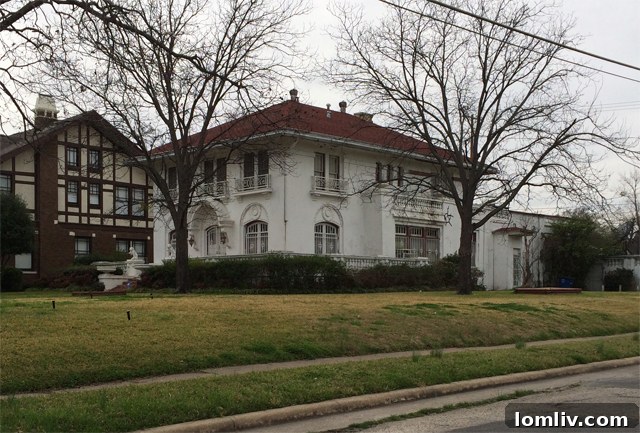
The architectural styles in South Boulevard evolved over time, reflecting broader national trends. The grandest and most elaborate homes were predominantly constructed before 1920, showcasing a mix of Classical Revival, Prairie School influences, and various eclectic styles that characterized the early 20th-century American elite. These substantial two-story residences were designed to impress, often featuring intricate detailing, expansive porches, and a commanding presence on their large lots. Following this initial period, the bungalow style began to gain popularity in the area. While modern perceptions often associate bungalows with smaller, more modest dwellings, the bungalows built in South Boulevard during this era were far from diminutive. Many of the earliest bungalows rivaled their two-story neighbors in square footage and luxurious appointments, often exceeding 2,000 square feet, demonstrating that “bungalow” referred more to an architectural style and layout rather than a specific size constraint. These homes provided a more relaxed yet still elegant alternative for affluent families seeking comfort and convenience.
Master Architects and Visionary Builders: Crafting Dallas’s Finest Residences
The design and construction of these magnificent homes attracted some of the era’s most esteemed architects, creating a veritable “Who’s Who” of Dallas’s architectural talent. Visionaries like H.A. Overbeck, the influential firm of Lang & Witchell, Hal Thompson, and Roscoe DeWitt lent their expertise to shape the distinct character of the South Boulevard/Park Row Historic District. It’s often tempting to assume that such grand residences were custom-commissioned by their first affluent occupants. However, much like today’s real estate market, a significant number of these homes were in fact “spec homes” – built on speculation by developers, designed to appeal to the tastes of the discerning wealthy buyers of the time. This practice allowed for a high concentration of sophisticated design and quality craftsmanship throughout the neighborhood, even without direct client input from the outset.
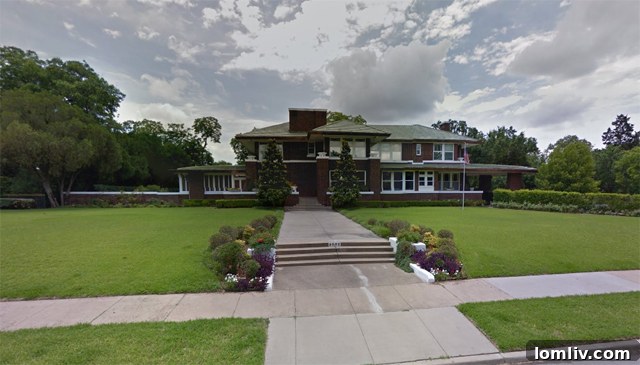
Lang & Witchell: A Legacy of Residential and Commercial Excellence
Among the most prolific and celebrated architectural firms of the period were Lang & Witchell. Their residential designs were highly sought after, reflecting a blend of stylistic grandeur and functional elegance. Many architectural historians consider the Higgenbotham home at 5002 Swiss Avenue to be one of their crowning achievements in residential architecture. This magnificent structure, encompassing a generous 5,400 square feet, exudes an undeniable sense of scale and opulence, perfectly capturing the aspirations of Dallas’s early 20th-century elite.
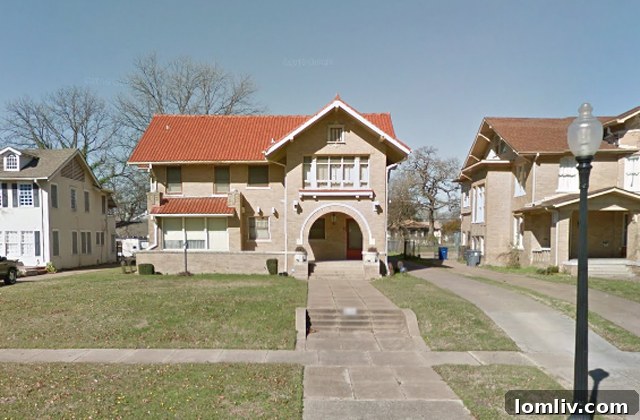
However, Lang & Witchell’s brilliance was not confined to Swiss Avenue. The firm also left an indelible mark on South Boulevard, exemplified by the Salzenstein home at 2419 South Boulevard. Though a mere 10 percent smaller than the Higgenbotham residence, at 4,700 square feet, the Salzenstein home ingeniously utilizes its deep lot. From the street, it presents a refined and stately facade, yet its true grandeur unfolds as the property extends far back, maximizing space and privacy – a perfect illustration of the thoughtful urban planning and architectural innovation prevalent in the district.
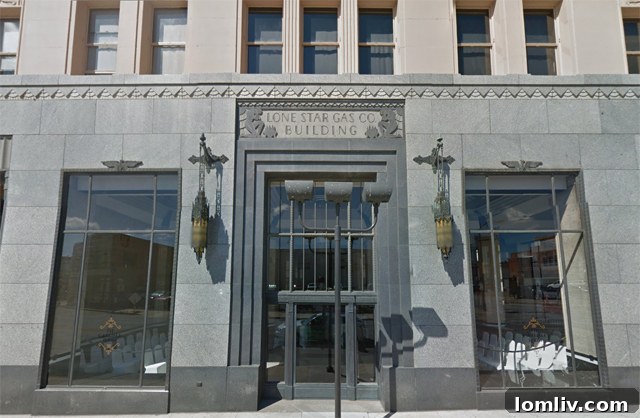
Beyond their acclaimed residential projects, Lang & Witchell were equally prominent in commercial architecture, shaping Dallas’s burgeoning skyline and public spaces. Their portfolio includes several iconic structures that remain cornerstones of the city’s architectural identity, such as the distinguished Fair Park Music Hall, an enduring venue for arts and entertainment. They also designed the imposing Dallas Power and Light building and the remarkable Lone Star Gas building, a structure that has been thoughtfully repurposed into the modern and highly sought-after Lone Star Gas Lofts. This adaptive reuse project stands as a testament to the enduring quality of their design and the potential for historic buildings to find new life in contemporary urban settings, blending the past with the present.
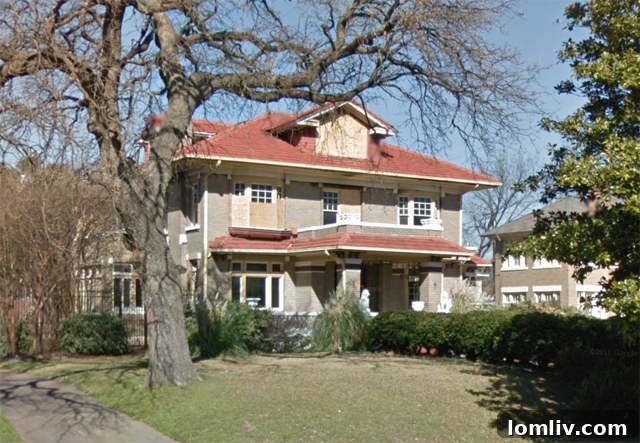
H.A. Overbeck: Master of Substantial Design
Another architectural luminary who significantly contributed to the character of South Boulevard was H.A. Overbeck. Overbeck was renowned for designing homes that possessed a profound sense of “mass” – substantial, imposing structures that conveyed strength, permanence, and classical elegance. His work seamlessly integrated scale with intricate detailing, creating residences that were both grand and aesthetically refined. Among his most celebrated contributions to the district is the L.G. Bromberg home, located at 2617 South Boulevard. This magnificent residence stood out not only for its impressive architectural presence but also for its substantial cost of construction, estimated at $17,000 at the time – a truly staggering sum in the early 20th century, underscoring its unparalleled luxury and the ambition of its original owners. It’s a nostalgic thought to consider such a price in today’s market, where similar grandeur would command many millions. The significance of Overbeck’s designs is further underscored by the fact that all three of his homes on South Boulevard were specifically highlighted and recognized when the area was placed on the National Register of Historic Places, a testament to their enduring architectural and historical value.
Prominent Residents: The Dallas Elite Who Called South Boulevard Home
A neighborhood graced with such impressive architecture invariably attracts residents of equally impressive stature. The homes along South Boulevard were once the abodes of individuals whose names are inextricably linked with the growth and prosperity of Dallas, many of whom founded or led businesses that remain prominent to this day. These luminaries chose South Boulevard for its prestige, its architectural beauty, and its vibrant community, further solidifying its reputation as a premier residential address. Here is a glimpse into the lives of some of these influential figures and their South Boulevard residences:
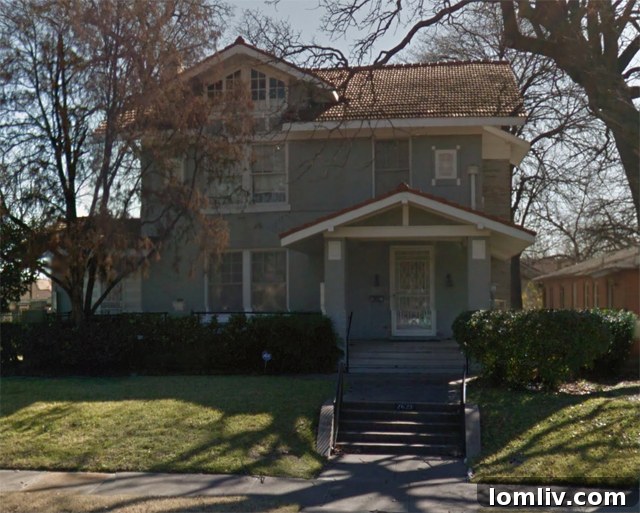
For a remarkable fourteen years, the stately residence at 2620 South Boulevard served as the family home of Herbert Marcus, the visionary co-founder and president of the iconic luxury retail empire, Neiman Marcus. It was within these elegant walls that his son, Stanley Marcus, who would later become a legendary figure in American retail himself, spent his formative years. The home itself is architecturally significant, classified as “Progressive in style,” and features distinctive details reminiscent of the famed American architect Louis Sullivan, known for his ornate and innovative designs. This residence is a tangible link to the entrepreneurial spirit that built Dallas and to the family whose name became synonymous with high fashion and impeccable service.
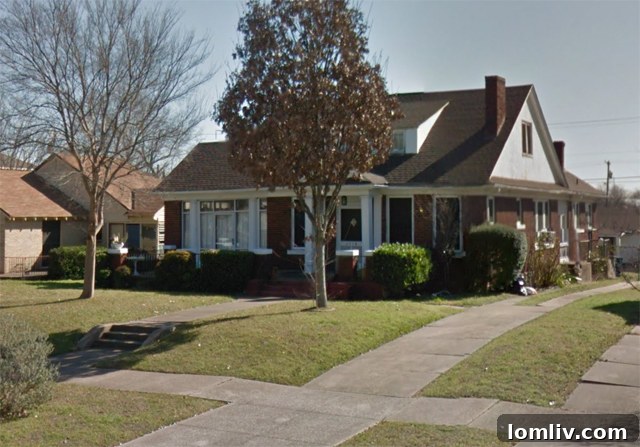
Embodying the adage “from acorns do mighty oaks grow,” 2714 South Boulevard was the distinguished residence of none other than Henry S. Miller, the patriarch of one of Texas’s most influential real estate dynasties. Miller’s legacy in Dallas real estate is immense, having shaped vast swathes of the city’s development. His choice to reside in South Boulevard further attests to the neighborhood’s desirability among the city’s economic powerhouses. Coincidentally, the author recently had the privilege of touring the former penthouse home of Henry S. Miller Jr. in Highland Park, a story that promises to further illuminate the continuing influence of this remarkable family on Dallas’s landscape.
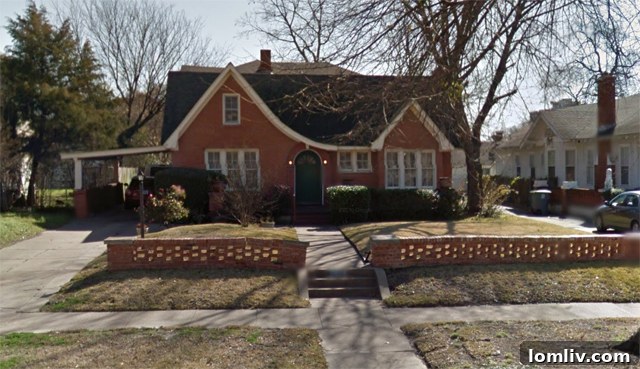
The home at 2424 South Boulevard was once the residence of Julius Schepps, a towering figure in Dallas business and philanthropy. Schepps’s family legacy began with his father’s successful bakery, but Julius forged his own path, establishing an insurance company that thrived for 43 years and even a brewery, which he sold after a single year, showcasing his dynamic entrepreneurial spirit. A highly respected civic leader, he served as a director of the prestigious Mercantile National Bank from 1922 until his passing in 1971, a remarkable tenure that spanned nearly five decades. His indelible contributions to the city are commemorated by a park in Deep Ellum bearing his name, as well as a significant stretch of Interstate 45. In recognition of his profound impact and unwavering dedication to Dallas, Julius Schepps was deservingly named “Dallas’ Most Outstanding Citizen” in 1954, an honor that speaks volumes about his character and influence.
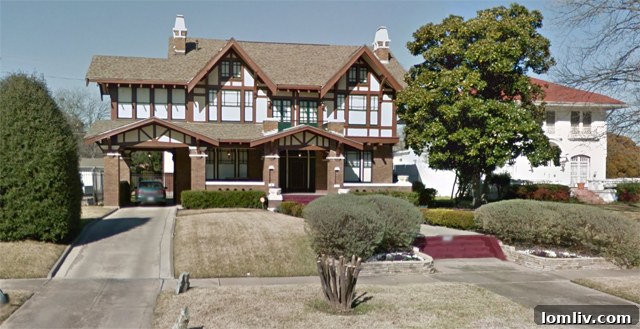
A Beacon of Preservation: The Enduring Spirit of South Boulevard
It is profoundly fitting to conclude this exploration with a focus on a home that epitomizes the ongoing revitalization of South Boulevard: 2527 South Boulevard. Originally built between 1913 and 1914 and once owned by Max Rosenfield, the credit manager for Sanger Brothers Department Store, this residence is now the cherished home of Dr. and Mrs. Longshaw. The Longshaws represent the vanguard of the neighborhood’s modern-day saviors, individuals whose dedication goes beyond mere appreciation for history. Over many years, they have undertaken the monumental task of acquiring dilapidated homes on the street, meticulously renovating them to their former glory, and then thoughtfully passing them on to new owners who share a passion for preservation. Their work is a powerful catalyst, demonstrating that these grand old mansions, despite their age and size, can be beautifully restored and adapted for contemporary living.
The Longshaws are precisely the kind of neighborhood advocates essential for attracting new buyers, particularly those who might initially be daunted by the sheer scale and complexity of renovating such historic properties. Their successful projects serve as inspiring examples, providing a roadmap and reassurance to prospective residents. It is equally symbolic that their home is situated directly next door to the T.A. Manning home, the very first residence built in the area. This proximity creates a beautiful continuum, linking the district’s pioneering past with its vibrant, preserved present and a promising future. The South Boulevard/Park Row Historic District stands as a powerful testament to Dallas’s rich history, the enduring beauty of its architecture, and the unwavering commitment of its community to cherish and protect its unique legacy for generations to come.
Embark on Your Own Dallas Historic Home Journey
The story of South Boulevard is a living narrative, continually unfolding. Stay tuned for an upcoming installment, where we’ll delve deeper into the architectural diversity of the district by exploring a trio of homes currently on the market, each representing different stages and styles of South Boulevard residences.
Do you have a compelling HOA story to share, perhaps a glimpse into high-rise history, or insights into the Dallas real estate market? Realtors, if you have a unique listing – whether it’s a historic gem in need of thoughtful renovation or a beautifully completed masterpiece – we invite you to feature it. Ever considered hosting a DALTX Staff Meeting? We’re always open to exciting collaborations and stories that enrich our understanding of Dallas’s diverse communities. Feel free to shoot Jon an email at [email protected]. (And yes, marriage proposals are accepted – they’re legal in Texas!)