
Do Soundproof Curtains Really Work? A Complete Guide to a Quieter Home
In the quest for a peaceful home, unwanted noise is a common enemy. Whether it’s the constant drone of traffic, a neighbor’s loud music, or the general hustle and bustle of city life, finding silence can feel like an impossible task. Soundproof curtains often appear as a simple, affordable, and stylish solution. But do they live up to the hype? The short answer is yes, they can make a significant difference, but they don’t work in the way most people imagine. They are not a magic mute button for the outside world.
Instead of completely blocking sound, these specialized curtains are designed to absorb and dampen it. They excel at reducing echo and muffling ambient noise, creating a more serene and acoustically pleasant environment. Understanding their capabilities and limitations is the key to using them effectively and avoiding disappointment. This guide will walk you through everything you need to know, from the science behind how they work to choosing and installing the perfect set for your space.
Understanding How Soundproof Curtains Actually Work

To appreciate what soundproof curtains can do, it’s important to distinguish between soundproofing and sound absorption. True soundproofing involves blocking sound waves from passing through a barrier. This requires mass and density—think thick concrete walls, double-paned windows, or specialized drywall. These materials create an formidable obstacle that sound waves struggle to penetrate. Curtains, being made of fabric, simply lack the mass to achieve this level of sound blocking.
Instead, their strength lies in sound absorption. Sound-absorbing curtains are crafted from thick, dense, and often multi-layered materials like velvet, suede, or tightly woven polyester. When sound waves hit these soft, porous surfaces, a portion of their energy is converted into a minuscule amount of heat, effectively stopping the sound from bouncing back into the room. This process significantly reduces reverberation and echo, which is the persistence of sound after the original source has stopped. By taming echo, these curtains make speech clearer, music more defined, and the overall atmosphere of a room far more calm and controlled. They don’t stop the noise at the source, but they clean up how it behaves once it’s inside your space.
The Unseen Enemy: Why Curtains Can’t Achieve Total Silence
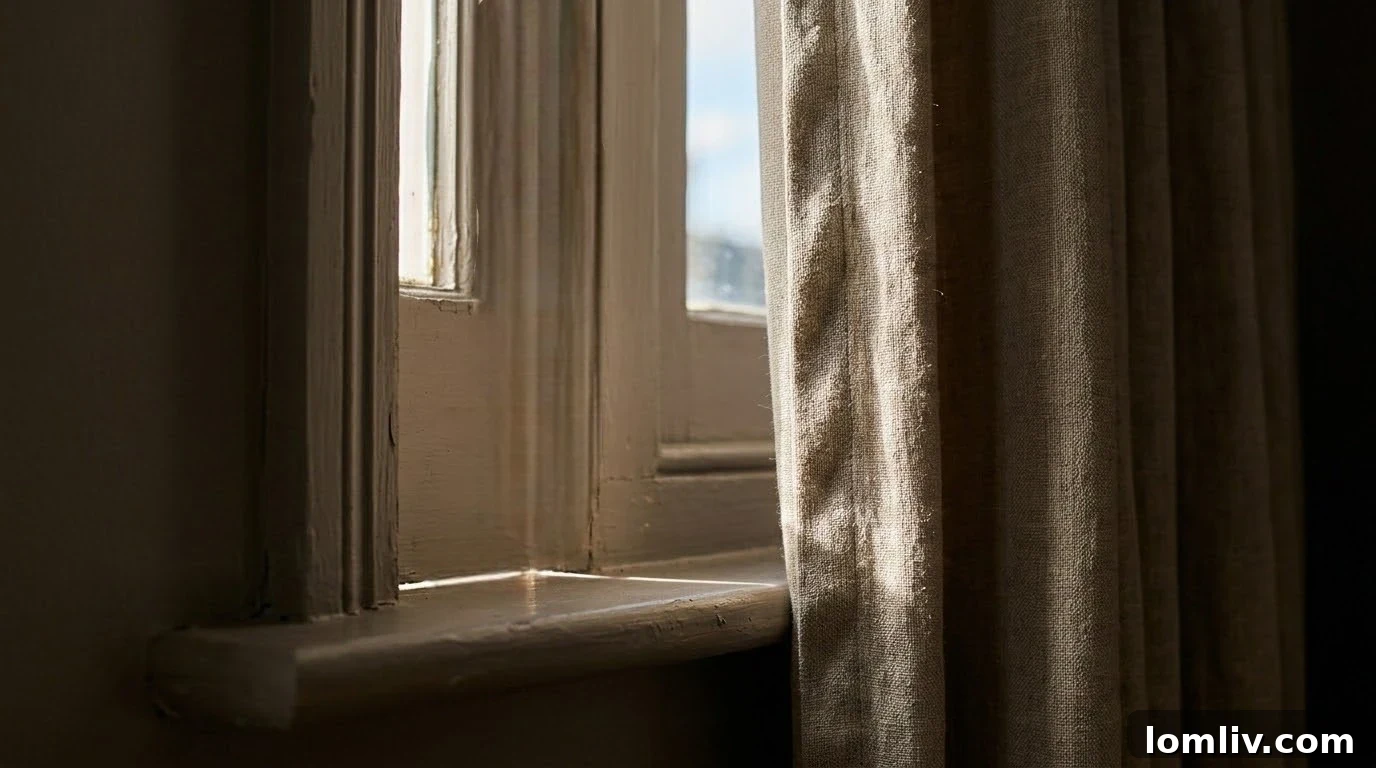
Even the highest-quality acoustic curtains have their limits, primarily because sound is like water—it will find any path of least resistance to get through. The main reason curtains can’t create a perfectly silent room is due to sound leakage and their inability to stop low-frequency sounds.
Sound can easily flank, or bypass, a curtain through tiny gaps. Small openings around the window frame, underneath the curtain, or between the curtain and the wall act as open doors for noise. No matter how dense the fabric is, if there’s a gap, sound will travel through it. This is why proper installation is just as crucial as the quality of the curtain itself. Without a tight seal against the wall, a significant amount of noise will still leak into your room.
Furthermore, curtains struggle with low-frequency sound waves. These long, powerful waves, produced by things like bass-heavy music, construction equipment, or rumbling trucks, are notoriously difficult to stop. They carry more energy and can cause physical vibrations in structures. While a heavy curtain might muffle higher-pitched sounds like voices or sirens, the deep thumps and rumbles will often pass right through. Blocking these frequencies requires the kind of mass and structural isolation that fabric alone cannot provide.
The Ideal Scenarios: When Soundproof Curtains Are a Smart Investment

Despite their limitations, soundproof curtains are an excellent solution in many common situations. They are most effective when the goal is to reduce, rather than eliminate, noise. If you’re dealing with moderate levels of ambient noise, these curtains can dramatically improve your quality of life.
For Home Offices: In the age of remote work, a quiet workspace is essential for concentration and professionalism. Sound-absorbing curtains can dampen the distracting sounds of a nearby street or household activity, making it easier to focus and ensuring your video calls are free from background noise. They help create a more controlled acoustic environment without the need for a major renovation.
For Bedrooms and Nurseries: A peaceful bedroom is crucial for restful sleep. Soundproof curtains can take the sharp edge off car horns, distant sirens, and early morning garbage trucks, helping light sleepers and children stay asleep longer. Many also double as blackout curtains, blocking light and providing thermal insulation, which further contributes to a perfect sleeping environment.
For Renters: If you’re living in an apartment or rental home, making permanent structural changes is usually not an option. Soundproof curtains offer a powerful, non-permanent way to improve your living space. They are easy to install and remove, allowing you to take your investment with you when you move, all without risking your security deposit.
For Home Theaters: In a media room or home theater, controlling sound is key to an immersive experience. Acoustic curtains absorb stray sound waves, preventing echo and reverberation that can muddy the audio. This results in crisper dialogue and a more balanced, professional-sounding audio experience.
Your Buyer’s Guide: How to Choose the Best Sound-Absorbing Curtains

Selecting the right curtains is critical to getting the results you want. Not all products marketed as “soundproof” are effective. Look for specific features that indicate a curtain is designed for genuine sound absorption.
Focus on Material and Weight: The most important factor is the fabric’s density and weight. Look for heavy materials like velvet, suede, or heavyweight polyester. The best options are multi-layered, often featuring a decorative outer layer, a dense inner core of felt or foam, and a backing layer. The heavier the curtain, the more sound energy it can absorb.
Size for Maximum Coverage: Size is not just about covering the window—it’s about creating a substantial barrier. For optimal performance, your curtains should be significantly wider and taller than your window frame. Aim for a curtain rod that extends at least 6-12 inches beyond the frame on each side, and hang it as close to the ceiling as possible. The curtain should ideally pool slightly on the floor to create a better seal at the bottom.
Check the Weave: A tight, dense weave is far more effective at trapping sound than a loose, airy one. Hold the fabric up to a light source; if you can see a lot of light passing through, it likely won’t be very effective at absorbing sound. A dense weave indicates fewer air gaps for sound to penetrate.
Look for an NRC Rating: Some high-end acoustic curtains come with a Noise Reduction Coefficient (NRC) rating. This is a standardized measure of how much sound a material can absorb, with a scale from 0 (perfectly reflective) to 1 (perfectly absorbent). A curtain with a high NRC rating (e.g., 0.7 or above) is scientifically proven to be an effective sound absorber.
Installation is Key: Hanging Your Curtains for Maximum Effectiveness

You can buy the best acoustic curtains on the market, but if they are hung improperly, their effectiveness will be severely compromised. Proper installation is all about minimizing gaps and maximizing coverage.
Use the Right Hardware: Heavy curtains require a heavy-duty curtain rod. A flimsy rod will sag under the weight, creating a gap at the top and potentially pulling out of the wall. Invest in a sturdy, high-quality rod and use strong wall anchors to secure it firmly. Consider a wraparound curtain rod, which allows the curtain to curve back and rest flush against the wall, sealing the sides and preventing sound leakage.
Hang High and Wide: As mentioned earlier, extend the curtain rod well beyond the window frame on all sides. Mounting the rod as close to the ceiling as possible and letting the curtains touch or puddle on the floor creates a floor-to-ceiling barrier that is far more effective than a curtain that just covers the glass.
Seal the Edges: For an even greater boost in performance, seal the edges of the curtains to the wall. You can do this easily with adhesive Velcro strips or magnetic tape placed along the vertical edges of the curtains and the corresponding wall. This simple trick eliminates the side gaps and can make a surprisingly large difference in the amount of noise that gets through.
Beyond the Curtains: A Multi-Layered Soundproofing Strategy

Soundproof curtains are most powerful when used as part of a larger strategy. By combining them with other simple sound-dampening techniques, you can create a truly peaceful space.
Seal Window and Door Gaps: Before you even hang the curtains, inspect your windows and doors for air gaps. Apply weatherstripping tape around window frames and use a door sweep to block the space under your door. Sealing these common leak points provides a crucial first line of defense against noise.
Add Soft Furnishings: Hard surfaces like hardwood floors, bare walls, and large windows reflect sound, creating echo. Counteract this by adding soft, sound-absorbing materials throughout the room. A thick area rug with a dense pad underneath, upholstered furniture, plush throw pillows, and even wall tapestries can all help soak up excess sound.
Use Bookshelves Strategically: A large, well-stocked bookshelf placed against a shared wall can act as an effective sound barrier. The varied shapes and mass of the books help to diffuse and absorb sound waves, reducing noise transfer from an adjacent room.
Consider Window Inserts: If your budget allows, acrylic window inserts are a fantastic complement to soundproof curtains. These custom-fitted panels create an airtight seal over your existing windows, adding another layer of defense that significantly blocks outside noise before it even reaches your curtains.
The Verdict: Are Soundproof Curtains Right for You?
Soundproof curtains will not transform a noisy urban apartment into a silent sanctuary. However, they are an incredibly effective tool for managing and reducing unwanted noise. By absorbing sound, cutting down on echo, and muffling the harshness of exterior sounds, they make a tangible improvement to the comfort and tranquility of any room. They are a practical, affordable, and aesthetically pleasing solution for anyone looking to turn down the volume on the world outside.
When you approach them with realistic expectations and combine them with smart installation and other sound-dampening techniques, you’ll find that soundproof curtains are a worthwhile investment in a more peaceful home. They prove that you don’t always need a full-scale renovation to achieve a significant and satisfying level of quiet.