By Brenda Masse
Special Contributor
Navigating the dynamic landscape of real estate, especially in a competitive market, requires meticulous preparation from potential homebuyers. While it may not always be feasible to negotiate every minor detail, entering a home purchase with a clear understanding of potential future expenses is paramount. This insight is particularly crucial for the five major structural and mechanical areas of any house: the foundation, plumbing systems, electrical wiring, HVAC (heating, ventilation, and air conditioning) units, and the roof. These components are the backbone of a home’s functionality and safety, and their condition can significantly impact your long-term investment.
Our extensive experience in the North Texas real estate market reveals that home buyers frequently express the most significant concerns and inquiries regarding foundational integrity. Given the unique soil conditions and climate variations in this region, foundation issues are a common topic of discussion. Therefore, we’ve compiled some recent findings and essential information to help you understand common foundation types, repair processes, and crucial signs of movement.
Understanding Your Home’s Foundation: Pier-and-Beam vs. Slab
In North Texas, residential properties predominantly feature one of two primary foundation types: a concrete slab foundation or a pier-and-beam foundation. Each offers distinct characteristics, advantages, and potential challenges. Understanding which type supports your prospective home is the first step in appreciating its structural nuances.
Pier-and-Beam Foundation: A Deeper Look
Most of the older homes constructed in North Texas, particularly those built before the 1980s, typically utilize a pier-and-beam foundation. This classic construction method involves a system of concrete piers or blocks supporting wooden beams, which in turn support the floor joists and subfloor of the house. Unlike slab foundations, pier-and-beam homes are elevated several feet above the ground, creating a vital crawl space underneath.
This crawl space is a defining feature, offering practical access to the underlying foundation structure, as well as critical plumbing lines, electrical conduits, and sometimes HVAC ductwork. This accessibility can be a significant advantage during inspections, maintenance, and repairs, as it often allows professionals to address issues without extensive disruption to the interior of the home.
In the accompanying video, you’ll observe an exemplary pier-and-beam foundation within a crawl space. This visual demonstrates what a well-maintained, structurally sound under-home environment should ideally look like – a clean, dry, and accessible space where the supporting beams and piers are clearly visible and intact. This “good example” is important because many crawl spaces can unfortunately suffer from poor ventilation, moisture intrusion, pest infestations, or structural degradation, all of which can compromise the foundation and overall home health. Proper ventilation, adequate drainage, and a robust vapor barrier are key indicators of a healthy pier-and-beam system.
Slab Foundation: Modern Construction and Its Challenges
The majority of newer homes in North Texas feature a slab foundation, where the house rests directly on a large, reinforced concrete slab poured at ground level. This construction style is generally quicker and less expensive to build, and it offers better protection against certain pests and moisture from the ground. However, slab foundations are particularly susceptible to the expansive clay soils prevalent in North Texas. These soils expand when wet and contract when dry, leading to significant ground movement that can exert immense pressure on the rigid concrete slab, causing it to crack, shift, or settle unevenly. This movement is the primary culprit behind the need for slab foundation repair in the region.
Slab Foundation Repair: What to Expect
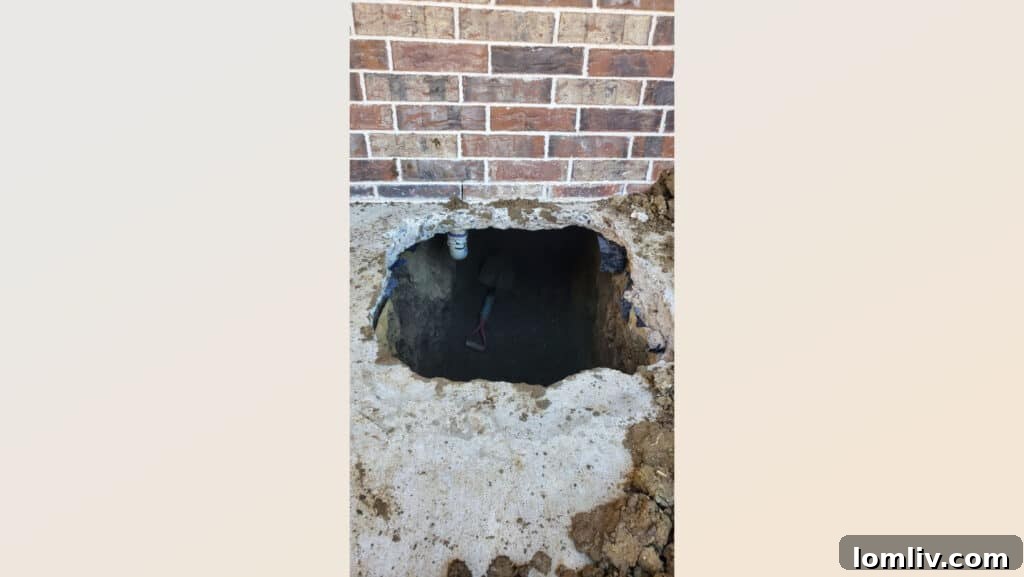
The image above vividly illustrates the intensity of a slab foundation repair: a deep, dark tunnel excavated beneath the concrete slab. This specialized tunneling process is a common method for accessing problematic areas without demolishing interior flooring. Foundation professionals meticulously tunnel under the house, often from the exterior perimeter, to reach specific points requiring intervention. This technique is frequently employed to repair frozen pipes, replace aging cast iron plumbing lines that run beneath the house, or, most commonly, to address structural damage caused by significant foundation movement.
When foundation movement leads to an unlevel or compromised slab, expert foundation repair companies employ advanced techniques to restore structural integrity. This often involves installing new concrete piers (or sometimes steel piers) or repairing existing ones. Using powerful hydraulic jacks, similar to those used to lift vehicles, the foundation pros carefully lift the affected sections of the house, gradually bringing the slab back to a level position. The new or repaired piers then provide the necessary stable support to bear the weight of the home, preventing further settling and structural distress.
While tunneling from the outside is often preferred to minimize disruption, there are instances where direct access from the interior of the house becomes unavoidable. This means cutting into existing flooring – whether it’s tile, hardwood, or carpet – to reach the problem area. Such repairs, while essential for the home’s long-term health, can be intrusive and necessitate additional repairs to flooring and finishes, adding to both the cost and the inconvenience for homeowners. Therefore, early detection and understanding the scope of potential repairs are vital for any homeowner in North Texas.
Critical Signs of Foundation Movement: What to Watch For
Identifying foundation problems early can save homeowners significant time, money, and stress. The key is to be observant of your property, both inside and out. Foundation issues manifest in various ways, often subtly at first, before escalating into more severe structural concerns. Here are the primary indicators of potential foundation movement:
- Cracks in Walls and Ceilings: While hairline cracks can be normal with minor settling, jagged, stair-step cracks in brick mortar, or long, horizontal, or vertical cracks in drywall, especially around door and window frames, are red flags.
- Unlevel Floors: Floors that feel sloped, bouncy, or visibly uneven are a strong indicator. You might notice this when furniture appears tilted or if a ball rolls on its own across the floor.
- Sticking Doors and Windows: If doors and windows begin to stick, refusing to open or close properly, or if they have noticeable gaps around their frames, it often points to a shifted foundation distorting the door/window frames.
- Gaps Around Window and Door Frames: Beyond sticking, visible gaps appearing between window frames and the surrounding brick or siding, or between door frames and the interior wall, indicate structural shift.
- Cabinet and Countertop Misalignment: Kitchen or bathroom cabinets pulling away from the wall, or countertops becoming uneven, suggest underlying foundation movement affecting the structure they are attached to.
- Separation of Trim and Molding: Baseboards, crown molding, or other decorative trim separating from the walls or ceilings can be a subtle but important sign of structural stress.
- Bowing or Leaning Walls: Walls that appear to be bowing inwards or outwards, or leaning, are a serious indication of significant foundation distress that requires immediate attention.
- Exterior Brick Issues: Besides stair-step cracks, watch for separated chimney structures, visible gaps where the chimney meets the house, or leaning fences that are attached to the home’s foundation.
Being proactive about these signs and seeking professional assessment can prevent minor issues from becoming major, costly repairs. The TikTok video below offers a quick visual guide to some of these common indicators.
@greenscenehome Signs of Foundation Movement #askahomeinspector #homeinspectionfinds
♬ original sound – Green Scene Home Inspections
Investigate Cracks: When to Worry and When Not To
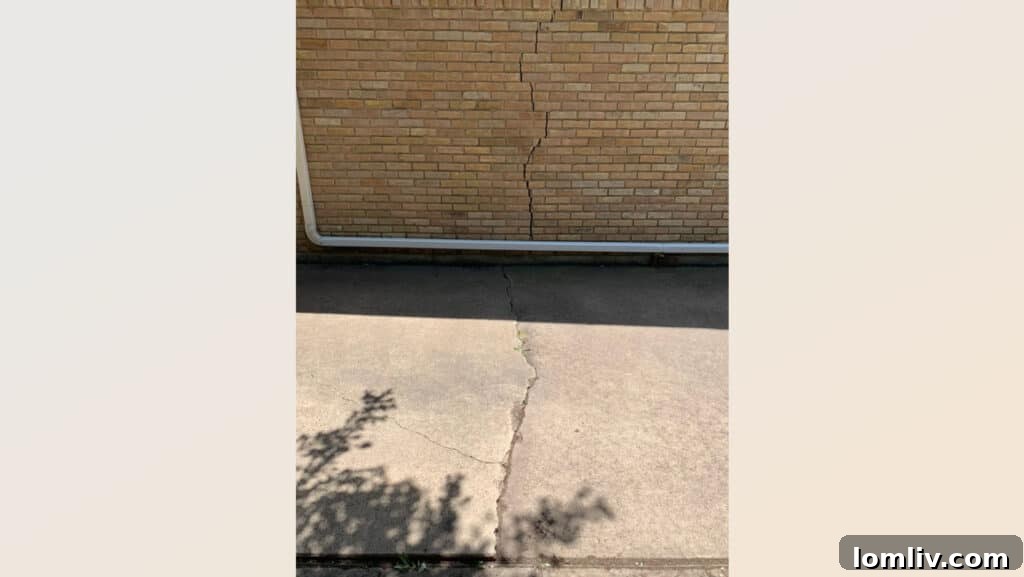
Not all cracks signify a dire structural emergency. Sometimes, a crack is merely a crack – a superficial result of normal wear and tear, the natural settling of a home over decades, or the aesthetic effects of harsh weather cycles. Hairline cracks in plaster or concrete that do not widen or lengthen over time are often benign. However, certain types of cracks are definitive indicators that your house is under significant stress from foundational movement.
The image above illustrates a particularly concerning scenario: a crack that not only traverses the pavement but extends all the way up the exterior brick wall. This type of continuous, significant crack strongly suggests that the underlying foundation has shifted or settled unevenly, causing stress throughout the entire structure. These cracks often appear as stair-step patterns in brick mortar or as wide, vertical, or horizontal fissures in concrete. They are typically wider than a quarter-inch, continue across multiple surfaces, and may grow over time. The primary cause of such stress in North Texas is often the expansive clay soil, which puts immense pressure on foundations as it swells and shrinks with moisture fluctuations.
When you observe such cracks, or any of the other foundation movement signs, it’s crucial not to delay seeking professional advice. Ignoring these indicators can lead to escalating damage, more complex repairs, and substantial costs down the line. Homeowners should understand that early intervention is almost always less expensive and less intrusive than addressing advanced foundation failure.
Preventative Measures and Proactive Maintenance
While some foundation issues are unavoidable due to soil conditions, homeowners can take proactive steps to mitigate risks and maintain their foundation’s health:
- Maintain Consistent Soil Moisture: During dry periods, water your foundation using a soaker hose system around the perimeter to keep the soil consistently moist. In wet periods, ensure proper drainage to prevent excessive saturation.
- Ensure Proper Drainage: Slope the ground away from your foundation so that rainwater drains away from the house. Install effective guttering and downspouts that extend several feet away from the foundation.
- Control Tree Roots: Large trees planted too close to the house can absorb significant moisture from the soil beneath the foundation, leading to soil contraction and settlement. Consider root barriers or consult an arborist.
- Regular Inspections: Periodically walk around your property, both inside and out, specifically looking for the signs of foundation movement discussed earlier. Early detection is key.
Seeking Professional Guidance for Foundation Concerns
If you have any foundation concerns – whether you’re a prospective buyer or a current homeowner – the most prudent step is to consult with qualified professionals. Do not rely solely on generalized advice or superficial observations. Ask a trusted Realtor or a certified Home Inspector to recommend a reputable structural engineer or a foundation repair company they have confidence in. These professionals possess the specialized knowledge, tools, and experience to accurately diagnose foundation problems and recommend appropriate solutions.
A structural engineer can provide an unbiased assessment of your foundation’s condition, identifying the root cause of any issues and outlining the necessary corrective actions. A reputable foundation company will then offer a detailed proposal for repairs, often including a warranty for their work. If you are in the process of purchasing a home that shows evidence of foundation problems, obtaining this expert information is invaluable. It will equip you with the knowledge to understand the extent of the problem, the urgency of the repair, and the estimated costs involved, empowering you to make informed decisions and negotiate effectively.
Ultimately, a home’s foundation is its bedrock, safeguarding your investment and providing a stable living environment. Being informed and proactive about foundation health is an essential aspect of responsible homeownership, particularly in regions prone to soil movement like North Texas.