The Future of YFZ Ranch: What Awaits the Former FLDS Compound?
The name Yearning For Zion Ranch in Eldorado, Texas, evokes a tumultuous past, marked by a highly publicized raid that thrust a secluded fundamentalist community into the national spotlight. In 2008, this sprawling 1,600-acre property became the epicenter of a child welfare investigation, ultimately leading to the arrest and conviction of FLDS (Fundamentalist Church of Jesus Christ of Latter-Day Saints) leader Warren Jeffs on grave charges of sexual assault and aggravated sexual assault. The images from that time remain vivid: women in distinctive prairie-style pastel dresses, along with scores of children and infants, being carefully loaded onto buses by child welfare officials, responding to alarming reports of underage marriages and systemic abuse within the compound.
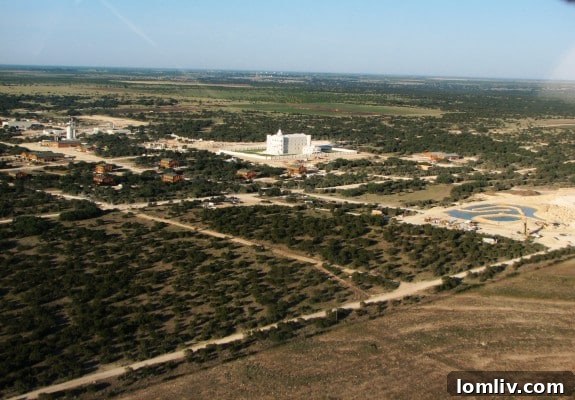
The 2008 raid and subsequent investigation did far more than simply expose the YFZ Ranch; it unveiled a deeply insular and often troubling lifestyle practiced by the fundamentalist Mormon followers. Beyond the shocking allegations, the investigation offered a rare glimpse into the physical layout and daily operations of the compound. The property featured numerous log homes clustered around a prominent three-story temple, designed to house multiple families, many of whom were believed to be part of polygamous arrangements. While polygamy itself was not the direct focus of the criminal charges against Jeffs, its alleged presence within the community fueled public intrigue and highlighted the stark contrast between the FLDS way of life and mainstream American society. The events also brought into sharp focus the challenges faced by state child protective services in dealing with such complex, deeply entrenched communities, but that profound discussion warrants a separate examination.
The Seizure Saga: Legal Battles and Outstanding Debts
Years after the initial raid and Jeffs’ conviction, the fate of the YFZ Ranch remains uncertain, embroiled in ongoing legal battles. The State of Texas has been actively pursuing efforts to seize the property, citing its role in the crimes committed and seeking to reclaim assets. However, the path to seizure has been anything but straightforward. Reports indicate that a number of former YFZ residents, estimated by local observers (such as pilots who regularly fly over the area) to be between 10 and 80 individuals, have made concerted efforts to pay down the ranch’s significant outstanding tax bills. These attempts highlight a complex situation where some members of the FLDS community still retain a connection to the land, complicating the state’s legal proceedings and raising questions about their continued presence and financial commitment.
This prolonged legal tug-of-war has kept the YFZ Ranch in a peculiar state of limbo. On one hand, the state views it as a property tainted by severe criminal activity, ripe for forfeiture and sale. On the other, the persistence of a small group of residents suggests a lingering attachment and a fight to maintain some form of control or claim over the compound. The eventual outcome of these legal battles will be pivotal, determining whether the property truly transitions into new hands and what form its next chapter will take.
Unlocking Potential: Speculating on the Ranch’s Next Incarnation
The most compelling question now looms large: if the state successfully seizes the YFZ Ranch, what will become of this notorious compound? The potential uses for such a vast and historically charged property are diverse and intriguing. One perspective suggests it could be an excellent investment for individuals or groups interested in establishing a unique camp or a self-sustaining commune. Its isolated location and existing infrastructure, designed for communal living, could be repurposed for educational retreats, spiritual gatherings, or even an intentional community seeking a particular lifestyle.
Another significant factor influencing the ranch’s marketability is the ongoing economic boom in West Texas. Thanks to the flourishing shale gas industry and extensive domestic drilling operations, the region is experiencing a severe shortage of available housing. The numerous structures on the YFZ property, including the log homes and other communal buildings, could potentially be renovated and converted into much-needed residential units, offering a unique solution to the area’s housing crisis. This conversion could provide housing for oilfield workers or other newcomers drawn to the region’s economic opportunities.
Katy Vine, a writer for Texas Monthly, has eloquently outlined several imaginative possibilities for the ranch’s future, reflecting a wide range of public and civic ideas:
After the property has been vacated, law enforcement will begin taking inventory and the compound will be sold. This raises the question, Who will buy it? Oil-field companies needing housing? A group needing a religious retreat facility? Some in town have imagined a boy’s home or some other nonprofit purchasing the land—situations that would prove problematic for the local school district, which has grown to depend on the ranch’s taxes for 5 to 10 percent of its budget. A few, noting the original watchtower and the community-living structures, have even proposed a minimum-security prison. That would be one way to circumvent a marketing challenge.
Beyond Housing: Social and Economic Implications for Eldorado
Expanding on Vine’s insights, the future of the YFZ Ranch has profound implications for the small town of Eldorado and the surrounding West Texas community. The idea of oil-field companies acquiring the property for housing is highly pragmatic given the regional needs. Such a development would not only address the housing shortage but also integrate the property more fully into the local economy, providing jobs and contributing to the tax base.
Alternatively, the transformation of the ranch into a religious retreat or another type of spiritual center offers a different trajectory. While it might draw new visitors and create some local employment, the nature of such a retreat would significantly influence its community integration. The existing infrastructure, particularly the temple, might appeal to groups seeking a secluded and expansive setting for their practices.
The concept of a boy’s home or a non-profit organization purchasing the land presents a noble vision, aiming to repurpose the site for social good. However, as Vine points out, this option introduces a complex challenge for the local school district. The Eldorado school district has historically relied on the ranch’s property taxes for a significant portion—between 5 to 10 percent—of its annual budget. If the property were to be acquired by a tax-exempt non-profit, this crucial revenue stream would disappear, placing a substantial financial burden on the local education system and potentially impacting the quality of schooling for local children. Any plans for the ranch must carefully consider this delicate economic balance.
An Unconventional Path: The Prison Proposal and Legacy
Perhaps the most unconventional, yet strangely logical, proposition for the YFZ Ranch is its conversion into a minimum-security prison. The existing layout of the compound, with its watchtower (which could be repurposed) and structures designed for community living within a controlled environment, lends itself surprisingly well to such a function. This option would effectively circumvent many of the marketing challenges associated with selling a property carrying such a heavy historical stigma. A prison would bring stable employment to the area and provide a clear, defined use for the site, potentially offering a definitive closure to its controversial past by repurposing it for public safety.
Ultimately, the story of the YFZ Ranch is a complex tapestry woven with threads of fundamentalism, controversy, legal battles, and the aspirations of a small Texas town. As the state continues its efforts to determine the ranch’s fate, the speculation surrounding its next chapter highlights not only practical considerations but also the deeply embedded historical and social implications. Whether it becomes a haven for workers, a site for social service, or even a correctional facility, the future owner will acquire not just 1,600 acres of West Texas land, but also a piece of American history, forever tied to the dramatic events that unfolded within its gates. The path chosen will undoubtedly shape the legacy of the YFZ Ranch, transforming a symbol of isolation and scandal into a new entity with a distinct purpose, marking a significant transition for Eldorado and the wider region.