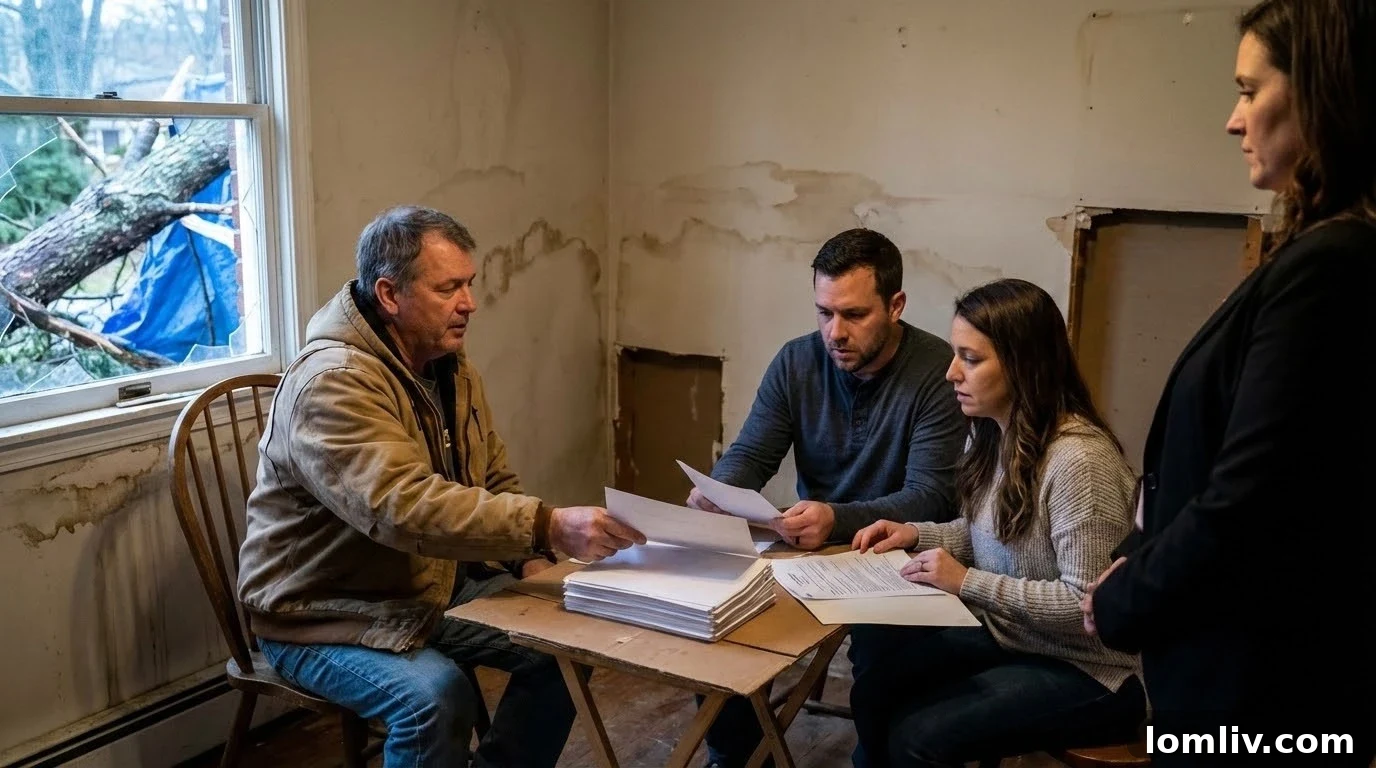
When a severe storm strikes, its aftermath often leaves homeowners grappling with far more than just surface-level damage. The emotional and financial toll of serious property damage can profoundly disrupt daily life, forcing individuals to navigate complex insurance claims, secure temporary housing, and confront a monumental decision: should they undertake costly and time-consuming repairs, or sell their home as-is?
This challenging predicament was a stark reality for countless homeowners in 2025, following a year marked by unprecedented severe weather events. According to Environment America, a relentless barrage of thunderstorms, tornadoes, and hailstorms swept across vital regions, including Texas, the Midwest, and the central United States. States such as Missouri, Arkansas, Illinois, Indiana, Mississippi, and Alabama alone witnessed an astonishing 182 tornadoes in May, highlighting the widespread devastation.
The prospect of selling a damaged house often conjures images of desperate measures and lowball offers from opportunistic buyers. However, this common assumption isn’t always accurate. With the right strategy, complete transparency, and effective marketing, it is absolutely possible to secure a fair price for a storm-damaged property. The key is not to conceal the damage, but rather to openly acknowledge its condition, strategically showcase the property’s underlying strengths, and vividly illustrate its future potential to the right audience.
Obtain a Professional Damage Assessment
Before any decisions about pricing or extensive repairs can be made, a comprehensive understanding of the damage’s full scope is paramount. The initial and often most critical step is to engage a professional disaster restoration and cleaning company. These specialized professionals are equipped to handle immediate hazards such as pumping out standing water, thoroughly drying out the property to prevent secondary damage, and addressing any mold growth or lingering odors before they escalate into more severe problems.
As experts like Disaster Masterz emphasize, prompt cleanup is crucial for preventing further structural decay and preparing the property for a detailed inspection. Once the immediate hazards and initial mess are mitigated, the next essential step is to hire a licensed home inspector or a reputable general contractor. Their role is to meticulously examine all critical components of the home, including the roof, siding, windows, and foundation. Crucially, they must also inspect the electrical and plumbing systems, which are highly susceptible to hidden water damage that might not be immediately apparent.
Throughout this process, thorough documentation is non-negotiable. Ensure every detail is recorded with dated photographs, comprehensive written reports, and itemized contractor estimates. This extensive paperwork serves multiple vital functions: it facilitates smoother insurance payouts, provides leverage during buyer negotiations, and offers serious prospective buyers a transparent, detailed understanding of the property’s exact condition and the challenges they might be undertaking. Be sure to ask your inspector to differentiate between repairs that are absolutely essential for safety, mortgage approval, or basic habitability (typically structural or electrical fixes) versus cosmetic issues, which can often be left for the next owner to address and personalize.
Analyze the Costs: Repairing vs. Selling As Is
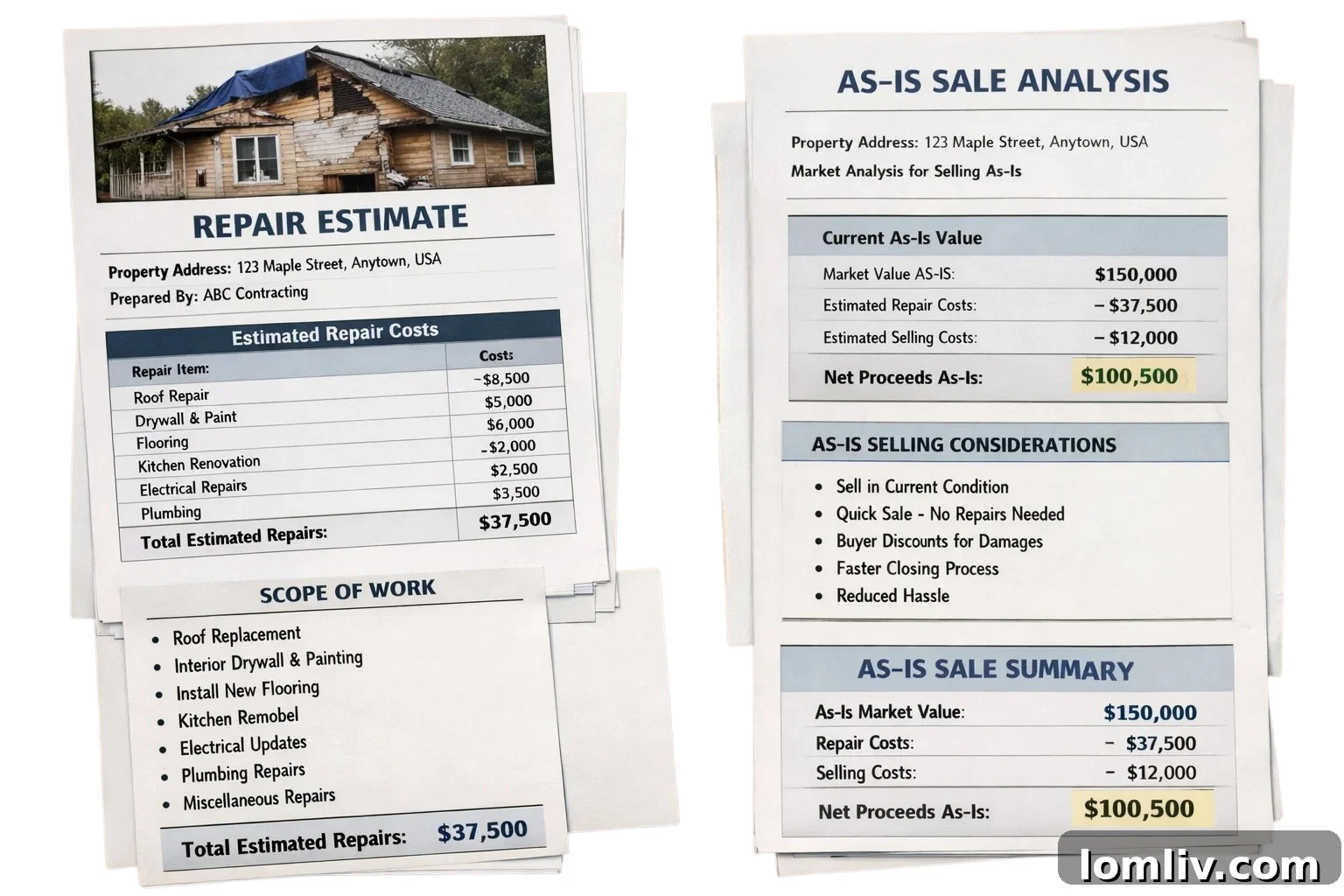
Once you have a clear and comprehensive assessment of the damage, the next critical phase involves a meticulous cost-benefit analysis: comparing the expense and effort of fully repairing the home against the potential returns of selling it strictly as-is. As reported by WTOP News, even seemingly minor storm damage, such as missing roof shingles, torn siding, damaged gutters, or broken glass, can accumulate into substantial repair costs surprisingly quickly, often exceeding initial estimates.
To make an informed decision, begin by determining the property’s “After Repair Value” (ARV) – what the home would be worth in its local market if it were fully repaired and in pristine condition. This can be estimated by researching recent sales of comparable, undamaged homes in your neighborhood. From this ARV, subtract the projected repair costs and all anticipated selling expenses (e.g., agent commissions, closing costs). This calculation provides a realistic understanding of your potential profit margin if you choose to repair.
Real estate investors commonly employ the “seventy percent rule,” which dictates that they typically won’t pay more than seventy percent of the ARV, minus the estimated repair costs. Understanding this formula is crucial for setting realistic pricing expectations, especially when targeting investors. Concurrently, it’s vital to obtain a solid “as-is” valuation from a real estate agent who possesses specialized experience in your local market, particularly with distressed or storm-damaged properties. Their expertise will provide an accurate market value for your home in its current condition, factoring in its unique challenges.
With these concrete financial figures in hand, you can then compare what you would realistically walk away with in both scenarios. Beyond the monetary aspect, carefully consider the time commitment, stress, and logistical complexities associated with each option. Undertaking extensive repairs can mean weeks or even months of living amidst a construction zone, constant oversight of contractors, and budgeting for unexpected issues and delays. While selling as-is might yield a lower upfront cash amount, it often provides a significantly faster, less stressful, and more predictable exit strategy, allowing you to move forward without the protracted burdens of restoration.
Embrace Full Transparency
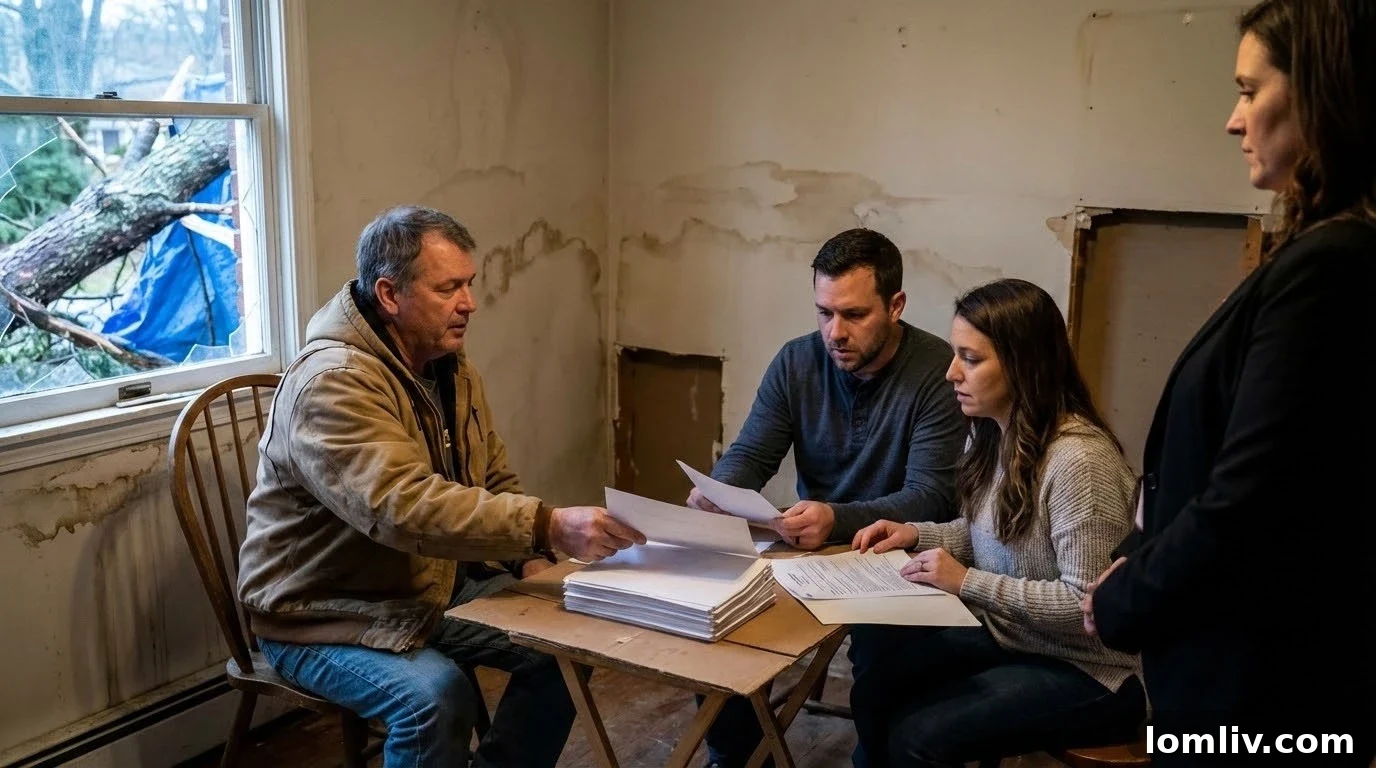
When selling a property with existing damage, full transparency is not just ethical, it’s smart business, as highlighted by publications like Homes and Rentals. Being completely upfront about all known issues fosters immediate trust with potential buyers. Conversely, any attempt to conceal serious problems can lead to devastating consequences, including prolonged legal battles, hefty fines, and the complete collapse of a potential sale, often leaving the seller in a worse position than before.
It is imperative to disclose, in writing, all known damage, any past flooding history, details of previous insurance claims, and any unfinished repairs. Buyers and their mortgage lenders will invariably uncover these issues during the inspection and appraisal phases, regardless of any attempts to hide them. Proactively providing your inspection reports, contractor estimates, engineering letters, and detailed repair histories demonstrates that you have nothing to hide. This level of honesty not only builds credibility but also helps to set realistic expectations from the outset, streamlining the negotiation process and preventing last-minute surprises that could derail the deal.
Under no circumstances should you attempt to mask significant structural or water damage with superficial cosmetic fixes. Painting over water stains, patching visible cracks without addressing the underlying structural issues, or simply covering up mold will inevitably backfire. Such deceptive practices not only scare off serious and legitimate buyers but also expose you to severe legal liabilities and potential lawsuits for misrepresentation down the road. Authenticity and honesty are your strongest assets in selling a damaged property.
Identify and Target the Right Buyers
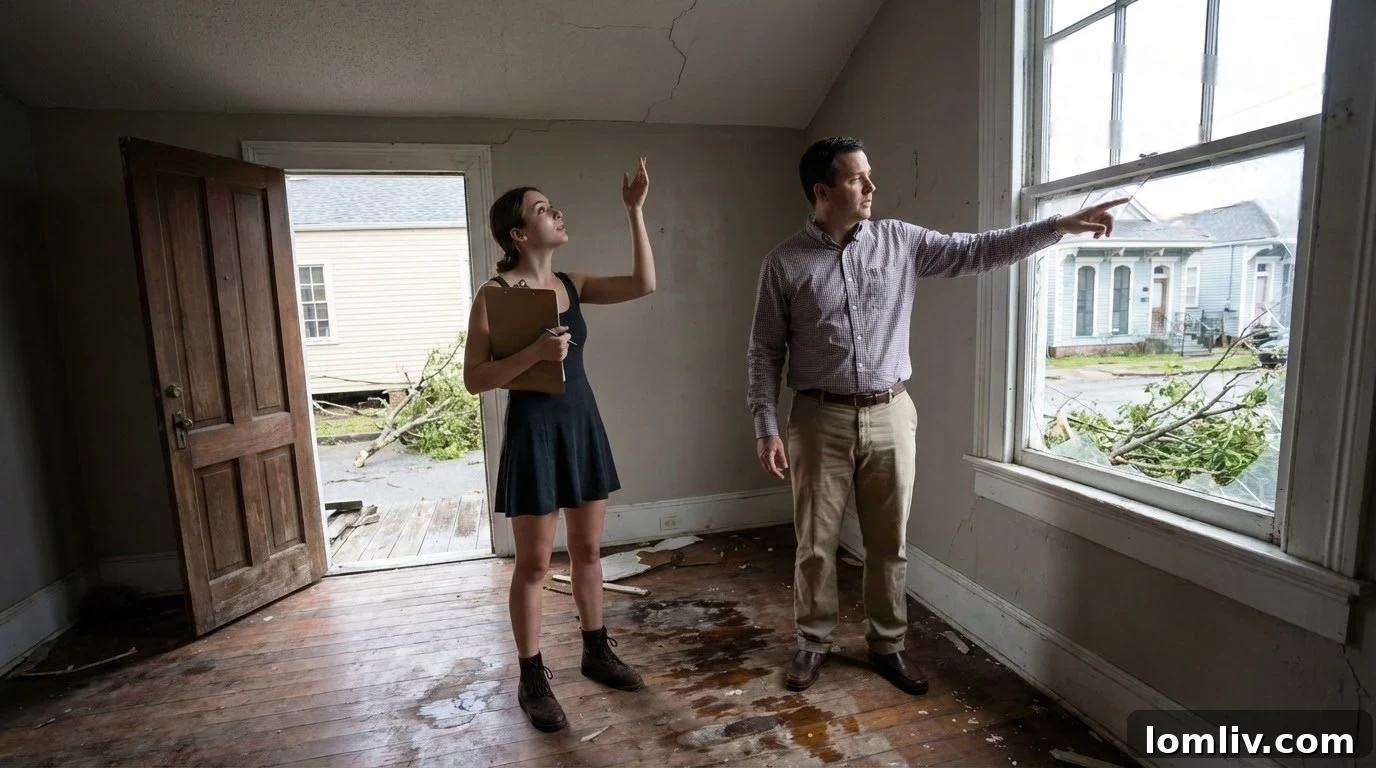
Successfully selling a storm-damaged house hinges on a clear understanding of your target audience. A conventional family seeking a move-in ready home is typically not the ideal buyer. Instead, your efforts should focus on individuals or entities who possess the vision and resources to see potential where others perceive only problems. This often means working with a real estate agent who specializes in selling distressed properties or investor-grade assets, as they have the expertise to properly market such unique homes and connect with the right buyer pool.
Cash buyers frequently represent your best option in these scenarios. As Investopedia reported, all-cash transactions accounted for nearly a third of all home sales in the first half of 2025. This data further revealed that half of all homes priced above two million dollars were purchased with cash, while cash transactions comprised approximately two-thirds of homes sold for under one hundred thousand dollars. These statistics underscore the prevalence and appeal of cash offers, particularly for properties that may require significant repairs, as they bypass the often stringent requirements of traditional mortgage lenders.
Beyond traditional cash buyers, you should specifically target seasoned real estate investors, house flippers, and local contractors. Since these are individuals and companies who acquire homes as part of their business model, your marketing efforts should strategically highlight the property’s inherent upside and profit potential. Emphasize key attractive features such as:
- Its location within a highly desirable neighborhood with strong appreciation potential.
- A generously sized lot that offers room for expansion or landscaping.
- Proximity to top-rated local schools, enhancing long-term family appeal.
- The raw potential for a complete fresh rebuild, allowing for custom design and modern amenities.
- Any unique architectural features or historical significance that could add value.
Consider offering strategic seller concessions or pricing the home competitively to make the deal even more enticing for someone looking to undertake significant renovations and flip the property for a profit. Understanding what motivates these buyers will help you position your damaged home as a valuable investment opportunity.
Strategize Your Next Steps
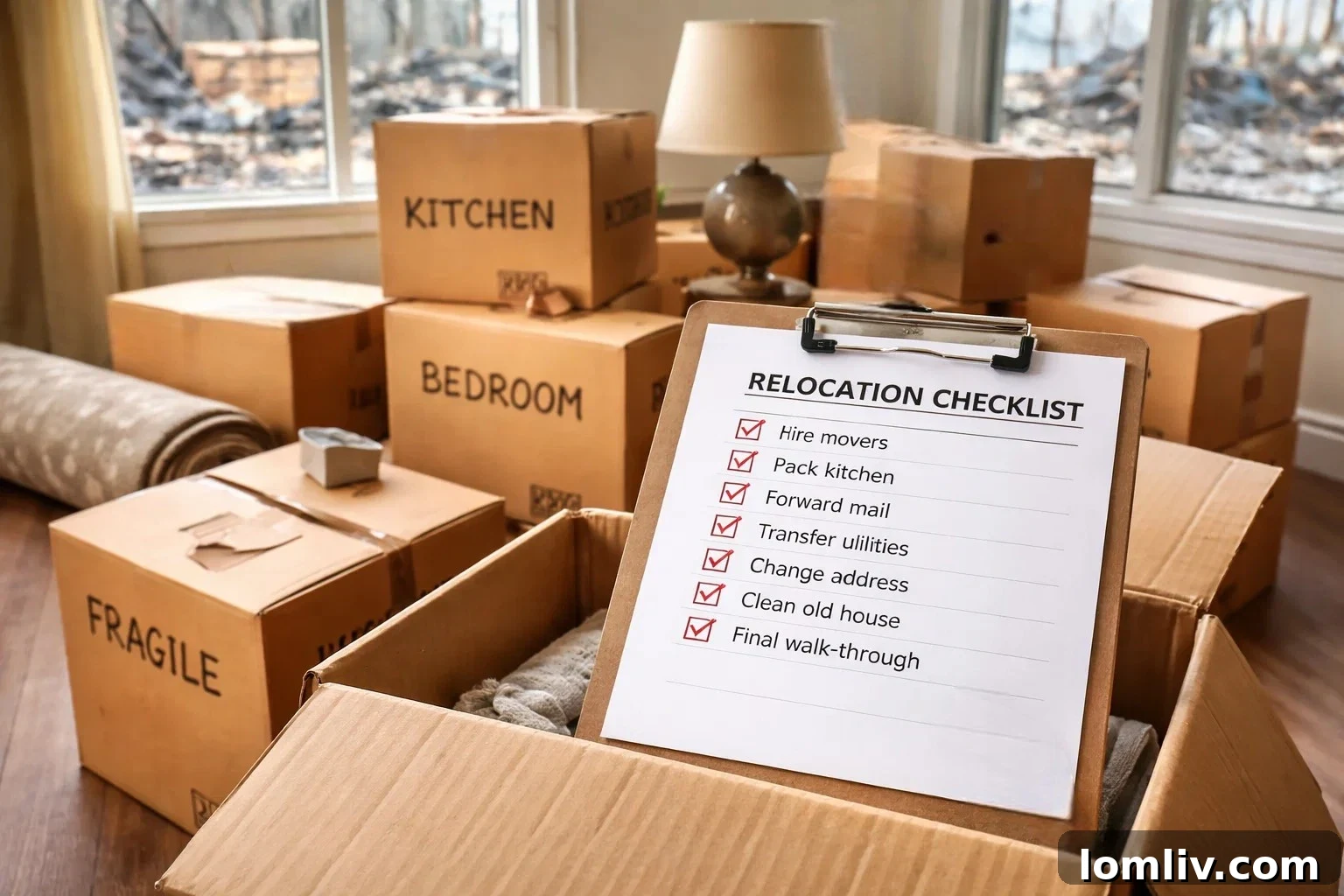
Having a clear vision for your future after the sale is crucial for negotiating with confidence and avoiding impulsive, panicked decisions. Begin by defining your primary priorities. Do you prioritize securing the highest possible price, achieving a swift closing, completely sidestepping all repairs, or simply freeing up cash to purchase a new residence? Your answers will guide your negotiation strategy and help you determine the most suitable buyer.
Simultaneously, start planning your next living situation well in advance. Whether this involves buying another house in a resilient city like New Orleans or relocating entirely to a new community such as Santa Rosa, California, early planning is key. It’s also a highly advisable step to reach out to a moving and storage company early in the process. Redwood Moving and Storage, for instance, highlights that obtaining a quote and openly discussing your timeline in advance significantly streamlines the logistics of both local and long-distance moves. Proactively addressing these heavy logistical elements early on can alleviate a substantial amount of stress once the house officially closes, allowing you to focus on settling into your new environment.
Maintain consistent and clear communication with your insurance adjuster regarding your payouts and any temporary housing coverage you might be entitled to. It is absolutely essential to understand how your policy benefits could change if you opt to sell the home as-is versus undertaking the repairs. Additionally, consult with a mortgage lender to explore getting pre-approved for your next home. They can offer invaluable advice tailored to your current loan balance, the status of your pending insurance claim, and your credit score. All these factors play a critical role in determining your future buying power and overall financial readiness for your next chapter.
Frequently Asked Questions About Selling Storm-Damaged Homes
What are common examples of storm damage homeowners face?
Storm damage typically encompasses a wide range of issues, both visible and hidden. Exterior damage often includes missing or dislodged roof shingles, torn or punctured siding, shattered windows, and severely bent or detached gutters. Inside the house, homeowners might discover interior leaks, unsightly brown ceiling stains indicative of water intrusion, flooded basements or crawl spaces, warped hardwood flooring, and the rapid, insidious growth of mold. Beyond the immediate structure, common ancillary damage includes fallen trees impacting the property, fried electrical panels due to power surges, and HVAC units rendered inoperable by water intrusion or direct lightning strikes. Understanding these common issues is the first step toward effective assessment and repair.
How does a major disaster impact a property’s market value?
A major disaster, such as a severe storm, hurricane, or fire, will almost invariably cause a significant short-term drop in a home’s market value, particularly if the damage remains unrepaired and visible. The perception of damage and the unknown costs of restoration deter many conventional buyers. However, with thorough, professional repairs, meticulously documented mold remediation efforts, and a strong, recovering local buyer demand, the property’s value can often completely rebound over time. The key factors in recovery are the quality of repairs, transparent disclosure, and the overall health of the local real estate market.
What are the most essential post-storm repairs to prioritize?
The most critical post-storm repairs are those directly related to ensuring the safety of occupants, preserving the structural integrity of the home, and preventing further deterioration. This means immediate prioritization of:
- **Roof Patching and Leak Prevention:** Sealing any breaches in the roof to stop water from entering and causing further interior damage.
- **Securing Broken Windows and Exterior Doors:** Protecting the interior from weather elements, intruders, and ensuring basic security.
- **Drying Out Water-Damaged Rooms:** Rapidly extracting standing water and using professional drying equipment to prevent mold growth and structural weakening.
- **Fixing Immediate Electrical or Gas Hazards:** Addressing any downed power lines, damaged electrical panels, or compromised gas lines to prevent fires, electrocution, or explosions.
Tackling these essential fixes not only keeps the property secure from the elements but also makes it significantly more appealing and less risky to prospective buyers, even if they plan further renovations.
Selling a storm-damaged home for a great price is less about sheer luck and more about executing a well-thought-out strategy. By proactively addressing the most critical repairs, maintaining complete honesty and transparency about the property’s condition, and strategically marketing to the right discerning buyers, you can absolutely secure a very strong and fair offer. With a comprehensive plan in place, your damaged property doesn’t have to remain a persistent financial burden. Instead, it can gracefully transform into the crucial stepping stone toward your next chapter and future endeavors.