In the dynamic and often hazardous world of industrial maintenance, the integrity of your equipment and the safety of your personnel hinge on critical decisions. When it comes to specialized tasks like high-pressure water blasting or hydroblasting, choosing the right contractor is paramount. This isn’t merely about securing the most economical quote; it’s about forging a strategic partnership with a company that prioritizes safety, technical excellence, and environmental compliance above all else. Operating under extreme pressures, sometimes exceeding 40,000 PSI, leaves absolutely zero margin for error. For facility managers and safety directors, distinguishing between average suppliers and truly elite water blasting companies requires a clear understanding of industry best practices.
Top-tier providers differentiate themselves through a combination of highly technical expertise, rigorously proven operating methodologies, and unwavering adherence to stringent safety protocols designed to safeguard both workers and valuable industrial equipment. Conversely, engaging an unqualified or negligent partner can lead to far more severe consequences than just a subpar cleaning job. Such a decision exposes your organization to significant liabilities, elevates the risk of catastrophic injuries to personnel, and increases the potential for irreversible damage to expensive machinery and infrastructure. The repercussions can extend to legal battles, substantial financial penalties, and irreparable harm to your company’s reputation and operational continuity.
To ensure your facility remains compliant with all regulatory standards and, most importantly, to protect the well-being of your employees, it is crucial to meticulously evaluate potential water blasting contractors against a comprehensive set of industrial safety benchmarks. This guide outlines the five essential standards that define an industry-leading, responsible high-pressure water jetting partner, helping you make an informed decision that safeguards your operations and your team.
1. Unwavering Adherence to WJTA Training and Certification Standards
Mastery of high-pressure water jetting technology is not a skill acquired through casual observation or rudimentary training. It demands extensive, specialized education and practical experience. In the United States, the universally recognized gold standard for proficiency and safety in this specialized industry is established by the Waterjet Technology Association (WJTA). When initiating the vetting process for prospective water blasting companies, your very first inquiry should unequivocally focus on their commitment to and compliance with these specific, authoritative guidelines.
Professional and reputable hydroblasting contractors should be able to present a meticulously structured, formalized training program. This program must encompass both comprehensive classroom-based instruction, covering theoretical knowledge, safety principles, and operational procedures, as well as thoroughly documented field hours. These field hours are critical for ensuring practical competency, allowing personnel to gain hands-on experience under supervised conditions. Furthermore, when assessing the personnel comprising a contractor’s crews, it is imperative to identify “competent persons.” These individuals are defined by their ability to accurately identify existing and potential hazards within the work environment and, crucially, possess the explicit authority to initiate and implement immediate corrective actions without delay. This level of empowerment is fundamental to proactive safety management.
As you gather detailed information from various potential partners, you will notice certain commonalities among top-tier providers. For instance, their hydroblasting service pages and internal documentation will consistently demonstrate how these rigorous WJTA safety standards are not merely suggestions but are intricately integrated into their daily operational workflow. This profound level of transparency regarding their training methodologies and ongoing certification processes provides an invaluable layer of confidence. It assures you that the crews dispatched to your facility will arrive equipped with not only the necessary technical skills but also the critical awareness and experience required to effectively navigate and mitigate the unique hazards inherent to your specific industrial environment. Such a commitment to continuous education and explicit safety protocols underscores a contractor’s dedication to operational excellence and worker protection.
2. Rigorous Documented Equipment Maintenance and Pressure Testing Protocols
In the unforgiving environment of ultra-high pressure water blasting, where systems operate at pressures routinely exceeding 20,000 PSI, and often reaching 40,000 PSI, even the most minute defect can have catastrophic consequences. A hairline crack in a component or an imperceptible leak in a high-pressure hose can instantly escalate from a minor issue to a life-threatening incident. For elite water blasting companies, the meticulous and continuous maintenance of equipment is not merely a procedural step; it is an foundational pillar of their safety philosophy. This commitment to equipment integrity is equally and mutually vital for both the contractor and the client, as safe operation is inextricably linked to properly maintained machinery.
A truly professional contractor will readily furnish a complete, auditable record of all maintenance activities performed on every unit designated for use at your facility, preceding the commencement of any work. This comprehensive documentation provides undeniable proof of their proactive approach to equipment reliability and safety.
Key maintenance standards that demand thorough review include:
- Hose Retirement Guidelines: High-pressure hoses, the arteries of any water blasting system, are subjected to immense stress. They must be retired from service based on stringent criteria that extend beyond mere visible signs of wear. Protocols should dictate retirement based on predetermined age limits, irrespective of apparent condition, or after accumulating a specified number of service hours. This proactive approach prevents the insidious degradation of material strength that can lead to unexpected failures.
- Daily Inspection Log: As an indispensable part of site preparation and ongoing operations, a rigorous daily inspection of all high-pressure hoses and critical system components is an absolute requirement before any operation begins. The daily log should specifically detail inspections of:
- Burst Discs: These vital safety devices are designed to rupture at a predetermined pressure, acting as a pressure relief mechanism to prevent catastrophic over-pressurization of the system. Their integrity must be verified.
- Whip Checks (Safety Cables): These essential safety restraints, installed on the ends of high-pressure hoses, are designed to prevent violent whipping in the event of a hose or coupling failure, which could inflict severe injury.
- Emergency Stop (E-Stop) Systems: The functionality of all E-Stop buttons, which provide immediate shutdown capability for the entire system, must be confirmed daily to ensure they can instantly halt operations in an emergency.
- Nozzle Integrity: The nozzle is where the extreme pressure is converted into a focused, powerful jet. Worn, damaged, or improperly maintained nozzles will not only deliver unreliable performance, leading to inefficient cleaning, but can also cause violent recoil, creating significant safety risks and uneven pressure distribution for the operator. Inquire about the company’s precise protocols for regularly inspecting, replacing, and re-monitoring their specialized tips and advanced 3D tool heads, ensuring optimal performance and uncompromising safety.
By diligently scrutinizing these maintenance and testing records, facility managers can gain critical insight into a contractor’s commitment to operational safety and prevent potential equipment failures that could jeopardize projects and personnel.
3. The Strategic Adoption of Hands-Free and Automated Technology
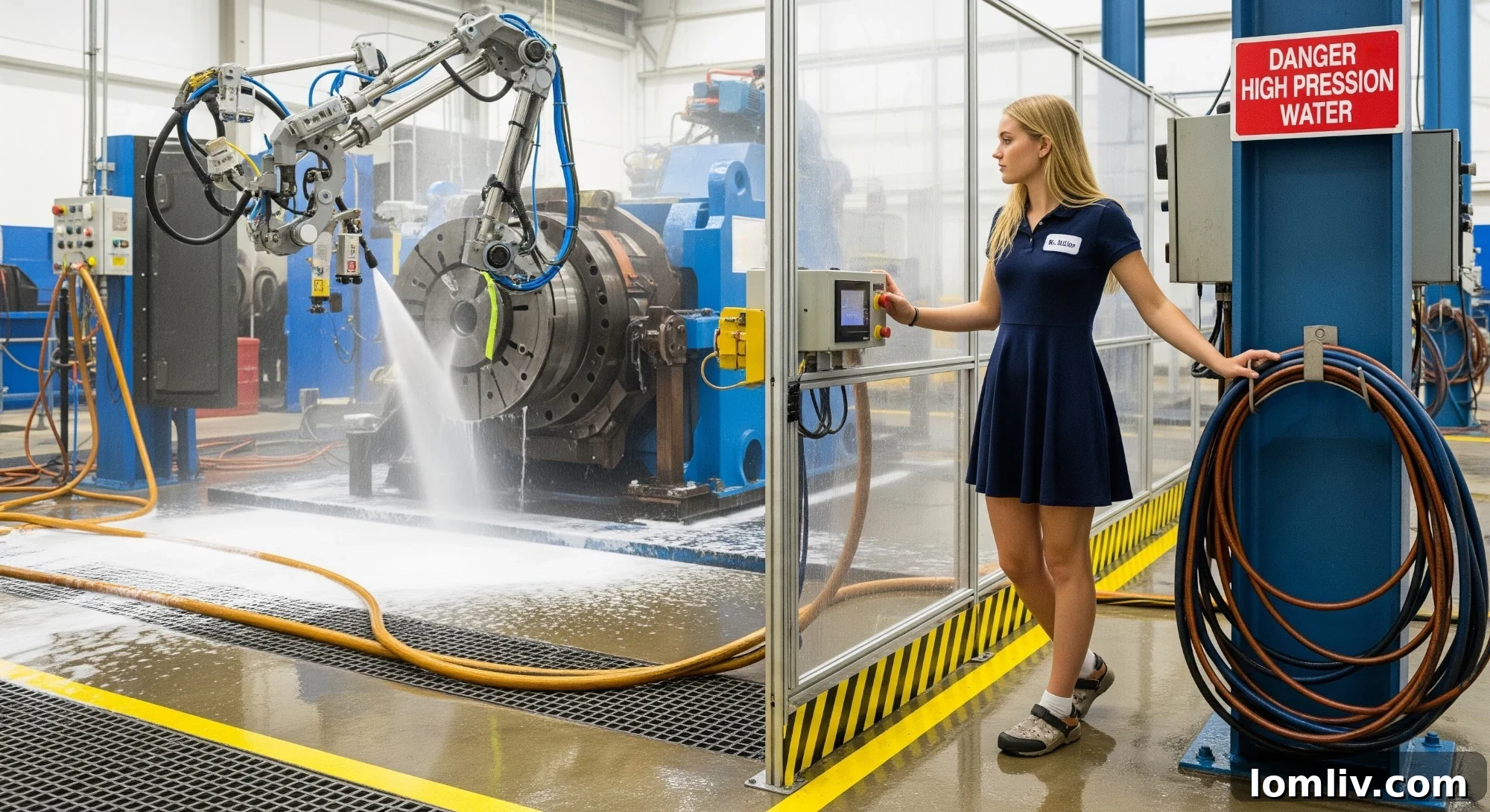
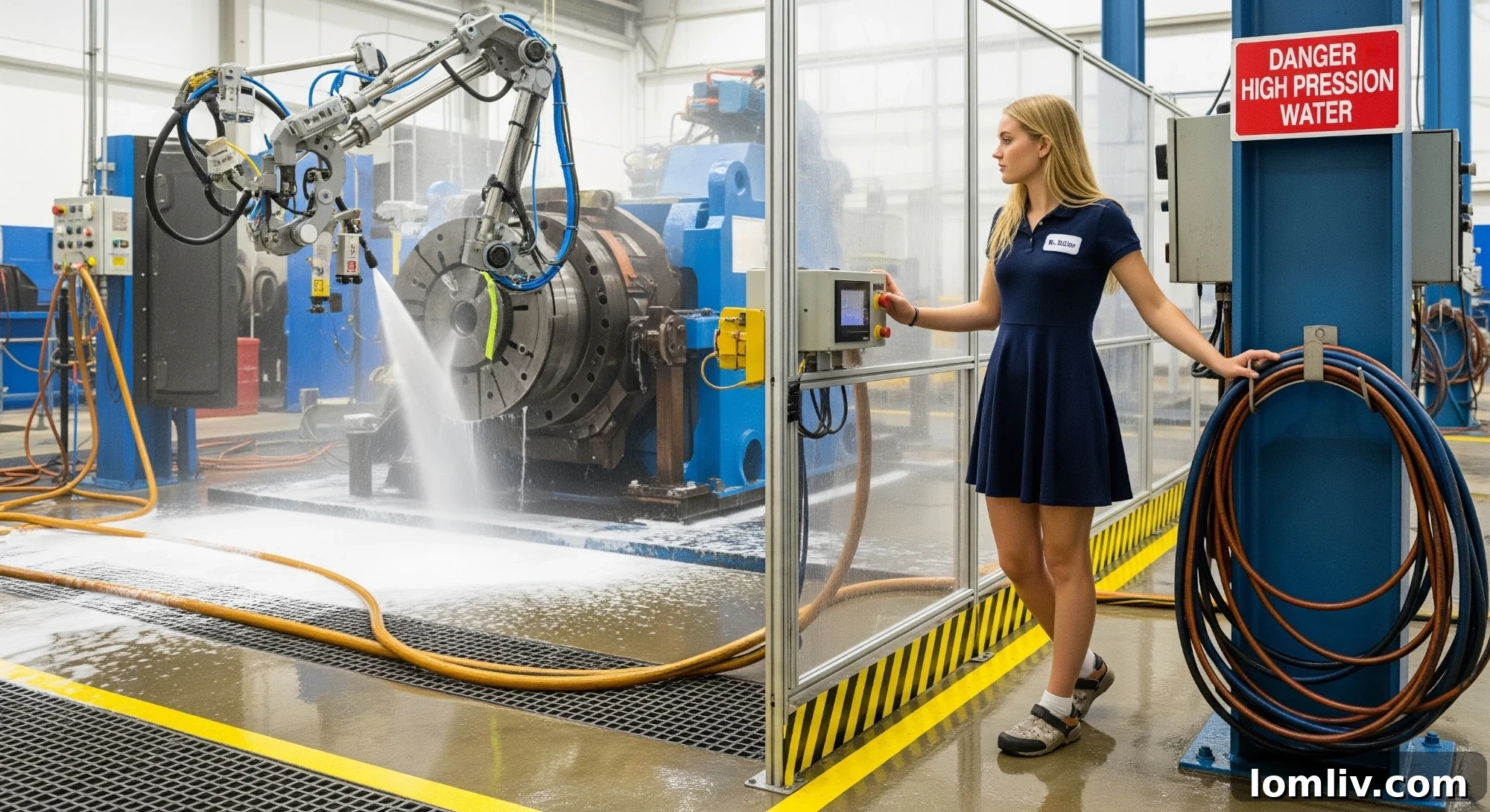
The most profoundly effective strategy for elevating safety standards in high-pressure water blasting operations is to systematically remove the human operator from the immediate “line of fire.” Across the U.S. industrial sector, modern safety paradigms are rapidly evolving, with a clear and accelerating trend towards advanced automation. Consequently, when selecting among various water blasting companies, it is imperative to prioritize those that demonstrate a significant and ongoing investment in robotic and hands-free technology. This investment signals a forward-thinking approach to safety and operational efficiency.
Automated hydroblasting systems, such as sophisticated robotic crawlers designed for the precision cleaning of large tanks, or multi-lance machines engineered for the efficient cleaning of complex heat exchanger bundles, offer a dual advantage that profoundly impacts project outcomes and safety profiles. Firstly, these advanced systems deliver an unparalleled level of consistency and operational speed, capabilities that a human operator, regardless of skill, simply cannot match. This translates directly into more uniform cleaning results, reduced project timelines, and enhanced productivity. Secondly, and perhaps more critically, automation fundamentally transforms the safety landscape by allowing technicians to operate the high-pressure equipment from a secure, remote distance, often from behind a protective console or barrier. This strategic separation drastically mitigates the risk of direct water injection injuries, which are among the most severe hazards in this industry. Furthermore, it effectively eliminates the physical fatigue that can accumulate during extended shifts or highly complex turnaround projects, a common contributing factor to human error and accidents.
Is Automated Hydroblasting More Expensive Than Manual Jetting?
While it is true that the initial mobilization costs associated with deploying specialized robotic equipment might be incrementally higher than for traditional manual setups, a thorough analysis reveals that the total project Return on Investment (ROI) is typically superior with automation. Automated systems are engineered to complete demanding jobs significantly faster, minimizing valuable downtime for your facility. Moreover, they achieve this with a drastically reduced incidence of recordable incidents, a crucial factor that not only protects your facility’s safety rating but can also lead to more favorable insurance premiums. The long-term financial benefits, including reduced labor costs, enhanced cleaning efficacy, lower risk of human error, and the avoidance of costly accident-related expenses and liability, collectively underscore the compelling value proposition of automated hydroblasting as a strategic and economically sound investment.
4. Comprehensive Medical and Emergency Response Plans Tailored for High-Pressure Injuries
The unique and insidious nature of high-pressure water injection injuries mandates a highly specialized and immediate medical response that goes far beyond the capabilities of a standard first-aid kit. The trauma inflicted by ultra-high pressure water, while often appearing as a minor puncture wound on the surface, can cause devastating internal tissue destruction and introduce bacteria deep into the body, leading to severe complications, including infection, tissue necrosis, and even amputation. Therefore, a truly professional water blasting contractor must possess and articulate a meticulously developed, site-specific emergency medical plan. This plan must not only be internally understood but also proactively communicated to and coordinated with your local medical emergency providers, ensuring they are prepared to handle such specific injuries.
An educated and responsible U.S. professional crew will invariably carry “Medical Alert Cards.” These critical documents are designed to be immediately handed to Emergency Room staff in the unfortunate event of an accident. The cards serve a vital purpose: they unequivocally notify surgeons and medical personnel that the injury involves high-pressure water. This immediate disclosure is crucial because, without this specific information, medical professionals might initially misdiagnose the severity of the wound, potentially delaying the specialized treatment required. High-pressure injection injuries often necessitate aggressive surgical debridement to remove damaged tissue and prevent the spread of infection, along with specific antibiotic regimens. Any company unable to clearly explain their precise protocol for managing a high-pressure injection injury, including the use of medical alert cards and coordination with local medical facilities, has demonstrably failed to meet the minimum threshold for industrial safety and should not be considered a viable partner. Their preparedness in an emergency is a direct reflection of their overall commitment to worker safety.
5. Unambiguous Proof Through Proven Safety Metrics (EMR and TRIR)
Ultimately, a company’s genuine commitment to safety is most transparently reflected not just in its policies and procedures, but in its verifiable data. When evaluating prospective water blasting companies, two key safety metrics provide invaluable insight into their operational safety culture: the Experience Modification Rate (EMR) and the Total Recordable Incident Rate (TRIR).
Experience Modification Rate (EMR):
- An EMR is a numerical representation used by insurance companies to gauge past cost of injuries and future chances of risk. An EMR of less than 1.0 is considered a favorable benchmark, indicating that a company has a better-than-average safety record within its industry. A lower EMR often translates to lower workers’ compensation insurance premiums for the contractor, reflecting their effective safety programs.
- Beyond mere numbers, a healthy EMR is also indicative of strong employer involvement in fostering a culture of safety. This includes robust safety management programs, comprehensive training initiatives, and, crucially, active employee participation in safety committees and hazard identification processes. A company with a low EMR is often one where safety is truly a shared responsibility, from leadership down to every team member.
Total Recordable Incident Rate (TRIR):
- The TRIR tracks the number of recordable workplace incidents (as defined by OSHA, including injuries or illnesses that require more than first aid, lost workdays, restricted work, or job transfer) that occurred per 100 full-time employees over a one-year period. It offers a snapshot of a company’s day-to-day operational safety performance based on their specific location’s records.
- A consistently low TRIR demonstrates that a company effectively manages workplace hazards and has a proactive approach to preventing injuries and illnesses. It reflects the practical success of their safety programs on the ground.
When evaluating several water blasting companies operating within a specific state, it is standard practice and highly recommended that customers request at least three years of historical EMR and TRIR records. This multi-year view allows for the identification of consistent safety performance rather than isolated good years. Moreover, if a contractor genuinely prides itself on its safety history and commitment, they will not hesitate to provide this documentation promptly and transparently upon request. Their willingness to share these metrics is a strong indicator of their confidence and integrity.
Beyond these quantitative metrics, also inquire about the contractors’ “close call” or near-miss reporting systems. A robust near-miss reporting culture is a hallmark of a truly proactive safety program. It encourages employees to report potential hazards or incidents that did not result in injury or harm, enabling the company to investigate, identify root causes, and implement corrective actions *before* an actual accident occurs. Understanding how a contractor fosters this open communication and uses near-miss data for continuous improvement provides deeper insight into their overall culture of safety and their dedication to preventing future incidents.
Responsible Use and Environmental Compliance
Beyond the immediate concerns of worker and equipment safety, facility managers bear the crucial responsibility of ensuring that their contractors operate in strict compliance with all relevant environmental regulations, particularly concerning wastewater management. The high-pressure water used in the blasting process, which often mixes with various industrial contaminants, sludges, and residues, cannot simply be discharged into standard drainage systems. Any wastewater generated during the hydroblasting procedure must be meticulously contained, appropriately filtered, treated, or disposed of in strict accordance with both state and federal mandates. Non-compliance with these environmental regulations can result in substantial fines, legal action, operational shutdowns, and severe reputational damage for both the contractor and the facility owner.
Facility managers should actively discuss and verify the contractor’s wastewater management plan, including their methods for containment (e.g., berms, vacuum trucks), filtration technologies (e.g., sediment removal, oil/water separation), and their designated, permitted disposal facilities. Understanding these protocols is crucial for maintaining your facility’s environmental stewardship. For more comprehensive information on federal industrial cleaning standards and environmental guidelines, facility managers are strongly encouraged to consult the authoritative resources provided by the Occupational Safety and Health Administration (OSHA) and the Environmental Protection Agency (EPA).
Conclusion: Partnering for Uncompromised Safety and Efficiency
Choosing a water blasting company is far more than a routine vendor selection; it represents one of the most significant safety and operational decisions a facility manager will make during a maintenance cycle. The inherent risks associated with ultra-high pressure operations demand an unparalleled level of diligence and scrutiny in contractor selection. By steadfastly insisting on adherence to WJTA certification standards, prioritizing partners who strategically invest in hands-free and automated technology, and demanding transparent, verifiable safety metrics such as EMR and TRIR, you actively fortify your facility’s defenses against the potentially catastrophic costs of negligence.
A truly responsible and elite water blasting partner will not merely provide a cleaning service; they will become an extension of your commitment to operational excellence and, more importantly, a vigilant protector of your most invaluable assets: your employees and the environment. Selecting the right partner ensures not only the efficient and thorough cleaning of your vital industrial equipment but also guarantees the highest level of safety and compliance, fostering a secure and productive work environment for everyone involved.