This is the inaugural article in a captivating series exploring the iconic television living rooms that have become indelible parts of popular culture.
Have you ever found yourself dreaming about the most iconic living room sets from your favorite TV shows? As classic series continue to charm new generations through retro channels and cutting-edge streaming platforms, the very sets that made us feel right at home while watching our beloved characters unfold their lives are making a grand resurgence. We are embarking on an exciting journey to delve deep into what makes these fictional spaces so extraordinarily special, examining their design, cultural impact, and the unforgettable moments they hosted. If there’s a particular TV set you’d love us to explore, or if you have cherished memories associated with one, please don’t hesitate to share them with us by emailing [email protected]. Your insights could inspire our next deep dive!
Unpacking the Iconic: Jerry Seinfeld’s Apartment (1989-1998)
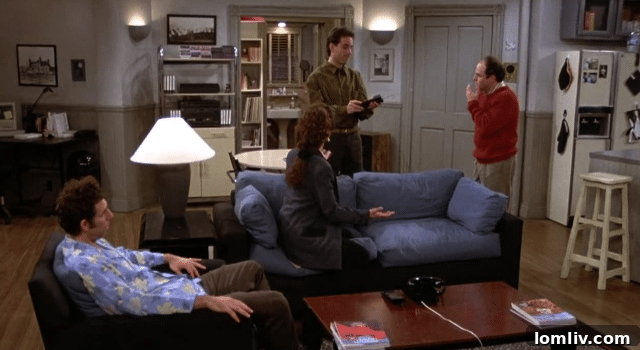
Nestled (or perhaps just depicted) at the fictional address of 121 W. 81st St. in Manhattan, Jerry Seinfeld’s apartment stands as arguably the most famous and universally recognizable New York City abode in television history. For nine groundbreaking seasons, this humble one-bedroom unit served as the central nerve center for Jerry, George, Elaine, and Kramer, becoming as much a character in the “show about nothing” as the titular comedian himself. The layout of this apartment – from the distinct front door to the compact kitchen, the inviting couch, the unassuming dining table, and even the often-overlooked bathroom door – is indelibly etched into the collective consciousness of millions of fans worldwide. We’ve witnessed countless mundane yet hilarious interactions within its walls, to the point where any minor alteration to its familiar structure would undoubtedly provoke a collective cry of “serenity now!!”
The mere sight of the Seinfeld apartment set instantly transports our minds into the familiar routines that unfolded over 180 episodes. Picture it: Jerry, the ever-observant host, would buzz in George or Elaine, who would then enter through the main door with varying degrees of enthusiasm. That is, of course, unless you were Kramer, whose entrances were legendary, characterized by an explosive burst through the door, a quick slide, and an unpredictable disposition. Upon entering, the typical trajectory involved a sharp left turn, a beeline for the refrigerator, and the ritualistic grab of a drink, signaling the commencement of another endlessly quotable conversation. This consistent choreography, repeated thousands of times, cemented the apartment’s layout and its functional elements into the fabric of the show’s humor and rhythm.
While the series and the apartment itself exude an undeniable New York-centric charm and authenticity, the reality behind the magic is that this iconic dwelling was, in fact, an intricately designed set built within the sprawling studio lots of Los Angeles. This dichotomy between perceived reality and filmed illusion is a hallmark of television production. Interestingly, the architectural integrity of Jerry’s apartment has been a topic of playful debate among fans. According to a popular Reddit thread, the apartment’s design, while perfectly functional and believable for a sitcom set, might defy real-world logic. Critics playfully suggest that the hallway configuration, particularly the placement of the front door relative to the rest of the unit, couldn’t logistically exist in a genuine New York City apartment building without some highly unusual, perhaps even impossible, architectural contortions. This fascinating detail only adds to the mystique of the Seinfeld set, highlighting the creative liberties taken to craft a space that felt utterly real, even if it wasn’t physically plausible.
Jerry’s Hallway Can’t Exist.
byu/PixelMagic inseinfeld
The apartment’s layout seamlessly integrates the kitchen into the main living area, a design choice that was perhaps ahead of its time for a 90s sitcom and perfectly suited for the constant dialogue exchanges. The kitchen’s most distinguishing feature is undoubtedly the open shelf brimming with an eclectic assortment of cereal boxes, a quirky yet fitting detail that speaks volumes about Jerry’s character and comedic persona. Much of the show’s memorable dialogue and impromptu discussions organically revolve around this kitchen counter, which served as a natural gathering point for the gang. It presents itself as a typical New York apartment kitchen: compact, often bustling, and just barely functional enough to support the characters’ minimal culinary endeavors. This modest setting, however, perfectly encapsulates the everyday realism that underpinned the show’s humor, where grand schemes were often hatched over a bowl of Kix or a coffee.
Transitioning from the kitchen, the living room area has played host to a revolving door of chairs and couches, each witnessing its fair share of comedic mishaps. Who could forget the infamous incident where Poppy, the eccentric chef, soiled the pristine sofa, leading to one of the show’s most cringe-worthy yet hilarious moments? This central seating area was the primary stage for countless “show-about-nothing” discussions, where the mundane minutiae of daily life were meticulously dissected and transformed into comedic gold. Behind the main couch, the dining area served as an extension of this conversational hub, occasionally hosting more structured, albeit still chaotic, meals and debates. Adjacent to the expansive window, an inviting alcove functioned as Jerry’s de facto work-from-home space, complete with a classic computer, a functional desk, and a bookshelf packed with an intriguing collection of VHS tapes and a treasure trove of Superman paraphernalia. These personal touches offered glimpses into Jerry’s world, showcasing his dedication to comedy, his appreciation for pop culture, and his inherently observational nature.
While often relegated to the background, the bathroom door in Jerry’s apartment did have its moment in the comedic spotlight. It’s usually not a key element in the show’s narrative, yet it provided the perfect backdrop for one of George Costanza’s most iconic and desperate moments. Who can forget the frantic scene where George, pants around his ankles and a look of sheer panic on his face, burst out of the bathroom, demanding that Jerry answer the phone with the now legendary phrase, “Vandalay Industries,” before comically tumbling to the floor? This particular instance perfectly illustrates how even the most unassuming elements of the set could be leveraged for maximum comedic effect, contributing to the enduring legacy of Seinfeld’s physical comedy and unforgettable one-liners.
The enduring appeal and cultural significance of Jerry’s apartment have transcended the television screen, inspiring a remarkable array of tribute products that allow fans to bring a piece of this iconic dwelling into their own lives. Among the most popular is the delightful Lego Seinfeld Set, a meticulously detailed recreation that allows enthusiasts to build and display their own miniature version of Jerry’s world, complete with minifigures of the main cast. Beyond Lego, dedicated fans have gone to extraordinary lengths to create faithful reproductions, including a stunning recreated set built by enthusiasts, showcasing the incredible passion the show inspires. While some highly sought-after items, like a specialized replica set, may no longer be readily available, the market for Seinfeld memorabilia remains vibrant. For the ultimate collector, unique pieces periodically emerge, such as a monumental $14,999.99 signed apartment set on eBay, a testament to the show’s lasting impact and the willingness of fans to invest in a piece of its history. These products, and many more, highlight how deeply Jerry’s apartment has resonated with audiences, transforming a mere television set into a beloved cultural artifact.
Ultimately, Jerry Seinfeld’s apartment is far more than just a backdrop; it is a foundational element of a sitcom that redefined comedic storytelling. Its consistent presence, unchanging layout, and unassuming character allowed the focus to remain squarely on the brilliant dialogue and character interactions that made “Seinfeld” a cultural phenomenon. It’s a space where mundane observations transformed into profound comedic insights, where everyday annoyances escalated into hilarious catastrophes, and where four friends simply existed, in all their neurotic glory. Spending time contemplating this small, yet infinitely complex apartment is a delightful journey into the heart of one of television’s greatest achievements. And as Jerry himself might say, when it comes to immersing yourself in the world of Seinfeld, or indeed any beloved fictional space, wasting a lot of time exploring this apartment is perfectly acceptable — not that there’s anything wrong with that.