

SEC and Texas Authorities Uncover Multi-Million Dollar Real Estate Investment Fraud Scheme
- SEC brings serious fraud charges against Christian Custom Homes CEO Phillip Carter and co-conspirators.
- Federal agency alleges a vast scheme defrauding over 270 investors nationwide of nearly $45 million.
- This federal action follows earlier fraud indictments from the Texas State Securities Board.
- Phillip Carter’s business empire, including Christian Custom Homes, now under new management for restructuring.
In a significant development in the ongoing legal saga surrounding Frisco-based Christian Custom Homes, the U.S. Securities and Exchange Commission (SEC) has announced a sweeping set of fraud charges against CEO Phillip Michael Carter and two alleged co-conspirators. This federal action comes just over two months after the Texas State Securities Board (TSSB) initiated its own series of fraud charges against Carter, painting a grim picture of alleged widespread financial misconduct within the real estate development sector. The combined investigations reveal a meticulously crafted scheme that purportedly victimized hundreds of investors, many of whom were elderly Texans, through deceptive investment opportunities tied to real estate.

The initial charges filed in November by the Texas State Securities Board detailed the indictments of Phillip Michael Carter and his wife, Shelley Noel Carter. These state-level fraud accusations stemmed from the alleged misappropriation of investor funds that were explicitly designated for various real estate development ventures. Adding to the complexity of the case, Phillip Carter was also indicted in Collin County Court. These specific charges related to the sale of fraudulent promissory notes, linking him with Richard Gregory Tilford of Arlington, who is alleged to have solicited and raised a staggering $6 million from unsuspecting investors. Shelley Carter, Phillip’s wife, was separately charged with money laundering and the misapplication of investor funds, suggesting a broader pattern of financial deception that extended beyond a single individual.
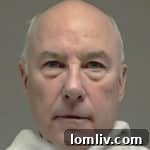
According to the Texas indictment, Phillip Carter reportedly amassed nearly $17.5 million from approximately 100 investors. A significant portion of these investors were identified as elderly Texans, making the alleged fraud particularly egregious. The funds were purportedly raised for various real estate development projects through entities such as Texas Cash Cow Investments Inc. and North Forty Development LLC. These companies were presented as legitimate avenues for lucrative investments in the burgeoning Texas real estate market.
A key figure in this complex web of alleged deceit was one of Carter’s sales agents, Bobby Eugene Guess. Guess, a former wealth manager who once hosted the radio program “Dollars & Sense” on WBAP, had previously received a target letter from the U.S. Attorney’s Office. This letter informed him that he was under investigation for serious offenses including mail fraud, money laundering, and securities fraud. His involvement in the scheme ultimately led to a conviction and, in July, he was sentenced to 12 years in state prison. The state charges against Tilford and both Phillip and Shelley Carter remain pending, promising further legal proceedings in the months to come.
The SEC Alleges a Widespread ‘Multi-Million Dollar Offering Fraud’
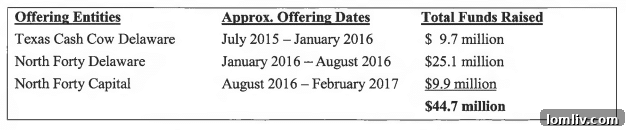
The SEC’s intervention escalated the case dramatically, announcing charges against Carter, Guess, and Tilford for orchestrating what it described as a “multi-million dollar offering fraud.” The federal agency’s complaint alleges that the trio collectively raised a staggering almost $45 million from more than 270 investors located across the United States. This vast sum was obtained through the sale of short-term, high-yield promissory notes. Crucially, these notes were issued by shell companies that the SEC contends were deliberately established to mislead and confuse investors, making it difficult for them to discern the true nature of their investments.
The SEC’s complaint further detailed the elaborate deception employed by Carter, Guess, and Tilford. It alleged that they “made a number of other materially false and misleading statements while soliciting investors.” While it acknowledged that Carter did, in fact, develop some legitimate real estate projects, a significant portion of investor funds – more than $1.2 million – was allegedly misappropriated. These funds were reportedly used to satisfy a personal IRS tax lien, make illicit Ponzi payments to certain investors to sustain the illusion of profitability, and even to operate the Double Droptine Ranch, Carter’s luxurious out-of-state hunting ranch.
Among the many false claims cited by the Texas State Securities Board, Carter allegedly presented himself with a fabricated resume. He falsely informed investors that he held a chemical engineering degree from the University of Virginia and had previously served as a project engineer for Texas Instruments. Adding to his embellished credentials, he also claimed to have collaborated with renowned financial education author Robert Kiyosaki, known for his “Rich Dad, Poor Dad” series. These misrepresentations were likely intended to build trust and credibility with potential investors, encouraging them to commit their funds to his ventures.
The heart of the alleged fraud, according to the SEC, lay in the deceptive nature of the investment vehicles. Carter, Guess, and Tilford were accused of selling what investors believed were interests in Carter’s legitimate companies, supposedly backed by tangible assets from genuine development projects. However, the SEC asserted that investors were instead sold securities issued by entities with strikingly similar names, but which were, in reality, shell companies possessing no actual assets or legitimate backing.
One particular promissory note, detailed in the SEC complaint, contained language designed to reassure investors:
“Assets are backed by the pooling of properties held primarily in Frisco, McKinney, and Prosper Texas, by North Forty Development LLC. Texas First Financial, LLC provides updates on properties held. Values of said properties are security for this agreement. In the event of default for payment on this agreement, holder is hereby granted authority to file liens) against current properties held.”
However, the SEC’s investigation revealed a crucial deviation. Instead of receiving notes from the legitimate North Forty Development LLC, Guess allegedly sent investors promissory notes issued by shell companies he himself created. These entities bore names strikingly similar to the authentic companies investors believed they were engaging with. Examples include “Texas Cash Cow, LLC” or “Texas Cash Cow Delaware” (in contrast to Carter’s legitimate “Texas Cash Cow Investments”), and “North Forty Development, LLC,” or “North Forty Delaware,” which was nearly identical to Carter’s legitimate “North-Forty Development” – with the subtle but significant absence of a hyphen.
This intentional slight alteration in names created a facade of legitimacy while diverting investor funds. “Consequently, the notes that investors received were not ‘backed by hard assets’ as promised, and Carter and his entities were not obligated — at least by the face of the documents — to repay the notes,” the SEC complaint elaborated. Regardless of the issuing entity, all investor money was ultimately directed to accounts under Carter’s direct control. Carter then allegedly used these funds to make a $1.2 million payment towards a personal IRS tax lien, finance the operations of his luxury hunting ranch, funnel over $3 million into Ponzi payments to other investors, and sustain his extravagant lifestyle.
The SEC’s complaint provides a detailed list of how investor money was allegedly misused, illustrating the sheer scope of Carter’s personal enrichment. This “laundry list” of illicit expenses included approximately $800,000 in cash withdrawals, $500,000 transferred directly to his personal bank accounts, $124,000 spent on a private jet, $39,000 for luxury Dallas Cowboys tickets, and $5,000 in political contributions. Perhaps most egregious was a $1 million transfer of funds, derived from the distressed sale of a North-Forty real estate project, directly into a personal bank account.
‘Carter’s House of Cards Collapsed’ Amidst Mounting Legal Pressure
Despite receiving clear warnings and target letters from the U.S. Attorney’s Office, Phillip Carter reportedly pressed on with his deceptive practices. Alarmingly, in August 2016, approximately one week after the TSSB issued a cease-and-desist order against Guess and Texas First, Carter began issuing a new round of promissory notes. These notes were issued under the name “North Forty Capital.” However, as the SEC complaint revealed, North Forty Capital was not a registered corporate entity; it was merely a bank account or a “doing business as” (d/b/a) designation for Carter, deceptively presented as a legitimate company.
This additional round of fraudulent notes was also allegedly sold by Guess and Tilford, who, in brazen disregard of the warnings, continued to assure investors that their investments were backed by robust hard assets. This cycle of deception, fueled by continued false promises, eventually led to the inevitable collapse of the elaborate scheme.
Shamoil T. Shipchandler, Director of the SEC’s Fort Worth Regional Office, emphasized the gravity of the allegations, stating, “Phillip Carter and his co-defendants lied about the nature of their investments and enriched themselves at their investors’ expense.” The SEC complaint meticulously detailed how Carter, Guess, and Tilford repeatedly marketed the real estate development projects to prospective investors as “low risk.” Yet, they consistently failed to disclose a critical truth: that the repayment of these investments was contingent upon the success of a complex and lengthy chain of real estate development projects, a fact that inherently carried significant risk.
The complaint vividly concludes by explaining the scheme’s downfall: “Because Carter misused investor funds for unrelated purposes, because of undisclosed risks inherent in Carter’s real estate projects, and finally because he was indicted on Texas criminal securities fraud charges on November 6, 2018, Carter’s house of cards collapsed.”
Legal Ramifications and Future Outlook
The SEC’s complaint was formally filed with the U.S. District Court for the Northern District of Texas in Dallas. It charges Phillip Carter, Bobby Eugene Guess, and Richard Gregory Tilford with violating crucial anti-fraud provisions of both the Securities Act and the Exchange Act. Additionally, they face accusations of participating in the unregistered offer and sale of securities, and operating as unlicensed brokers, further compounding the severity of their alleged transgressions.
The agency is actively seeking various remedies, including permanent injunctions to prevent future illicit activities, disgorgements of ill-gotten gains to be returned to investors, and significant civil penalties. Furthermore, the SEC has requested an immediate asset freeze, a comprehensive accounting of all funds, and a document preservation order for Carter and several of the companies he operated. In an additional measure, the SEC has requested that four of Carter’s companies, including Christian Custom Homes, be named as “relief defendants.” A relief defendant is typically an individual or entity not accused of direct wrongdoing but believed to have benefited financially from the illicit activities, usually by receiving funds or property that rightfully belong to victims.
The SEC estimates that Carter owes investors more than $45 million. Since his indictment, his ability to close on several of his remaining real estate properties has been severely impacted, indicating that the financial resources needed to sustain his real estate developments are rapidly diminishing.
In a proactive move earlier this month, Phillip Carter transferred control of North Forty (the hunting ranch), Christian Custom Homes, McKinney Executive Suites at Crescent Parc Development Partners, Frisco Wade Crossing Development Partners, and several other associated entities to a new manager. This manager specializes in the restructuring of distressed companies, a clear indication of the severe financial distress and legal pressures facing Carter’s business empire. The ongoing legal battles at both state and federal levels promise a prolonged period of scrutiny and potential restitution for the many investors who allegedly fell victim to this intricate real estate investment fraud scheme.
To view the complete SEC complaint, click here.