The Dallas Museum Tower Controversy: Unpacking the Architect’s Perspective on Reflectivity and Design
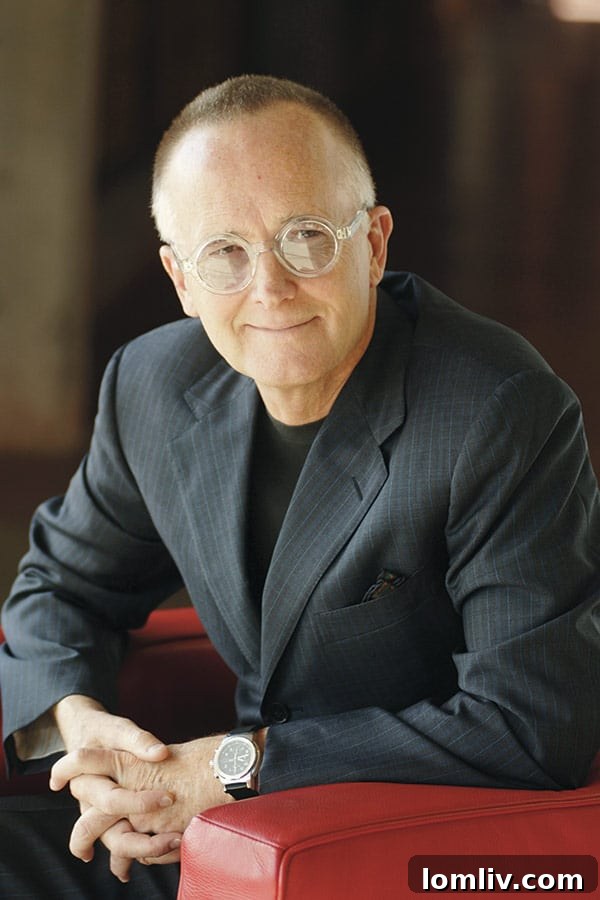
The Dallas Arts District stands as a beacon of culture and architectural innovation, yet it has also been the stage for one of the most enduring and passionate debates in modern urban development: the controversy surrounding the Museum Tower’s reflective facade and its impact on the adjacent Nasher Sculpture Center. Designed by renowned architect Scott Johnson, principal at Johnson Fain, the towering residential structure has garnered significant attention, much of it negative, concerning claims that its reflectivity has damaged precious art and delicate landscaping at the Nasher. Amidst years of intense public scrutiny and media coverage, a recent insight from Johnson himself has cast a new light on the narrative, revealing a startling communication gap that has shaped the public’s understanding of this complex architectural challenge.
The Architect’s Unheard Voice: Scott Johnson Speaks Out
For years, the Museum Tower has faced a barrage of criticism. Accusations ranged from intense solar glare and heat concentration to ultraviolet light exposure, all allegedly detrimental to the Nasher’s esteemed outdoor sculpture collection and garden. Despite the widespread discussion, architect Scott Johnson expressed profound surprise at his consistent exclusion from the media discourse. In a candid statement, he highlighted his frustration:
I have found it surprising that so much has been said and written without inquiring of the building designer. While, on the one hand, I don’t relish entering a conversation in which sides have long been drawn, a dominant narrative seems fixed, facts are frequently misstated, and public relations blunders have clouded genuine conversation, on the other hand, I have a high regard for the importance of architectural criticism in the mainstream media. I consider it a vital contribution to civic life as I do this fervent, if difficult, conversation among Dallasites.
Johnson’s remarks underscore a critical oversight in the ongoing debate. His perspective, that of the designer entrusted with bringing the Museum Tower to life, offers crucial context regarding the design intentions, material selections, and technical considerations that shaped the building. The architect’s unique insight into the project’s genesis and its adherence to specific architectural and environmental standards is indispensable for a comprehensive understanding. His respect for architectural criticism is evident, yet it is tempered by a clear exasperation over what he perceives as a “dominant narrative” formed without direct input from the very person responsible for the building’s design. This exclusion, Johnson suggests, has led to a conversation clouded by “frequently misstated facts” and a lack of balanced perspective, hindering any genuine path toward resolution.
Journalistic Responsibility: Challenging Assumptions
The revelation that a central figure in such a prominent controversy had not been consistently approached by the media prompted introspection from the original article’s author, a seasoned reporter. This moment of self-reflection highlights a common, yet potentially detrimental, assumption in journalism:
As a reporter you sometimes just assume that a source embroiled in controversy is not going to talk. Of course, every time I find myself making this assumption I make myself ask, call, pester, and try to get the info as a reporter should. So I just ASSUMED Johnson had never talked because the lawyers or someone told him not to. Did I call him? Once. Maybe it’s time to call him again.
This candid admission serves as a powerful reminder of the fundamental ethical obligations in reporting. In contentious situations, journalists often face challenges in securing direct comments, with sources sometimes advised by legal counsel or public relations teams to remain silent. However, the integrity of reporting hinges on the persistent pursuit of all relevant perspectives. A balanced and thorough account requires reaching out to every party involved, no matter how seemingly reluctant, to ensure that diverse viewpoints are represented. The realization that a crucial voice remained unheard for so long, simply due to an assumption, underscores the ongoing importance of challenging preconceived notions and diligently striving for comprehensive information, thus enriching public dialogue and fostering a more nuanced understanding of complex issues.
The Unavoidable Material: Why High-Performance Glass Was the Choice
At the core of the Museum Tower’s design, and subsequently the controversy, lies the selection of its primary cladding material: high-performance reflective glass. Johnson vehemently defends this choice, posing a critical question about viable alternatives and underscoring the practical and historical context of his decision. The use of such glass was not merely an aesthetic preference but a functional necessity, deeply rooted in architectural standards, urban planning, and environmental considerations.
We were made aware of a master plan for the Arts District done many years earlier, well before the design and construction of the Nasher, which located a tall building on our site not-to-exceed 50 stories. We saw no evidence that there were any constraints with regard to materials or reflectivity. Having worked in Texas over many years, this seemed normal to us. What also seemed normal to us was the choice in a tall residential building of high performance glass with a reflective coating. Dallas has many examples, as does every major city in America. If you have walked around Manhattan’s Ground Zero Memorial during mid-day to the south of the new Freedom Tower, you have found yourself, on a sunny day, in the reflection of this very tall building. From the published renderings, it appears that all the other towers there will also use glass with reflective coatings. Whatever its future may be, coated glass is and has been an omnipresent material on skylines worldwide. With the continuing focus on minimizing energy consumption in buildings, this material will, in my view, remain popular unless regulations are put in place to moderate it.
Johnson’s explanation is multifaceted. Firstly, he points to a pre-existing master plan for the Dallas Arts District, which designated the Museum Tower’s site for a tall building up to 50 stories, crucially without any specific restrictions on materials or reflectivity. This established a foundational context for the development. Secondly, the choice of high-performance reflective glass aligns with widespread architectural practice, especially for high-rise residential buildings in climates like Texas. Dallas itself, along with countless other major global cities, showcases numerous examples of such structures. These materials are engineered for superior thermal performance, reflecting sunlight and reducing heat gain, which is vital for minimizing energy consumption and cooling costs in hot climates – a key factor in achieving sustainable building certifications like LEED Gold.
The Indispensable Advantages of Modern Reflective Glass:
- Energy Efficiency: Reflective coatings dramatically reduce solar heat gain, significantly lowering air conditioning loads and operational costs, aligning with modern sustainability goals.
- Thermal Comfort: By mitigating heat transfer, these glasses help maintain stable and comfortable interior temperatures for occupants.
- UV Protection: Advanced glass technology often incorporates UV-blocking properties, protecting interiors, furnishings, and occupants from harmful ultraviolet radiation.
- Aesthetic Versatility: Reflective glass provides a sleek, modern aesthetic that allows buildings to dynamically interact with their surroundings, reflecting the sky and cityscape in an ever-changing display.
- Daylighting Benefits: While controlling solar gain, these materials can still optimize natural light penetration, reducing the need for artificial lighting during daylight hours.
Examples like the Freedom Tower at Manhattan’s Ground Zero further illustrate that reflectivity is an inherent and accepted characteristic of contemporary skyscraper design, driven by both functional requirements and aesthetic aspirations. Johnson concludes that reflective glass will remain a prevalent choice globally unless specific regulations are enacted to moderate its use, emphasizing its continued importance in sustainable, energy-efficient architecture.
The Impossible Demand: ‘Eliminate All Reflection’
Perhaps the most revealing aspect of Johnson’s perspective concerns the demands put forth by the Nasher Sculpture Center regarding a resolution to the reflectivity issue. According to Johnson, the Nasher representatives presented a clear and uncompromising directive: “eliminate all reflection and do it all on Museum Tower,” while explicitly stating that “The Nasher…was not to be touched.” This insistence on absolute zero reflectivity from Museum Tower, Johnson contends, creates an unfeasible and technically impossible barrier to any meaningful resolution.
However, representatives of the Nasher were outspoken that their charge to Museum Tower was to “eliminate all reflection and do it all on Museum Tower.” The Nasher, they said, was not to be touched. Frankly, while I appreciated their ardent defense of a great building, it was clear to me, as it is to other architects, that if there is to be any glass in our as-of-right, code-conforming, LEED Gold tower, there will be reflectivity.
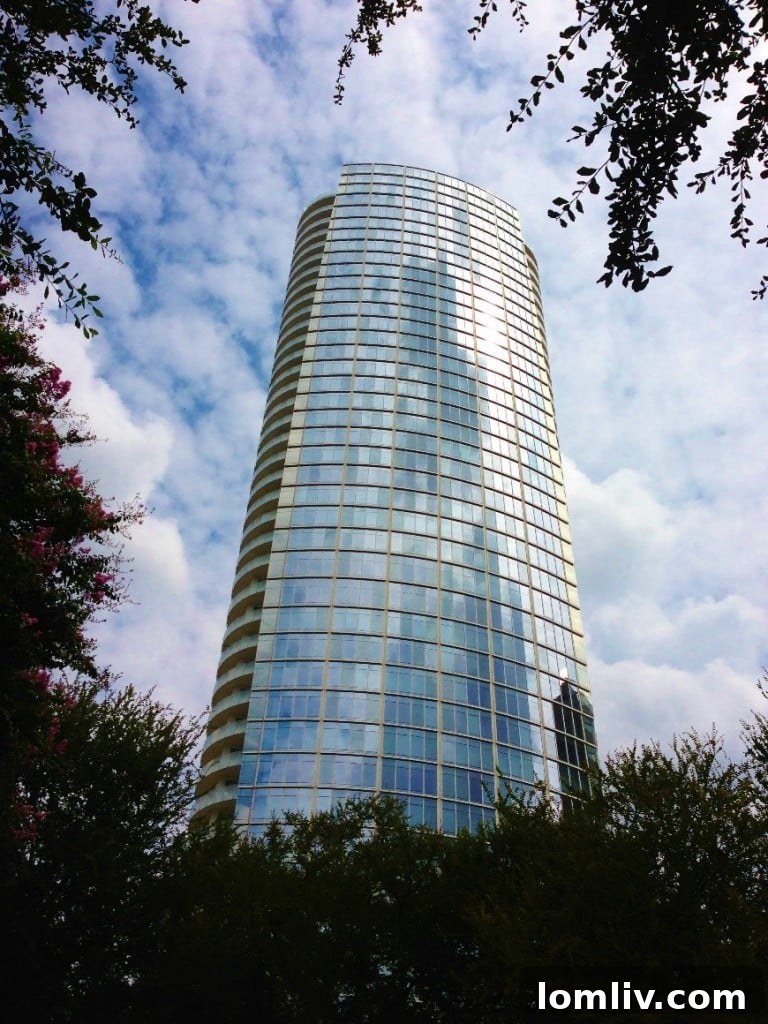
From a fundamental scientific and architectural standpoint, glass, by its very nature, reflects light. While the degree and type of reflection can be engineered and minimized through various treatments, the complete elimination of reflection from a transparent or even semi-transparent material like glass is a physical impossibility. Even opaque or metallic surfaces, when smooth, exhibit some level of specularity. Johnson’s assertion, echoed by other architects, is that any building incorporating glass, particularly one designed to meet stringent modern standards such as LEED Gold certification for environmental performance, will inherently possess reflective qualities. The Museum Tower’s status as an “as-of-right, code-conforming” structure further implies that its design and material choices adhere to all existing building codes and zoning regulations. To demand a fundamental alteration of its inherent material properties post-construction without altering the adjacent environment is not only technologically unachievable but also places an unreasonable burden on a single structure.
The Science of Reflection and Building Materials:
Light reflection is a natural phenomenon governed by the properties of a material’s surface. Transparent materials like glass, even if designed to be low-emissivity (low-E) or tinted, will always reflect a certain percentage of incident light. Achieving “zero reflectivity” is a concept that defies the laws of physics when dealing with glass or other common building cladding materials. Any attempts to achieve this would necessitate radical, likely unfeasible, structural and material changes that would fundamentally alter the building’s performance, aesthetics, and structural integrity.
Broader Implications for Urban Development and Architectural Coexistence
The protracted dispute between the Museum Tower and the Nasher Sculpture Center is more than just a localized architectural quarrel; it serves as a powerful case study with profound implications for urban planning, architectural design, and the coexistence of diverse structures within dense cultural districts worldwide. It spotlights the inherent tension between the desire to preserve existing cultural assets and the need for new, modern developments that often prioritize energy efficiency and contemporary aesthetics.
The lack of consistent, direct dialogue with key stakeholders, such as the architect, as revealed by Johnson, exacerbated the situation. It allowed for a dominant public narrative to form, potentially fueled by misinformation and an incomplete understanding of the architectural and scientific realities. This communication breakdown hindered opportunities for collaborative problem-solving and compromise, leading to a prolonged and costly impasse.
For future urban developments, particularly in sensitive cultural or historical contexts, several crucial lessons emerge. There is an undeniable need for comprehensive master planning that meticulously anticipates and assesses potential environmental interactions—such as light, shadow, and views—between new and existing structures. Proactive and transparent engagement with all stakeholders, including architects, developers, urban planners, and affected cultural institutions, from the earliest conceptual stages of a project is paramount. Such an integrated approach can identify potential conflicts before construction begins, allowing for design adjustments or mitigation strategies to be incorporated, thereby preventing costly disputes and fostering harmonious coexistence.
Ultimately, the saga of the Museum Tower and the Nasher Sculpture Center underscores that urban environments are complex, living ecosystems. Achieving balance requires not only strict adherence to legal and regulatory frameworks but also a spirit of open dialogue, mutual understanding, and a willingness from all parties to seek realistic and scientifically grounded solutions. When demands for absolute outcomes, such as “zero reflectivity,” clash with the immutable laws of physics and the realities of modern construction, the path to resolution becomes obscured, highlighting the critical need for pragmatism and collaborative problem-solving in the evolution of our cities.