Selling a home is a significant life event, often marked by excitement, anticipation, and a fair amount of stress. Amidst the flurry of finding a new residence, packing boxes, and coordinating logistics, it’s easy to overlook one of the most critical aspects of the transaction: the financial details. Many sellers, eager to reach the finish line, might be tempted to skim over the extensive forms and documents presented to them. However, for a truly smooth and financially sound closing, it is paramount for sellers to thoroughly review the financial figures of their transaction well in advance of closing day.
Before ever stepping up to the closing table to sign the final paperwork, a seller should receive and meticulously review their settlement statement. This crucial document serves as a comprehensive financial snapshot of the entire sale. Its primary purpose is to clearly outline the purchase price, detail all itemized deductions, and ultimately show the exact funds the seller will receive from the transaction. Receiving this statement ahead of time grants the seller a vital opportunity to scrutinize every fee and charge, identify and rectify any potential errors, and confirm the precise net proceeds they can expect from their home sale. This proactive approach ensures transparency, prevents last-minute surprises, and allows for any discrepancies to be addressed without delaying the closing.
The terms ‘settlement statement’ and ‘closing disclosure’ are often used interchangeably in general conversation to refer to the seller’s final closing document. While they both serve a similar function – providing a detailed financial breakdown of the transaction – they are, in fact, two distinct forms mandated by different government entities. Understanding the difference is key. In states like Texas, for instance, if the buyer is making an all-cash purchase, the HUD Settlement Statement (specifically the HUD-1 form) is typically used. Conversely, if the buyer is securing a mortgage loan to finance the purchase, a Closing Disclosure (CD) form, meticulously regulated and put out by the Consumer Financial Protection Bureau (CFPB), is the standard document. Regardless of the form used, the escrow agent, a neutral third party facilitating the transaction, is responsible for preparing the appropriate document, ensuring all financial aspects are accurately reflected.
Every seller’s statement, whether a HUD-1 or a Closing Disclosure, provides a comprehensive, line-item breakdown of all fees, charges, and expenses that the seller is responsible for, as well as all credits due to the seller. Much like a detailed budget balance sheet, it itemizes debits, which represent expenses or fees that reduce the seller’s proceeds, and credits, which are deposits or increases to the seller’s funds. This document effectively summarizes every financial detail of the transaction, and its accuracy is paramount, requiring precision down to the very last penny. This meticulous accounting ensures that all parties understand the financial flow and that the final transfer of funds is conducted without error.
Understanding Your Seller’s Closing Disclosure / Settlement Statement
To gain a deeper understanding of the closing process, let’s meticulously examine the various financial components a seller might encounter and how they are typically presented on their closing statement. It’s important to remember that this discussion focuses exclusively on the seller’s side of the transaction; the buyer’s financial breakdown involves a separate set of considerations, which we can explore in detail another time.
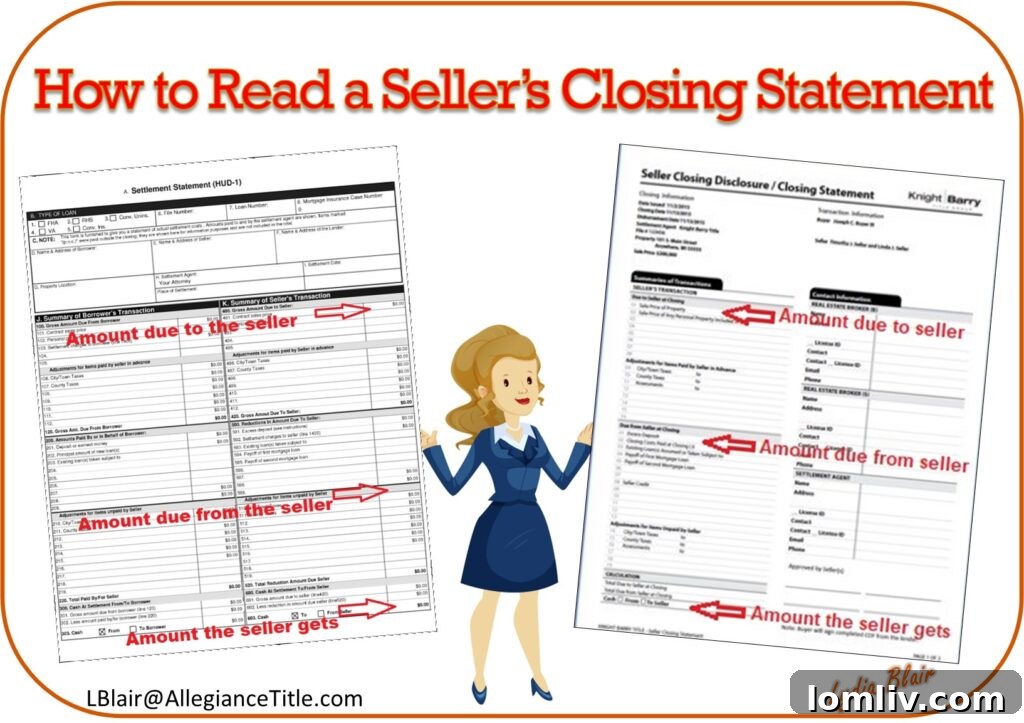
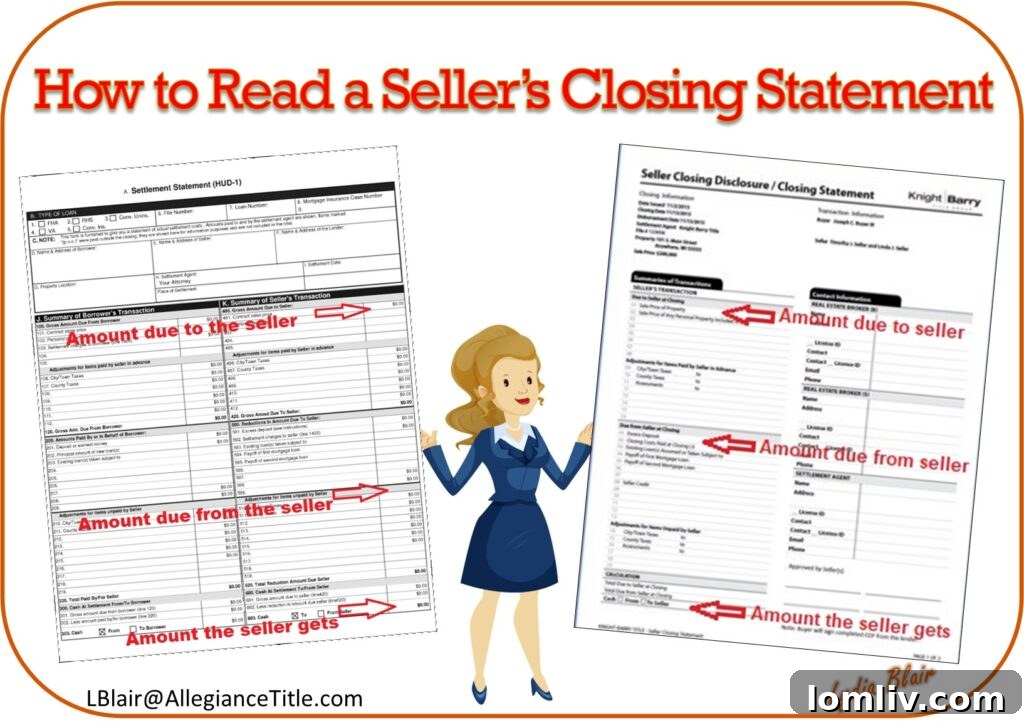
As mentioned, there are primarily two types of seller settlement statements, each tailored to specific transaction types. However, both documents share common foundational elements. At the very top of either the HUD-1 Settlement Statement or the Closing Disclosure, you’ll find several boxes containing essential information that provides an immediate overview of the transaction. This includes the full legal names of both the buyer and the seller, the complete property address, and the crucial closing date, which is also frequently referred to as the settlement date. These details ensure that the document pertains to the correct parties and property, establishing the context for all the financial figures that follow. Below are visual representations of these two kinds of seller settlement statements, although the interactive embeds are not included in the final HTML output.
Funds Due to Seller: Understanding Your Credits
The initial section of your settlement statement, typically found at the top of Page 1, details all the amounts that are “Due to Seller” – essentially, the credits that increase your net proceeds. This is where the primary inflow of funds is registered before any deductions are applied. The most significant amount listed here, of course, is the total sales price of the property, which forms the foundation of your earnings from the sale.
Beyond the core sales price, this section may also include any agreed-upon personal property that the buyer is purchasing alongside the home. This could encompass items like specific appliances, window treatments, or even select pieces of furniture that were negotiated as part of the sale. Another common credit often appearing here relates to “paid in advance” items. A prime example of this involves Homeowners Association (HOA) dues. If the seller has already paid their HOA dues for the entire quarter or year in advance, and the closing occurs mid-period, the buyer will be charged for their portion of these dues for the remainder of that period. This prorated amount is then credited back to the seller, effectively reimbursing them for the dues they paid for the time they will no longer own the home. Such prorations ensure fairness, with each party paying for the period they hold ownership. Similarly, other pre-paid expenses like property taxes or special assessments, if paid by the seller beyond their ownership period, would also appear as a credit.
Funds Due From Seller / Reductions: Your Debits and Deductions
Moving to the bottom half of Page 1, you will encounter the section detailing “Due From Seller” or “Reductions.” This crucial segment itemizes all the amounts that will be subtracted from the total funds initially due to the seller. These are the expenses and obligations that must be settled from the sale proceeds. Ultimately, at the very bottom of this section, after all deductions have been calculated, you’ll find the eagerly anticipated “cash to the seller” figure – the final net amount you will receive from the sale of your home.
Common seller deductions typically found on Page 1 may include:
- Payoff of Current Mortgage Loan: This is often the largest deduction. It includes the remaining principal balance of your mortgage, any accrued interest up to the closing date, and potentially any pre-payment penalties if applicable to your loan terms. The title company will obtain an exact payoff statement from your lender to ensure the loan is fully satisfied.
- Payoff of Additional Liens: Beyond the primary mortgage, any other outstanding liens on the property must be settled. This could include home equity lines of credit (HELOCs), mechanic’s liens (for unpaid work), tax liens, or judgment liens. All these must be cleared for the buyer to receive clear title.
- Prorated Property Taxes: The seller is responsible for property taxes for the portion of the year they owned the home. These taxes are typically prorated at closing, meaning the seller pays their share up to the closing date, and the buyer assumes responsibility thereafter. If taxes are paid in arrears, the seller’s prorated share will be deducted from their proceeds.
- Unpaid HOA Dues or Unpaid Property Taxes: Any delinquent HOA dues, special assessments, or past-due property taxes that were not caught or paid prior to closing will be deducted from the seller’s proceeds to ensure the property transfers with a clear financial standing.
- Lease-Back Rents or Deposits Due to the Buyer: If the seller entered into a post-occupancy agreement (leasing the home back from the buyer for a short period after closing), any agreed-upon rent payments or security deposits due to the buyer would be deducted here.
- Seller Credits for Repairs or Other Concessions: Often, negotiations during the inspection period result in the seller agreeing to provide a credit to the buyer for repairs, closing costs, or other negotiated concessions. These contractual credits will be clearly deducted from the seller’s side.
- Total of Closing Costs: This line item represents the sum of all the itemized closing costs that the seller is responsible for, which are typically detailed comprehensively on Page 2 of the settlement statement.
Page Two: Itemized Seller Closing Costs Explained in Detail
The second page of your settlement statement provides an exhaustive breakdown of the seller’s specific closing costs. These are the various fees and charges associated with completing the real estate transaction, distinct from the deductions listed on Page 1 that primarily cover payoffs and prorations. Understanding each of these costs is vital for comprehensive financial oversight.
Key seller closing costs that may appear on Page 2 include:
- Escrow/Settlement Fee: This is a fee charged by the title company or escrow agent for their services in managing the transaction. Their role is multifaceted, acting as a neutral third party to hold all funds and documents, coordinate with lenders, attorneys, and agents, prepare the necessary legal paperwork, facilitate the signing process, disburse funds, and ensure all conditions for closing are met. This fee covers their administrative work, including tasks like notarizing signatures on various documents.
- Title Insurance (Owner’s Policy): Title insurance protects against defects in the title, such as unpaid liens, errors in public records, or forged documents, which could jeopardize the buyer’s ownership. While the buyer typically pays for their lender’s title insurance policy, it is often a negotiated point in the contract for the seller to pay for the owner’s title insurance policy for the buyer. This protects the buyer from potential future claims against the property’s title arising from issues that existed before their purchase.
- Tax Certificate / Tax Service Fee: This fee is paid to a specialized tax service company to perform a thorough search of public records. The purpose is to confirm that all prior year property taxes have been paid in full and to accurately identify all taxing authorities (such as city, county, school district) that levy taxes on the property. This ensures no unexpected tax burdens are passed on to the buyer.
- Attorney Fees: In some states, attorneys are required to be present at closing, or to prepare specific legal documents. Even in non-attorney states, a seller may incur attorney fees for the preparation of legal documents beyond the standard forms, such as crafting the deed (the document transferring ownership), preparing affidavits, or providing legal counsel related to the transaction.
- Recording Fees: These are fees collected by the county or local government to record legal documents related to the property transfer into the public record. Recording ensures that the ownership change and any new liens (like a mortgage) are officially recognized and publicly accessible. While the buyer typically pays for recording the deed and mortgage (as they are establishing new ownership and a new lien), sellers may pay for recording other documents such as a Release of Lien (if they are clearing an old mortgage), Powers of Attorney used in the transaction, or specific affidavits.
- Real Estate Commissions: This is typically one of the largest closing costs for the seller. Broker and agent commissions are almost universally paid for by the seller. In many markets, including Texas, the total commission is commonly around 5-6 percent of the final sales price. This total commission is then typically split between the brokerage representing the seller (listing agent) and the brokerage representing the buyer (buyer’s agent). This fee compensates the real estate professionals for their expertise, marketing efforts, negotiation skills, and guidance throughout the selling process.
- Homeowner’s Association (HOA) Fees: If the property is part of an HOA, several fees might be involved. The most common is an HOA transfer fee, which is charged by the association to transfer membership from the seller to the buyer. This fee covers the administrative costs associated with updating records, providing new member packets, and establishing new accounts. The responsibility for paying this fee, or how it is split, is typically negotiated within the sales contract. There might also be fees for providing an HOA Resale Certificate or a statement of account, which provides crucial information about the association’s financial health, rules, and any outstanding dues.
- Other Fees and Contingencies: This category serves as a catch-all for various other expenses incurred by the seller or fees that the seller has contractually agreed to cover for the buyer. These can include:
- Home Warranty Policy: Often, as an incentive or part of negotiations, the seller will purchase a home warranty policy for the buyer, providing coverage for major systems and appliances for the first year of ownership.
- Survey Costs: If a new property survey is required by the lender or requested by the buyer and the seller has agreed to pay for it.
- Mobile Notary Service: For added convenience, especially if a party cannot attend the closing in person, a mobile notary may be utilized, and the fee might be covered by the seller.
- Pest Control Inspections/Treatments: If a pest inspection reveals an issue (e.g., termites) and the seller agrees to pay for the treatment as a condition of sale.
- Specific Repair Costs: While typically paid before closing, any final repair costs that are settled at closing might appear here.
- Courier Fees: For rush delivery of documents or funds.
As repeatedly emphasized, the importance of reviewing all these financial figures cannot be overstated. Sellers should dedicate ample time to scrutinize every line item and, crucially, communicate any questions or concerns directly to their escrow officer or title company representative PRIOR to the actual closing day. Attempting to request changes, dispute charges, or clarify ambiguities on the day of closing will almost invariably lead to significant delays, frustration, and potentially even jeopardizing the scheduled closing. Proactive engagement ensures a seamless and transparent transaction, allowing you to walk away from your home sale with complete confidence and clarity.
The opinions expressed herein are solely those of the individual author and are provided for informational purposes only, not as legal advice. For any particular issue or problem related to your specific real estate transaction, it is strongly recommended to contact a qualified attorney or financial advisor.