The Million-Dollar Obstacle: San Francisco’s Seismic Safety Meets Kitchen Design
San Francisco. The very name evokes images of iconic bridges, rolling fog, technological innovation, and a real estate market that continuously defies gravity. It’s a city of immense opportunity and equally immense prices, where a modest apartment can command a seven-figure sum. But beneath its picturesque surface and bustling streets lies another undeniable reality: San Francisco sits squarely in an active seismic zone. The ground moves, and the threat of a major earthquake is a constant, if often unspoken, companion for its residents.
These two defining characteristics – a searingly hot property market and the imperative for earthquake resilience – converge in unexpected ways. Sometimes, they collide to create truly unique, and at times perplexing, real estate anomalies. Our focus today is on one such peculiar listing that perfectly illustrates the compromises and realities of living in a city that demands both luxury and unwavering structural integrity.

The Allure of San Francisco Real Estate
For decades, San Francisco has been a magnet for talent, innovation, and investment. The technology boom, coupled with limited land availability and strict building regulations, has fueled a housing crisis of epic proportions. Properties are not just homes; they are highly coveted assets, often appreciating at rates that outpace national averages. Buyers routinely pay well over asking price, engaging in fierce bidding wars for even the smallest dwelling. The expectation, naturally, is that such a premium price will deliver a premium living experience – a space that is not only functional and aesthetically pleasing but also reflective of the city’s sophisticated urban lifestyle.
Prospective buyers scour listings, picturing themselves enjoying panoramic views, state-of-the-art appliances, and seamless interior designs. They envision kitchens as the heart of the home, sleek and efficient spaces for culinary creativity or entertaining. It’s against this backdrop of high expectations and even higher price tags that we introduce a property that has sparked both fascination and a good deal of head-scratching within the real estate community.
Living on Shaky Ground: The Imperative of Seismic Safety
The history of San Francisco is punctuated by powerful earthquakes. From the devastating 1906 quake to the more recent Loma Prieta event in 1989, seismic activity is an intrinsic part of the city’s identity. This geological reality necessitates stringent building codes and a strong emphasis on structural reinforcement. Seismic retrofitting, the process of strengthening older buildings to make them more resistant to earthquake damage, is a common and often costly undertaking. Newer constructions are designed from the ground up with earthquake resilience as a primary concern.
These engineering requirements, while absolutely crucial for public safety, can sometimes present significant challenges for architects and interior designers. Integrating massive support structures into residential spaces without compromising livability or aesthetics requires ingenious solutions. Sometimes, however, the solutions are less than elegant, forcing residents to confront the raw reality of their city’s geological predicament in their daily lives.
A Closer Look: The Unconventional Kitchen Design
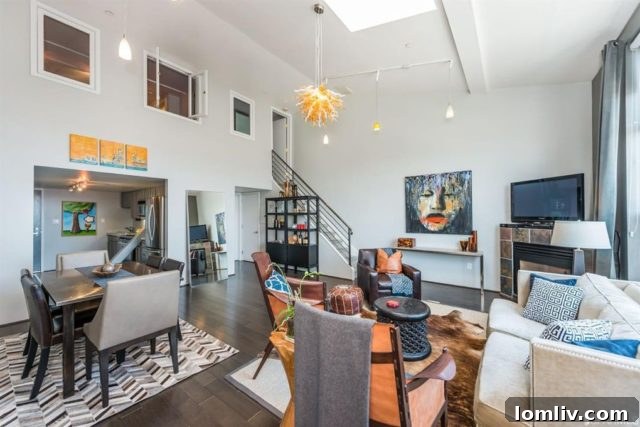
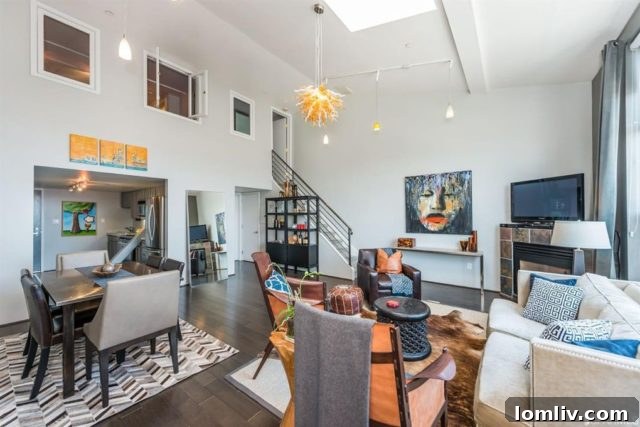
When you first glance at the initial photos of this San Francisco apartment, you might be excused for thinking, “What’s the big deal? This looks like a perfectly lovely, modern living space.” The finishes appear contemporary, the layout seems open, and it embodies the kind of urban sophistication many aspire to. Indeed, from certain angles, this unit presents itself as a desirable piece of Bay Area real estate.
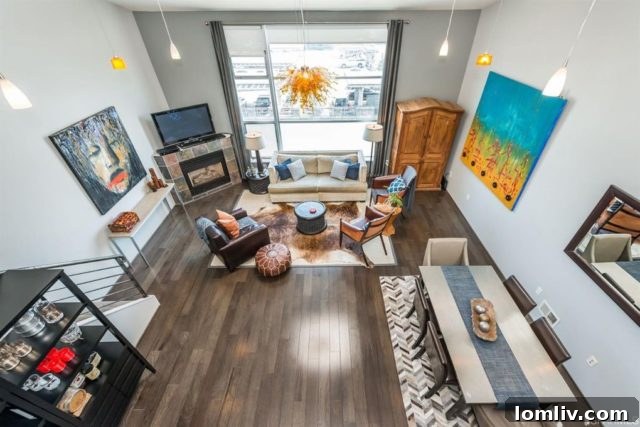
But as you scroll through the listing photos, a peculiar feature slowly begins to reveal itself, one that transforms the perception of this otherwise appealing apartment. It’s subtle at first, perhaps even dismissable, but then it becomes undeniably prominent.

And then…

It becomes starkly apparent.
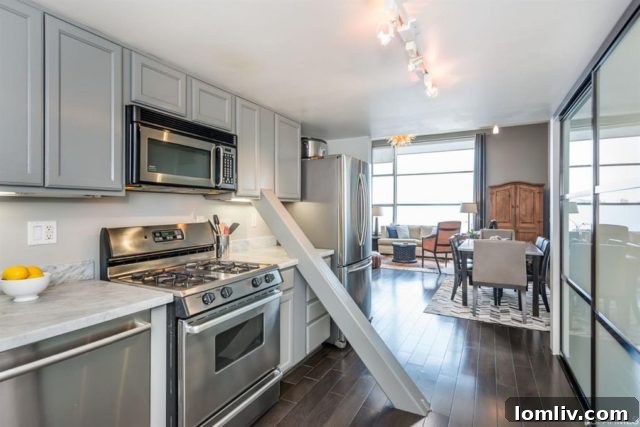
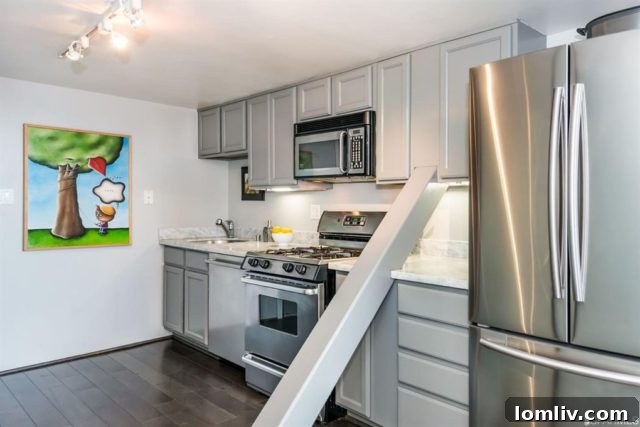
Ah, yes. There it is. A substantial structural beam, an essential component for earthquake safety, slices directly through the kitchen. Not discreetly placed in a corner or cleverly integrated into a wall, but boldly transecting a main countertop, sitting squarely between the range and the refrigerator. It’s an architectural element that refuses to be ignored, transforming a potentially sleek kitchen into a conversation piece, for better or worse.
Functionality Meets Flaw: The Daily Impact
This isn’t merely an aesthetic peculiarity; it’s a significant functional impediment. Imagine preparing a meal in this kitchen. The beam dictates workflow, breaks up counter space, and potentially creates a tripping hazard. Seamless movement between the stove, fridge, and sink – the classic kitchen triangle – is disrupted by a solid, unyielding obstruction. Transferring hot pots, carrying groceries, or simply navigating the space during a busy morning routine would require constant vigilance. One can easily picture the exasperation of bumping into it, the bruised shins, or worse, the dropped dishes, a direct consequence of this intrusive design.
For a property commanding a million-dollar-plus price tag, such a fundamental design flaw is jarring. Buyers in this market expect perfection, or at least a high degree of functionality and aesthetic consideration. To find such a pronounced compromise in the very heart of the home – the kitchen – highlights the extreme pressures and unique challenges that define San Francisco’s real estate landscape.

Personal Accounts and Social Media Buzz
The internet, ever keen to point out design curiosities, quickly latched onto this listing. Social media became a forum for collective bewilderment and shared anecdotes. It turns out, this particular unit is not alone in its predicament. While not standard across all apartments in the building, a few units do feature this “bruising” element, as one observer aptly put it. The humor, mixed with genuine incredulity, was palpable.
One former owner shared a particularly vivid, and painful, experience, confirming the beam’s real-world impact:
I broke my little toe on the beam. It has a little flange sticking out that is perfect to bend your toe back on. If you’re walking fast enough, you can get it to touch your foot.
— Will ¯_(ツ)_/¯ Smith (@willsmith) July 26, 2018
This personal testimony underscores that the beam isn’t just an eyesore; it’s a legitimate safety hazard in a space where quick movements are common. The thought of paying a substantial sum for a home that actively causes physical injury, however minor, is a stark reminder of the compromises people are willing to make in this competitive market.
Creative Solutions (or Lack Thereof)
Faced with an immovable object, some residents have attempted to mitigate its impact. One owner, perhaps driven by a combination of necessity and a desire to integrate the structural element, reportedly painted the beam black and added shelving, attempting to transform it into a kind of pseudo-island or a more intentional design feature. While a commendable effort, it highlights the architectural gymnastics required to make the space functional.
The Hell Beam runs through other units in the building too, but at least they tried to build around it here. Painting it black is a bold move. pic.twitter.com/DaJ87qffEC
— Andy Baio (@waxpancake) July 26, 2018
These efforts, while creative, ultimately cannot disguise the fundamental issue: a critical structural element was placed in a highly inconvenient location, requiring residents to adapt their lives to their kitchen, rather than the other way around. It’s a powerful symbol of how seismic safety, while paramount, can sometimes clash with elegant, human-centered design principles.
The Price of Peace of Mind: Value vs. Compromise
The most astonishing detail of this entire saga is the price tag. Despite its glaring flaw, someone did indeed pay over a million American dollars for the right to inhabit this uniquely structured apartment. This transaction speaks volumes about the San Francisco real estate market. It’s a market where the premium for location, status, and simply having a roof over one’s head in a coveted zip code can outweigh significant practical inconveniences.
For many, the peace of mind offered by a seismically sound structure, particularly in a city prone to earthquakes, is a non-negotiable factor. The beam, for all its awkwardness, is a visible testament to that safety. It represents the engineering necessary to withstand geological forces. Yet, the question remains: at what cost to daily comfort and livability? How much functional compromise is acceptable when investing such a significant sum?
Broader Implications for Urban Design and Safety
This “million-dollar obstacle” in a San Francisco kitchen serves as a microcosm for broader challenges in urban development, especially in densely populated, seismically active regions. Architects, engineers, and developers constantly grapple with balancing structural integrity, aesthetic appeal, and economic viability. Retrofitting older buildings, often with historical significance, presents its own set of complexities, frequently resulting in visible or intrusive structural elements.
The incident also sparks conversation about consumer expectations. In a market where demand far outstrips supply, are buyers forced to lower their standards, accepting design compromises they wouldn’t tolerate elsewhere? Or is there a growing appreciation for the raw honesty of necessary structural elements, even if they impinge on traditional notions of luxury?
Conclusion: A Quirky Testament to San Francisco Living
The San Francisco apartment with the infamous kitchen beam is more than just a peculiar real estate listing; it’s a quirky, yet profound, testament to the unique blend of ambition, resilience, and occasional absurdity that defines life in the Bay Area. It’s a city where innovation thrives, but also where the ground literally and figuratively shifts beneath your feet.
While the units in this building are currently sold, it’s easy to imagine that the “toe-killer” beam might eventually lead to some homeowners seeking a less impactful kitchen experience. One can only hope that future designs in seismic zones find more elegant ways to integrate essential safety features without sacrificing fundamental comfort. For now, this particular property stands as a fascinating reminder that in San Francisco, sometimes, even a million dollars can’t buy you a perfectly unimpeded path to your refrigerator.