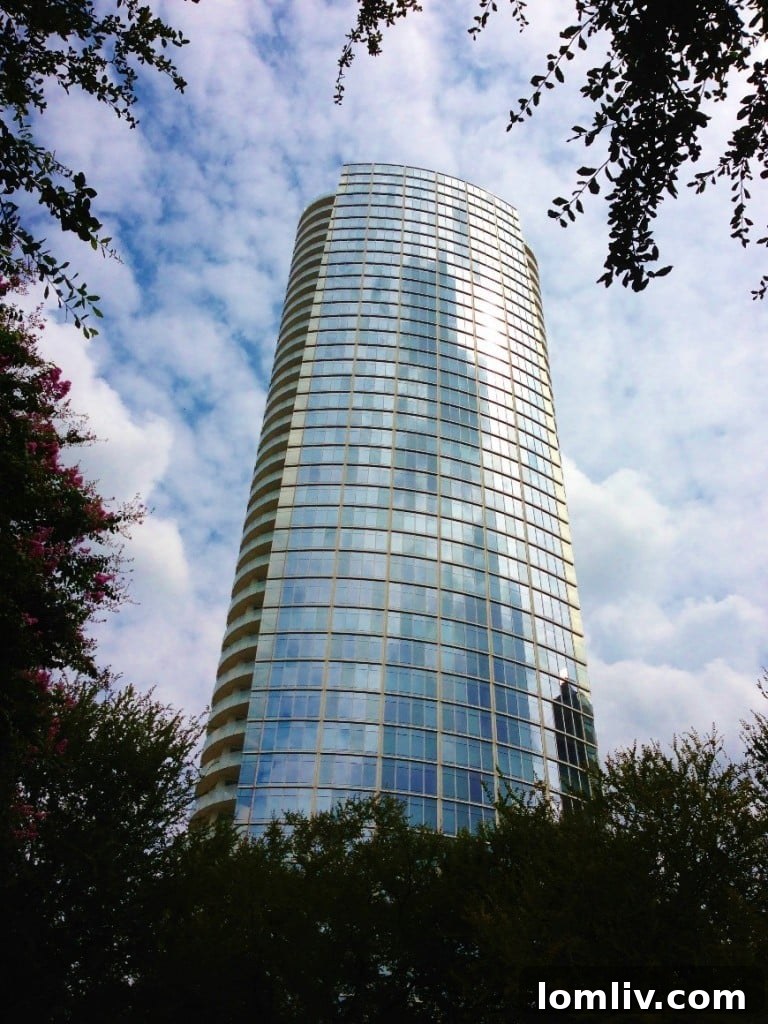
Dallas Real Estate: Unpacking the Museum Tower vs. Nasher Sculpture Center Saga
Understanding the pulse of the Dallas real estate market means listening to the voices shaping its landscape. This platform is dedicated to exploring the rich tapestry of Dallas’s urban development through the eyes of its most knowledgeable residents: the real estate community. Here, insights and narratives from local experts provide an invaluable perspective for anyone interested in Dallas properties and its evolving culture. They are the keepers of the local real estate story, witnessing the long-term impact of every transaction and development decision.
One such expert, Dallas Real Estate Broker Scott Carlson, offered a compelling narrative on the intricate and often contentious relationship between the iconic Museum Tower and the esteemed Nasher Sculpture Center. His initial essay deeply resonated, highlighting how real estate professionals, through their daily engagements in showing, selling, and closing properties, gain a profound understanding of community dynamics and the lasting effects of urban planning. What follows is an expanded rendition of Scott Carlson’s original insights, meticulously edited for clarity and flow, offering a fascinating journey into Dallas’s real estate “way-back machine.” For those of us who moved to Dallas later, like myself in 1980, this historical context provides a critical lens through which to view current urban challenges.
Museum Tower: A Higher Perspective – An Insider’s View on Dallas Architecture and Conflict
The philosophical underpinnings of art and sculpture often spark vigorous debate. What truly defines a piece of art? What makes a sculpture impactful? These questions become particularly poignant when considering the long-standing controversy surrounding the Museum Tower and the Nasher Sculpture Center in Dallas, a dispute that has cast a shadow, quite literally, over two significant architectural achievements. It’s time to delve deeper, shedding some backlight – and perhaps a little sunlight – on this complex urban saga.
An Architectural Love Affair: Museum Tower’s Impact on the Dallas Skyline
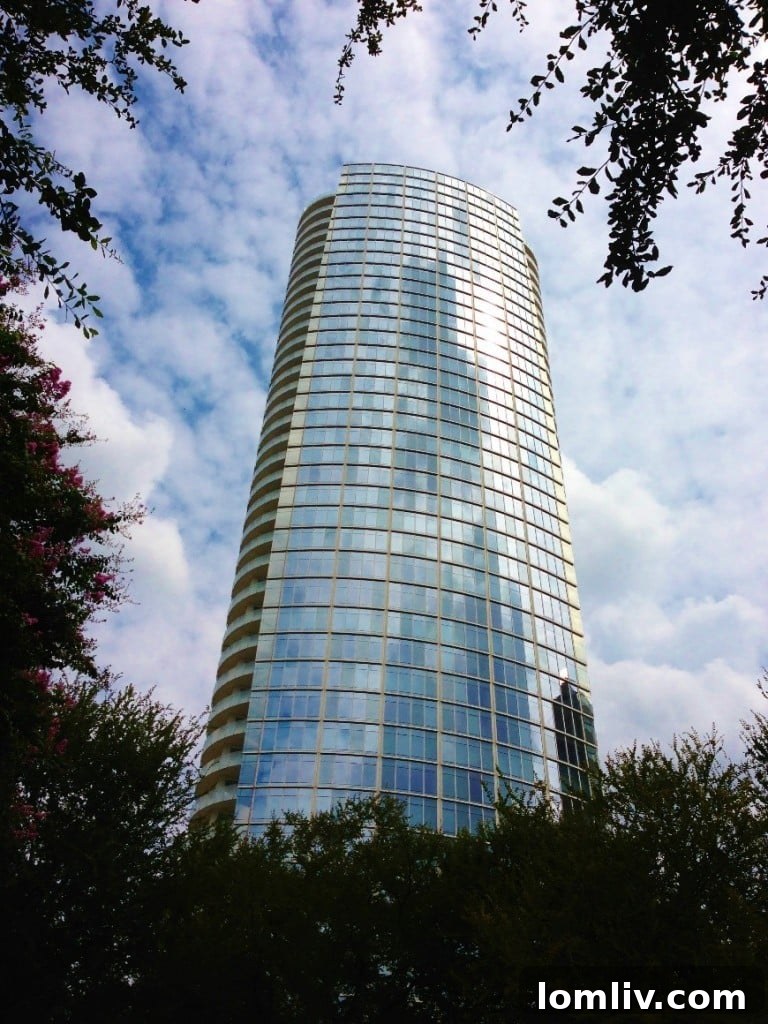
From its very inception, the Museum Tower has captivated many, including myself. Its sleek, modern design, soaring gracefully into the Dallas skyline, is, in my opinion, one of the most beautiful and significant additions to our city’s architectural panorama in the 21st century. I vividly recall the buzz of excitement in June 2010 when construction first broke ground. Over the subsequent two years, I watched with fascination from my twenty-story balcony on Turtle Creek as the tower progressively unfolded, a testament to modern engineering and design ambition.
As a residential real estate broker and a passionate admirer of architecture, I’ve long held Renzo Piano’s Nasher Sculpture Center in awe. Its design is not merely functional; it is a profound artistic statement, creating a space where light, shadow, and nature intertwine with world-class sculpture. In fact, I’ve often fantasized about having a home built with the same sophisticated blend of modernism and natural integration that defines the Nasher. It has become a cherished destination; whenever friends or family visit Dallas, the Nasher is invariably our first stop, a place to collectively experience beauty, creativity, and the sheer joy of art.
Scott Johnson’s Museum Tower, with its striking silhouette, has undeniably elevated Dallas onto the international 21st-century architectural stage. One of my most cherished views of the tower is from Central Expressway and Henderson, where it aligns majestically with I.M. Pei’s iconic Fountain Place and Kevin Roche’s imposing Bank of America Plaza. This triumvirate of architectural masterpieces forms a breathtaking, spectacular, and utterly unique vista, showcasing the dynamism and ambition of our city’s design evolution.
The Art of Light and Shadow: James Turrell’s Tending (BLUE)
Among the many creative works housed at The Nasher, James Turrell’s “Tending, (BLUE)” sky space holds a special place. This immersive installation invites guests to enter a chamber, sit, and gaze upwards through an aperture in the ceiling, experiencing the sky as a canvas of ever-changing color and light. I often lead my guests inside, where we engage in quiet contemplation, experiencing profound moments that evoke the spiritual grandeur of places like the King’s Chamber in Egypt’s Great Pyramid in Giza. It is a space designed for introspection and a unique perception of the heavens.
It is precisely this personal, introspective experience that makes the declared “destruction” of Tending (BLUE) so deeply saddening and, frankly, incomprehensible to me. Can art truly be “destroyed” when its essence lies in the individual’s emotional and spiritual connection to it? Each viewer’s experience within Turrell’s sky space is inherently unique, perfect in its own time and space. Is BLUE genuinely “destroyed” simply because the reflective glare from Museum Tower alters its intended visual purity? I used to cherish sitting within that space, studying the clouds drifting by, marveling at birds soaring overhead, and watching jet planes prepare for landing, all framed by that perfect aperture. The true magic of BLUE was the palpable energy it contained, a serene communion with the sky.
As the 19th-century French romantic artist Eugene Delacroix wisely stated, “Les artistes qui cherchent la perfection dans tout ce sont ceux qui ne peuvent pas atteindre à rien.” This translates to, “Artists who seek perfection in everything are those who cannot attain it in anything.” This sentiment feels particularly relevant here. Art, like life, is rarely perfect, but its beauty often lies in its ability to adapt and be reinterpreted. I hold onto the hope and patiently await the day The Nasher reopens BLUE, allowing us all to look up, marvel, experience, and behold the Museum Tower, not as an antagonist, but as a new, perhaps unexpected, element within this living sculpture.
Unearthing Dallas’s Real Estate History: The Roots of Conflict
How did we, a community of civilized, educated art lovers, arrive at a point where we are told we “cannot look up” and appreciate two incredible urban additions simultaneously? Perhaps the roots of this current drama extend far deeper than the immediate tiff between the Nasher Sculpture Center and Museum Tower. Driven by this question, I embarked on a journey into Dallas’s past, a field trip to the news archives at the Dallas Public Library, conveniently located directly across from Dallas City Hall.
Dallas City Hall: An Architectural Paradox
I. M. Pei’s Dallas City Hall is undeniably an architectural icon, a striking modernist structure that houses our city government. As I walked from my car to the library, I studied this unique, almost inverted piece of architecture. In my humble opinion, its design, with its unusual angles and imposing concrete, creates an energetic, almost unsettling, atmosphere. I recall a previous visit to the City Hall chambers years ago to voice concerns on behalf of Lakewood/East Dallas residents regarding a controversial 25-story high-rise proposed for White Rock Lake. The building itself felt disorienting; entering an upside-down structure, ascending an escalator, only to then descend stairs within the chambers, was a dizzying experience. I genuinely thought I might lose my breakfast. This is the very nexus where Dallas conducts all its critical business. It makes one wonder if, in such an environment, it’s any surprise that the City of Dallas might have “dropped the ball” on anticipating the full implications of the Museum Tower project.
A History of Titans: Caruth Farm, NorthPark, Nasher, and Crow
Our journey through archived headlines revealed a fascinating truth: the Museum Tower-Nasher story has antecedents stretching back decades, beginning miles north of the Arts District, near NorthPark Center. The battles then were just as fierce, echoing themes of growth, intrusion, and development struggles:
- “Growth intrudes on Caruth Farm”
- “Development Blocked by Council”
- “Council Members hope Caruth Developers Got Message”
- “Nasher and Crow over Crow Land”
- “Crow sets Sights on Caruth Mall”
- “Crow, Nasher, Grapple for Turf and Battle of the Titans”
- “City Promises Developer Nothing”
- “University Park Stalls North Central Plan”
Like many conflicts, this historic one centered around a colossal piece of land. Years ago, Raymond Nasher spearheaded an ambitious effort to rezone 39 acres of undeveloped land at the strategic intersection of Northwest Highway and North Central Expressway. It’s challenging to imagine now, but this prime location was once a vast, single vacant lot. In fact, it was a significant portion of the Caruth family’s expansive farm, whose 11,000 acres historically encompassed much of North Dallas. An old, telling joke about “North Dallas” – referring to anything north of downtown, long before the far northern suburbs existed – perfectly captured this reality:
Perhaps a tired old Dallas real estate joke describes it with more clarity: Q: “What’s the synonym for North Dallas?” A: “Will Ca-ruth’s backyard.”
Nasher, who held a 99-year lease on his NorthPark Mall from the Caruths beginning in 1965, sought to rezone the adjacent 39 acres from residential to commercial. He recognized its immense potential for commercial development. However, the Dallas City Council consistently rejected his rezoning requests over many years. The opposition came first from the Caruth family itself, and subsequently from over 300 homeowners who had settled near the property, staunchly defending their peaceful, leafy neighborhood against encroaching commercialization.
Crucially, before Nasher’s direct involvement, this same Caruth land had also captivated Trammell Crow, another titan of Dallas real estate. Crow had secured a series of options on the property, all contingent upon successfully rezoning the land for development. Yet, Crow, too, faced the same insurmountable hurdle: fierce opposition from homeowners who had fought commercial development for years, preventing him from ever securing the necessary zoning changes.
Somehow, by 1980, Raymond Nasher managed to purchase or gain control of this contested parcel. This immediately triggered a lawsuit from Crow, to which Nasher responded with a countersuit. However, this high-stakes legal battle was ultimately settled on the eve of the trial in 1981, with Nasher retaining control of the property. Despite this acquisition, Nasher’s efforts to rezone the land continued to face resistance, culminating in a significant 6:8 defeat at the hands of the city planning commission in 1991.
The Arts District Chess Match: Crow vs. Nasher, Round Two
Fast forward to downtown Dallas. By 1994, the “chosen land” for the future Nasher Sculpture Center Garden was a 2.1-acre parking lot within city blocks 527 and 528, precisely at 2001 Flora Street. This pivotal site sat just north of the formidable Trammell Crow Center and directly across from the Dallas Museum of Art. The irony, and the challenge, was stark: Trammell Crow, Nasher’s long-time rival, owned the very land Nasher coveted for his world-class sculpture garden.
What ensued was another brutal “battle of the titans.” The city, eager to secure a major cultural institution for its burgeoning Arts District, resorted to threatening condemnation on Crow’s downtown property. This decisive move ultimately cleared the path, and Nasher got his way, paving the future for one of Dallas’s most beloved cultural landmarks.
Then, in 1996, a significant “win-win” barter deal was brokered. The Downtown Dallas Arts District would gain a globally renowned sculpture garden, a tremendous cultural asset. In exchange, Ray Nasher finally received the highly sought-after zoning change for that parcel of dirt on Northwest Highway – the very land he had so desperately wanted to develop, and the same land Trammell Crow had once tried, and failed, to rezone. On the surface, it appeared to be a victory for everyone, a true stroke of urban planning genius, right?
Not exactly. The often-overlooked “losers” in this elaborate chess match were the more than 300 Park Cities homeowners who had fiercely fought against that zoning change for decades. Their persistent efforts to preserve their peaceful neighborhood ultimately succumbed to the city’s larger strategic vision. Their “sacrifice,” however, as real estate soldiers on the front lines of development, did indeed contribute to Dallas gaining a world-class museum, albeit at a significant personal cost to their community’s original character.
Karma and Consequences: The Boomerang Effect in Dallas Development
I’ve come to understand that a fundamental law of the universe is action and reaction. Some refer to it as the boomerang effect, others use the spiritual term Karma, and of course, Jesus of Nazareth taught that “you reap what you sow.” In the complex world of real estate, what one group perceives as beneficial for a neighborhood can simultaneously be detrimental to another. Who truly wins when neighborhood demographics and zoning regulations undergo significant shifts?
Could it be that the ongoing Museum Tower dilemma – the intense reflection issues affecting the Nasher – is a direct result of an energetic echo, a karmic consequence, stemming from the contested rezoning that took place five miles north of downtown Dallas? I find it profoundly ironic that one man’s unwavering decision and desire to push against the will of a neighborhood, with the backing of city government, could boomerang back to potentially “bite him” with a similar, if not identical, karmic force. Was the City of Dallas truly inattentive, or perhaps intentionally oblivious, to the potential reflection issues that would inevitably impact the nascent Nasher Sculpture Center when approving Museum Tower’s plans?
It remains baffling to me how American culture, generally speaking, struggles to accept its own karma. We are so quick to assign blame, and with the pervasive “over-lawyering” that characterizes our society, how do we ever truly balance these actions, these karmic debts? Karma, a Sanskrit word meaning “action,” suggests that every decision carries consequences. Are all actions divinely ordained, or simply reflections of human intent? What are the various actions and reactions to a particular energy, a cause and effect, and is this truly the immutable law of the universe?
Shared Responsibility and the Path Forward
In this protracted dispute, both Museum Tower and The Nasher Sculpture Center bear a degree of responsibility, as does, significantly, the City of Dallas. In my estimation, the Dallas city government and its planning commission are the primary culprits in this unfolding drama of cause and effect. Their decisions, or lack thereof, directly shaped the urban environment that led to the current reflections controversy.
There are unsettling, albeit unsubstantiated, rumblings that The Nasher might consider pulling out of Dallas entirely, relocating to another city or even another country. The implication is often that they would then sell their prime Arts District land to another developer for a high-rise, effectively casting Museum Tower as the villain in a dramatic exit. I recently overheard a rather high-profile woman adamantly declare she would never “step foot in Museum Tower.” Seriously? A client of mine even became noticeably angered when I merely suggested we explore available units within the building. I’m completely flabbergasted by this level of hostility. To refuse entry into what is undeniably an amazing 21st-century sculpture of architecture? Why such intense anger? ENOUGH!
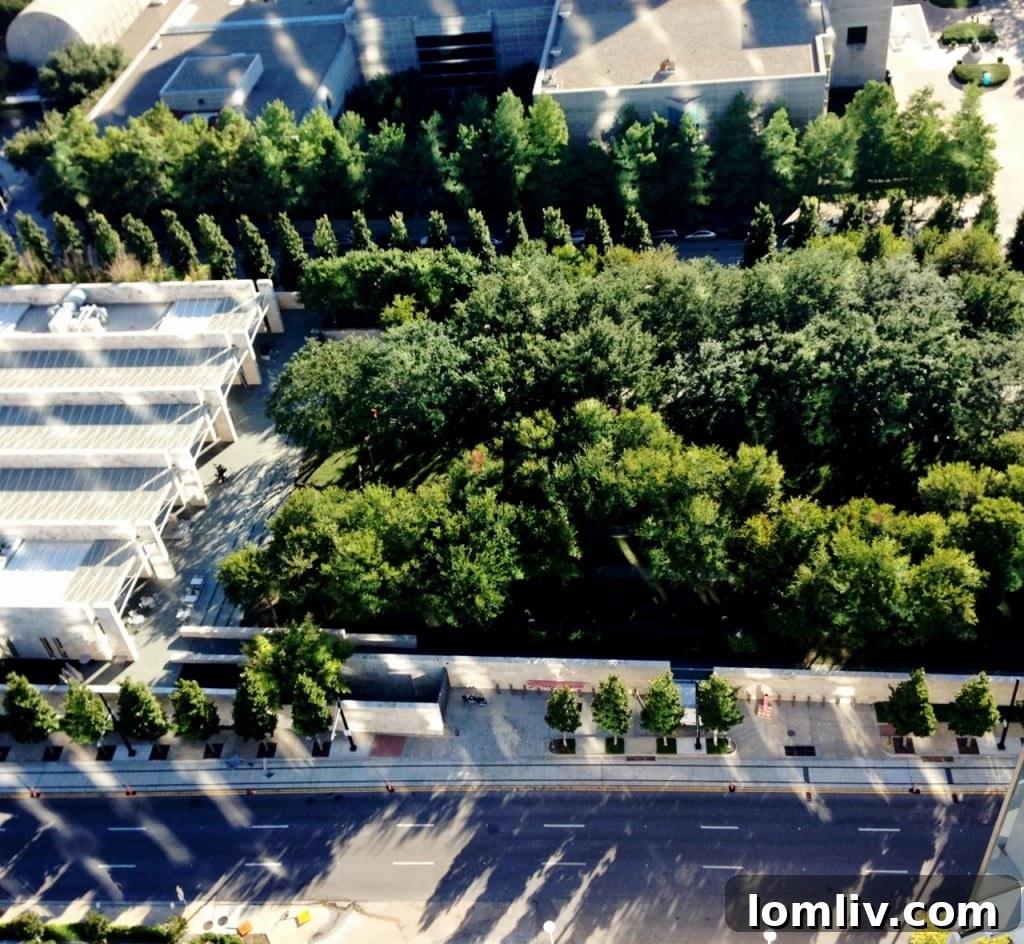
It’s interesting to note the city government’s current intense scrutiny of the Dallas Police and Fire Pension fund’s business. While this oversight is probably a good idea, given that Dallas taxpayers would ultimately bear the financial burden if investments falter, one must question the selective application of such scrutiny. We shouldn’t be “checking math” solely on behalf of the Nasher, especially when considering historical financial interconnections. Didn’t the Dallas Police and Fire Pension fund, after all, play a crucial role in financing the NorthPark Mall addition, a project that directly benefited Raymond Nasher’s enterprise?
Ultimately, both the Nasher Sculpture Garden and Museum Tower represent tremendous gifts to our city, enhancing its cultural vibrancy and architectural grandeur. Both stand proudly within Dallas’s urban fabric, and truthfully, when one looks back far enough into their respective histories, both parties have a little “dirt on their hands” – a testament to the messy, often contentious, nature of urban development. But this is precisely how cities are built, how they evolve, and how we, as a community, move forward and grow. Inevitably, some homeowners, some groups, will lose a battle in their efforts to preserve the status quo. Because the only true certainty in our lives, and in our cities, is change; it always happens.
The Nasher and Museum Tower, despite their historical friction, are both exceptionally beautiful and, in a broader sense, complement one another remarkably within the Dallas Arts District. The true winners in this scenario are all of us: those with Nasher Sculpture Center memberships who continue to enjoy its creativity, art, and joy – and hopefully, once again, the serene experience of BLUE. The winners are also those who have chosen to purchase units and make their homes within the Museum Tower, embracing its modern elegance and commanding views of the city.
Let us collectively revel in the greatness of each of these architectural and cultural achievements. Let us continue to be proud of both and actively support their continued presence and contributions to Dallas. And perhaps most importantly, let us embrace the sweet rays of forgiveness, for Dallas, at its very core, is and always has been… THE CITY OF FORGIVENESS!
– Scott Carlson