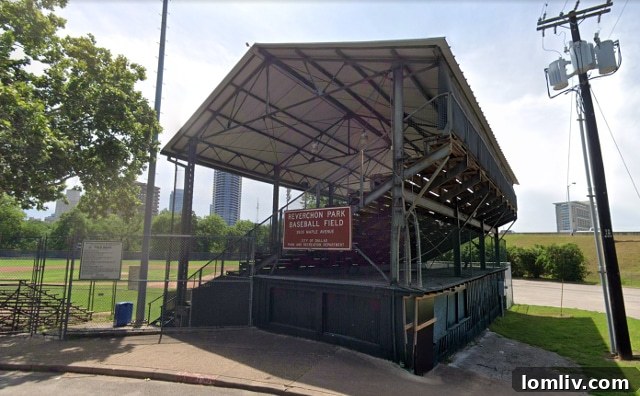
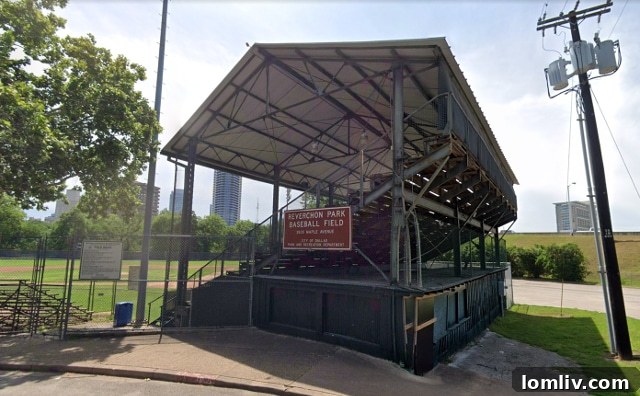
A storm of controversy is brewing around Dallas’s beloved Reverchon Park, as a new lawsuit seeks to halt the city’s approval of a massive expansion project. The legal challenge emerged on the very same day the city controversially referred an open records request concerning the park to the State’s Attorney, raising significant questions about transparency and accountability. For many observers, this timing is more than just a coincidence; it underscores a deepening divide between residents and city officials regarding the future of valuable public green space.
At the heart of this legal battle are Charlotte and Robert Barner, residents of the Park Towers condominiums, which directly border Reverchon Park across Fairmount Street. Their lawsuit, a critical step in community advocacy, alleges that the City of Dallas committed a clear violation of Chapter 26 of the Texas Parks and Wildlife Code. This alleged transgression occurred when the city council, on January 8, approved a lease agreement for six acres of Reverchon Park. The lease, extending for an astonishing period of up to 40 years, grants a private, for-profit entity substantial control over the parkland while seemingly leaving the city with minimal oversight or recourse. This arrangement has sparked outrage among community members who believe public parkland should serve the greater good, not private enterprise. (You can read the full lawsuit here to delve into the legal specifics).
The central pillar of the Barners’ legal challenge, and a point of contention previously highlighted, is the city’s apparent failure to provide proper notification to and solicit input from the surrounding neighborhood. This issue traces back to a 2017 meeting, which initially presented a modest “renovation” plan for the ballpark. However, by 2019, this initial concept had dramatically escalated into plans for a sprawling 3,500-seat stadium and an extensive events center. What alarms residents most is that this drastic transformation unfolded without a single follow-up meeting or direct neighborhood notification, effectively bypassing the very community it would most impact. The lack of transparency and public engagement in such a significant development process has eroded trust and fueled the current legal confrontation.
Beyond the fundamental absence of community dialogue, the lawsuit uncovers several other critical omissions and alleged violations that cast a shadow over the city’s approval process for the Reverchon Park development. This isn’t merely a dispute over missed meeting opportunities; it’s a profound challenge to the integrity of public land management and the rights of citizens.
Legal Mandates Ignored: No Meetings, No Valid Decision for Public Land
Chapter 26 of the Texas Parks and Wildlife Code serves as a crucial safeguard for public parklands, mandating specific procedures that cities must follow before making decisions that significantly alter these valuable spaces. A cornerstone of this legislation dictates that the city council is expressly prohibited from rendering a final decision on such projects until comprehensive notifications and public meetings have been diligently conducted. This requirement ensures that community voices are heard and considered before irreversible changes are made to shared public assets.
According to the lawsuit filed by the Barners, the city’s process for the Reverchon Park expansion fell woefully short of these explicit legal requirements. Furthermore, Chapter 26 imposes two additional, non-negotiable preconditions that must be rigorously determined before any city council vote can legitimize such a project. These determinations are:
- That there is **‘no feasible and prudent alternative’** to the proposed program or project. This clause places a high burden on the city to demonstrate that no other viable option exists that would achieve the project’s goals without encroaching upon or harming parkland. It compels authorities to explore every possible avenue before resorting to park conversion.
- That the program or project **‘includes all reasonable planning to minimize harm to the land, as a park, recreation area, scientific area, wildlife refuge, or historic site, resulting from the use’** of the park land for the proposed project or program. This second mandate ensures that even if a project is deemed necessary, every effort must be made to mitigate its negative impacts on the park’s ecological, recreational, and historical value. It demands foresight and proactive measures to protect the integrity of the public space.
In addition to these stringent requirements, Chapter 26 emphatically states that the city council “shall consider clearly enunciated local preferences.” This provision underscores the importance of local community input, requiring city officials to not only listen but actively weigh the preferences and concerns expressed by those most directly affected by the development. The Barners’ lawsuit strongly implies that these fundamental prerequisites were either ignored or insufficiently addressed during the approval process for the Reverchon Park stadium, raising serious questions about the legality and ethical conduct of the city’s actions.
Adding another layer to this contentious issue, Council Member David Blewett, both during the January 8 council session and in subsequent public discussions, maintained that the council’s approval was merely a preliminary step, suggesting further discussions and opportunities for input. However, the lawsuit directly refutes this assertion, contending that the approval constitutes a definitive and irreversible “done deal.” The legal document highlights a specific resolution:
“The Council voted to approve the Stadium Lease on January 8, 2020, and the resolution approving it directs the Acting City Attorney and the President of the Park Board to sign it.”
This statement from the lawsuit paints a picture of finality, directly contradicting the notion of a ‘first step’ and implying that the city’s representatives were mandated to execute the lease agreement post-vote. This discrepancy between official assurances and the legal reality outlined in the lawsuit further exacerbates the community’s frustration and distrust.
The proposed expansion of Reverchon Park into a 3,500-seat stadium and events center, spearheaded by Reverchon Park Sports and Entertainment LLC—an investor group led by Dallas Mavericks general manager Donnie Nelson—represents a dramatic shift for the area. The Barners articulate serious concerns about how this amplified level of activity would fundamentally alter their daily lives and the overall character of their neighborhood. They contend that the vastly increased scale of operations will introduce a litany of disturbances, ranging from intensified light pollution to overwhelming noise, ultimately diminishing their quality of life and the value of their property.
Specifically, the lawsuit points to the “amped-up lighting common in larger ballfields” as a significant intrusion. This isn’t just about general illumination; it encompasses dazzling light shows, potentially frequent fireworks displays, and the bright, persistent lighting required for professional-level sporting events and outdoor concert performances. Such pervasive light pollution, especially in what was once a relatively serene residential area, could disrupt sleep patterns, obscure natural night skies, and drastically change the ambiance of their homes. Coupled with this, the proposal outlines an ambitious schedule of “130 programmed stadium events each year,” with an expected average attendance of “over 2,000 ticketed customers per event.” This figure alone is roughly three times the maximum seating capacity of the existing ballpark. The Barners anticipate vastly larger crowds, leading to “far louder and more frequent” cheers and boos, along with the cacophony of concerts and ubiquitous tailgating activities. The projected decibel levels from these events are described as “outlandish,” indicating a complete overhaul of the neighborhood’s acoustic environment and a severe impact on residential peace and quiet.
An Ecological Blind Spot: The Fate of Reverchon Park’s Wildlife and Environment
Beyond the immediate human impact, the lawsuit introduces a crucial and often overlooked dimension: the profound effect of the proposed Reverchon Park development on the park’s natural environment and the local wildlife. The legal challenge sharply questions the environmental due diligence—or lack thereof—undertaken by the city and RPSE (Reverchon Park Sports and Entertainment LLC). “What are the effects of displacing several acres of natural grass with heat-retaining artificial turf? On wildlife? On drainage? On stormwater runoff? No one knows because the City and RPSE did not ask,” the lawsuit states, powerfully underscoring a critical oversight.
The conversion of natural grass to artificial turf is far from a benign change. Natural ecosystems within parks, even urban ones, support a surprising array of biodiversity. The existing natural grass provides habitat for insects, which in turn are a food source for birds and small mammals. It also contributes to soil health and acts as a natural filtration system. Replacing this with artificial turf would not only destroy these habitats but introduce a host of new environmental problems. Artificial turf can significantly increase ambient temperatures, creating a “heat island effect” that stresses remaining natural areas and makes the park less hospitable for both wildlife and human visitors during hot Dallas summers. Furthermore, it alters natural drainage patterns, potentially leading to increased stormwater runoff, overwhelming existing infrastructure, and contributing to localized flooding, especially if natural floodplains are encroached upon or paved over.
The broader environmental consequences extend to the destruction of existing flora and fauna. It is not difficult to envision that as trees are removed for construction, and as natural floodplains and green spaces are altered or replaced, the various wildlife species that currently inhabit Reverchon Park will be displaced. This includes not just visible creatures but also crucial soil microbes and pollinators. The cumulative impact on the park’s delicate ecosystem is immense, yet seemingly unstudied. Moreover, the sheer volume of large-scale events planned – 130 per year – will inevitably generate “heaps of trash.” This waste, if not meticulously managed, poses a direct threat to wildlife, which can become ensnared in discarded materials or ingest harmful plastics and food waste, further exacerbating the ecological damage.
Unstudied Impacts: Traffic, Safety, and a Troubling Double Standard
The proposed Reverchon Park expansion brings with it a host of unaddressed infrastructure challenges, particularly concerning traffic and public safety. This issue has been a recurring concern, and the lawsuit powerfully highlights the city’s astonishingly lax approach to traffic planning for a project of this magnitude. It contrasts sharply with the rigorous requirements placed on other developments in Dallas, exposing what appears to be a troubling two-tiered system.
For instance, the lawsuit points out that the Prescott project, located just a few blocks away next to the prestigious Mansion hotel, was explicitly mandated to furnish a comprehensive traffic study *before* its approval by the city council. This is standard procedure for developments that are anticipated to generate significant vehicular movement. Yet, for a sprawling 3,500-seat stadium – an entertainment venue projected to host 130 events annually, each drawing over 2,000 attendees and their associated vehicles – the city has adopted a disconcerting “catch ya later” requirement for traffic impact analysis. This disparity is not only baffling but also deeply irresponsible, setting a dangerous precedent for urban development and potentially unleashing unprecedented congestion onto already busy Dallas streets.
One particular section of the lawsuit encapsulates the profound negligence and lack of due diligence exhibited by the city and its prospective private partners. It reveals a stunning absence of critical studies that are fundamental to responsible urban planning and public safety for any project of this scale:
“If the City or its prospective private partners did any studies of the proposed plans and programs for Reverchon Park, they did not share them with the public: **no** traffic studies; **no** parking plans; no drainage studies; **no** noise studies; **no** lighting studies or plan; **no** environmental studies; **no** studies, period, not even a study of the emergency service access needs—ambulance, fire, and police—for the new **3,500**-seat stadium with only one, narrow paved entrance.”
This exhaustive list of missing assessments is nothing short of alarming. A project promising 130 large-scale events per year, attracting thousands, necessitates meticulous planning for traffic flow, adequate parking facilities, comprehensive drainage solutions to prevent flooding, detailed noise impact analyses for surrounding residential areas, and carefully designed lighting plans to minimize light pollution. Most critically, the complete absence of emergency service access studies for a stadium with a single, narrow entrance presents a dire public safety hazard. In the event of an emergency—a fire, a medical crisis, or a security incident—the ability of ambulances, fire trucks, and police vehicles to quickly access and egress the venue is paramount. Without proper planning, this could lead to catastrophic delays and endanger countless lives.
The lawsuit further accentuates this egregious oversight by drawing a direct comparison to established city protocols:
“The City apparently did not perform, or require its prospective private development partners to present, the kinds of studies it routinely requires private developers to submit before the City approves projects on private property.”
This statement is a scathing indictment of the city’s conduct, implying a systemic failure to apply its own standards when public parkland is involved. It suggests a process that has prioritized expediency and developer interests over thorough planning, environmental protection, community well-being, and public safety. The implications extend far beyond Reverchon Park, raising concerns about the integrity of urban development processes across Dallas and the equitable treatment of all development proposals, whether on private or public land.
As the legal battle intensifies and community concern mounts, a press conference has been scheduled at the ballfield for Friday at 11 a.m. This event will undoubtedly serve as a crucial platform for the plaintiffs and their supporters to publicly articulate their grievances and demand accountability from city officials, further spotlighting the high stakes involved in the future of Reverchon Park.