
Most people shopping for term insurance in India get puzzled by two common options: return-of-premium plans and term plans without income proof.
Although they are often mentioned together, they cater to very different needs.
Knowing the difference helps you pick the right product and avoid wasting time or money.
The Basics of Both Plan Types:
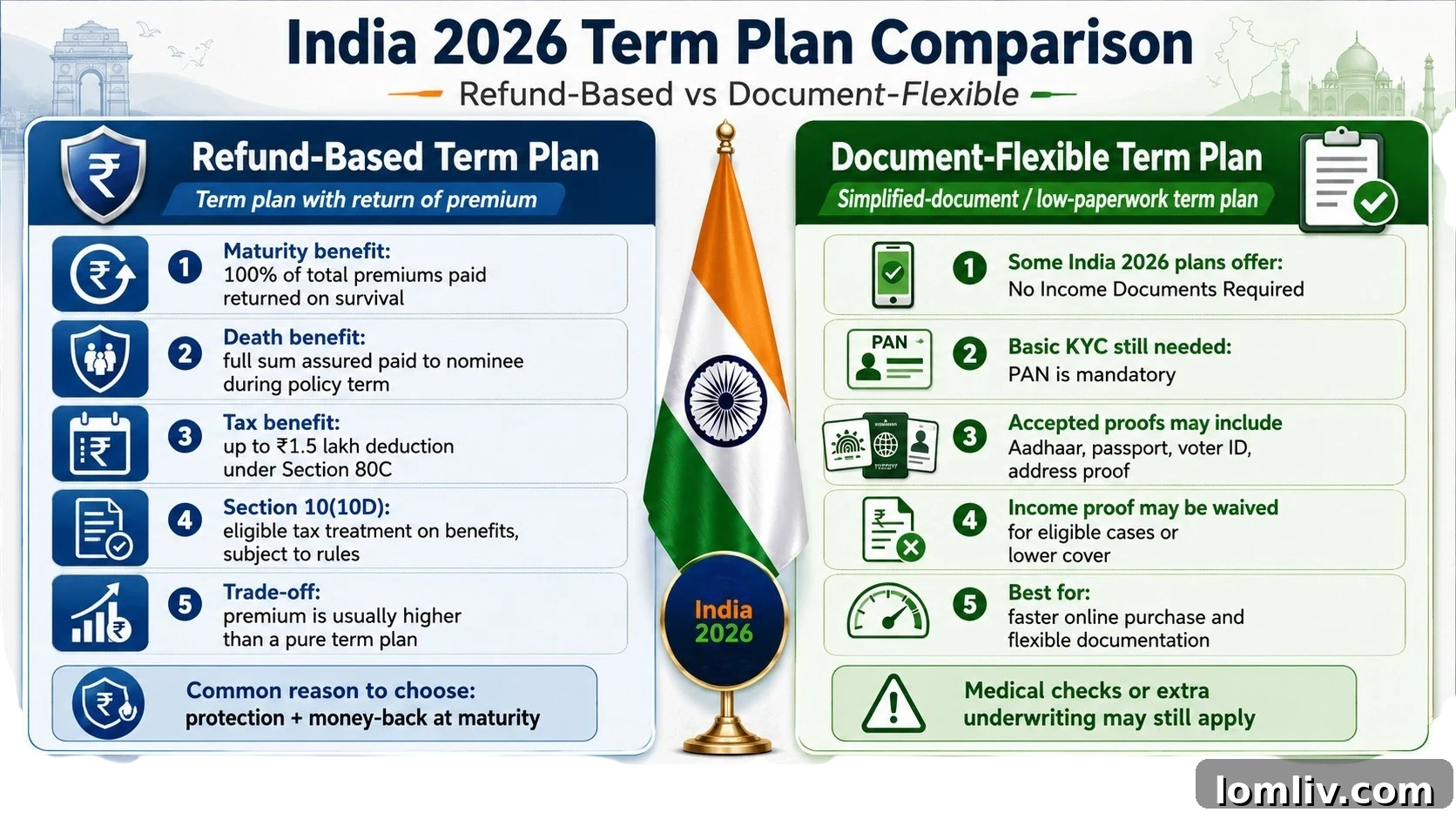
A term plan with return of premium (TROP) functions like a standard term insurance policy but with one key difference: if you survive the policy term, the insurer refunds the base premiums you paid. This refund usually excludes taxes, rider premiums and any additional fees, depending on policy terms. In short, TROP maintains life cover during the term and returns premiums if no claim arises.
A term plan without proof of income is aimed at people who cannot provide conventional income documents such as salary slips, Form 16 or income tax returns. This group typically includes freelancers, daily wage earners, informal traders, small business owners and homemakers. These applicants still need life protection but may not meet the documentation standards required by typical term plans.
Both products are legitimate solutions, designed for distinct circumstances.
Difference 1: What Problem Each Plan Actually Solves
TROP mainly addresses an emotional concern: many people dislike paying premiums for decades and receiving nothing if they survive. Although the protection was in place when it mattered, survivors often feel they lost their money. TROP removes that objection by refunding premiums at maturity, while keeping life cover intact throughout the term. For those who prefer a guaranteed return rather than investing the difference separately, TROP can be psychologically and practically appealing.
A term plan without proof of income solves a documentation problem. Standard term plans require income evidence because insurers use it to judge:
- whether the premium requested is affordable for the applicant
- what sum assured is proportionate to the applicant’s income
- whether the application risks over-insurance
For salaried individuals, salary slips, Form 16 or several years of ITR satisfy these needs. But many workers in India earn in cash or informally and lack such paperwork. A no-income-proof plan accepts alternative evidence—like bank statements, CA-certified statements, asset documents or credit history—so these applicants can still get coverage. The aim is to verify financial standing in other ways, not to bypass underwriting.
Difference 2: The Cost Structure Is Completely Different
TROP policies are materially more expensive than plain term plans. For the same cover, age and term, a TROP can cost far more—commonly 40% to 100% higher, and sometimes even more depending on the insurer and specifics. For example, on a ₹1 crore cover for a 30-year-old with a 30-year term, the TROP premium can be several hundred rupees extra each month compared with a plain term plan.
Over decades, that premium gap compounds. If you invest the difference instead, especially through a disciplined SIP, the potential corpus may exceed the total refund you’d receive from a TROP. Therefore, TROP fits buyers who prefer the convenience and certainty of a guaranteed refund and do not intend to invest the premium difference separately.
Term plans without income proof do not follow the same uniform premium models. Premiums are determined based on the cover requested and the alternative documentation provided. These plans often come with lower maximum coverage limits because income cannot be verified as precisely. The premium itself is not automatically higher, but the insured sum available to applicants without formal income proof is frequently lower than what a similarly placed salaried person could obtain.
Difference 3: Who Should Actually Buy Each One
This distinction is the most practical when selecting a policy.
A return-of-premium term plan is suitable for:
- Buyers who dislike paying long-term premiums without a maturity benefit
- Those who want life cover combined with a guaranteed savings element
- People who have already used other investment avenues and value a predictable refund
- Individuals who prefer simplicity over managing separate investments alongside a plain term plan
A term plan without income proof is suitable for:
- Freelancers and self-employed people who lack regular documentation
- Daily wage earners or informal sector workers
- Small business owners without formal audited accounts
- Homemakers seeking independent life cover and able to show bank transactions or asset proofs
- Anyone who needs life insurance but cannot provide traditional income documents
Note: “No income proof” does not mean no verification. Insurers still require evidence of financial standing—bank statements, asset documents or other acceptable proofs—to underwrite the policy. The flexibility lies in the types of documents accepted, not in skipping financial checks altogether.
Making the Right Choice for Your Situation
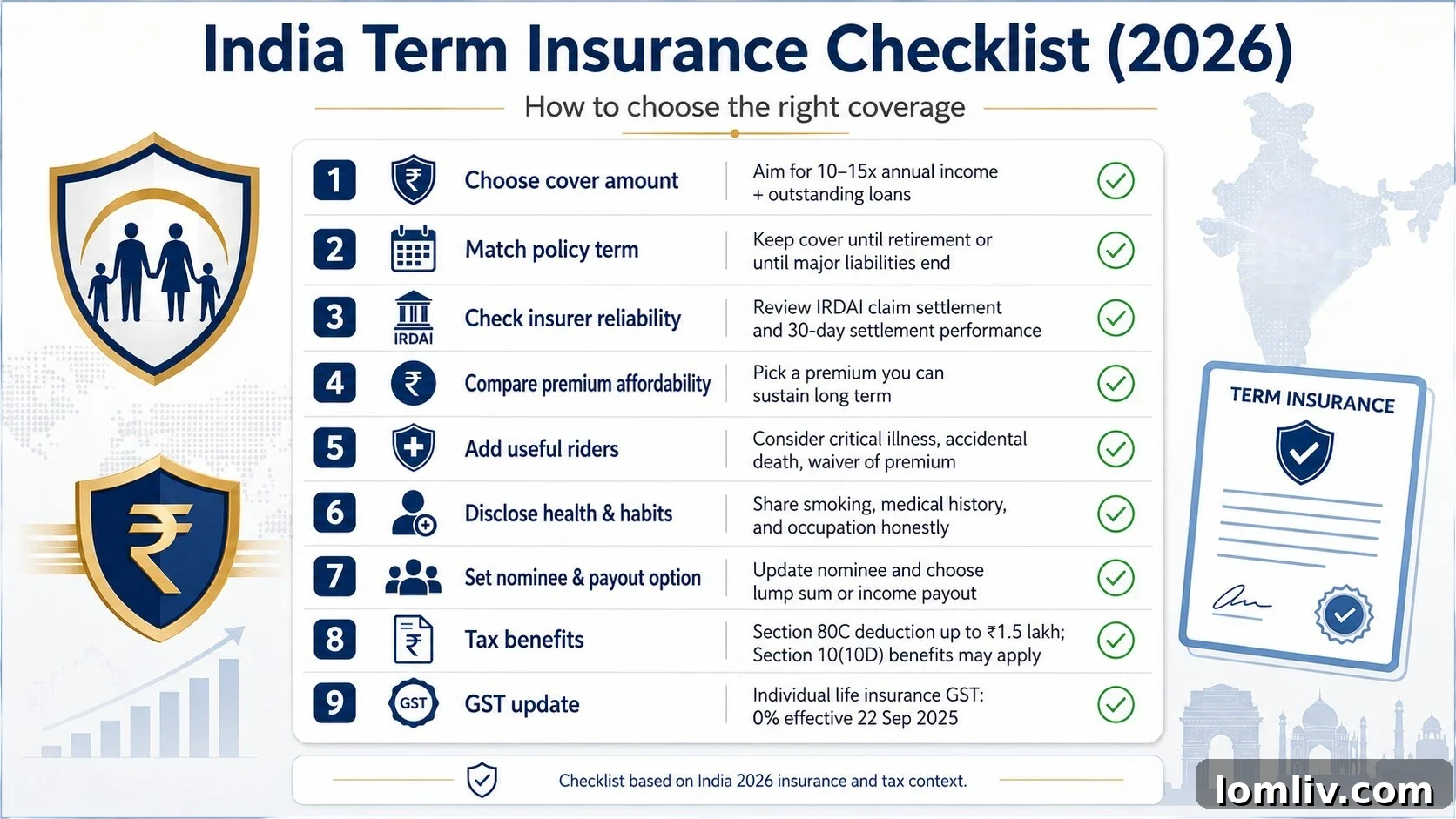
If you have steady income and standard documents, deciding between a plain term plan and a TROP comes down to whether a guaranteed premium refund is worth paying a significantly higher premium—often 60% to 100% more annually—for the same cover.
If you earn outside the formal economy or cannot produce standard income documents, a conventional term plan may be hard to obtain. For many in this situation, a no-income-proof plan is the practical way to secure life cover.
Identify the real problem you need to solve—emotional preference for a refund, or the practical need to bypass strict documentation—and choose the policy designed for that purpose.